Before the City Woke: The Moment the Flores Sea Let Go
At 05:58 on a Saturday morning, most of Flores was still asleep. That hour matters more than it might seem. People were horizontal, inside buildings, away from open ground, unaware that sixty-eight kilometres to the northwest, beneath the Flores Sea, something had been building for centuries and had just stopped waiting.
The number the USGS assigned to what happened next was 7.7. Here is what that number actually encodes. The magnitude scale is logarithmic, which means each whole step is roughly thirty-two times more energy released than the step below it. A magnitude 6 is not "a little less" than a 7.7. It is a fundamentally different animal. A 7.7 releases energy in the same order as several hundred Hiroshima-sized explosions, transferred not through air but through solid rock, arriving at your walls, your floor, your chest, before your brain has had time to decide what the sound means.
The epicentre sat in the Flores Sea, 68 kilometres northwest of Ende. Now hold that thought. Sixty-eight kilometres is roughly the distance you would drive in an hour on an open highway, the kind of distance that feels large on a map and feels like nothing at all when the shockwave is moving at several kilometres per second through basalt. By the time anyone in Ende registered the shaking, the rupture had already happened. The ground simply announced it late. Approximately 1.5 million people felt strong or severe shaking across Flores, Sumbawa, and as far as Sulawesi. Five of them, the Governor would confirm later, never woke up.
Ten Kilometres Down: Why Depth Is the Number That Changes Everything
Ten kilometres. That is roughly the cruising altitude of a commercial aircraft, measured downward instead of up. The hypocentre of the August 15 quake sat at that depth beneath the Flores Sea floor, which means it was, in geological terms, almost scratching the skin of the Earth.
Here is the strange part. A shallow earthquake is not just a deeper earthquake moved upward. It is a fundamentally different beast in terms of what reaches the surface. Seismologists define shallow-focus earthquakes as those occurring above 70 kilometres depth, and the physics is straightforward: energy radiates outward from the rupture point in all directions, so the closer that point sits to the surface, the less it spreads and weakens before it arrives. A magnitude 7.7 at 10 kilometres delivers energy to the ground above it with an intensity that the same magnitude event at 100 kilometres simply cannot match. The difference is not subtle. Surface shaking can be several times more violent, and the area of severe ground motion is dramatically wider.
Think of it this way: hold a torch ten centimetres from a wall versus one metre away. Same bulb, same output. The spot on the wall tells you everything. The 10 km depth is that torch held very close indeed, and approximately 1.5 million people were standing on that wall.
The 6.1-magnitude aftershock that followed tells its own story. Aftershock sequences are the fault redistributing stress — the rock around the rupture zone adjusting to its new configuration. A 6.1 is not a footnote. Standalone, it would be a serious earthquake. After a 7.7 has already cracked and weakened structures, it becomes something more dangerous still. Whether that aftershock brought down buildings already compromised in Maumere remains, as of now, unknown.
The Three-Hour Warning: How a Tsunami Alert Is Born and Cancelled
The siren doesn't wait for confirmation. That is the whole point.
Within minutes of the 7.7-magnitude rupture, BMKG — Indonesia's Agency for Meteorology, Climatology, and Geophysics — had seismometers triangulating the source and computers running the question that matters most after a shallow sea earthquake: did the seafloor move enough, fast enough, to displace the water above it? The answer, at that moment, had to be treated as yes. The warning went out. Sirens sounded across coastal Flores, and people who had been asleep ten minutes earlier were running uphill in the grey morning light.
Now hold that thought, because the physics here is unforgiving. Tsunami travel time is the narrow window between a seismic event and the first wave reaching shore. Depending on the distance and the ocean depth, that window can be as short as a few minutes. For coastal communities near the epicentre, 68 kilometres northwest of Ende, the margin for deliberation is essentially zero. You send the warning, then you watch what the ocean actually does.
What it did, this time, was modest. Instruments detected waves of less than one metre. Three hours after the initial alert, BMKG cancelled the warning. The system had worked precisely as designed: issue early, revise when data arrives. Here is the practical reality those three hours contain. Lifting the warning too soon risks lives if a second wave comes; holding it too long erodes the public trust that makes people run the next time. Every cancellation is a calibration, not a false alarm. The people on the hillsides above Flores were not wrong to run.
One and a Half Million People Felt This: The Human Scale of Indonesia's 7.7-Magnitude Earthquake
Start with a number: 1.5 million. That is roughly the population of Estonia, or greater Philadelphia, or the entire island of Crete. Every one of those people, on a Saturday morning just before six, felt their world lurch. Some were thrown from bed. Some were standing at a stove. Some, in the worst cases, never got up at all.
In Maumere, the largest town on Flores, and across the neighbouring Sikka district, the shaking did what shallow earthquakes do best: it found every weakness in every wall. Older concrete-block homes, the kind built cheaply and quickly across decades of Indonesian urbanisation, came down onto the people sleeping inside them. Governor Emanuel Melkiades Laka Lena confirmed the picture in plain, difficult language: five people died while sleeping, trapped under the ruins of their own roofs. Not caught outside, not near a shoreline. In bed.
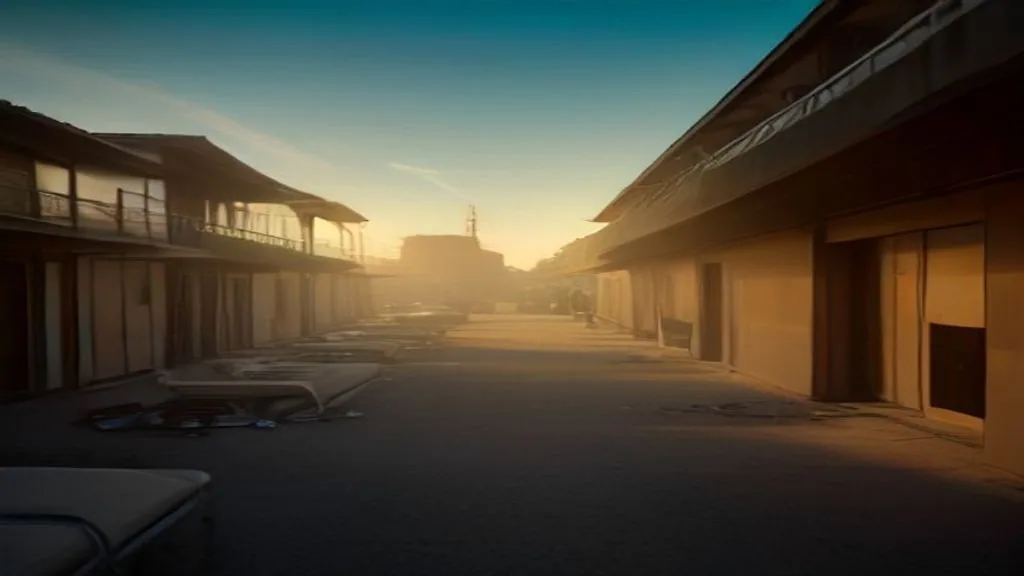
Hospitals in the Sikka district evacuated patients outdoors. Nurses wheeled beds into car parks and onto lawns, trading a ceiling for open sky, because open sky cannot fall on you. Here is the strange part: that decision, made in minutes in the dark, was almost certainly the right one. A building that survives one shock may not survive a 6.1 aftershock arriving an hour later.
The radius of consequence stretched far beyond Flores. People on Sumbawa, across the water to the west, felt it. People in South and Southeast Sulawesi, an archipelago-hop to the north, felt it. Shaking at that distance does not collapse buildings. But it does wake you up at dawn with your heart already running, and it reminds you, clearly, how large a 7.7-magnitude seismic event actually is.
One and a half million people knew this was not a small morning.
A magnitude 7.7 at 10 kilometres delivers energy to the ground above it with an intensity that the same magnitude event at 100 kilometres simply cannot match.
The Ring That Never Rests: Indonesia's Permanent Address on the Edge of Plates
Here is a useful way to picture the Pacific Ring of Fire: a horseshoe of tectonic boundaries tracing the Pacific Ocean's rim, roughly 40,000 kilometres long, where about 90 percent of the world's earthquakes happen to live. Indonesia does not merely touch this horseshoe. It sits at one of its most combustible corners, where the Australian plate grinds northward beneath the Eurasian plate in a process called subduction, and has been doing so for tens of millions of years.
Subduction is slow, patient, and eventually violent. One plate dives under another, dragging stress into the rock like a drawn bowstring. For decades, sometimes centuries, nothing visible happens. Then the rock fails, the bowstring releases, and the energy that was geology becomes destruction in seconds. The 10-kilometre depth of the earthquake is a direct signature of this interface, shallow enough that the stored energy had almost nowhere to go but up.
The 1992 Flores earthquake is the historical mirror here. A magnitude-7.8 quake struck almost the same corridor in December of that year, and the tsunami that followed killed more than 2,000 people. This week's event is not identical, but the geological address is nearly the same. The USGS, comparing magnitude, depth, and population exposure, issued a "yellow warning" for potential casualties and economic losses — a classification that means: significant damage is plausible, but the full picture will take days to assemble. Yellow is not reassurance. It is an honest acknowledgement of what a 7.7 quake at 10 kilometres can do to a region that has been here before, and survived before, and is counting again.
What the Rubble Has Not Yet Told Us
Science gave us the magnitude in seconds. USGS had a 7.7 on the board before most people in Maumere had stopped running. What science cannot yet give us is the count that actually matters: how many people have nowhere to sleep tonight.
The honest arithmetic of disaster assessment moves slowly. We do not know the total number of displaced persons now sheltering on hillsides or in school gymnasiums across Flores. We do not know the economic loss to Sikka district's homes, markets, and hospitals. The USGS issued a yellow warning for casualties and economic damage, which is a formal way of saying: significant, but the full ledger is still being written.
Here is the variable that keeps emergency coordinators at BNPB awake. The 6.1-magnitude aftershock that followed the mainshock did not arrive on a blank slate. It arrived on a landscape of already-cracked walls and compromised foundations. Whether it brought down structures that survived the first blow, nobody has confirmed yet.
And then there are the northern coastal villages of Flores, the ones without reliable communication links, the ones that may have felt the strongest shaking and sent no signal back. They are, right now, a blank space on the damage map.
The number 7.7 arrived in seconds. The full human cost of Indonesia's Flores Sea earthquake will take weeks, perhaps months, to surface. We still don't know. That, honestly, is the best part of where science ends and the slow, patient work of counting begins.