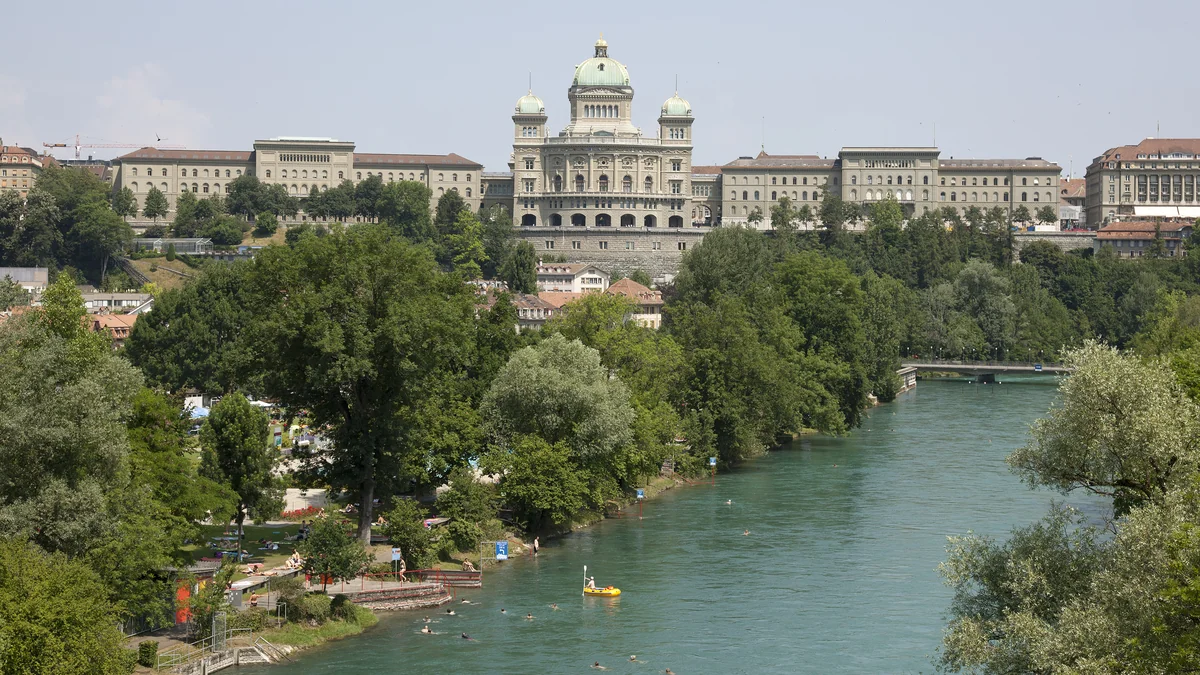
Something Felt Different in Vienna This Year
I have been watching Eurovision for long enough to know when the room has shifted, and something in Vienna this year shifted — quietly, the way Eurovision's new rules always arrive. Not dramatically, not with a single thunderclap moment, but the way a good meal changes register between the main course and the cheese — a quieting, a settling, a sense that the real conversation is about to begin.
The 2026 contest was the point where the accumulated weight of recent controversies stopped being background noise and became the headline itself. Years of bloc-voting complaints, whispers about state-sponsored campaigns, broadcasters in Ireland, Spain, and the Netherlands threatening to walk out the door entirely — all of it arrived at Vienna like guests who had been patient long enough and finally sat down at the table and said: so. Here we are.
The EBU's response was not a dramatic press conference. It rarely is with them. It was something quieter and more interesting: a series of specific, technical, carefully worded rule changes that together send a single clear signal.
Geopolitical neutrality is no longer a polite fiction the organisation maintains while looking the other way. It is now an active project. They are building it into the architecture of the thing itself, rule by rule.
Here's the thing nobody tells you: these contests always look like they're about songs. They are also always about power, money, attention, and identity. Vienna made that undeniable.
Which is exactly why Bulgaria and the singer Dara, who won in 2025 and handed Sofia the 2027 hosting rights, feel like such an interesting next chapter. A fresh stage. New rules. Let's see what happens.
Here's the Thing Nobody Tells You: This Was Never Just About the Music
Let's name the actual trigger, because the EBU certainly wasn't rushing to. In 2024, the Israeli government purchased targeted social media ads designed to mobilize votes for its Eurovision entry — coordinated, state-funded, aimed precisely at bending the televote. That is not a superfan operation running on coffee and passion.
That is a government using a song contest as a political instrument, and once it became impossible to ignore, the broadcasters of Ireland, Spain, and the Netherlands said, plainly, that they were considering walking. When three significant national broadcasters threaten a boycott, the EBU listens. It has to.
Here's the thing nobody tells you: the rules that followed are not the cautious housekeeping of a committee. They are the direct consequence of that pressure, drafted to close the specific gaps that 2024 exposed. State-funded advertising campaigns targeting votes for individual artists are now strictly banned.
The per-person vote cap dropped from 20 to 10 per method — SMS, app, or call — which sounds like a small number until you run the math on a coordinated national effort. These are not vague aspirational guidelines. They are technical barriers built for one purpose.
The hosting ban carries the most structural weight. Any country involved in an armed conflict or a "sensitive geopolitical situation" is now barred from hosting, even if they win. The EBU has essentially written itself a veto over its own result.
What the exact threshold for "sensitive" means in practice remains publicly undefined — which is either deliberate flexibility or a problem waiting to be tested, and probably both. Bakel Walden, chair of the Eurovision Reference Group, has described the need for "fair play" and neutrality as vital to the contest's survival. That framing tells you everything: the organisation knows that without trust in the system, there is no system.
How Your Vote Just Got Harder to Turn Into a Weapon
Here is the part that actually affects you, sitting on your couch next Saturday night with your phone in your hand. The EBU has cut the maximum number of votes you can cast per method — app, SMS, or call — from 20 down to 10. That sounds modest. But this is a direct technical brake on the kind of coordinated power-voting where organised groups flood the lines not because they love a song, but because they love a flag.
The second change is still proposed but worth knowing now: a rule that would require every voter to pick a minimum of three different favourites, not just stack all their votes on one entry. The logic is simple and rather elegant.
Concentrated bloc voting only works if everyone fires at a single target. Force the spread, and the weapon misfires.
Then there is the jury question, which is where it gets interesting. Professional juries were quietly removed from the semi-final process back in 2023, in the spirit of simplicity. Vienna brought them back.
They now sit inside the semi-final results again, acting as a buffer when public voting polarises along lines that have nothing to do with the quality of the three minutes on stage. Those juries also come with a new composition rule: a required quota of young experts aged 18 to 25, which is a smart move — they tend to vote for the song.
Here's the thing nobody tells you: none of these changes fixes the underlying tension, but together they make the system harder to game without being harder for a normal person to use. You can still vote enthusiastically. You just cannot vote like a department of state.
You can still vote enthusiastically. You just cannot vote like a department of state.
For 2027 in Bulgaria, the EBU is also investigating a full move to 100% online voting, which would consolidate all of this into one traceable platform. What that looks like in practice — whether it involves ID verification, whether it shuts out diaspora voters without local phone numbers — is still an open question.
What They're Asking the Artists to Sign, and Wear, and Definitely Not Say
Picture this: you have written the song of your life, you have the staging mapped down to the lighting cue at bar 32, and then someone hands you a piece of paper to sign before you go anywhere near the stage. The EBU is now asking every competing artist to commit to a code of conduct, an Olympic Oath of political neutrality, in writing, before the spotlight finds them.
What happens if you break it? That part, beautifully, they have not yet said.
The rules about what you can carry onto that stage are blunter. Only official national flags are permitted in the performance area and the green room. The rainbow flags, the protest banners, the solidarity scarves, those get to stay with the audience, where they belong in the EBU's current thinking.
It is a tidy solution that sidesteps rather than solves, but it removes the most obvious flashpoints from the cameras' reach.
Post-performance press conferences have been scaled back, too, almost to the point of vanishing. This is where artists, flushed and still catching their breath at 1 a.m., used to say the thing that reverberated for a week. The EBU quietly closed that door.
Here's the thing nobody tells you: the live-vocal rule got tightened in the same package, and this one is genuinely about the music. All lead vocals must now be performed live, and backing tracks cannot provide what the rulebook calls "unjustified support." The language is wonderfully vague.
Someone, somewhere, will test exactly where the line is.
The age change is the one that cuts deepest into the contest's future. The minimum age for competing artists has been raised from 16 to 18. That single number ends the neat conveyor belt from Junior Eurovision to the main stage, the one that has been quietly running for years.
Teenagers who win their national junior titles will now have to wait, and grow, before Vienna or Sofia or wherever hands them a microphone.
Sofia Is Next, and Under Eurovision's New Rules, It Will Look Nothing Like the One That Left
Dara won in 2025, Bulgaria got the keys, and now Sofia inherits something its predecessor cities never had to manage: a Eurovision built for a different era. Compare what lands in Bulgaria in 2027 to the contest that rolled into, say, Lisbon in 2018, and you are essentially comparing two different competitions wearing the same sequined jacket.
Here's the thing nobody tells you: the armed-conflict hosting ban is not a crisis measure. It is a structural rethink, quietly permanent, written into the rulebook now so the EBU never again has to improvise that particular conversation in public. Any country in an armed conflict or what the EBU calls a "sensitive geopolitical situation" simply cannot host, regardless of who wins.
The contest has effectively given itself a veto over geography. That is a genuinely new kind of power, and Sofia is the first city to host in its shadow.
The 100% online voting investigation is the other thing worth watching, and nobody is quite sure yet what it becomes. Right now it is a question — will it require ID verification, and if so, whose? — but by 2027 it could reshape who counts and how much.
The old contest rewarded whoever could mobilize the most phones fastest. The new one is trying to reward whoever genuinely loves the song most. Those are different contests.
So here is your one concrete thing. Watch the semi-finals this cycle differently. Notice where the jury result and the televote split apart.
That gap, right there, is exactly what Eurovision's new rules are trying to close. Sofia is where we find out if they worked.