
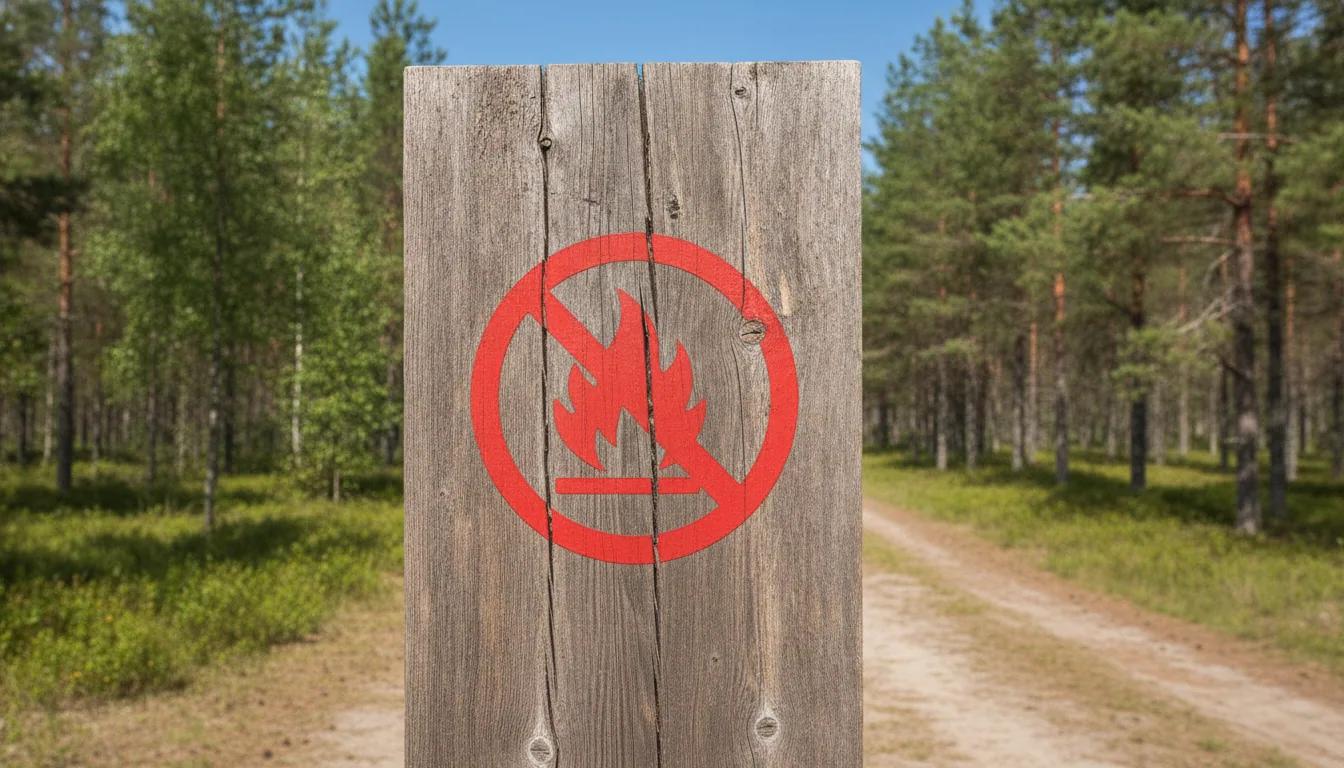
England's July 2026 was its driest month since 1836. A disposable grill's aluminum base reaches 450°C during use and stays dangerous for hours afterward. The UK is moving toward a blanket sales ban while Estonia runs a real-time dynamic fire hazard map — two different levers for the same risk.
From supermarket shelves to government chambers: how one product became a policy question
Waitrose didn't wait for an official announcement. The British supermarket chain pulled disposable grills from its shelves on its own initiative. The Channel Islands Co-op followed. That is a solution ahead of a mandate — and it is exactly how change starts moving.
The context that explains the decision is a single number: 1836. July 2026 was the driest month recorded in England since that year — not the driest in decades, not the driest since the war, but the driest in 190 years. When the ground is parched enough that grass ignites like paper, it doesn't take much to trigger a catastrophe. A disposable grill is exactly that much.
The social pressure moved from companies to policy faster than anyone expected. More than 8,000 people signed a petition calling for a ban. Andy Burnham announced that a grill ban was under active consideration in connection with an emergency climate and fire meeting. This was no longer a single retailer's supply chain decision — it had become a government-level question.
Here is the important distinction. Waitrose's decision was a gesture — a meaningful signal, but not a systemic change. A government ban would be a lever. One retailer stopping sales doesn't stop a customer from driving to the nearest Lidl; a national sales ban closes the channel entirely.
The petition, the retail pull, the political statements — together these form a pattern visible every time a society is ready to change a habit. Bans don't come from nowhere. They come from the moment enough people decide the old normal no longer works. England's July 2026 was that moment.
450 degrees and the sand that saves nothing
A disposable grill looks harmless: small, low, contained. The numbers tell a different story. The aluminum base reaches 450°C during use and stays dangerous for hours afterward.
Burying it in sand doesn't extinguish the heat — it hides it. Fire safety services across Europe have linked disposable grills to bin fires, woodland fires, and building fires. Nobody goes out to grill intending to start a fire. It happens often enough anyway that fire services feel compelled to issue formal warnings.
Estonia has a clear rule: any grill or open fire must be at least 8 metres from buildings and forest. That is a specific, measurable number — and a routinely ignored one. Eight metres is roughly two parking spaces. Most people conclude their spot is far enough away, until it isn't.
British authorities reached similar conclusions from the other direction. The government declared disposable grills a "significant public hazard" and moved toward a temporary sales ban — driven primarily by public safety, not environmental guilt. July 2026 was the driest month in England since 1836. On ground that dry, a 450°C aluminum base doesn't need long to do damage.
The danger isn't only in the moment of use. It's in the false confidence of the aftermath. Someone thinks they've safely buried the grill. The ground disagrees — and that is precisely why advice alone wasn't enough.
450°C is not an abstract number. It is above the ignition point of wood. Sand is a prayer, not a solution.
Estonia and the UK: two countries, one fire problem, two different answers
Estonia's approach is dynamic. The country's Rescue Board (Päästeamet) runs a real-time fire hazard map that determines whether and where outdoor fires are permitted — based not on the calendar, but on weather, soil moisture, and wind conditions. When the map turns red, the ban is on. When rain has done its work, the ban lifts.
The system showed real teeth in June 2023, when Midsummer arrived — Jaanipäev, the national holiday whose entire cultural identity is built around fire. The Rescue Board made no exception: the ban applied across all public outdoor spaces, with only private home gardens exempt. Estonians celebrated Midsummer, but the bonfires didn't burn. That wasn't a gesture. That was a lever.
The UK is taking a different road. The government is weighing a permanent, blanket ban on disposable grills — a centralized, fixed rule that responds not to a live hazard map but to legislative pressure. Over 8,000 people signed a petition, and Andy Burnham announced the ban was under active consideration following an emergency fire and climate meeting.
Which approach is the stronger lever? Estonia's model is flexible and proportionate: the restriction is exactly as strict as conditions require, and no stricter. The UK model is simpler to enforce and clearer to communicate — but it makes no distinction between a parched July and a wet August. A dynamic system requires public trust in the regulating agency and the habit of checking a map before heading out; a permanent ban requires only that retailers comply.
Both have a clear logic. The practical question is which one actually reduces fires — and that data is still being collected.
Aluminum, plastic, and the recycling illusion
Pick up a disposable grill and feel the weight. Thin aluminum tray, plastic handle, wire grates buried under charcoal. Cheap, light, perfect for one evening — and one of the more structurally awkward objects in the waste system, because of exactly those same qualities.
Aluminum and plastic bonded together don't recycle. Not because the system is lazy, but because no sorting line can separate fused mixed materials. A used disposable grill goes to landfill whole — charcoal residue and all. That structural problem repeats itself millions of times across Europe every summer.
There are already alternatives on shelves. CasusGrill is made from cardboard, bamboo, and volcanic rock: it breaks down naturally and leaves no plastic trace. That's not a green marketing claim — it's a verified product you can buy today. The question is price and availability. CasusGrill costs more than the cheapest aluminum tray, and if it's not stocked in the nearest shop, it isn't a real option. An inaccessible green choice is a gesture, not a lever — and retailer decisions like Waitrose's voluntary removal change the physical shelf, not just the symbolic one.
The ban also opens a second market: reusable camping grills in titanium or stainless steel weigh under half a kilogram and survive thousands of uses. One purchase, zero packaging waste on every trip that follows. The materials arithmetic isn't complicated.
The honest scorecard: gesture, lever, and what to do next
A grill ban sounds minor. Viewed across a longer arc, it is something else: an early visible marker of summer habits shifting under sustained climate pressure — not an anomaly, but a precedent.
The UK and Estonia have chosen different paths, and the choice reveals different governance instincts. The UK is moving toward a centralized ban — the government labeled disposable grills a significant public hazard and political pressure has been unambiguous. Estonia runs a dynamic system: the Rescue Board adjusts restrictions in real time to actual fire risk. Which is better? Estonia's approach is more proportionate; the UK's is more legible to the public. Both are real levers, not gestures.
Honest open questions remain. Will a ban stay temporary or become permanent? What are the penalties, and who enforces them? Will Estonia ever move from dynamic operational restrictions to a full sales ban on disposable grills? No answers yet, and it's honest to say so.
What actually moves the needle? Not 8,000 petition signatures. Waitrose and the Channel Islands Co-op removing products from shelves was a stronger lever than any online campaign: when a product disappears from the shelf, the frictionless default purchase disappears with it. A fire hazard map is a lever. A law is a lever. A retailer's buying decision is a lever. A web campaign is a gesture if it leaves the supply chain untouched.
The honest scorecard: disposable grills are worth regulating, their materials footprint is real if not enormous, and as climates warm, these kinds of restrictions will become more common across Europe. Despair is just procrastination with better PR.
One concrete next step: before heading out this summer, check whether your country's fire authority runs a real-time hazard map. One click. That's a lever, not a gesture.