France is implementing a national ban on social media for youth under 15, requiring platforms to verify ages or close non-compliant accounts by January 2027. This landmark legislation targets apps like TikTok and Instagram, shifting enforcement responsibility from parents to tech companies to combat digital addiction.
France’s social media ban for youth officially sets a hard digital wall at age 15 to protect minors from algorithmic manipulation and harmful content. My oldest daughter is 11. In four years, her life will be defined by a number that French lawmakers just turned into a hard wall.
We talk about school trips and grocery prices, but soon we will talk about July 21, 2026. On that Tuesday, the French National Assembly sat down and decided that childhood officially ends at 15. The vote was 279 in favor and 81 against.
It was a clear, loud signal that the digital Wild West is closing its gates to the youngest. For a parent, 15 is not just an age. It is the bridge between being a child who follows rules and a young adult who navigates the world.
France’s social media ban for youth at the kitchen table
In France, 90% of youth aged 12 to 17 are on their phones every single day. That is not just a statistic. It is millions of hours spent in front of screens instead of doing homework or sleeping.
When the Senate added 243 more "yes" votes, they were not just passing a law. They were drawing a line for every kitchen table in Europe. France has decided that mental health is a public utility.
They are the first in the EU to say that a full fridge and a warm home are not enough if a child’s mind is at stake. Do the arithmetic. If your child is 13 today, they have two years of sanctioned scrolling left before the new reality hits in January 2027.
A 243-to-2 mandate for protecting 'brains not for sale'
The political shift in Paris was not a quiet one. When the French Senate voted on the measure, the result was a staggering 243 votes in favor and only 2 against. This 243-to-2 count is not a narrow partisan victory.
It represents a total consensus that the current digital landscape is failing our children. Laure Miller, a Member of Parliament for Ensemble pour la République, was the one who drafted and presented the bill. Miller framed the legislation not as a simple restriction, but as a necessary shield.
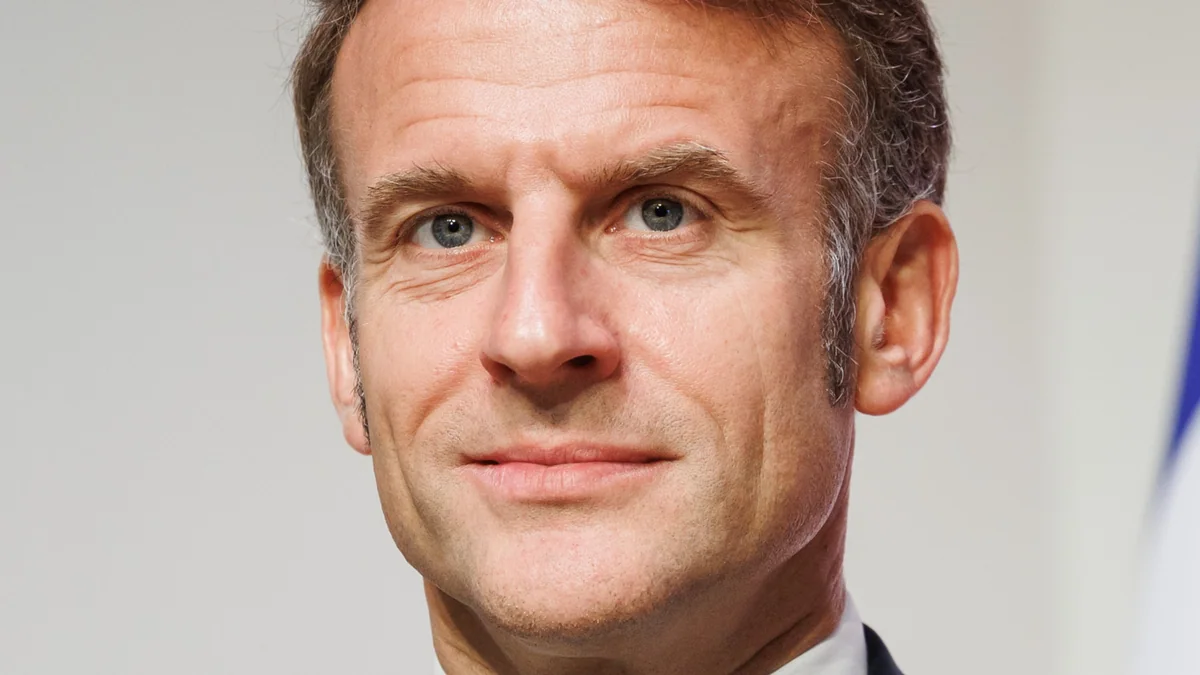
It is rare to see such unity in a modern parliament, especially when facing the immense lobbying power of global tech giants. President Emmanuel Macron has been the primary political driver behind this ban. He has been vocal about the risks of digital addiction and the erosion of mental health among the youth.
"Our children’s brains are not for sale," Macron stated, grounding the debate in a fight for cognitive sovereignty. Policy feels different when a government decides the market shouldn’t own a child’s attention. The era of treating 12-year-olds like data points for profit is coming to an end.
France is finally admitting that digital safety is an unfair fight for a parent to face alone.
The September 1 deadline and the apps left on the table
The first date parents need to mark on the calendar is September 1, 2026. From that day, a 14-year-old in France cannot simply download TikTok and start a new profile. This landmark legislation, often referred to as France’s social media ban for youth, targets the spaces where infinite scroll and the hunt for likes happen.
Platforms have exactly four months after that to clean house. By January 1, 2027, the digital slate must be cleared. Every existing account held by a child under the age limit must be verified or closed.
The ban targets the heavy hitters: TikTok, Instagram, Snapchat, Facebook, and X. Educational platforms and scientific databases are exempt. Wikipedia will remain open because a child looking up history is not the same as a child losing six hours to a feed.
The treatment of YouTube and WhatsApp shows the practical side of this policy. They face partial restrictions rather than a total ban. A 12-year-old might still use WhatsApp to message their mother or watch a tutorial on YouTube.
However, public comments and public channels will be restricted for these younger users. This distinction matters for the household budget and daily life. The law recognizes that private messaging is a utility, while a public comment section is a minefield.
Shifting the burden: Why tech firms now carry the ID check
In my house, the most tired words are "ten more minutes." It is the sound of a parent trying to out-negotiate an algorithm designed by millionaires. France is finally admitting that this is an unfair fight for parents.
The new law shifts the entire burden of proof. Responsibility for verifying ages and enforcing the ban lies entirely with technology companies. If a child under 15 is on the app, the company is at fault, not the family.
To make this work, the French government is moving away from simple checkboxes. The law mandates the use of certified age-verification methods. The France Identité application is the primary tool proposed for this check.
This is not a self-regulated honor system. The digital regulator Arcom and the data protection agency CNIL will oversee the process. They must approve the verification systems the tech firms build to ensure compliance.
A school week is hard enough without the constant "screen time" friction at every meal. This policy acts as a tool to remove that weight from the dinner table. I write so that parents can finally stop being the only ones holding the line.
From the classroom to the bedroom: Scaling the smartphone ban
In 2018, France took phones out of primary and middle school classrooms. This was a physical boundary that ended at the school gate. The new law is a deliberate escalation that follows the child into their private life.
Approximately 90% of French youth aged 12 to 17 use a smartphone every single day. For these teenagers, the device is rarely a luxury item. It is their social oxygen, their map, and often their mirror.
Anne Le Hénanff, the French Digital Minister, confirmed this expansion now includes high schools. The policy shift treats digital space like a physical classroom where certain behaviors are simply not permitted. It recognizes that a child’s development does not stop at the school bell.
This is about daily safety rather than abstract policy. Cyberbullying used to stop at the front door, but now it enters the bedroom through a glowing screen at midnight. By moving the ban to the platform, the state is trying to rebuild the protective walls that the internet era tore down.
The European stress test: Will the Digital Services Act hold?
France is the first in the European Union to attempt this. The parliament finalized approval on July 21, 2026, following the precedent set by Australia in late 2025. While Australia chose a limit of 16, France set their threshold at 15 years.
The legislation is designed to align with the EU’s Digital Services Act (DSA). Digital Minister Anne Le Hénanff confirmed the law is proportionate and remains in accordance with EU regulations. Regulators Arcom and CNIL will oversee the cross-border enforcement process.
If tech companies can verify ages for French teenagers, they can do it for everyone. Families in Riga and Tallinn should watch this experiment. Approximately 90% of youth now use smartphones daily, regardless of where they live.
Protecting kids is not a luxury reserved for the west of the continent. It is a policy choice that starts with one country and ends with all of us. We watch France today to decide what we demand for our own kitchens regarding France’s social media ban for youth.