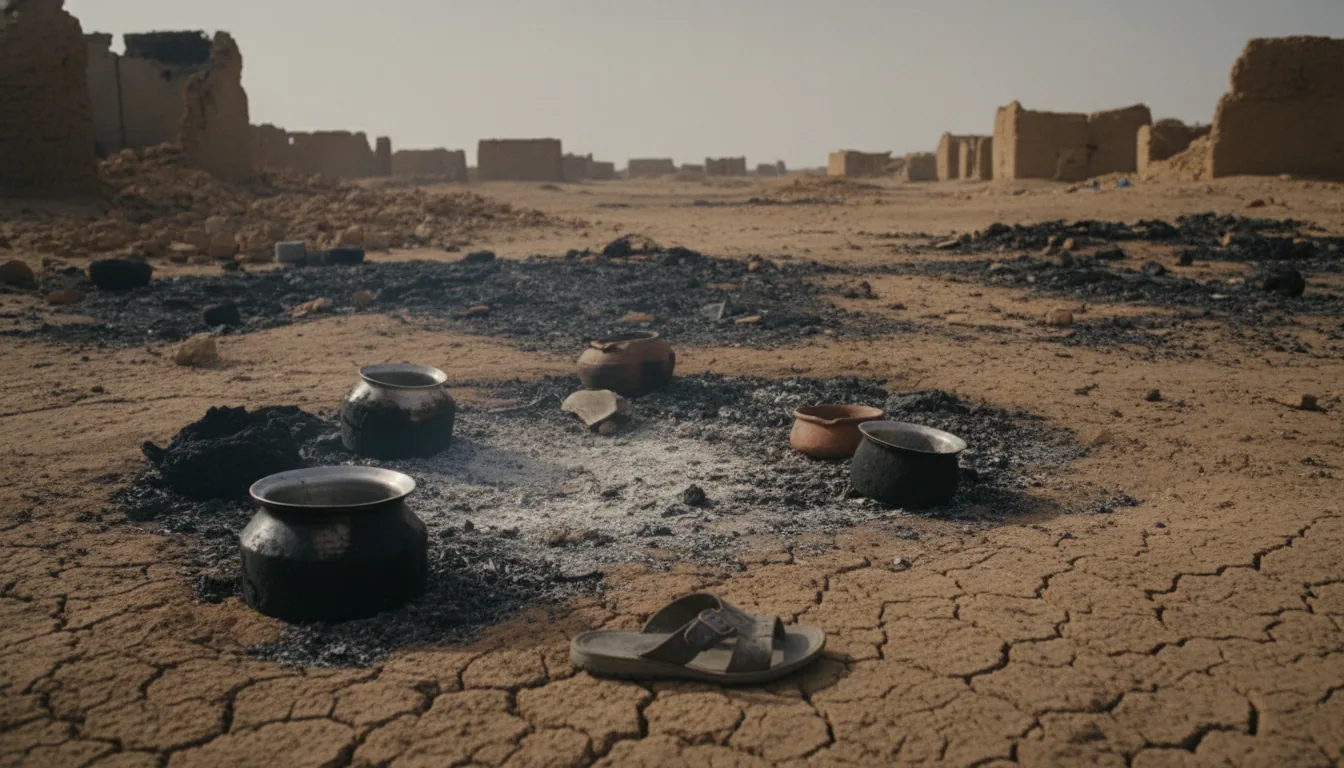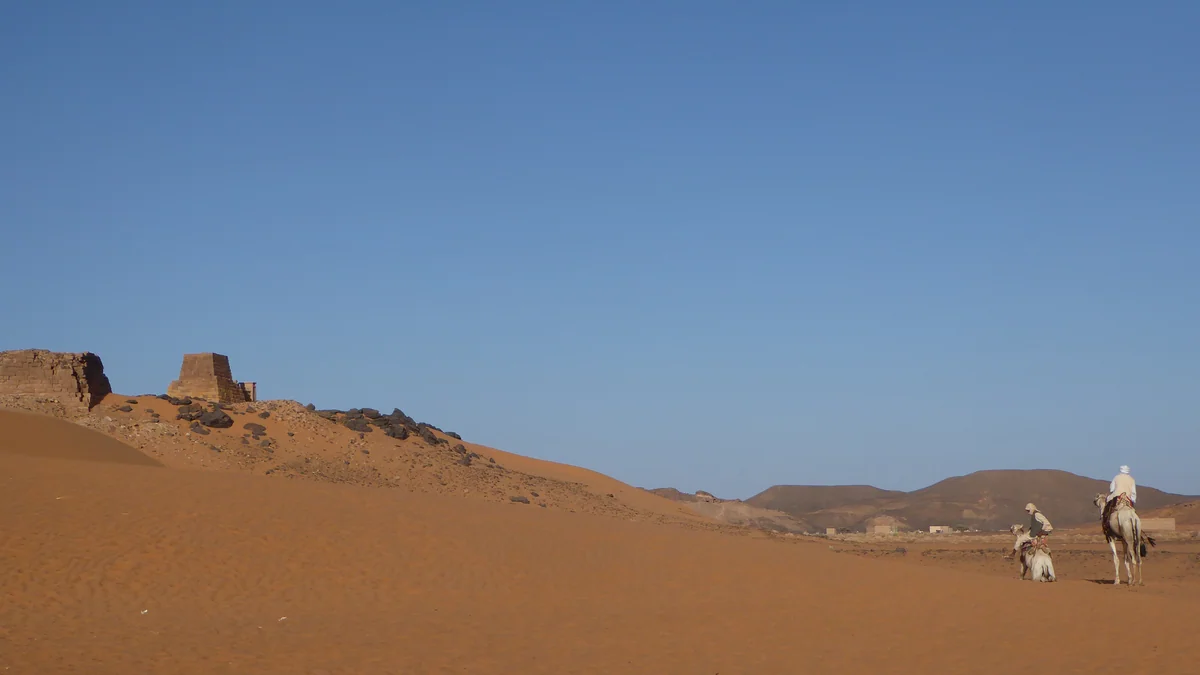
Sudanese pyramids are currently facing systemic destruction as the war between the Sudanese Armed Forces and Rapid Support Forces consumes ancient heritage sites. More than 250 pyramids in the Nubian desert are being repurposed as military cover or looted for the international black market.
Sudanese pyramids are caught in a cycle of tactical occupation and asset liquidation that threatens the very foundation of Nubian identity. I remember the damp dust of the Sarajevo National Museum in 1994, where curators hid the Haggadah while the city burned. History suggests that when a state collapses, the oldest stones are the first things to be liquidated.
The Western wire remains obsessed with the Egyptian pyramid industry, yet the real volume of antiquity lies further south. Sudan contains more than 250 pyramids in its Nubian region, a number that far exceeds the count in Egypt. The wire says these are merely ruins, but original history suggests they are the load-bearing walls of an ancient African sovereignty.
The geometry here is distinct and deliberate. Unlike the broad, sloping silhouettes of Giza, these structures are defined by smaller bases and steeper angles. These 2,000-year-old burial sites for the Kushite Kingdom rose like stone needles from the sand.
From my desk, I see the same pattern I watched in Grozny. When great powers negotiate, the heritage of the borderland becomes secondary. The Kushite legacy is now caught between warring generals, a tragedy where history is cleared to make room for a newer, bloodier map.
Sudanese Pyramids as a Strategic Command Post
The April 2023 rupture between the Sudanese Armed Forces (SAF) and the Rapid Support Forces (RSF) was a structural failure, not a sudden accident. I have seen this arrangement fail before: 1991, Moscow. Two centers of gravity cannot occupy the same floor without the house collapsing.
In Khartoum, the RSF converted the Sudan National Museum into a military base. To a paramilitary commander, the world's largest collection of Nubian artifacts is simply tactical cover. Thick walls turn a site of cultural continuity into a command post among the antiquities.
By January 2024, the geography of the war expanded from the capital to the desert interior. RSF units targeted the UNESCO World Heritage sites of Naqa and Musawwarat es-Sufra, where 2,000-year-old temples stand in the path of modern artillery. These locations are the memory of the Kushite Kingdom, now caught between two local empires.
Over 20 museums across the country have been reported as looted or destroyed since the conflict began. The wire says these sites are caught in the crossfire, but the reality is colder. When the state collapses, its history is the first asset to be liquidated for cash or convenience.
The Kushite kings built for eternity, but they did not account for the modern utility of a temple as a sniper nest.
Liquidation at the Speed of Fiber Optics
The departure of every international archaeological mission in 2023 followed a predictable pattern of imperial retreat. When the security situation deteriorated, the experts packed their brushes and GPR units. They left the Kushite ruins to the desert and the militias.
This is the definition of a borderland abandonment. The foreign specialists return to safe desks in Brussels or Paris. The locals stay behind to watch the load-bearing walls of their history be stripped for parts.
The wire says Sudanese heritage has been lost; the original records say something colder: an inventory liquidation. An estimated 60% to 70% of the exhibits in the Sudan National Museum have been removed since the April 2023 rupture.
This was not a random act of destruction, but a systematic clearance of assets. Items like gold jewelry and mummies from the 2,000-year-old Kushite period are no longer treated as state treasures.
They are now liquid commodities appearing for sale on international platforms like eBay. Somewhere a spreadsheet was quietly updated to reflect these new arrivals. The transition from a burial chamber to a digital auction happens at the speed of fiber optics.
The RSF and SAF commanders treat these objects as currency, not as the foundations of a state. International protection has failed for the same structural reason it failed in the 1990s. Without a physical presence, the observer is just a witness to a robbery.
We must stop using the word "stolen" as if it implies a temporary absence. It is the final erasure of the small-nation floor by those who value the sale over the soil.
The Working Class in the Necropolis
Sand in the Nubian desert has a specific, abrasive weight, drifting against the stone in waves. It preserves the silence of those whom the standard history of empires usually ignores. Recent research from early 2025 suggests these steep-angled tombs were not exclusively for the Kushite elite.
We have long viewed the pyramids as monuments to absolute power. However, the latest forensic data suggests a different social stratification entirely. The commoner was often buried beneath the sandstone alongside the rulers, suggesting the Kushite state required a reliable labor force even in the afterlife.
Ask the small question first: who was the commoner here, and who was the empire? Recent findings reveal a Kushite social structure that was a shared endeavor. Even as militias move artillery through the desert, the soil reminds us that the state was built by the many.
The Silent Siege of Sand and Salt
I have seen what happens to a structure when the technicians leave. In the winter of 1995, the institutional shells of Grozny still stood, but the buildings began to rot from the inside. In Sudan, the desert conducts a more patient and permanent siege than any paramilitary unit.
The human buffer has been removed. Without maintenance staff to sweep and monitor, the Sahara is reclaiming the floor. A stone that survived two millennia cannot survive a single year of institutional abandonment.
Salt accumulation is causing the fragile sandstone walls of ancient temples to crumble into fine dust. This is the chemical signature of a state dissolving into its most basic elements. The salt and the sand are the only powers that never need to sign a treaty.
The Satellite as the Last Sentry
When the state loses its monopoly on violence, it loses its right to the ground. In Sudan, sovereignty has been outsourced to a satellite lens. UNESCO monitors the ancient Kushite region from a distance that renders human tragedy invisible.
This is digital monitoring as a substitute for physical presence. I have heard the promise of remote protection before in 1995. It failed then for the reason it will fail now—the camera is not a shield.
The technical response is clinical. UNESCO has trained 40 specialists in the removal of rubble and the handling of unexploded ordnance. These individuals are the designated custodians of a kingdom currently under military occupation.
They wait for a ceasefire that the RSF and SAF leadership have no incentive to sign. Until then, heritage exists only as a resolution on a digital map. Watch the UNESCO digital inventory of 1,700 items instead.
The evidence forces us to conclude that the Kushite legacy has been reduced to a spreadsheet. The 250 Sudanese pyramids will stand, but they will belong only to the sand and the sensor.