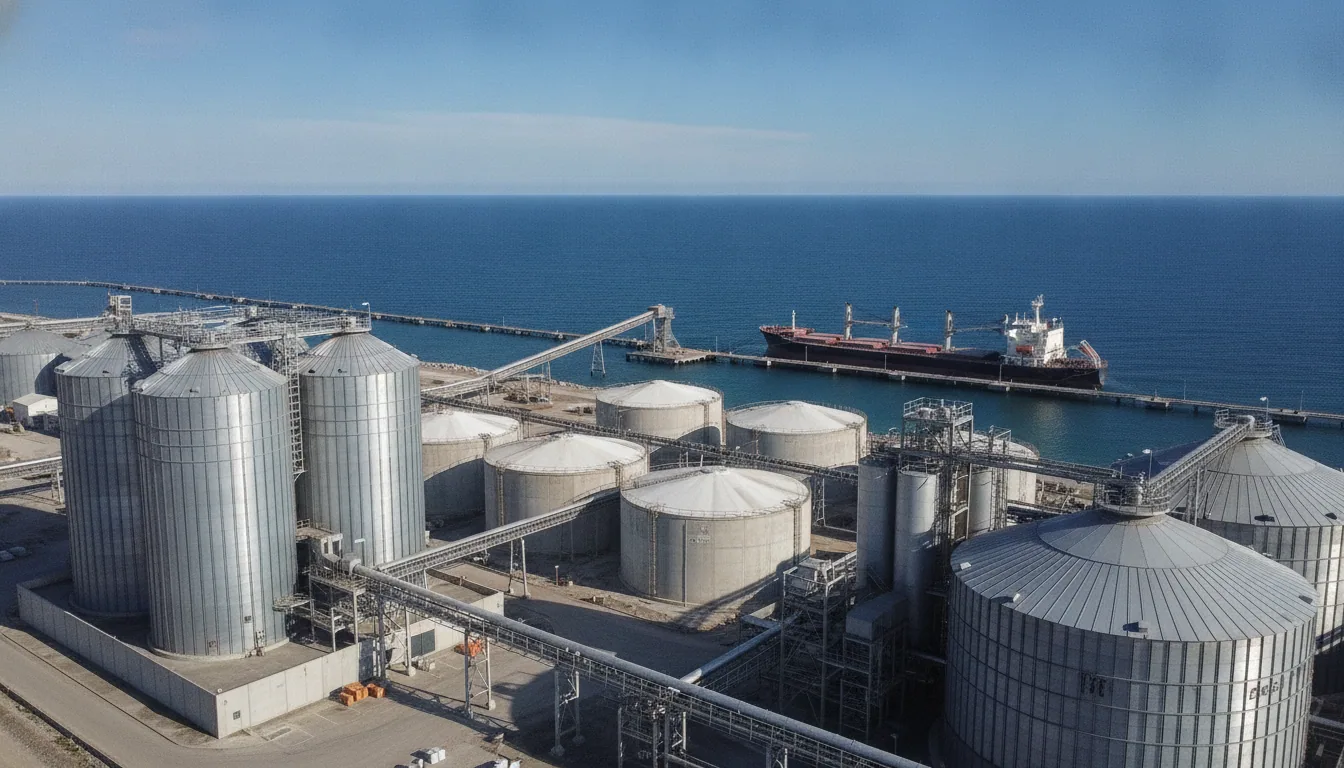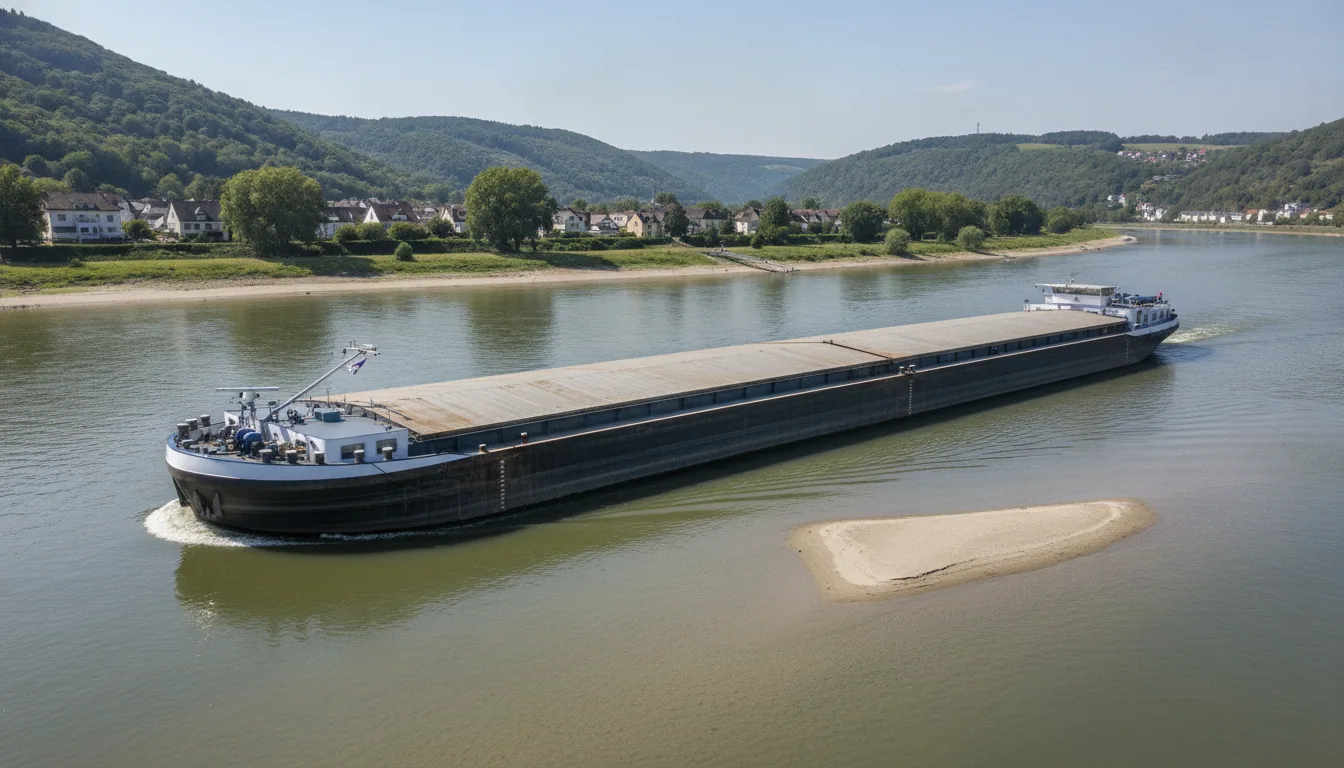
A specialized barge fleet commissioned by BASF can now navigate the Rhine drought crisis, carrying hundreds of tonnes of raw materials in water barely deep enough to cover rubber boots. These low-water vessels utilize ultra-wide hulls to maintain supply chain logistics even when river depths at critical chokepoints drop to record lows.
The Rhine drought crisis is currently being managed through a shift toward specialized low-water vessel engineering and rail-based logistics as climate patterns disrupt traditional river transport. Engineering for the extremes is no longer a prototype experiment; it is the only way to maintain a functional supply chain. This engineering difference is a matter of buoyancy and displaced weight.
When the water at the Kaub chokepoint dropped to a record 25 cm on July 31, 2026, standard shipping effectively stalled. This followed the driest March in German history, which prevented the usual river recharge and forced most ships to operate at just 20% capacity. While standard hulls bottom out, this specialized fleet keeps moving.
BASF has addressed this by deploying specialized low-water-capable barges that utilize an ultra-wide hull and lightweight components. These vessels are engineered to carry industrial loads even when the river level falls toward the record lows measured at gauging stations.
CFO Dirk Elvermann views this as a necessary industrial pivot. He remains concerned as the 2026 crisis intensifies, but the honest scorecard shows that engineering for the extremes actually works. It feels green to rely on river transport, provided we acknowledge that Germany has lost 60 billion cubic metres of water since 2001.
The 25-Centimetre Reality: When the Alpine Recharge Fails
On July 31, 2026, the water level at the Kaub gauging station dropped to 25 centimetres. This critical chokepoint between Mainz and Koblenz is where the riverbed is naturally shallow. For a logistics manager, this height is roughly that of a standard dinner plate, marking the narrow margin between a moving barge and a grounded asset.
The records continued to fall further downstream. On August 1, Cologne water levels hit 67 centimetres, which is two centimetres lower than the 2018 record. By the next day, the Düsseldorf gauge measured just 21 centimetres, severely impacting throughput at major inland ports. To manage the Rhine drought crisis, managers must now track these measurements hourly.
This is the physical result of a failed Alpine recharge. Four consecutive heatwaves across Western Europe in 2026 accelerated evaporation before the river could recover from the driest March in German history. Germany no longer has a hydrological buffer when glacier runoff fails.
Engineering for the extremes actually works.
We are now entering historical territory. The WSV forecasts suggest Kaub could drop further to 24 centimetres, which would be the lowest level recorded since systematic records began in 1880. A 25-centimetre river level means most standard vessels are restricted to 20 percent of their usual load capacity to avoid hitting the riverbed.
The Invisible Bill: The True Cost of Shallow Water
When a river like the Rhine drops, the physics of shipping becomes a math problem that businesses cannot solve with slogans. Many vessels are now restricted to 20% of their usual load capacity to avoid grounding. To move the same volume of goods, logistics managers now need four to five times as many ships.
This creates a bottleneck that forces a costly switch to road and rail transport. While these alternatives exist, they lack the massive scale of inland waterways. One standard Rhine barge carries the same load as about 100 trucks.
The financial result is a sharp spike in overhead. In late July 2026, tanker-barge freight rates between Rotterdam and Karlsruhe rose to between €145 and €150 per tonne. The data says it is a fundamental shift in how we price European industry.
NIWIS and the Rhine Drought Crisis
On July 15, 2026, Environment Minister Carsten Schneider launched NIWIS. This national information system provides real-time data on soil moisture and river depths. For a logistics manager at BASF, it is a vital dashboard for navigating the Rhine drought crisis.
NIWIS tells us exactly how much water is missing, but it does not put a single drop back into the channel. The data shows a staggering deficit. Germany has lost 60 billion cubic metres of water over the last 25 years, a volume roughly equal to 24 million Olympic swimming pools.
The warning signs arrived early in March 2025, the driest March in German history. Usually, this is the month for hydrological recharge when rain and melting snow fill the natural reservoirs. In 2025, that recharge never happened.
Reliable data is the first step toward a solution. Schneider warned that water scarcity could cost the German economy €625 billion by 2050 if adaptation remains slow. Monitoring alone will not save the Rhine, but it moves us away from panic and toward engineering.
The Industrial Stress Test: Steel, Power, and Coal
In a typical summer, the Rhine acts as Europe’s most efficient conveyor belt for bulk goods. The 2026 data shows it is now a seasonal variable. This year, the industrial stress test moved from a theoretical climate model to a floor-level reality for heavy manufacturing across the continent.
Thyssenkrupp Steel provides the clearest example of this structural shift. In July 2026, the company suspended barge operations and reduced blast furnace production at its Duisburg facilities. These production cuts represent a significant failure of the primary industrial supply lever.
The energy sector is facing a similar math problem involving fuel logistics. Providers like EnBW and Grosskraftwerk Mannheim are now burning through coal stockpiles because barge deliveries have essentially stopped. Usually, these reserves are a strategic buffer for winter demand, but today they are drained just to keep the lights on.
Managing these navigation chokepoints falls to the WSV, the German Federal Waterways and Shipping Administration. Their data is the only lever preventing a total logistical collapse. Even so, they cannot manufacture the water the industry actually needs to function.
The Honest Scorecard: Moving the Needle on River Resilience
The Central Commission for the Navigation of the Rhine (CCNR) reports a structural shift in supply chain strategies. This is not a seasonal blip. Joint Research Centre (JRC) data highlights record-low precipitation patterns that have blocked the river's natural recharge.
Temporary fixes like lighter loads are no longer enough when the Kaub gauge hits 25 cm. Relying on a depleted river is a gamble industry can no longer afford. Many fleets currently transport only one-third of their usual cargo, requiring five times as many ships to move the same volume.
The honest scorecard: Adaptation could cost the economy €625 billion by 2050 if we move too slowly. Despair is just procrastination with better PR, so leaders must prioritize rail-redundancy over the theatre of river dredging. That remains the most effective lever for surviving the long-term Rhine drought crisis.