
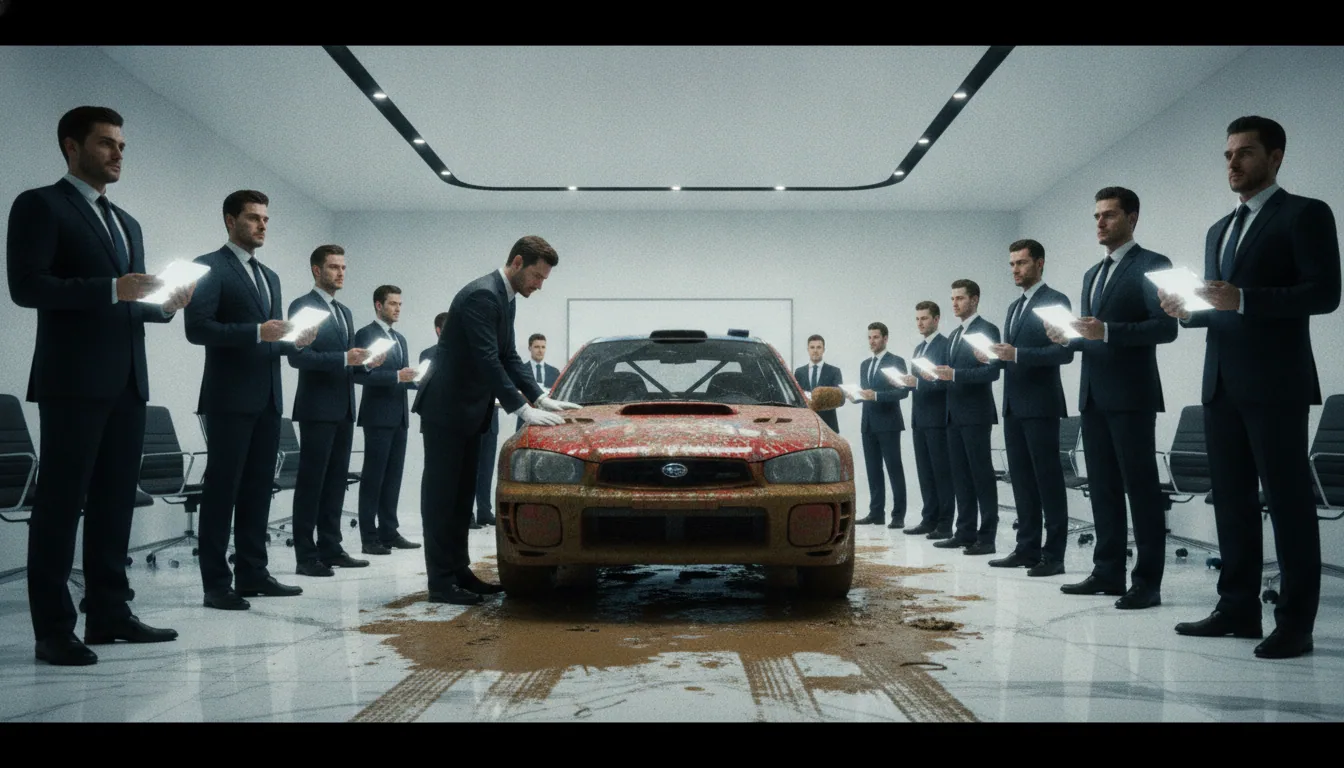
On July 31, 2026, the World Rally Championship (WRC) officially entered its private equity era when the FIA announced the sale of its commercial rights for €500 million to Cosmobilis Group and Park Square Capital. This tectonic shift aims to stabilize the sport’s chaotic finances and introduce new technical regulations for 2027 that prioritize cost-cutting and manufacturer interest over expensive hybrid complexity.
If you’ve ever tried to sell your old, oil-stained garage at a price that would make a Dubai real estate agent blush, you know exactly what it feels like to be the President of the FIA right now. It’s that precise moment where you’re standing in the middle of a pile of burning debris, looking potential investors in the eye, and insisting with a straight face that this is a "strategic investment opportunity" rather than just a very loud and expensive way to get mud in places where mud should never be.
Mohammed Ben Sulayem called this the deal of the century and the biggest event in rallying history. But here’s the thing about the WRC that nobody wants you to understand: when JP Morgan decides your hobby is worth €500 million, you aren’t a sport anymore. You’re just a line item in someone’s quarterly report (and not the fun kind where they buy everyone pizza, but the kind where they start asking why the cars need so many expensive gears).
The Half-Billion Euro Cosmetic Surgery
Our new overlords in the food chain are Cosmobilis, a French tech platform, and Park Square Capital, an investment firm. This is fantastic news for anyone who has ever thought that rallying’s only real problem was a tragic lack of French algorithms and a shortage of people who think "adventure" is a synonym for "risk-adjusted return."
Ben Sulayem seems to believe every signature on a contract is an epistemological breakthrough. But when you call a renovation a "new era," it usually just means you’ve painted over the cracks and are praying the new owner doesn’t notice the foundation is missing (which is FIA-speak for "we have no idea how we got here").
For years, WRC Promoter GmbH was like a weird student flat where Red Bull and a German investment firm called KW25 shared the rent, but nobody ever actually bothered to wash the dishes. Now, the energy-drink billionaires have finally wiped the mud off their shoes and sold the entire rattling circus. It’s the ultimate sign that the party is officially over, and the guys who want to see receipts and corrected bookkeeping have arrived. We have officially entered the spreadsheet-poisoned era.
When JP Morgan decides your hobby is worth €500 million, you aren’t a sport anymore. You’re just a line item in someone’s Excel table.
Enter Éric Boullier, the new CEO and a man who previously ran the McLaren and Lotus F1 teams. There’s something almost poetic about F1 ghosts haunting the world of rallying, turning dirt tracks into what looks increasingly like Formula 1 in a swamp. Behind the scenes, M-Sport founder Malcolm Wilson spent two years lurking in the shadows, strategically convincing these new owners that they were the perfect victims to drop half a billion euros into a sport where the main product is "noise and dust."
WRC27 and the Death of the Hybrid: A Budget Menu Hero
With the WRC27 rules, we’re living in an age where technology is supposed to take us to Mars, but the FIA decided that to save rallying, they needed to set the clock back ten years. Starting in 2025, hybrid systems are being ripped out of the cars—the best news for the sport since the invention of the inner tube.
Hybrids made these cars so absurdly complex and expensive that even oil-state princes started sweating when they looked at the invoices. Now, they’re throwing that expensive, heavy electrical junk out the window, and it’s an absolutely unhinged decision that we desperately needed.
Then there’s the new €345,000 price cap for top-tier cars. A million-euro monster that cost more than a luxury penthouse in downtown Tallinn is being turned into a savings menu hero. Tubular frames are the new luxury, because standardized bodies mean less expensive factory-porn and more raw speed. Annual team budgets are also being put on a crash diet, dropping from €70 million to a measly €25–€30 million. It’s a financial weight-loss journey that would make fitness influencers jealous—we’re talking a 50% cut, and we’re letting them do it. We’re letting them DO IT.
Ten Suitors and a Suicide Mission
There are supposedly ten manufacturers peeking through the window like orphans at a candy store, but none of them have brought their wallets yet. They’re waiting to see if the WRC27 rules are actually sustainable or just another creative way to incinerate cash.
Then we have Project Rally One and guys like Yves Matton and Lionel Hansen. They’re planning to build the first private team car by August 2026, which, in rallying terms, is an enterprise so risky it borders on a suicide mission. But the new owners want to make WRC a "global benchmark," which usually just means more useless apps and expensive graphics packages. Cosmobilis thinks fans want more data and fewer muddy boots. They want to sell us the "vibe" of rallying without us having to actually swat mosquitoes or stand in a torrential downpour.
Estonia: The Global Laboratory of Hope
Estonia has become the sport’s last and most desperate survival instinct. While the rest of the world argues in glass-walled offices, Estonia just rents a few excavators and gets it done. Confirming Rally Estonia for the 2026 calendar is that moment where you realize there’s only one adult left in the room.
They’ve even set up a €100,000 support package for young talents to ensure they don’t have to go out and get a real job. Nobody wants to see the next world champion stuck in an open-plan office filling out spreadsheets. We need them on the edge of a ditch kicking up dust, not falling victim to corporate culture.
Robert Virves proved that even in a system that is absolutely cooked, you can still achieve something. He pocketed €25,000 in prize money for his WRC2 win at Rally Estonia. In the context of the rallying world, that’s about as effective as trying to put out a forest fire with a nursery-school water pistol, but it’s pure hope.
Estonia is now the global lab testing whether rallying can avoid collapsing under its own bureaucratic weight. Anyway, rallying will always be a place where people stand in the mud to watch metal objects fly past them at terrifying speeds. We’re all doomed, but at least Robert got his check, and the "new era" gives us until 2026 to pretend that speed can save the world.
Sleep well.