2026 El Niño climate records indicate a 91% probability of a new global temperature peak. Driven by an energy shift in the tropical Pacific, the Niño-3.4 index has reached +2.1 °C, triggering widespread disruptions to global weather patterns, trade winds, and atmospheric water vapor capacity.
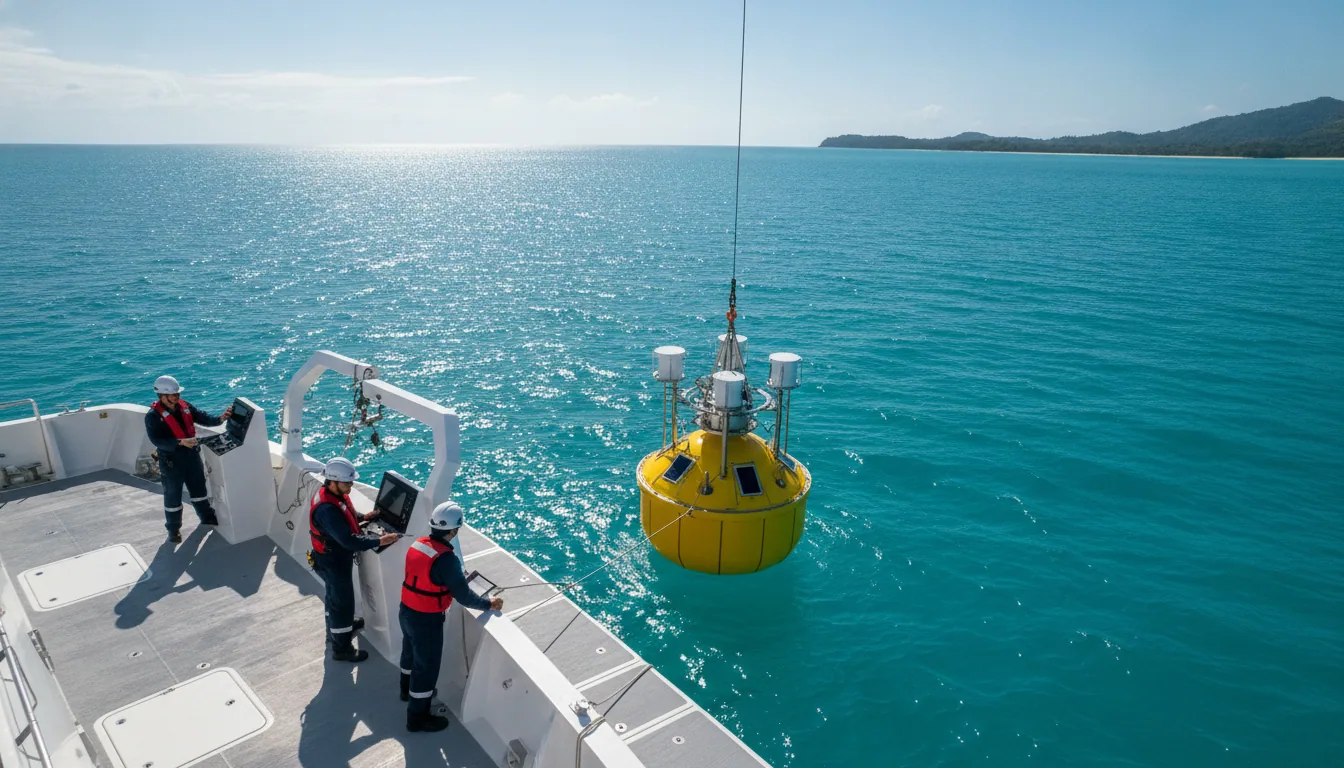
2026 El Niño climate records show that the rapidly intensifying Pacific heat has reached historic proportions, demanding precise infrastructure management over reactive panic. Deep beneath the surface of the tropical Pacific, 4,000 real-time sensors are quietly doing the most important job on the planet. Tracking the heat stored 100 to 300 meters down allows us to measure energy rather than just watching surface waves.
These sensors are the ultimate early warning lever. They provide the hard numbers that allow a farmer in South America or a grid operator in Europe to prepare for specific local outcomes. There is a 91% probability that 2026 will set a new global heat record based on these subsurface measurements.
Maintaining 4,000 instruments in the open sea is a massive logistical task that relies on stable international funding. Scientist Mojib Latif notes that if this network is compromised by budget shifts, we lose our eyes on the ocean. Maintaining these sensors is what actually works to protect billions of people from sudden climate shifts.
The Arithmetic Behind the 2026 El Niño Climate Records
On June 11, 2026, NOAA confirmed that El Niño conditions were officially present in the tropical Pacific. While initial reports showed an 80% probability, that figure reached over 90% by the close of the year. The core of this event is measured by the Niño-3.4 index, a specific corridor of water used to track intensity.
By mid-July 2026, this index reached +2.1 °C above the baseline. It feels like a small fluctuation, but the data says it is a massive injection of energy into the global climate system. Scientists now place the probability of a "very strong" event at 81% for the October to December window.
In the Eastern Pacific, surface temperatures are currently more than 2.5 °C above the historical 150-year average. This represents a fundamental recalibration of atmospheric water vapor capacity. A +2.5 °C anomaly in this region represents a volume of heat that disrupts global trade winds and rainfall patterns.
Despair is just procrastination with better PR, so we look at the numbers instead.
Breaking the Temperature Ceiling: The 91% Probability
The first half of the year was already the third warmest on record, at 1.4 °C above pre-industrial levels. To an ordinary household, 1.4 °C is barely a nudge on the thermostat, but it represents an unfathomable volume of additional heat energy added to the planet. In reality, this shift alters the energy balance of our global climate system.
The Arctic provided the first verifiable evidence of this energy surge. In early 2026, sea ice extent remained at or near record lows for 39 consecutive days. This loss of white ice forces the dark ocean to absorb solar energy instead of reflecting it, accelerating the warming loop.
There is currently a 35% chance that 2026 will take the title of the warmest year ever recorded. Data shows a consistent thermal lag between Pacific warming and global atmospheric heat peaks. This means 2027 will likely be even hotter as the energy from the tropical ocean continues to bleed into the air.
The Energy-Agriculture Squeeze: Europe’s Double Hit
In the Amazon basin, the 2026 drought turns riverbeds into cracked clay while the Horn of Africa braces for sudden, intense flooding. These teleconnections are the atmosphere's way of balancing the +2.1 °C temperature surge that also impacts rainfall in Southeast Asia. It is a predictable redistribution of global energy that we can map and forecast.
In Europe, this global shift creates a specific engineering headache for the power sector. Low river levels mean less water for hydroelectric turbines, while those same warm rivers cannot provide enough cooling water for nuclear reactors. This is a stress test for our energy grid's thermal management and strategic water-use priorities.
Agriculture faces a similar squeeze as European farmers manage existing droughts that threaten local yields. A Super El Niño creates a rare, synchronized risk where crop failures in Southeast Asia or the Amazon usually balance out elsewhere. The real lever for survival is the chemistry of water retention and the mechanical engineering of irrigation.
The Warning Chain: From Buoys to Basements
Zeke Hausfather describes the current Pacific temperature shift as happening by an "unfathomable margin" that hasn't been seen in 150 years. We rely on a network of 4,000 real-time sensors to provide the precise engineering calculations that allow cities to prepare. If these buoys are not maintained, we lose the data map affecting billions of people.
The warning chain only works if the science translates into local action. Daniela Matei from the Max Planck Institute notes that despite record global heat, Europe may face a significantly colder winter starting in January 2027. She suggests we keep our gas storage in view rather than being surprised by the sudden frost.
Infrastructure maintenance is the actual work of survival. Funding a sensor in the middle of the ocean is the lever that prevents a disaster in a basement halfway across the world. Data is the only tool we have to replace a vague feeling of dread with a calculated plan.
Managing the 1.7 °C Reality
The data suggests that while 2026 is likely record-breaking, 2027 is projected to reach a global temperature rise of 1.7 °C above pre-industrial levels. This is a temporary spike requiring immediate, numerate management rather than panic. A 1.7 °C rise means the atmosphere holds significantly more water vapor, which translates to higher crop failure risks.
We cannot stop the 2026-27 El Niño, but we can choose which levers to pull. Protecting the 4,000 real-time sensors in the Pacific is a non-negotiable priority for global food security. Keeping European gas storage full ahead of a potentially colder January 2027 is a matter of basic engineering and foresight.
Hope is a discipline built on the fact that we have the tools to see these shifts coming. The most productive step for any citizen or leader is to fund the infrastructure that replaces fear with data. Understanding the 2026 El Niño climate records allows us to pull the levers of preparation before the heat peaks.