
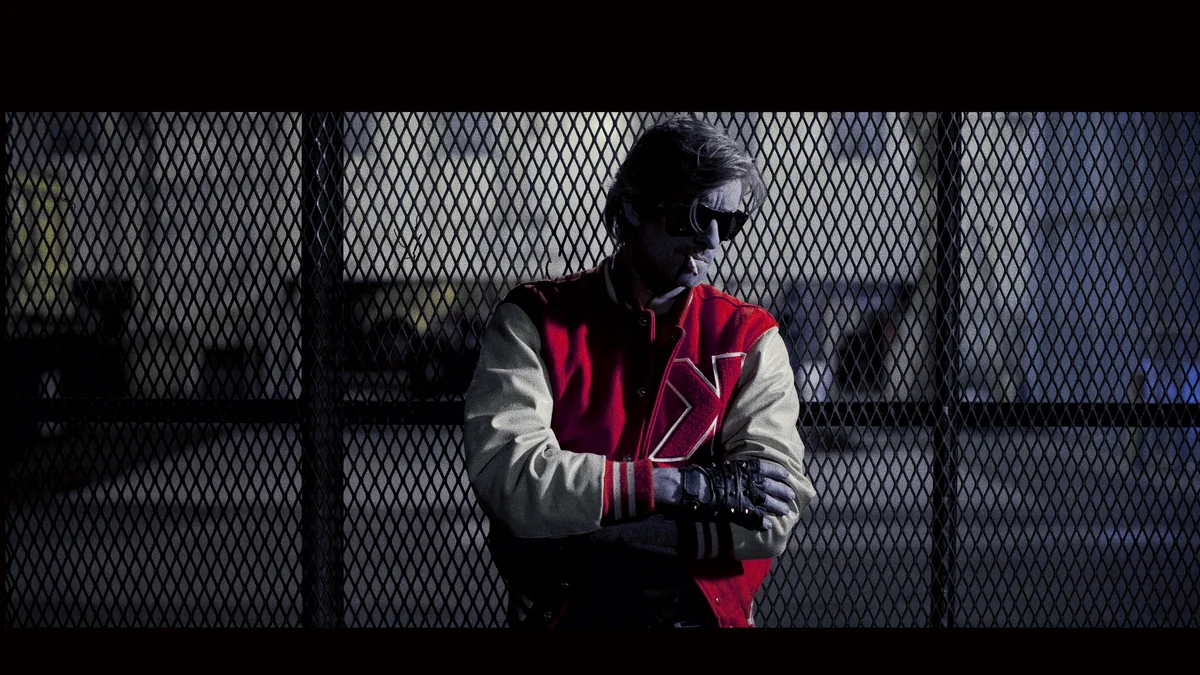
Vincent Belorgey, the French producer known globally as the synthwave pioneer Kavinsky, passed away on July 28, 2026, at the age of 50. His legacy, defined by the iconic track "Nightcall" and a cinematic 1980s aesthetic, remains a cornerstone of modern pop culture and the definitive sound of the neo-noir lifestyle.
Paris is a city of ghosts, but on the night of Tuesday, July 28, 2026, it felt like it lost one of its most vivid ones. Vincent Belorgey—the man who stepped into the skin of a red-eyed zombie driver and called himself Kavinsky—was found at his home, just days shy of his 51st birthday. When the news broke on Wednesday morning, the streets of Paris felt a little emptier, the neon a little dimmer.
There is an official investigation, of course, but the cause of death matters less than the silence he leaves behind. Vincent didn’t just compose music; he built a shelter out of synthesizer patches and the smell of old leather. He reminded us that life is too short for bad coffee or shoes that hurt, and certainly too short for music that doesn’t make you feel like the protagonist of your own movie.
Here is the thing nobody tells you: his legacy isn’t a list of chart positions. It is a warm permission slip to live a little more boldly.
We lost a pioneer, but we gained a legend that refuses to stay quiet.
Try this tonight: pour yourself a glass of properly chilled white wine—nothing fancy, just something crisp—and put on his music. You do not need to be rich to feel the inexplicable freedom a good beat provides. You just need a pair of headphones and the nerve to choose yourself for an hour.
The Zombie and the Ferrari: A Myth Built to Last
The best stories don’t have to be true to be authentic. Vincent understood this instinctively when he started his journey in 2005. He didn't just release tracks; he created a mythology that was half B-movie horror and half neon-soaked dream.
Along with friends like Mr. Oizo and Jackson Fourgeaud, he built a world centered on a single fictional moment: a 1986 night and a red Ferrari Testarossa. The story goes that a driver died in a crash, only to wake up twenty years later as a zombie. This character became our permission to escape the grey of the everyday and drive toward a virtual sunset.
His first single, "Testarossa Autodrive," is a masterclass in analog magic. You can feel the sound physically; it’s thick and rich, like a heavy silk. When "Nightcall" followed, polished by the hands of Guy-Manuel de Homem-Christo from Daft Punk, it used a vocoder to create a ghostly voice that floats over a foggy highway.
Try listening to that track in a dark car. Then come back and thank me.
The Ride That Never Ends: From "Drive" to the Streets of Tallinn
You don’t need to be a Hollywood student to feel like the lead in a Nicolas Winding Refn film. In 2011, Kavinsky defined the crisp, sweet taste of nighttime loneliness for an entire generation. Whether you found him through the movie Drive or through the neon streets of Grand Theft Auto IV, the effect was the same: time stopped.
Neo-noir is an attainable lifestyle. It is that exact second when you turn the volume knob to the right and feel the orange glow of the dashboard lights. You don’t need the expensive Ferrari; you just need the permission to take that time for yourself.
Find a stretch of road where the streetlights slide over your hood in a rhythmic, yellow pulse. Play "Nightcall" just as the sun disappears. It is a sensory pleasure that costs nothing but turns an ordinary Tuesday into an event. The good plates are for Tuesday, and the best music is for when the city sleeps.
The Olympic Flame and the Diamond Record
Paris is most beautiful when the world is watching and she pretends not to notice. During the 2024 Olympic closing ceremony, there was a specific kind of French electricity in the air. When Kavinsky stood on that stage, the bass frequencies made the champagne glasses in the VIP boxes vibrate in time.
He was never a man in a hurry. Nine years passed between his debut OutRun and his album Reborn—a rebellious act in an era of constant content. He knew that good things need time to settle, like a deep red Bordeaux. That patience paid off; "Nightcall" went diamond in France, proving that quality doesn't need to scream to be heard.
A Tale of Two Kavinskys: The Producer and the Policy
There is a strange, almost mischievous irony in how the name Kavinsky has resonated in Estonia recently. While some of us were chasing neon tail-lights, our education leaders were poring over a different kind of script.
In May 2025, Jessica Kavinsky’s report on the transition to Estonian-language education became a defining document for our schools. It’s a heavy, serious piece of work—the polar opposite of a synthwave dream.
Perhaps that is the only way to navigate the modern world: with "Nightcall" in one ear and a report on education policy on the desk. We need the dream of the midnight drive just as much as we need the sober look at our reality.
So, this week, put on the album OutRun while you finish your most tedious paperwork. It will make even the dullest spreadsheet feel a little more heroic. Kavinsky’s real legacy is exactly that: the freedom to mix art into the grey of the ordinary day.