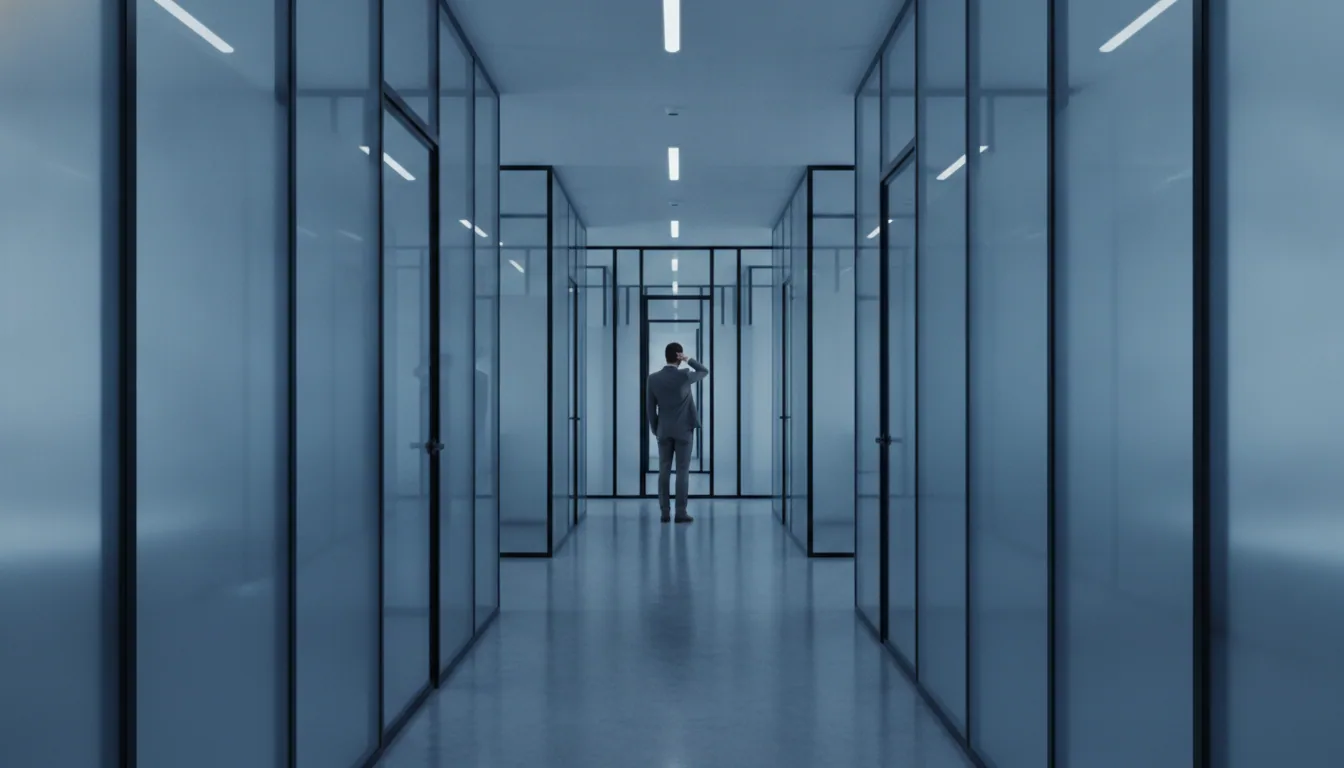
Neurodiversity and the modern office are at a turning point as data for 2025 shows 20% of the population is neurodivergent. Organizations adopting cognitive ergonomics and sensory zoning see productivity gains up to 92%, proving that inclusive design is an economic necessity for the global workforce.
Neurodiversity and the modern office can successfully coexist when companies implement sensory zoning and output-based management to leverage the unique cognitive strengths of the 20% of the workforce currently facing environmental barriers. My oldest daughter is eleven, and she already knows that a "good job" is the only thing standing between a warm home and a cold radiator. We tell our children that the EU is a land of opportunity where talent is the only currency that matters.
For 15 to 20% of the population, however, the door to that opportunity is heavy and often locked. Deloitte estimates this is the global neurodivergent population for 2025. These are neighbors with ADHD, autism, or dyslexia who bring a different kind of precision to the table.
The 2024 Buckland Review brought this reality into sharp focus with a single, painful number. It revealed that only 3 in 10 autistic adults in the UK are currently employed. Do the arithmetic.
That is 70% of a talent pool left on the sidelines while companies struggle to fill roles. We talk about growth but ignore the math in front of us. This is what policy feels like when it fails to account for how people actually function.
Getting a job is only half the battle when the environment is not built for you. If the office is a sensory minefield, the paycheck becomes a tax on your health. The standard office is a barrier to the productivity we claim to want.
I write so that we might finally stop treating one-fifth of our workforce as a footnote. This is a moment to rethink how we work, not just where we sit. It is a chance to build a system that actually fits the people who use it.
Doing the Arithmetic on Neurodiversity and the Modern Office
In my reporting, I have seen that companies rarely change for a moral epiphany; they change when they do the arithmetic. Between 2018 and late 2024, US job postings featuring neurodiversity keywords grew from 0.5% to 1.3%. This shift is driven by a clear and desperate need for talent.
The numbers from firms like JPMorgan Chase explain why. In their tech roles, neurodivergent hires were found to be 48% faster and 92% more productive than their neurotypical colleagues. That is nearly double the output for the same hours worked.
When a worker is that efficient, they are no longer just a "diversity hire." They are an economic engine. Supporting these workers is a matter of simple, practical math.
Deloitte Insights found that when organizations use mentors for neurodivergent staff, productivity increases by 18%. Profitability follows closely behind with a 16% rise. That's what policy feels like when it moves from a human resources pamphlet to a corporate balance sheet.
I write so that we stop treating neuroinclusion as a luxury for good times. These figures prove that excluding nearly a fifth of our population is what we truly cannot afford. A mentor or a quiet desk is a small investment when the return is measured in double-digit growth.
From Chair Heights to Cognitive Ergonomics
"The Average Office Doesn’t Work." This headline from the IIDA isn't just a slogan; it is the daily reality for the 15 to 20% of people who process the world differently. For many workers, a flickering fluorescent light or a humming printer isn't a minor annoyance, but a barrier to survival.
Designing for neurodiversity is not a "nice-to-have" addition to a corporate budget; it is how we build environments that reflect the real world.
We are seeing a fundamental shift in how we build these workspaces. For decades, ergonomics meant adjusting chair heights and ensuring proper wrist support to prevent physical strain. Now, companies like Haworth are moving toward cognitive ergonomics to support how the human brain handles a heavy mental workload.
Design firms like HOK and ASID are now implementing sensory zoning as a standard practice. This separates high-energy collaboration areas from low-stimulation quiet zones to manage sensory processing needs. It ensures that one person’s loud brainstorming session does not become another person’s sensory nightmare.
There is a technical blueprint for this known as the PAS 6463:2022 standard. This framework provides specific requirements for neuroinclusive lighting and acoustic robustness in modern office fit-outs. These standards are essential tools for keeping people in their jobs.
Do the arithmetic: when the office is built only for the "average," you exclude the most productive people. As the IIDA suggests, it is how we build environments that reflect the real world.
The Return-to-Office Collision
For many people I interview, the quiet of a home kitchen at 8:00 AM is not a luxury. It is a necessary tool. This silence allows a worker to process their tasks before the sensory noise of the world begins.
According to the Birkbeck/Neurodiversity in Business 2026 study, 75% of neurodivergent workers rely on hybrid work models for their professional stability. When the fluorescent lights of a central office hum, productivity often drops. In a rigid office, a person might struggle just to stay focused.
At home, that same person can be 92% more productive than their peers. This is not about comfort. It is about being able to earn the money that pays for a week's groceries or the childcare bill.
Many organizations are now reversing these flexible policies. Over 50% of neurodivergent employees who received return-to-office mandates in 2025 and 2026 are reconsidering their future with their employer. For these workers, a forced return is a threat to their professional survival.
Do the arithmetic. If half of a company's most efficient staff are looking for the exit, the management policy is failing.
Flexibility should be viewed as a "reasonable adjustment," not a special favor. It is the difference between a stable career and a desperate search for a new job. I write so that we understand that for 20% of our neighbors, the office is a sensory collision they cannot afford to win.
The Inclusion Gap
In 2025, Microsoft is celebrating ten years of its neurodiversity programming, having expanded hiring specifically to its data centers for technician roles in 2024. This looks like success, yet specialized initiatives have not yet reached the average office floor or the regional branch. Do the arithmetic on the gap between corporate press releases and the daily reality of a neurodivergent worker.
The City & Guilds Index for 2026 reveals that between 38% and 45% of neurodivergent employees face regular workplace microaggressions. That is nearly half of these professionals experiencing the social exclusions that make a long shift feel even longer. Human behavior is far harder to fix than an uncomfortable office chair.
According to Understood.org, 70% of adults believe a stigma persists when requesting workplace accommodations like flexible hours or noise-canceling tools. People worry that asking for a quiet corner will mark them as a burden or a problem to be solved. That is what policy feels like when it lacks the backbone of culture.
The EY Global Neuroinclusion Study 2025 found that only 25% of neurodivergent professionals feel truly included in their current workplace. We can install the best acoustic panels, but if three out of four people still feel like outsiders, the system is broken. Real inclusion requires a shift in management that no architect can provide on their own.
A Practical Path to a Warm Office and a Full Fridge
The Buckland Review found that only 3 in 10 autistic adults in the UK are currently employed. This is not just a statistic; it is a massive loss of potential and a lot of empty fridges. For the 15% to 20% of the population who are neurodivergent, the modern office remains a barrier to basic economic security.
We must move toward output-based management. This means ending the culture of presenteeism where bosses watch the clock instead of the results. Organizations like JLL and Arup now view this shift as necessary for survival in a modern economy.
In 2025, Professor Amanda Kirby is leading a UK government expert panel to define these new standards. Meanwhile, Acas has launched a major campaign to help firms adopt neuroinclusive recruitment. These are the tools we need to bridge the gap between the 25% who feel included and the rest who are left behind.
Do the arithmetic. JPMorgan Chase reported that neurodivergent hires were 92% more productive in certain roles. I write so that my daughters grow up where neurodiversity and the modern office evolve to ensure a different way of thinking is an asset, not a reason to worry about the heating bill.
A warm home should not depend on how well you tolerate a loud room. That is what policy feels like when the office door is finally open to everyone. It is the only way to ensure nobody is left out in the cold.