European infrastructure failure during heatwaves occurs when cooling systems, energy grids, and transport networks reach physical limits designed for mid-20th-century climates. The 2026 crisis saw 1,000 deaths in France, reactor shutdowns, and grid collapses, proving that resilience requires transitioning from winter-centric to heat-resistant engineering and updated climate-modeling data.
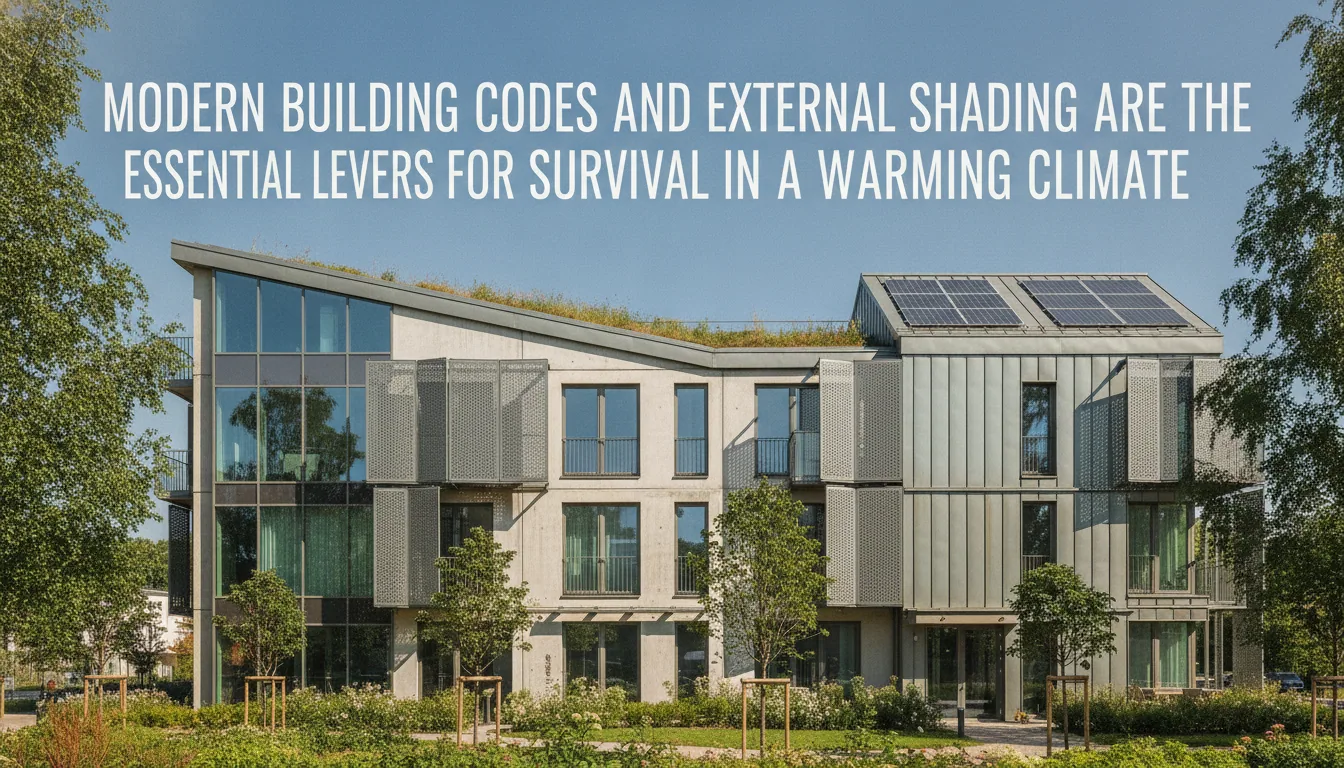
This failure is a direct consequence of a continent-wide mismatch between 20th-century hardware and 21st-century thermal extremes. Last year, Estonia updated its building codes to stop pretending our climate is still stuck in the mid-20th century. By mandating that energy efficiency calculations use data from 1990 to 2020, we finally acknowledged that "normal" has shifted.
That is not a gesture; that is a lever that ensures new homes remain livable without bankrupting their owners on cooling costs. In June 2026, the rest of Europe faced the cost of moving too slowly on similar reforms. An "Omega block" atmospheric pattern developed, trapping a stationary high-pressure system over the continent for several consecutive days.
Instead of a passing front, the heat became a stagnant trap that baked the soil and strained every gear of the economy. It was a systemic shock that our infrastructure was never built to absorb. In France, the human cost was stark and immediate, resulting in approximately 1,000 excess deaths recorded during the peak of the event.
The state was forced to close over 1,350 schools as average daily and nightly temperatures hit 29.2 °C. When a classroom stays that hot until midnight, it is no longer a place of learning but a health risk. The failure of essential services extended to the most critical environments.
East Surrey Hospital in the UK was forced to declare a "critical incident" when its cooling systems failed simultaneously with a surge in patient demand. The data says it is a predictable result of using 20th-century cooling capacities in a 21st-century climate. People looked for relief in desperate, unmonitored ways.
In a single day, 40 people drowned in France while seeking cool water in unregulated ponds and rivers. This is the catch with unmanaged heat: when the official systems break, people make choices that lead to further tragedy. Despair is just procrastination with better PR, but the honest scorecard shows we are still building for a world that no longer exists.
The Omega Block: Analyzing European Infrastructure Failure During Heatwaves
In June 2026, Europe encountered a hard engineering limit. As temperatures climbed toward 40 °C, the demand for air conditioning surged to record levels. Usually, higher demand is a simple signal for more production, but here, the physics of heat transfer intervened.
The first failure point was the most reliable one. French energy giant EDF restricted output at four nuclear power plants because river temperatures in the Rhône and Garonne were too high for safe cooling. While nuclear is a weather-proof baseload, the data says that when the water is too hot, the reactors must dial back.
The grid itself began to literally stretch and break. In Italian cities like Milan, Rome, and Florence, underground electricity cables failed as thermal expansion caused insulation to break down. That is not a gesture; that is a lever of systemic failure that left 68,000 households in the Finistère department without power.
The financial signal of this mismatch was just as sharp. Peak electricity prices on European exchanges reached 400 €/MWh during the height of the heatwave. This volatility is a hallmark of European infrastructure failure during heatwaves, where supply chokes exactly when the population needs it most.
High prices are a loud, expensive warning that our infrastructure is poorly insulated against the reality of a warming continent. These numbers show we are building for the wrong century. The honest scorecard shows that efficiency is now a survival metric rather than just a line in a corporate report.
Despair is just procrastination with better PR, but the honest scorecard shows we are still building for a world that no longer exists.
Buckling Rails and Softening Roads: The Physical Limits of Northern Infrastructure
Northern European infrastructure was designed to survive deep frost, not handle 40 °C. When temperatures climbed in June 2026, the physical chemistry of our transport networks reached a breaking point. In Heidelberg, Germany, tram traffic was restricted after bitumen mixtures softened and deformed under the sun.
It feels green to take the tram, but the question is whether the tram can run when the road begins to melt. Valérie Pécresse, President of the Ile-de-France regional council, warned that railways cannot withstand temperatures above 50 °C. The steel tracks reach these temperatures long before the air does.
In late June 2026, German rail traffic faced a nationwide standstill. This was not just a matter of tracks bending; the GSM-R radio communication system failed entirely because electronic components could not shed heat. When hardware overheats, the failure is rarely isolated.
Belgian rail operator SNCB cancelled roughly 100 trains per day during the final week of June due to technical equipment failures. That represents thousands of individuals losing their reliable connection to work or school because of a cooling fan. Stating the number helps us see that this is a systemic vulnerability, not a series of unlucky accidents.
The heat also choked our water highways. Low water levels on the Rhine river forced cargo ships to reduce their loads, which immediately disrupted fuel and industrial supply chains. This is the honest scorecard: a vital artery for European industry was throttled because the environment moved outside its historical design parameters.
We have spent decades optimizing for speed while ignoring the thermal stability of the ground beneath us. Upgrading bitumen specifications and rail sensors to handle 50 °C costs more upfront but prevents economic paralysis. That is not a gesture; that is a lever for regional resilience.
The Estonian Shift: Moving Beyond 20th-Century Building Codes
In July 2025, the air in Tallinn did not move for three weeks. It was the third warmest year in Estonian history, and the heat felt heavy, uncharacteristic, and invasive. For residents in modern glass apartments, the indoors became a kiln as we realized we had optimized for winter but ignored the rising summer.
The math we were using was dangerously broken. Until recently, Estonian building regulations relied on climate data that stopped being relevant decades ago. Using 1990 averages to design a 2026 home is like buying a winter coat based on a forecast from the previous century.
In June 2025, the government finally updated the math to require energy efficiency calculations based on 1990–2020 data. This is not just a technical preference for engineers. According to a 2025 SEI report, heatwaves in Estonia’s five largest cities cause an estimated 36 premature deaths every year.
Stating the number makes the stakes clear: these are 36 preventable losses that occur because our urban planning failed to keep pace with the thermometer. That's not a gesture; that's a lever. By mandating that projects account for the cooling load of a modern summer, we force developers to prioritize external shading and reflective materials.
It feels green to talk about "future-proofing," but the real work happens in the building inspector's spreadsheet. The honest scorecard: we can no longer build for the climate we used to have. Updating a building code is less photogenic than planting a tree, but it is the difference between a home and a hazard.
From Gestures to Levers: Designing Resilient Urban Cooling
Europe is currently warming at twice the global average rate. For nearly a century, our urban engineering focused on a single priority: keeping the heat inside to survive the winter. This "business as usual" engineering died during the 2026 heatwave.
We must now distinguish between gestures and levers. A handful of potted trees on a plaza feels green, but it rarely shifts the needle on urban heat islands. Real levers include high-albedo road surfaces and district cooling pipes that run beneath our feet.
These systems don't just look sustainable; they actually shift the thermometer for everyone. City planners are finally abandoning heating-centric philosophies and treating heat as a waste product to be managed. This shift carries a significant price tag, as retrofitting a block can cost millions.
The honest scorecard: since 1980, climate-related economic losses in the EU have reached 822 billion euros. A staggering 25 percent of those losses occurred in just the period between 2021 and 2024. This data makes the financial argument for us.
We are no longer debating whether to spend the money. We are choosing between proactive investment and the cost of systemic failure. That's not a gesture; that's a lever.
The Honest Scorecard: What Rebuilding Europe Actually Costs
The 2026 Omega block failure was not a lack of technology, but a failure of foresight. EEA data shows climate-related losses reached 822 billion euros since 1980, with a full quarter of that damage occurring in just the last few years. Despair is just procrastination with better PR, as these remain solvable engineering hurdles.
Consider the price of inaction. During the June heatwave, peak electricity prices hit 400 €/MWh as supply choked and demand spiked. In the Finistère department, 68,000 households lost power simply because a single grid transformer failed its thermal stress test.
What actually moves the needle? For the homeowner, it is installing heat pumps with cooling capacity to manage 40 °C peaks. Resilience is a choice, not a miracle. By mandating 1990–2020 climate data in all tenders, we move past the era of European infrastructure failure during heatwaves and toward a continent designed to survive the reality of a warming world.