
In May 2026, the United Kingdom hit a peak temperature of 33 °C. For most of the last century, that was a holiday temperature; today, it is a physical limit where legacy infrastructure begins to fail. When rails buckle and asphalt softens, it isn't a natural disaster—it is a stress test for systems designed for a climate that no longer exists.
Heatwaves are often framed as a matter of personal discomfort or public health alerts. But the 2026 May heatwave proved that extreme heat is a structural risk. When Heathrow delays mount and Avanti West Coast cancels trains, it is because we have reached the edge of what our materials were built to endure.
Despair is just procrastination with better PR. Instead of mourning the weather, we need to look at the engineers and builders who are actually moving the needle. The question isn't how to stop the heat, but how to build roads, rails, and buildings that don't melt when the thermometer hits numbers we used to only see on holiday.
The Lesson of May 2026: Materials Science Has a Ceiling
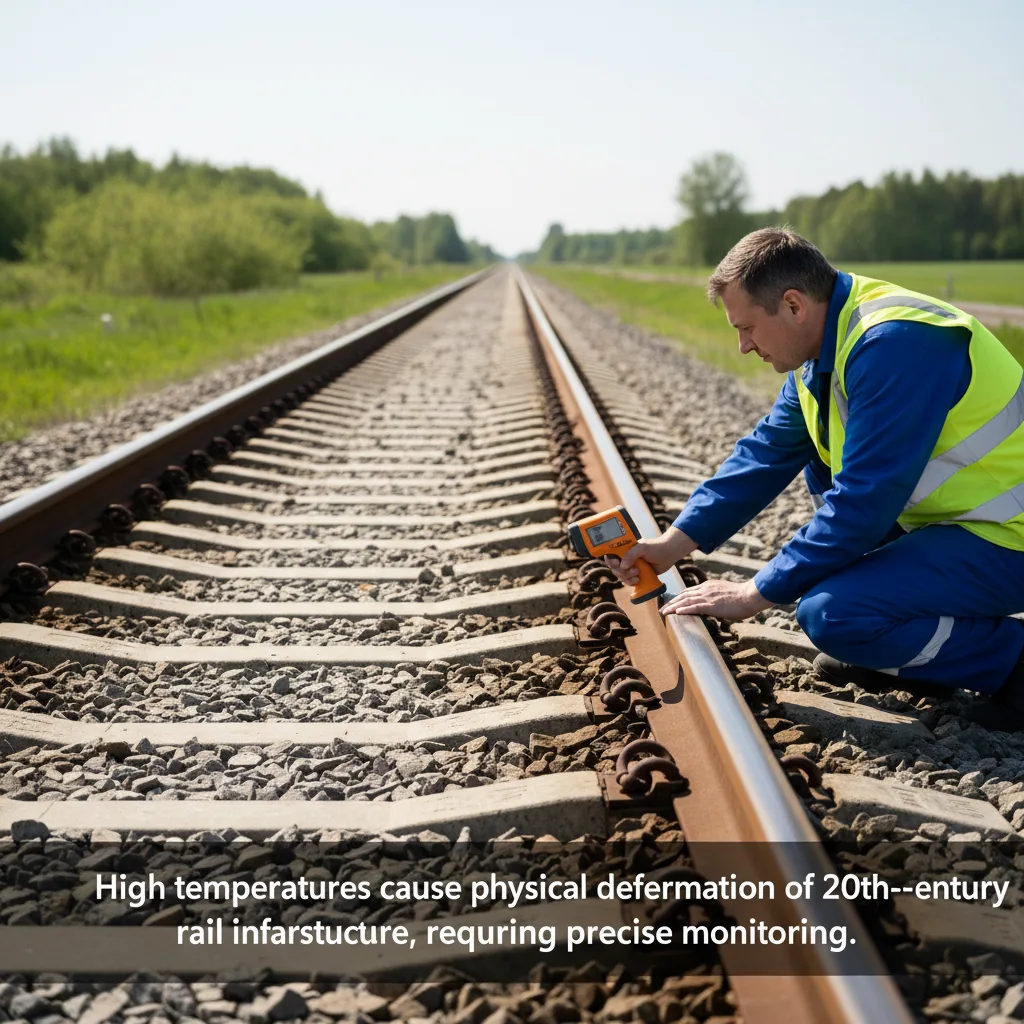
On 22 May 2026, the UK didn't just break records; it hit a wall of thermal expansion. In physics, when materials get hot, they take up more space. If a railway or a road isn't designed for that specific volume of expansion, the resulting internal stress causes the structure to deform.
At 28 °C, a standard road performs as expected. At 33 °C, we begin to see the limits of 20th-century engineering. The Met Office's amber warnings were more than health advice; they were a signal to the economy that our physical foundation was reaching a breaking point.
This event wasn't a freak accident; it was a stress test for systems designed for the climate of 1950.
Moving from "Smart" to Resilient
The FinEst Centre for Smart Cities has pointed out that we need to pivot from "smart" cities to resilient ones. A smart city has sensors that tell you it is hot; a resilient city is one that keeps working anyway. This requires adaptive design—planning for the next 50 years of climate forecasts rather than the last 50 years of averages.
In Estonia, companies like TekTrade Baltic OÜ and Inser Infra OÜ are focusing on the levers that actually matter. They are deploying heat-resistant materials designed to withstand extreme temperatures without deforming. This isn't a symbolic gesture; it is a technical solution to infrastructure fatigue.
The Chemistry of the Solution
Standard asphalt begins to soften around 30 °C. However, new mixtures and polymer-modified bitumens remain stable at much higher thresholds. Using these materials means fewer ruts in the road and fewer emergency repairs after every hot summer. It is an investment with a clear mathematical justification, not just a "green" label.
| Solution | It feels... | The data says... |
|---|---|---|
| Standard Asphalt | Cheap and sufficient | Maintenance costs rise 40% after heatwaves |
| Heat-Resistant Mix | An expensive niche | Lifespan is 2x longer in extreme conditions |
| White Roofing | An aesthetic choice | Reduces building cooling costs by up to 15% |
| Smart Rail Sensors | A tech gadget | Prevents rail buckling and derailments |
Climate Resilience as Economic Survival
Infrastructure firm Tariston has mapped how heatwaves ripple through the economy. It isn't just office discomfort; heat drives drought, fire risks, and pest cycles that disrupt supply lines. It is a systemic risk that changes how long a building or a bridge will actually last.
The Ministry of Climate is now looking at how to integrate these risks into every public procurement. We cannot afford to wait until a substation overheats or a rail line twists. We need to build the tolerance into the system before the crisis hits.
Trees vs. Chemistry
We often hear that planting trees is the ultimate "green" solution. Trees are vital for urban cooling and mitigate the heat island effect, but a tree will not save a railway line when the steel hits its critical expansion point.
This is where the work of designers at Inser Infra OÜ becomes critical. They are using materials that are both environmentally stable and chemically robust. It is about the balance point: building things that last, rather than wasting resources on constant repairs.
The Honest Scorecard: What's the Catch?
- Upfront Cost: Adaptive design and heat-resistant materials are 15–25% more expensive at the start.
- The Scale Problem: You cannot replace a nation's entire rail network in a year; this is a multi-decade transition.
- Wishful Thinking: Many developers still hope for a return to "normal" summers, which is a dangerous form of gambling.
Our attention is often pulled toward theatre—the latest minor policy squabble or symbolic ban. Meanwhile, the structural shifts in materials science and urban planning are what actually determine our safety. These choices decide whether your city remains functional or becomes an unliveable oven.
What Actually Moves the Needle
A heatwave is no longer just weather; it is a risk factor for the physical integrity of our world. We have the technology, the materials, and the data from the 2026 crisis. What we need is the discipline to choose long-term resilience over short-term savings.
Next time you see a new development, don't ask if it's "green". Ask what its thermal breaking point is. Resilience is an investment that pays for itself on the first day the city is baking, but your home remains cool and the trains are still running.