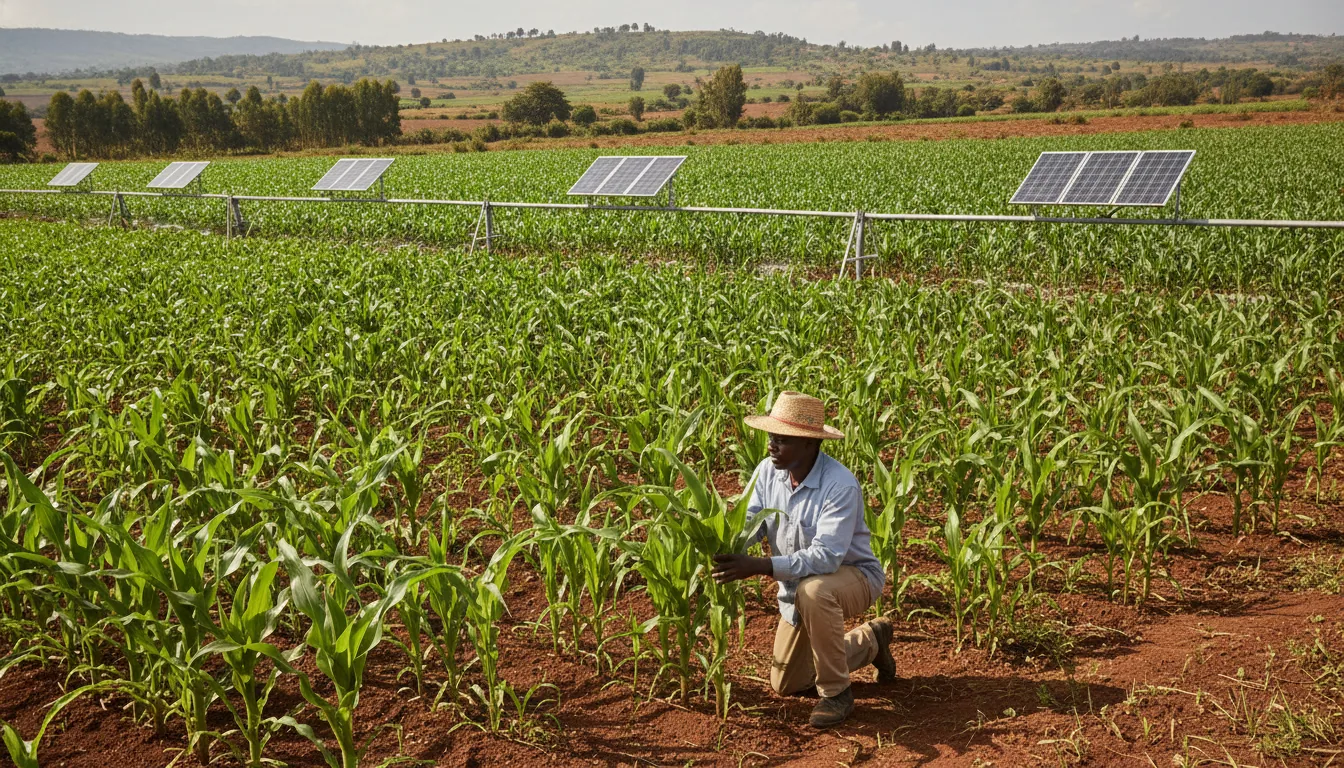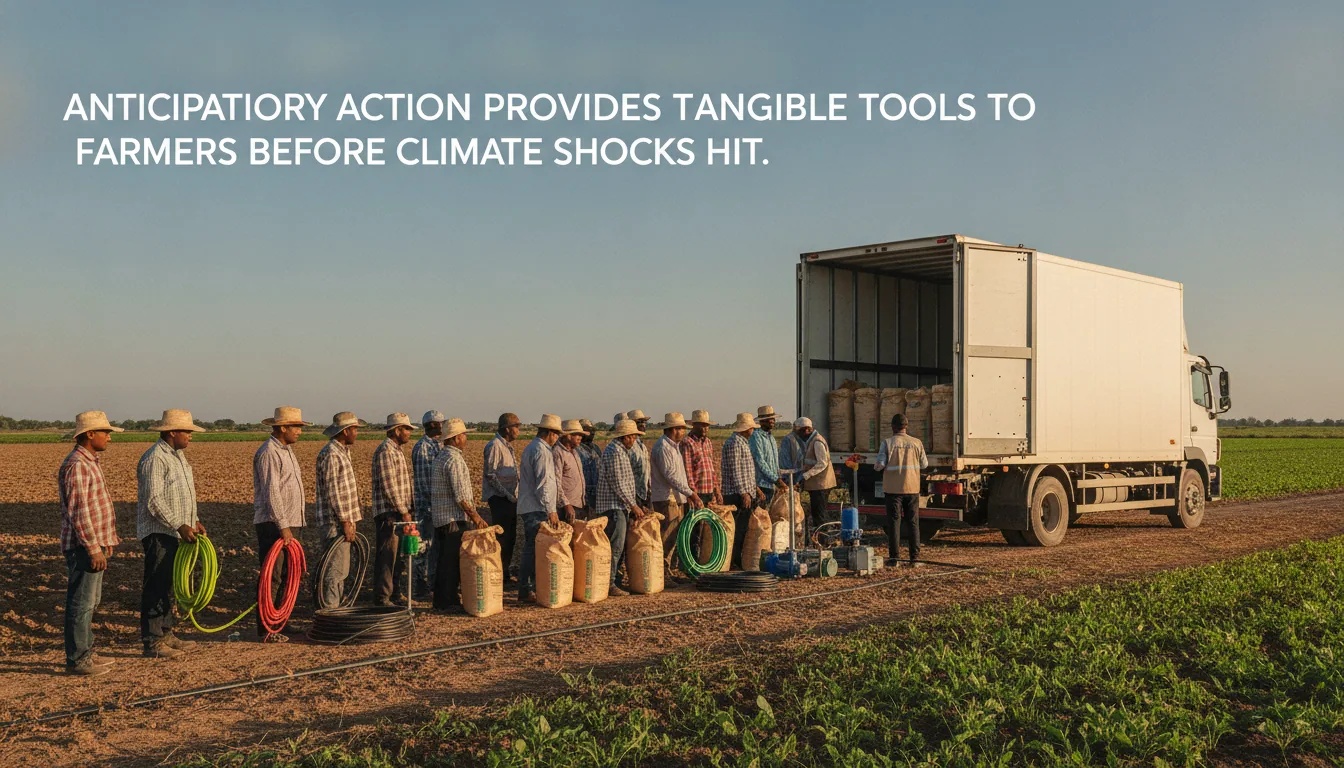
Current data indicates that the 2026 Super El Niño and global food security will be defined by a $202 million race to deploy resources before a projected 2.0 °C temperature anomaly. This Joint Anticipatory Action Appeal by the FAO and WFP provides seeds and cash to 8.8 million people, protecting the livelihoods of 500 million farmers.
Logistical readiness and anticipatory funding determine whether a 2.0 °C climate shock results in a systemic harvest collapse or a protected food supply.
The $202 Million Bet on Prevention: How Anticipatory Action Works
On June 18, 2026, the FAO and WFP launched a $202 million Joint Anticipatory Action Appeal. This is not another plea for emergency aid after the fact. It is a logistical head start designed to get cash and drought-resistant seeds into the hands of farmers before the weather breaks.
We are currently tracking a Super El Niño event. NOAA and the WMO have confirmed that sea surface temperatures are likely to exceed 2.0 °C above historical averages by the end of the year. The traditional response is to wait for the crisis and then send food, but that is a slow and expensive way to save lives.
The baseline for this event is already challenging. Even before the peak of this El Niño, 345 million people are facing acute food shortages. We are not starting from a place of global abundance; instead, we are starting from a deficit.
Anticipatory action works because it respects the calendar of a farm. If a farmer receives cash and tools before the rain stops, they can pivot and protect their livelihood. It changes the outcome for the 8.8 million people in the direct path of the initial climate shocks.
Despair is just procrastination with better PR. This $202 million appeal is a concrete, numerate bet on the idea that we can outrun the thermometer. It is the first step in protecting the 500 million farmers who form the backbone of global food security.
Measuring the Monster: Why the 2026 Super El Niño and Global Food Security Depend on the 2.0 °C Threshold
On June 11, 2026, NOAA issued an official El Niño Advisory. It confirms that the warming of the central and eastern Pacific is no longer a forecast, but a measured reality. The WMO reports a 90% likelihood of these conditions persisting through at least November 2026.
It feels green to dismiss this as mere natural variability, but the data suggests otherwise. To meteorologists, a Super El Niño is defined by sea surface temperatures exceeding 2.0 °C above the historical average. At this threshold, local weather shifts become systemic disruptions that measurably impact yields.
The current data is precise and allows for honest planning rather than theater. There is a 63% probability that this event will reach "very strong" status between November 2026 and January 2027. A 2.0 °C anomaly represents enough excess heat energy to disrupt global atmospheric circulation for an entire two-year cycle.
Previous cycles in 2015 and 2023 were intense, but 2026 starts from a significantly higher global baseline. Adam Scaife at the UK Met Office warns that this event will likely make 2027 the hottest year since records began in 1850. Disruptive climate conditions could potentially linger for two years or longer, compounding the pressure on global water tables.
That's not a gesture; that's a lever that shifts global food security. The persistence of this heat can break agricultural systems over multiple seasons. This means the honest scorecard must account for a crisis that lasts until 2028.
The Geography of Risk: From the Dry Corridor to the Sahel
The geography of a Super El Niño is predictable, which makes it manageable. In Central America’s Dry Corridor and Haiti, there is a 70% probability of below-normal rainfall. This data point tells us exactly where the local food supply will break first.
Southern Africa and the Sahel face a different scale of pressure. Here, 61 million people are in the direct path of extreme drought risk according to the latest risk profiles. Already, 8 million of those residents are living with acute food insecurity before the peak heat arrives.
Across the ocean, the risk follows the moisture. Below-average monsoon rainfall is expected to hit agricultural production in India and Southeast Asia. These crops are the lifeblood of 500 million farmers who now face a volatile economic landscape.
The honest scorecard shows 8.8 million people across 22 high-risk countries are in the direct path of immediate climate shocks. In reality, these are specific regional shocks that can be mitigated by moving from broad panic to a proportionate to-do list. Knowing the geography of risk is not a gesture; it is a lever.
The Fertilizer Trap: Why Geopolitics is the Real Climate Multiplier
In a village across the Sahel, the stacks of urea bags are half as high as they were last season. Outside, the heat is rising, but the immediate threat to a farmer's yield isn't just the sun. The immediate threat to a yield is the price tag on the nitrogen.
The closure of the Strait of Hormuz, triggered by conflict, has created an "input squeeze" that hits harder than the weather. This maritime chokepoint is the primary artery for global nutrient supplies. When tankers stop moving, the cost of ammonia and phosphorus spikes instantly for a smallholder farmer.
It feels green to focus only on drought-resistant seeds, but those seeds are a failed investment if the soil lacks basic chemistry. Fertilizer is the fuel that allows a crop to survive a stressful season. Without it, the biological potential of a plant is simply locked away.
The weather ruins the harvest, but protectionism ruins the market.
Despair is just procrastination with better PR, but we must face the trade-offs. For 500 million farmers, the Super El Niño is a double-sided trap. A 2.0-degree Celsius rise in sea surface temperatures reduces the yield, while conflict-driven scarcity raises the cost of every hectare.
We often talk about climate as an isolated event. The honest scorecard shows that geopolitics is the real multiplier. If the supply chain is blocked, the best engineering in the world cannot reach the field where it is needed most.
Market Realities: Price Spikes and the Protectionist Feedback Loop
In 2008, the global food crisis was triggered by a total lack of trust. Governments saw a dip in production and immediately locked their gates to protect local supplies. As we approach the 2026 peak, we are seeing the same protectionist instincts resurface in major markets.
Rice, maize, wheat, and soybeans are identified as the crops most vulnerable to the climate shifts NOAA is tracking. These four staples support the diets of billions. When yields falter, the initial shock is manageable through global reserves, provided markets stay open.
Modeling shows price hikes of 50% to 100% for staples like rice and sugar if exporters restrict trade. For an ordinary household, this means the food budget doubles while the plate stays half-empty. It feels like an unavoidable disaster, but the data suggests a solvable trade failure.
An export ban feels like a protective gesture, but it rarely lowers local prices for long. Instead, it acts as a lever that triggers an inflationary shock across the global commodity price channel. Closing a border is not a solution; it is just a way to export hunger.
The Honest Scorecard: Protecting 500 Million Livelihoods
The math of this Super El Niño is daunting because of where it lands. While we watch the global mercury, 500 million farmers are watching their soil. These smallholders produce the majority of the world’s food, and for them, this anomaly is a direct threat to their survival.
The data suggests 2027 will likely be the hottest year since 1850. We are looking at a 63% probability of a very strong event that could temporarily breach the 1.5 °C Paris threshold. The numbers say it is a systemic stress test we are equipped to pass if we choose the right tools.
Despair is just procrastination with better PR. Staring at the thermometer does not plant crops or stabilize market prices for the 61 million people in Southern Africa. We must focus on what measurably moves the needle rather than retreating into the comfort of a doomsday headline.
Here's what actually works. The FAO and WFP have launched a $202 million Joint Anticipatory Action Appeal to help 8.8 million people in high-risk zones. That is a lever that allows us to distribute drought-resistant seeds and cash before the harvest fails.
The honest scorecard: The 2026 Super El Niño and global food security represent a massive, solvable problem. We have the forecast and a clear $202 million funding target to protect 500 million livelihoods. For global leaders, the next step is to fund this appeal and refuse the urge to implement protective food export bans.