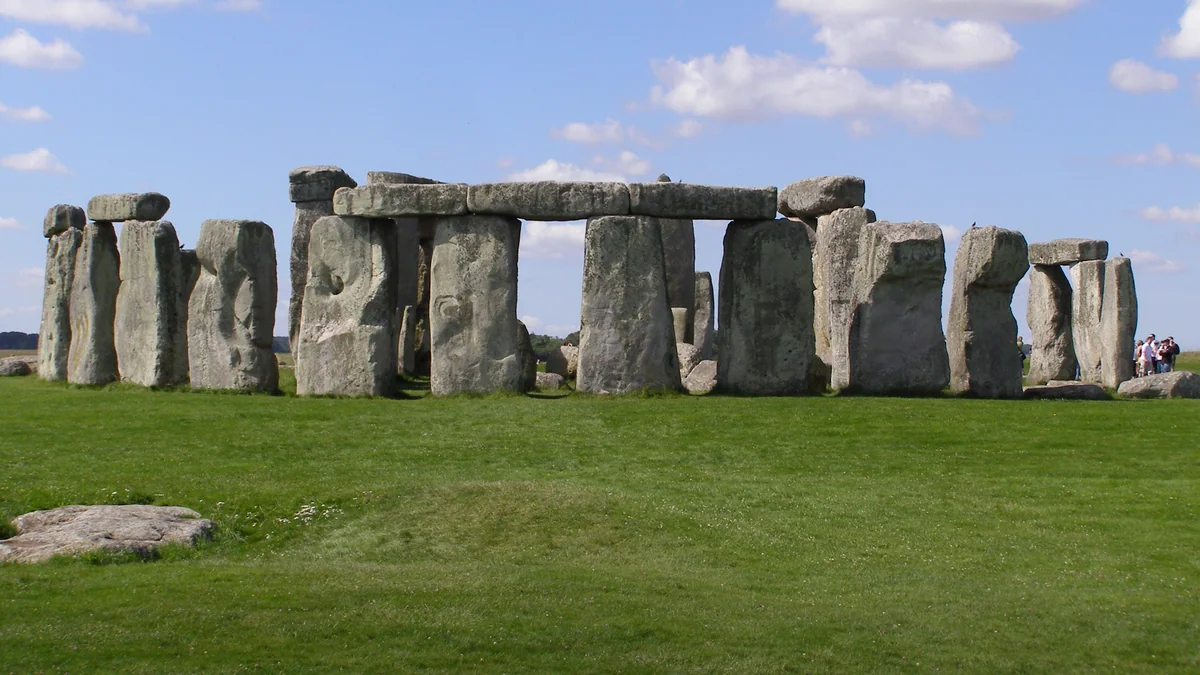
The Stonehenge prototype was a prehistoric wooden alignment discovered in Bulford that established the precise solar geometry later used in the world's most famous stone circle. Dating to 3000 BC, this Neolithic site features two massive timber poles set 120 meters apart to create a perfect summer solstice alignment.
A Three-Mile Gap and a 500-Year Head Start
Imagine digging a trench for a modern housing estate meant for soldiers returning from duty. You expect to find clay or flint, but instead, you uncover the ghost of an ancient thought. In Bulford, Wiltshire, archaeologists found a structure that rewrites the timeline of the world's most famous landscape.
Wessex Archaeology recently revealed two deep pits that once held massive timber poles, set 120 meters apart to create a solstice alignment. These poles acted like the sights on a rifle, aimed directly at the rising summer sun. The Bulford discovery proves the great monument was actually a long-term dress rehearsal.
These poles are just five kilometers down the road from the iconic stones. To someone standing in this field 5,000 years ago, this alignment was the high-water mark of human knowledge. Carbon dating places this wooden site at approximately 3000 BC, giving it a 500-year head start on the stone trilithons.
Five centuries is roughly twenty generations of people passing down a single, obsessed idea before the first stone was ever moved. Lead archaeologist Phil Harding described the discovery as the highlight of his career. Now hold that thought.
The Stonehenge Prototype: Two Poles and a Line Across the Sky
The blueprint for the world's most famous monument did not start with heavy sarsen stone. It began with two simple holes in the Wiltshire chalk, each dug exactly one meter deep into the earth. These pits once held thick poles of ash wood, rising like dark needles against the wide, green horizon.
The poles stood 120 meters apart, catching the sun at its yearly extremes. This empty space between the timbers tells a precise story of Neolithic geometry and human intent. The alignment confirms that solar reverence was a deep-rooted local tradition long before the first stones arrived on Salisbury Plain.
The sun has not changed its path in five millennia, but we have certainly changed the tools we use to catch it. To someone standing here in 1610, this level of astronomical precision would have been indistinguishable from magic. These people were simply using the materials they had at hand to anchor their place in the universe.
The Career Highlight Under a Construction Site
There is a quiet irony in where we find our ancestors. To build modern housing for soldiers, the Ministry of Defence had to peel back the turf at Bulford. They found a 5,000-year-old ghost instead of simple utility lines and pipes.
Phil Harding, a veteran archaeologist, called this find the highlight of his career. He felt a profound sense of gratitude to still be in the field for such a discovery. Now hold that thought.
The actual excavation wrapped up between 2015 and 2017, yet the announcement waited until 2026. In the world of archaeology, the digging is the fast part while the understanding takes years of laboratory work. Microscopic analysis of soil and timber pits is required to be absolutely sure of what we are seeing.
Insight often comes from the discarded debris of a Tuesday afternoon five millennia ago. The Wessex Archaeology team found fragments of Neolithic pottery and animal bones scattered in the ancient soil. They even unearthed a rare, disc-shaped flint knife, which was likely a tool of high precision and status.
The shift from timber to stone represents a massive change in the human psyche.
The Landscape of Experiments
Stonehenge was more like the final draft of a very long, very messy essay written across the British landscape. For centuries, Neolithic people were testing their architectural vocabulary in timber, earth, and shadow. They experimented with form long before they ever committed to the permanent record of stone.
One of the most startling chapters of this story sits 140 miles away in the rain-swept Preseli Hills of Wales. At a site called Waun Mawn, archaeologists found the remains of a stone circle dating to 3400 BC. Evidence suggests stones were hauled across valleys to be recycled, showing a sacred monument on the move.
The circular shape we recognize today had its own trial runs at the Flagstones site in Dorset, dating to 3200 BC. Builders there were already perfecting the circular enclosure design that would eventually define the Wiltshire horizon. These were the structural ancestors of the later stone circles.
These scattered sites show us a culture testing ideas across hundreds of miles. They were participating in a regional dialogue about how to pin down the heavens. Now hold that thought.
The Shift Toward the Permanent
The wooden poles at Bulford, likely carved from ash, were essentially a conversation with the sky. Wood is warm, organic, and temporary; it breathes, it rots, and eventually returns to the mud. For five centuries, this was how the ancestors of the Stonehenge builders marked their time.
They did not need ten-ton blocks of sarsen to find the sun. This tells us that the "aha" moment of solar alignment was already an old, comfortable truth. The transition to stone represents the moment we stopped just observing the world and started trying to outlast it.
We moved from the organic world of trees to the geological world of rock. But for the people at Bulford in 3000 BC, those timber poles were a practical piece of technology. Seeing the Stonehenge prototype makes the finished trilithons feel like a very long-term project.
We still don't know what these people called themselves or what songs they sang while digging those pits. We are left staring at the empty spaces where the prototype once stood. We are left wondering if those ancient builders knew we would still be looking for them five thousand years later.