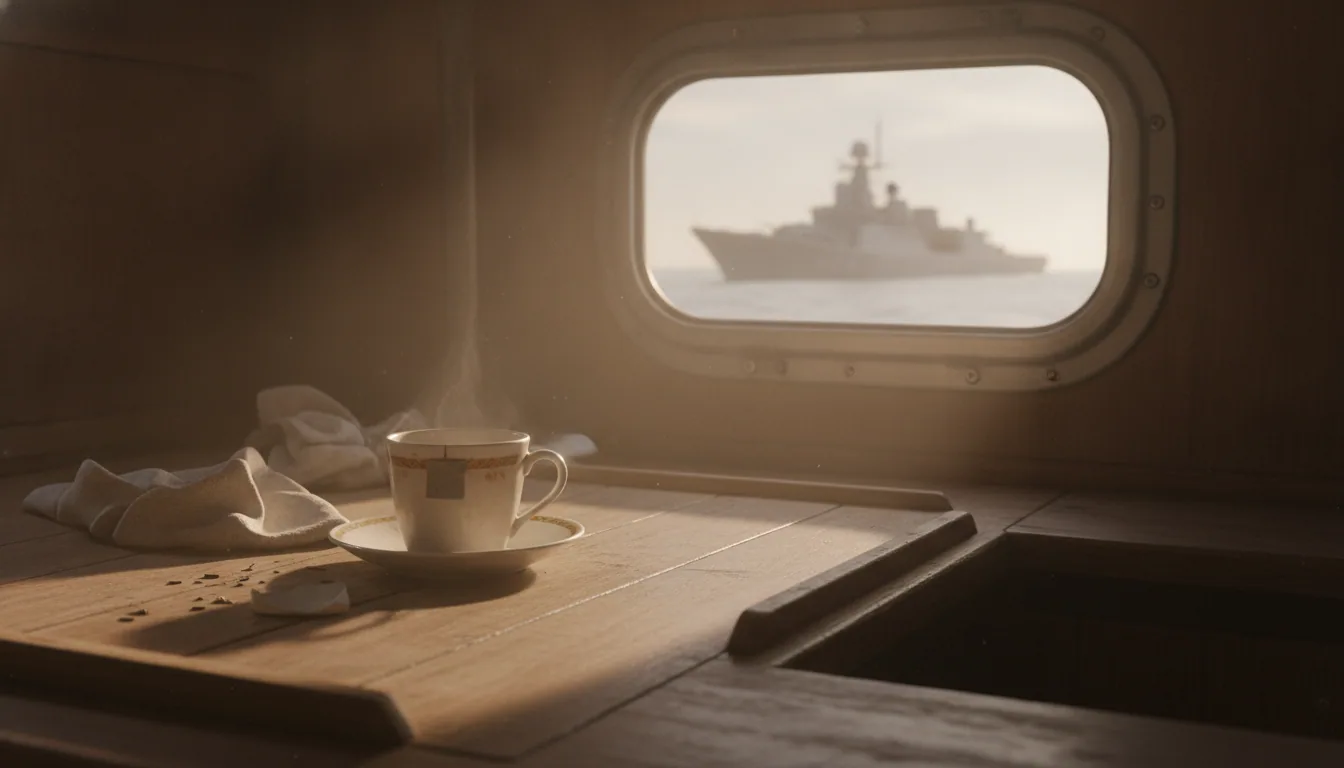
On June 16, 2026, a Russian frigate fired warning shots at a British yacht, Bright Future, 20 miles off the Isle of Wight. This incident followed the seizure of a shadow fleet tanker and highlights growing naval tensions and the real-world risks to civilian maritime safety in European shipping lanes.
Russian warning shots in the English Channel turned a peaceful Tuesday morning into a geopolitical confrontation for a retired British couple sailing in international waters. Jane Kelvey, 68, and her husband Alan, 70, were navigating their 40-foot yacht when the rhythm of the sea was broken by gunfire.
Four or five rounds of small arms fire were discharged from a Russian frigate directly into their path. This sudden escalation highlights how quickly a peaceful hobby can turn into a geopolitical flashpoint.
One minute you are navigating international waters, and the next, you are staring at the hull of a warship. There was no radio contact and no signal before the shots began.
We discuss maritime law and "shadow fleets" as if they are abstract puzzles for lawyers. For Jane and Alan, the reality was the sound of bullets 150 meters away from their kitchen table.
The Ghost Frigate: Why the AIS Signal Matters to You
If you work on the water, you know the Automatic Identification System (AIS) is the digital map that prevents disaster. The Admiral Grigorovich, a Russian Black Sea Fleet frigate, was effectively a ghost that morning.
The yacht crew reported that the warship never appeared on their AIS screen. When a vessel that size goes dark in busy shipping lanes, it creates a "gray zone" where shared rules fail.
The Russian Defence Ministry claimed their sailors fired "pre-emptive" warning shots because the yacht ignored collision warnings. The Kelveys stated they were not on a collision course and received no radio contact.
At 500 yards, the Russian crew fired four to five rounds of small arms fire into the water. Doing so near civilian traffic forces a smaller vessel to guess the intentions of a massive, silent warship.
We are watching the safety of the common European home be tested, wave by wave.
Russian Warning Shots in the English Channel and the 600-Ship Shadow Fleet
The shots fired on June 16 did not happen in a vacuum. Just two days earlier, Royal Marine Commandos conducted a six-hour operation to seize the Russian tanker Smyrtos.
The Admiral Grigorovich had been escorting shadow fleet tankers in the region right before its encounter with the Kelveys. There are now 600 Russian shadow fleet vessels sanctioned by the UK.
These are aging tankers used to bypass oil sanctions and keep revenue flowing. The aggressive posture toward a 40-foot yacht looks more like a retaliatory signal than a navigational error.
This naval friction is part of our daily economics. When shipping lanes become unpredictable, the cost of transporting everything from oil to grain begins to climb.
High risk leads to higher insurance premiums and freight rates. Eventually, those numbers find their way to your utility statement or your grocery receipt.
That’s What Policy Feels Like When the MoD Meets the Sea
Jane and Alan were sailing 20 miles south of the Isle of Wight, well past the 12-nautical-mile limit. At that distance, the water is supposed to be a safe, shared space.
British Prime Minister Sir Keir Starmer described the encounter as "reckless." The UK Ministry of Defence categorized the event as an "isolated incident" to manage public alarm.
Russian authorities stated they acted in accordance with UNCLOS principles. In their view, the warning shots were a necessary safety measure, not an attack.
To a lawyer, UNCLOS is a set of guidelines about maritime safety. To a 68-year-old grandmother, it is the sharp, terrifying crack of five bullets hitting the water.
Official attempts to downplay the danger avoid a wider conflict that would drive prices higher. But "strategic signaling" is cold comfort for civilians in international waters.
Checking on the Neighbors: The Role of the HMS Tyne and HMS Mersey
On June 16, the crews of HMS Mersey and HMS Tyne were the neighbors keeping watch. HMS Mersey was already monitoring the Russian frigate as it moved through these busy international lanes.
When the shots were fired, HMS Tyne dispatched a sea boat to the Bright Future to check on the Kelveys. It takes a professional naval response to ensure retirees remain safe in their own cabin.
Russian sources suggested the frigate may have been experiencing engine difficulties. We recognize the difference between a mechanical failure and a calculated choice.
The incident ended with the Bright Future docking in Cherbourg to be interviewed by French police. Safety in our common European home should not be this expensive or this terrifying for civilians.
Grounding the Argument: Why We Cannot Afford a Lawless Channel
The English Channel is a vital artery for the goods we buy every day. On June 16, 2026, it became a classroom for a dangerous lesson.
When a 40-foot yacht is met with gunfire, the rules of the sea have failed. With 600 sanctioned shadow fleet ships operating in our waters, lawlessness becomes a policy choice.
Protecting two retirees is the stress test for our entire maritime security. If we lose the predictability of international law, we lose the stability that keeps our markets functioning.
Practical enforcement is the only way to ensure June is not a bullet-riddled month. Investigating the impact of Russian warning shots in the English Channel is the first step toward reclaiming a horizon without fear.