The May 28, 2026, Beirut strike in Choueifat targeted Hezbollah commander Ali al-Husseini, signaling a sharp rise in regional tensions. With over 3,269 Lebanese casualties and 1 million displaced, the operation tests the endurance of international ceasefires and the fragile safety of civilian infrastructure across the Levant.
The Beirut strike and the limits of escalation are defined by the immediate impact on civilian life, as evidenced by the targeting of an apartment block in Choueifat that shattered a three-week period of relative calm. On Thursday, May 28, 2026, life in the suburb usually moved to the rhythm of the nearby international airport. But that morning, the sound was different.
An Israeli precision strike hit an apartment building in this crowded neighborhood. The target was Ali al-Husseini, a commander in Hezbollah’s missile array. This was the first time the Lebanese capital had been targeted since May 6, 2026.
The strike in Choueifat was not an isolated event. On the same day, the Israeli Defense Forces launched broad operations across the Beqaa Valley and Tyre. The geography of violence is expanding again, reaching far beyond the border fences.
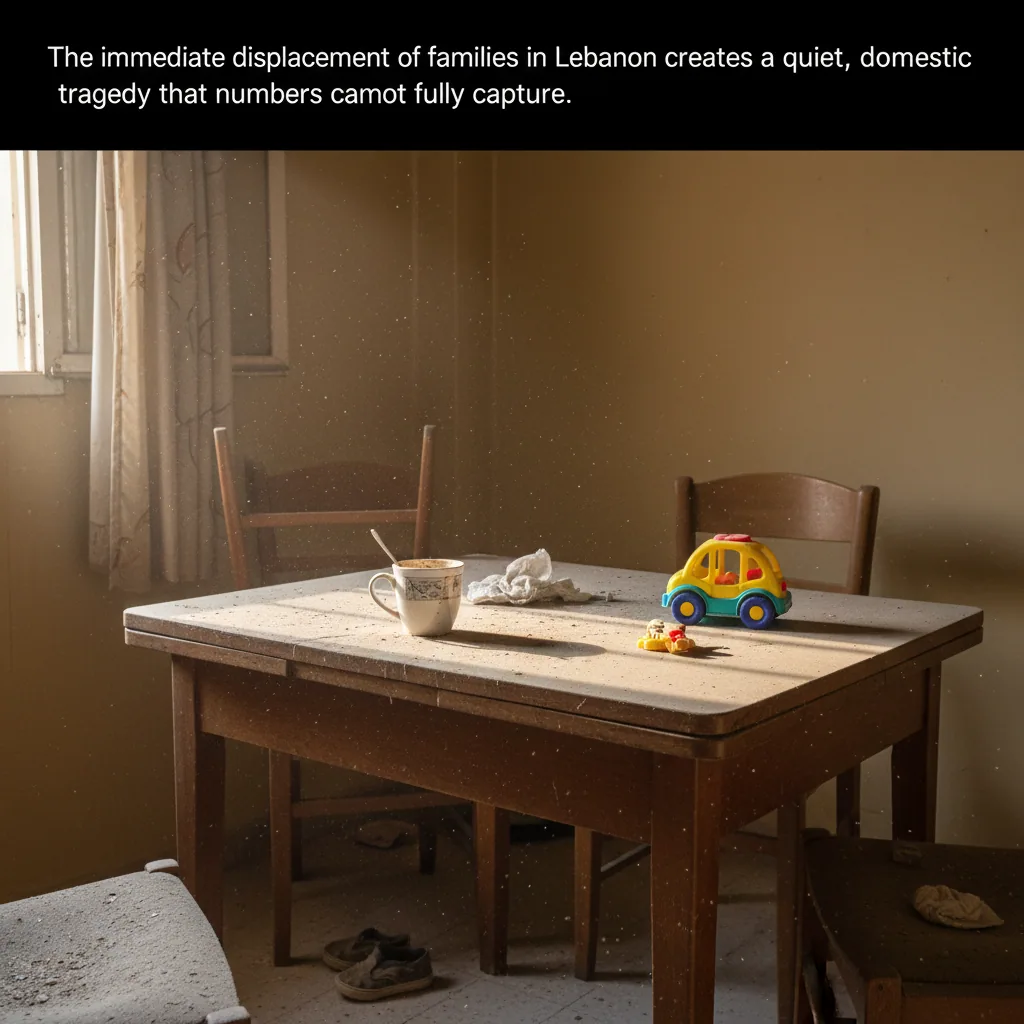
We do not have a final casualty count for the Choueifat building yet. We know that when a missile hits a residential block, the cost is measured in more than just bricks. It is measured in the sudden, total loss of a kitchen table and a child’s bed.
The Weight of 3,269 Lives: Doing the Arithmetic of Grief
Do the arithmetic. 3,269. By May 28, 2026, that is the number of people killed in Lebanon since this conflict began. In a working-class neighborhood, that is the population of several apartment blocks suddenly gone quiet.
The intensity of the violence is accelerating. In the final week of May alone, Lebanese health officials reported nearly 300 deaths from airstrikes. That is more than forty lives ended every single day for seven days straight.
Then there are the 9,800 injured. For a family, an injury is a secondary disaster that often goes overlooked in news scrolls. It means a bed occupied, a wage lost, and a daughter who must quit her job to provide care.
This is what policy feels like when a government decides to press the gas. It feels like 9,800 families searching for bandages in a system under fire. Between May 21 and May 24, nine attacks on healthcare facilities were recorded, killing eight more people.
I write so that we do not treat these numbers as mere background noise. 3,269 is not a rounded figure for a briefing; it is a ledger of families who have lost their anchors and their futures. Every number represents a household budget broken by burial costs.
A Million Empty Kitchens: The Math of Displacement
Policy talks about security zones, but for a family, it means leaving the stove cold and the doors unlocked. Over 1 million people in Lebanon have been forced to leave their beds and kitchens behind. This is the math of survival when the sky becomes a threat.
The IDF has issued evacuation orders for residents in the south to move north of the Zahrani River. This line on a map translates to thousands of families packing whatever fits in a car. It means trading a lifetime of work for the uncertainty of a school gym floor.
The burden is shared across the border. Between 60,000 and 96,000 Israeli residents remain evacuated from their northern homes. They are living in temporary housing, watching the weeks turn into months while their houses sit empty.
Displacement creates a two-speed survival reality where the cost of a safe night's sleep is more than many can afford. I write so that we do not forget the people behind these massive, staggering figures. Whether you are in Beirut or Tel Aviv, the fear is the same.
A million empty kitchens represent a million broken routines that no military victory can easily repair.
Negotiating Through Fire: The Beirut Strike and the Limits of Escalation
On May 25, 2026, Benjamin Netanyahu stated that Israel would not take its foot off the gas. That is what policy feels like when the air pressure in your living room suddenly changes. The Prime Minister promised to intensify strikes in response to Hezbollah drone attacks.
In the sterile world of diplomacy, this is called building leverage. In a neighborhood like Choueifat, it is just the sound of another morning lost to the floorboards shaking. The "gas" hit the floor on May 28 with the strike on Ali al-Husseini.
This is the "escalate to de-escalate" theory in its rawest form. Policy makers believe that more pressure today will force a ceasefire tomorrow. A single precision strike on an apartment building carries the weight of an entire regional strategy.
The tension is not localized. To the north and east, the Sapad 2025 Russian military exercises are contributing to broader regional and NATO tensions. It is a massive stress test where every border, from the Baltics to the Levant, feels increasingly brittle.
The Price of a Hospital Bed: Losing the Safety Net
In Riga, we worry about the cost of medicine or the length of a waiting list. We still assume the building itself is a sanctuary. In Lebanon, that basic assumption of human dignity has evaporated under the weight of military strategy.
Between May 21 and May 24, 2026, nine attacks were recorded specifically against healthcare facilities. Eight people died in these medical settings in just four days. These were places where the only objective should have been survival.
When policy dictates that the military will not slow down, the hospital bed becomes just another coordinate. That is what policy feels like when a doctor has to decide if staying at a patient's side is a death sentence.
Officials point to targets like Ali al-Husseini to justify the fire. But when nine clinics are hit in less than a week, the damage is systemic. It is no longer about one man or one missile array; it is the collapse of the infrastructure that keeps a society human.
Fragile Paper and Falling Bombs: The Washington Disconnect
On April 17, 2026, the United States mediated a ceasefire that looked good on a mahogany desk. In the reality of the southern suburbs, it is just a piece of fragile paper. Both sides trade daily accusations of violations while the bombs keep falling.
The strike in Choueifat occurred exactly 24 hours before security talks were scheduled in Washington. This timing is a brutal form of leverage used before the first handshake. While officials prepare their talking points, the death toll continues to climb.
Removing a commander does not seem to stop the cycle of violence or the displacement of 1 million people. Between 60,000 and 96,000 Israelis also remain evacuated from their homes. This is what policy feels like when it is disconnected from the bus stop.
Washington will analyze strategic leverage, but for a family in a shelter, only a roof that does not collapse matters. The human cost of these maneuvers remains the most accurate measure of policy success or failure. We cannot ignore the people living under the flight path.
Turning the Stove Back On: The Path to Resolution 1701
For the displaced, peace is the practical ability to go home and turn on the stove. This requires moving past metaphors of "stepping on the gas" and toward the hard arithmetic of UN Resolution 1701. Stability depends on the Litani River becoming a real boundary again.
That is what policy feels like when it works: Hezbollah forces stay north and the Blue Line is respected. This is the only path that allows families to return to their own kitchen tables. Despair is a luxury my daughters cannot afford, and we need a system that protects its most vulnerable.
A million people cannot live in temporary shelters forever. I write so that we judge a system by how it protects its families. This future starts with the 1701 promise and an honest assessment of the Beirut strike and the limits of escalation.