The Laose koopaime logistika refers to the complex international rescue operation launched in May 2026 to save seven villagers trapped in a flooded gold mine in the Xaysomboun province. This emergency mobilization of Laotian, Thai, and European experts aimed to overcome extreme geological barriers to reach those missing underground. The crisis began when seven villagers entered an abandoned gold mine on May 19, seeking wildlife or ore.
For seven days, the silence of the Xaysomboun jungle masked a race against rising monsoon waters. The disappearance triggered a massive mobilization of experts, effectively rewriting the old order of isolated rural accidents. This cross-border correlation of talent culminated in the 16:30 miracle on May 27, when five survivors were located alive.
Success remains shadowed by the inherent risks of resource scarcity in the 21st century. Despite the arrival of specialized divers and heavy machinery, two individuals remain missing as of late May. Their absence serves as a sobering reminder of the institutional behavior required to manage such high-stakes humanitarian crises.
The Friction of Geography: Challenges Facing Laose Koopaime Logistika
Elite international expertise meets absolute physical immobility in the Long Cheng district. The Xaysomboun province exists in a state of geopolitical isolation that complicates even the most well-funded rescue efforts. Personnel were forced to navigate a grueling four-kilometer trek through dense, mountainous jungle largely inaccessible to standard transit.
The karst topography imposes a severe physical tax on human intervention. Interior cave passages are restricted to widths of only 50 to 60 centimeters, nullifying most standard industrial recovery tools. If geological architecture dictates the limits of movement, then the rescue mission becomes a paradigm shift in extreme miniaturization.
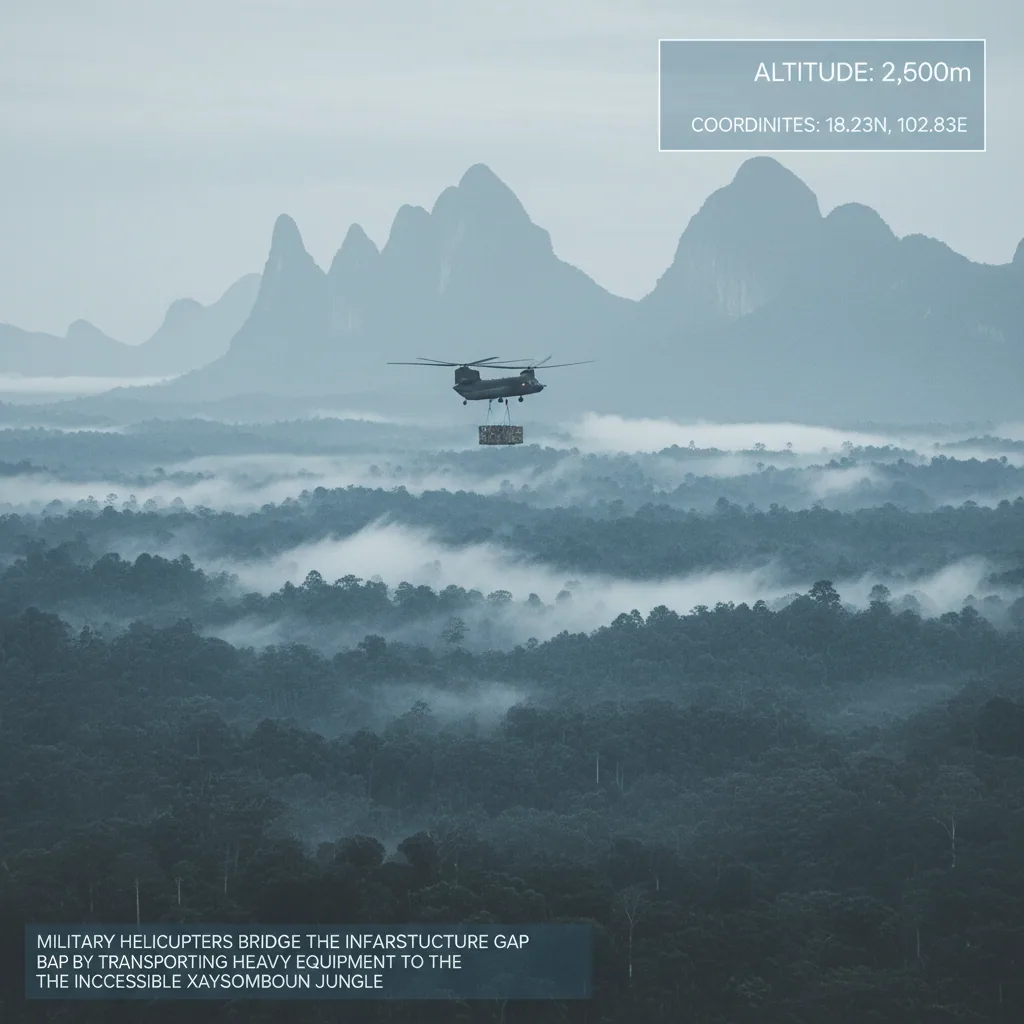
The Laotian military assumed the role of a primary logistical engine to bridge this infrastructure gap. By utilizing helicopters, the state demonstrated specific institutional behavior where military assets must substitute for neglected road networks. In the Estonian context, this reliance on aviation highlights a profound cross-border correlation between geography and state capacity.
Cross-Border Correlation: Rewriting the Protocol for International Aid
Rigid state sovereignty meets the fluid agility of non-state actors in this remote district. The Laotian military has integrated a complex mosaic of international entities to address a crisis beyond its organic capacity. This emerging paradigm of disaster response was first tested when seven villagers disappeared into the flooded mine.
We are witnessing a rewriting of the old order where technical precision must yield to local tradition.
The operation functions as a multi-disciplinary synthesis of military logistics and civilian specialist ingenuity. While the Laotian state maintains command, the tactical heavy lifting relies on Thai volunteer organizations. This correlation demonstrates how institutional behavior is shifting from isolated national responses toward collaborative socio-economic blueprints.
Individual expertise is weaponized against hostile geography. Specialists such as Mikko Paasi and Norrased Palasing bring technical diving skills that often defy bureaucratic protocols. If specialized knowledge is the primary currency of modern rescue, then grassroots networks are now essential state partners.
Corporate actors further blur the lines between private commercial interest and urgent public safety. A Chinese mining company deployed heavy excavators to drill alternative rescue shafts, providing a technological layer the local military lacked. Future crisis management will depend entirely on how effectively a state can choreograph these disparate international actors.
Digital Blueprints and Sacred Rites: The Estonian Context
High-speed fiber optics meet the pungent scent of ritual sacrifice at the humid cave entrance. While elite divers monitored digital oxygen sensors, local officials performed traditional ceremonies involving rice alcohol and chickens. This intersection of the scientific and the sacred illustrates the emerging paradigm of modern crisis management.
In the Estonian context, this event highlighted a peculiar digital friction known as a name collision. A search for logistical intelligence on the "Laose" incident frequently pulls data for Laose Transport OÜ in Kerita. If algorithms cannot distinguish a Baltic transport firm from a Laotian mining disaster, our information age remains surprisingly fragile.
The technical logistics within the mine were equally striking. Rescuers installed internet cables deep into the narrow passages to facilitate real-time medical advice and monitoring. This deployment of high-tech communication in a subterranean environment represents a significant shift in institutional behavior.
The Terminal Chamber: Victim Stabilization Under Pressure
Industrial engineering often collapses when confronted by the elementary physics of a tropical deluge. The emerging paradigm of crisis management was tested at the 300 meter mark, where five survivors were located. In the Estonian context of flat logistics, every meter here represents a calculated risk against the water table.
The primary challenge lies in the hydraulic head, where trapped water creates immense downward pressure. If pumping capacity fails to exceed monsoon inflow, the system reaches a deadly equilibrium. Rescuers deployed powerful pumps to mitigate this, but persistent rain caused periodic flooding resets.
The survivors were found hungry and dehydrated but stable, requiring immediate stabilization before the next rain cycle. This situation highlights a cross-border correlation between geographic isolation and the vulnerability of artisanal workers. This race against seasonal resets is rewriting the old order of crisis response in Southeast Asia.
The Emerging Paradigm: Lessons for the Global Mining Frontier
Official state-sanctioned reporting often struggles against the raw speed of decentralized digital activism. While the Lao Economic Daily provided technical logistics, the Rescue Volunteer for People organization managed the immediate social narrative. This duality represents a shift where official data must coexist with unfiltered, grassroots reporting to ensure institutional transparency.
The decision to enter the abandoned mine reflects a specific socio-economic blueprint common in Xaysomboun. For these independent gold hunters, the 4 km jungle trek creates a geographic vacuum where artisanal mining is a primary survival strategy. Institutional behavior must adapt to the reality that climate-driven disasters will increasingly target these vulnerable economic actors.
As we analyze the Laose koopaime logistika, we see a global rewriting of the old order. How can a state balance economic necessity with the massive logistical cost of a military-led rescue when the next seasonal deluge occurs? The emerging paradigm suggests that technical precision and global cooperation are our only defenses against the friction of geography.