
Hamburg, November 28: What the Tribunal Actually Decided
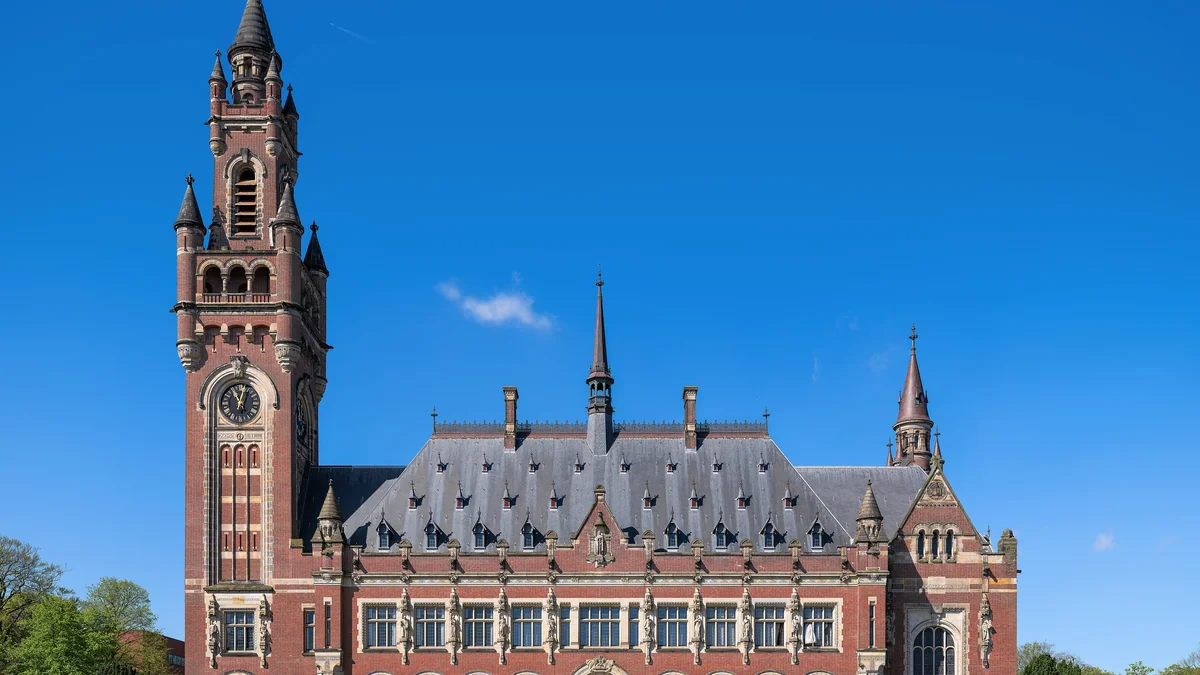
In the Falkland Islands oil dispute, there is a particular institutional move that experienced observers learn to recognise: the jurisdictional dodge. It is not a verdict on the merits. It is the court stepping aside, cleanly, while the underlying quarrel burns on. ITLOS President Maurice Kamga delivered one on November 28, 2026, and Buenos Aires immediately called it a defeat; London called it a victory; both readings are partly wrong.
The tribunal voted 18 to 3 to reject Argentina's application for provisional measures halting the Sea Lion project. Kamga's stated ground was precise and narrow: the dispute turns on territorial sovereignty, and territorial sovereignty falls outside the tribunal's remit under the Law of the Sea. UNCLOS was not built to resolve competing claims over who owns a piece of land; it was built to manage what happens beneath the water around it.
That distinction matters. Argentina did not lose a case on November 28. It lost one procedural lever while the broader arbitration remains in play. The 18-3 margin is a signal about where the international legal consensus currently places the jurisdictional boundary, not a judgment on the shelf rights beneath the North Falkland Basin.
Provisional measures are temporary by design; a final ruling is another instrument entirely. What the Hamburg vote did do, unambiguously, is clear the path for Navitas Petroleum and Rockhopper Exploration to proceed toward a March 2027 drilling start.
The ledger moves forward. The sovereignty question does not.
The Prize: Falkland Islands Oil and the North Falkland Basin
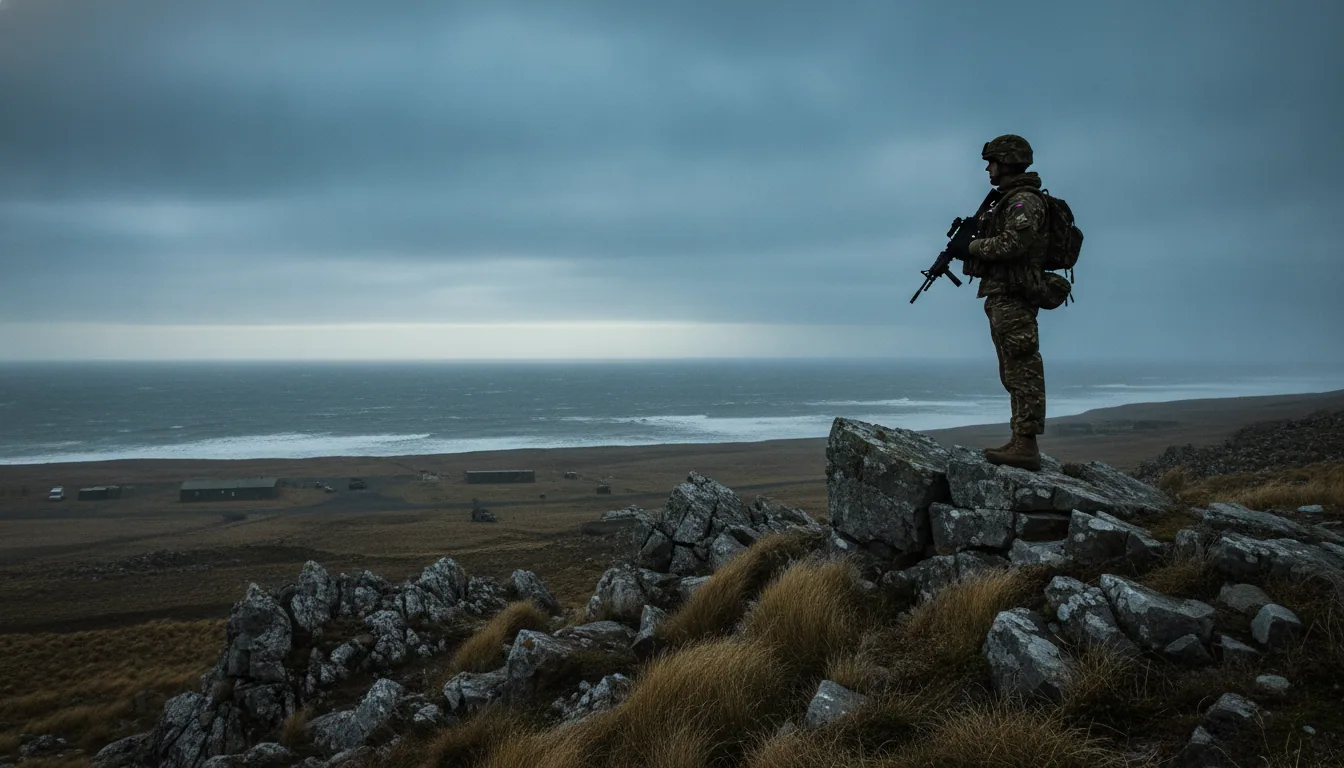
The Sea Lion field sits 220 kilometres north of the islands, in the North Falkland Basin, beneath water that belongs — depending on whose maps you consult — to either a British overseas territory or the Argentine continental shelf. The geological ambiguity is irrelevant to the drillbit. The commercial ambiguity is the whole story.
Recoverable reserves are estimated between 500 million and 917 million barrels. Total oil in place runs to roughly 1.7 billion barrels. Those are numbers that focus the mind of any government, large or small.
The joint venture is structured with Navitas Petroleum of Israel holding 65 percent and UK-based Rockhopper Exploration holding 35 percent. The Final Investment Decision was reached on December 10, 2025 — a date that passed quietly in most Western newsrooms and loudly in Buenos Aires. Drilling is scheduled to begin in March 2027, with first oil targeted for March 2028.
Production will run through the Aoka Mizu, a Floating Production, Storage and Offloading vessel rated at 55,000 barrels per day. That is a modest output by North Sea standards. For a territory of roughly 3,500 people, it is something else entirely.
The Falkland Islands Government projects £4 billion in revenue over the project's thirty-year lifespan. The territory's current GDP makes that figure approximately double in scale — a structural transformation, not a windfall.
Read point one of any sovereignty dispute: the question is never only about flags. It is about who collects the revenue, and from whom.
That is the load-bearing wall. Buenos Aires understands this perfectly, which is why the legal and economic pressure has been calibrated not at the geology but at the investors who make the geology profitable.
Buenos Aires Plays the Long Game: Ultimatum, Decree and the List of Sixty
On September 30, 2026, Javier Milei gave the United Kingdom two weeks to halt the Sea Lion project. The gesture landed in the headlines; the structural limits were quieter. Argentina cannot place a frigate over the North Falkland Basin, and no court has handed it the jurisdictional lever it needs.
What it has instead is paper: a sanctions register, a presidential decree, and the long patience of a government that knows oil takes years to reach the surface.
Decree 868/2026, signed on September 4, is the machinery behind the ultimatum. It authorises Buenos Aires to disqualify non-compliant companies from Argentine economic activity for twenty years.
That is a serious instrument for any firm with Argentine exposure. For a small exploration company whose entire portfolio sits in the South Atlantic, it is designed to be existential.
Sixty individuals and entities now appear on Argentina's list, among them Eco Atlantic and Borders & Southern. The reach is deliberately wide. Sanctions may extend to investment firms holding shares in the project companies, drawing in parties that have never signed a drilling licence or set foot near the Falklands. That is the logic of extraterritorial pressure: you cannot stop the drill, so you raise the cost of financing it.
Ask the small question first: who is the borderland here, and who is the empire? In this case the answer is not obvious, because Buenos Aires is using the toolkit of a large state while standing on much weaker legal ground.
Buenos Aires is using the toolkit of a large state while standing on much weaker legal ground.
The UK has dusted off the Protection of Trading Interests Act in response, preparing secondary legislation to shield British firms. The counter-move is old but functional. Whether it covers non-British entities on the list is precisely the question the lawyers are billing for now.
The Weight of 1982 and the Answer of 2013
The junta that sent men ashore on the Falklands in April 1982 was looking for a war it could win quickly enough to paper over an economy it had already destroyed. It did not get the short war. It got a rout, 649 Argentine dead, and a surrender signed in June. The generals fell within the year.
What survived them, embedded in every subsequent Argentine government regardless of party, was the Malvinas claim — stripped of the original cynicism, hardened by grief into something that felt like principle.
That is the domestic structure Buenos Aires has been working inside ever since. No Argentine president has the political space to let the claim go quiet, and no one has tried. The islands have been a British overseas territory since 1833 — a fact Argentina has never accepted and shows no sign of accepting.
Then came March 2013. The islanders, prompted partly by Argentine diplomatic pressure and partly by the approaching anniversary of the war, held a sovereignty referendum. The result was 99.8 percent in favour of remaining a British overseas territory, on a turnout of 92 percent. It is difficult to construct a cleaner democratic verdict.
Argentina dismissed it immediately, on the grounds that a population Britain had settled could not legitimately determine sovereignty over territory Argentina considers its own.
The legal logic is not frivolous. Self-determination is the principle that cuts both ways here: the same rule that protects the islanders from being handed over protects them from being ignored. The 2013 referendum neither erases the Argentine claim nor proves it wrong.
It simply adds another party to a dispute that the great powers have always been too comfortable to resolve, and the islanders too small to force.
London Shields the Deal; Washington Keeps Its Options Open
London's response to Decree 868/2026 is the Protection of Trading Interests Act, a piece of legislation last dusted off seriously in the 1980s to counter American extraterritorial reach. The UK is preparing secondary legislation under it to shield Navitas, Rockhopper, and their contractors from Argentine sanctions. That is the structural difference worth noting: the PTI Act can protect a company from a foreign penalty, but it cannot resolve the central question of the Falklands oil dispute — who owns the seabed.
The shielding move buys time. It does not buy sovereignty. Buenos Aires understands this, which is why Decree 868/2026 was drafted with a wider aperture than Rockhopper's share register — institutional investors holding positions in the involved companies sit inside its perimeter.
Vanguard and Dimensional Fund Advisors, whose exposure is passive and incidental, could find themselves named under Argentine law for activities they did not choose and cannot easily exit. The decree's reach is the point.
Then there is Washington. In August 2026, Donald Trump suggested the United States is reviewing its longstanding neutrality on the sovereignty question. That signal, characteristically unfinished, left two readings.
If the US moves toward London, Argentina loses its last hope of isolating Britain diplomatically in the Western hemisphere. If it does not move — if the August signal dissolves into the ambient noise of the administration's output — Buenos Aires can read that silence as a tacit green light to press harder.
The comparison that matters here is not 1982, when Washington ultimately backed London after initial ambiguity; it is every subsequent instance in which a great power's neutrality review concluded with no review at all. The asymmetry is structural: for London, US neutrality is enough; for Argentina, it is the minimum necessary condition for anything.
The Second Front: Environmental Law and the Watch Marker
Falklands Conservation has challenged the Sea Lion project's Environmental Impact Statement on a single, specific ground: the seabird baseline data underpinning it is twenty years old. The challenge is not Argentine-initiated. That matters structurally. Buenos Aires can be dismissed as a litigant with an obvious sovereign interest; a Falklands-registered conservation body cannot be dismissed on the same terms.
The EIS challenge occupies a legally separate front from the ITLOS proceedings and from Decree 868/2026. It requires no jurisdictional argument about sovereignty. It requires only a demonstration that the data does not meet the standard the licensing authority set. Whether that standard was met with two-decade-old population figures for species whose ranges and numbers shift with ocean temperature is, at minimum, a question the record does not yet close.
The marker to watch is narrow and dateable. Before drilling commences in March 2027, the Falkland Islands Government must decide whether to accept the existing EIS or demand updated seabird surveys. If it demands the update, the timeline moves; the Final Investment Decision of December 2025 becomes aspirational rather than binding, and the second front opens in earnest.
If it accepts the data unchanged, the evidence will force a quieter conclusion: that the £4 billion revenue projection from Falkland Islands oil carried more weight in that decision than the birds did.