The Invoice Arrives: How the Special Relationship Acquired a Price Tag
The Falklands Transaction has always had a price. What changed on August 31, 2026 is that someone finally wrote it on the invoice.
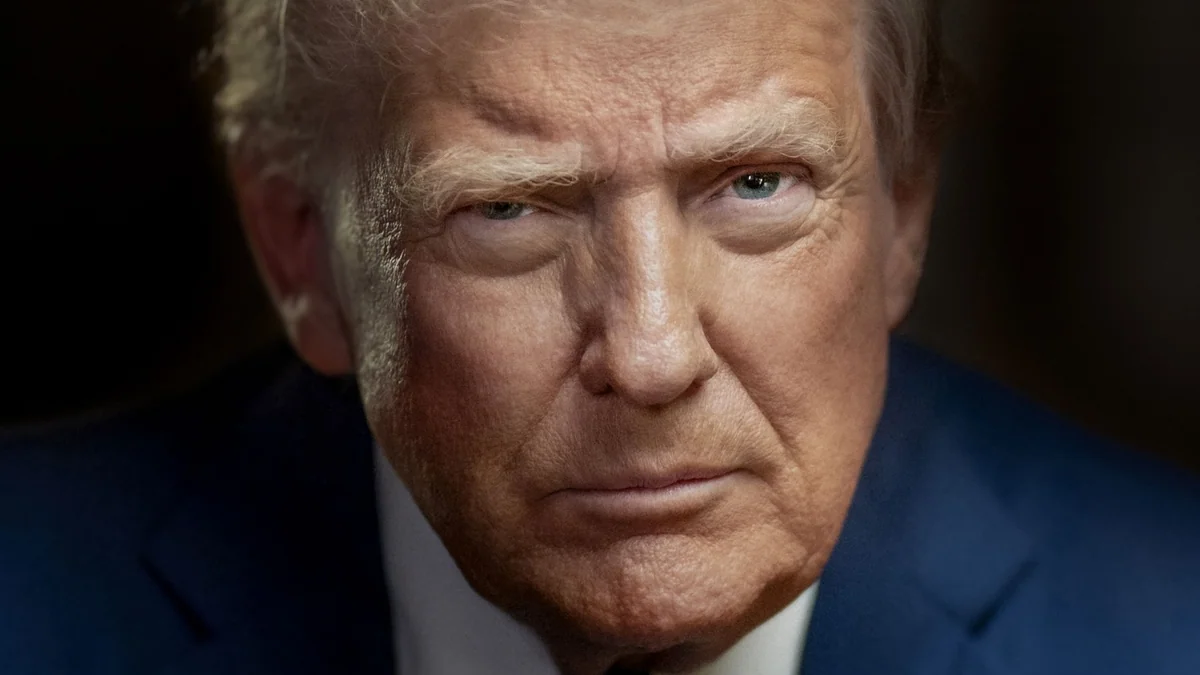
Donald Trump's statement that he is reconsidering US support for British sovereignty over the Falkland Islands was reported widely as provocation, as bluster, as the latest episode in an erratic presidency. That reading is comfortable and probably wrong.
The trigger Trump named was specific: the UK's refusal, under Keir Starmer, to send ships for US operations against Iran. "Your country was not there to help me," Trump said. "I asked your former leader, 'Why don't you send a couple of ships?' He said, 'We don't have any.'" That is not rhetoric. That is a ledger entry.
The price attached to continued support is, by Trump's account, UK defence spending raised to 5% of GDP. Britain currently spends roughly 2.5%. The gap between those two numbers is not a negotiating position - it is a structural incompatibility, and both sides know it.
Against this, Foreign Secretary Ed Miliband offered on September 4 that the UK commitment to the Falkland Islands was "absolute." The word is doing considerable work for the salary it draws. Absolute commitments require either the capacity to enforce them or the patronage of someone who does.
For forty years the special relationship provided the second option when the first ran short. What Trump has done, with a single statement of dissatisfaction, is place that second option on the table as a conditional.
The 1982 Falklands comparison is instructive precisely where it breaks: Thatcher had Washington. The question now is the cost of having it again, and who sets the rate.
Three Billion Barrels: The Economics Behind the Falklands Transaction
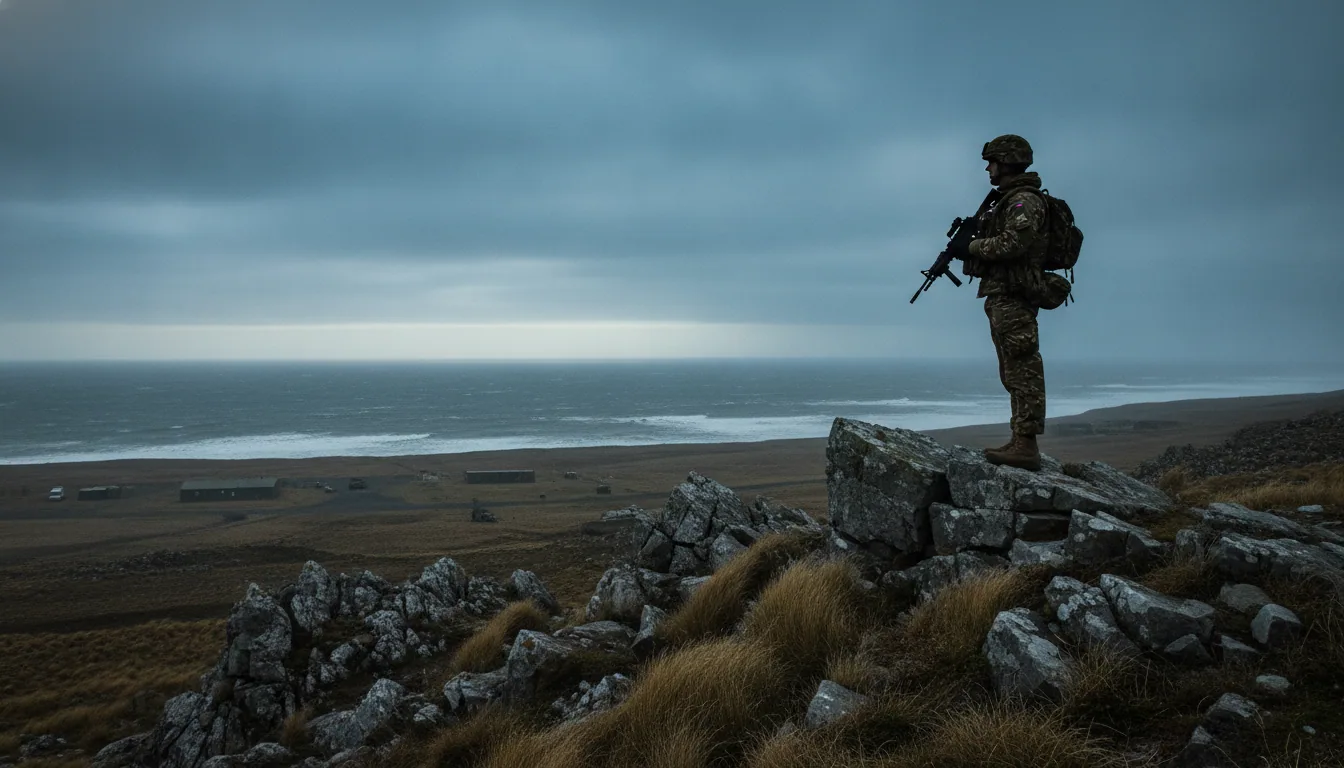
Strip the sovereignty language away and what remains is a geology report. The Sea Lion field, sitting 220 kilometres north of Stanley, holds an estimated 3.1 billion barrels of prospective recoverable resources.
That number is the load-bearing wall. The diplomatic manoeuvring around it is moulding.
The timing matters more than the headline figure. The Final Investment Decision for Sea Lion was reached in December 2025 - the moment that converted a geological estimate into committed capital and a construction schedule. Before FID, the islands were a historical grievance and a fishing licence.
After it, they became a revenue stream. The crisis did not precede the oil; it followed it.
The crisis did not precede the oil; it followed it.
Capital has been moving accordingly. In September 2026, Navitas Petroleum signed a deal to acquire a second FPSO vessel for the project. An FPSO is not a gesture.
It is a floating production and storage platform, ordered years ahead of first oil, and its acquisition signals that the operator is building infrastructure, not running a prospectus. Eco Atlantic's purchase of JHI Associates in March 2026 for approximately $52.3 million tells the same story from a different angle: consolidation ahead of production, not exploration theatre.
First oil is targeted for 2028. The Sea Lion project carries an estimated £4 billion in prospective tax and royalty payments to London. For a government already under pressure to raise defence spending to levels it cannot afford, that revenue matters in ways that no foreign secretary's statement about "absolute commitment" will quite capture.
Buenos Aires understands this arithmetic. So does Washington. The argument is not about flags.
Milei's Lever: Sanctions, Steel and the Naval Base at the End of the World
Milei has two instruments and one dependency. The first instrument: a decree to open sanction proceedings against 45 entities involved in financing and operating the Sea Lion oil project.
The second: new state funding for a naval base in Tierra del Fuego, the nearest Argentine territory to the islands. The dependency is Washington, and without it neither instrument amounts to much.
The sanctions are economic warfare aimed at the financing chain - the banks, insurers and contractors without whom an offshore deepwater project cannot proceed. Whether they bite depends on whether US institutions feel any obligation to comply, which in turn depends on whether Washington quietly signals it will not object.
Milei's decree is loud. Its practical effect is a question mark.
The naval base is slower and more honest about what it is. Tierra del Fuego cannot project force to Port Stanley in any realistic near-term scenario; Argentina's surface fleet is in no condition to threaten a British task group. The base is a political statement in concrete, a message to Buenos Aires's own electorate as much as to London.
The gap between declared urgency and actual capacity is the structural fact here. Argentina's leverage is borrowed. Milei can sanction, can build, can declare - but the door he needs was opened from Washington, and Washington can close it on a single phone call.
Ask the small question first: who is the borderland here, and who is the empire? In this transaction, Argentina is neither. It is the instrument.
The Chagos Comparison: A Precedent That Does Not Quite Fit
Argentina's diplomats reach for Chagos the way lawyers reach for a precedent they know is imperfect but hope the judge does not inspect too closely. In October 2024, the United Kingdom transferred sovereignty over the Chagos Islands to Mauritius, accepting the decolonisation framing that London had resisted for decades. Buenos Aires promptly filed it as Exhibit A.
The problem is structural, and it sits in the voter rolls. Chagos had no settled indigenous population casting ballots - the Chagossians had been forcibly removed between 1967 and 1973 to make room for a US military base, which is its own indictment, though a separate one.
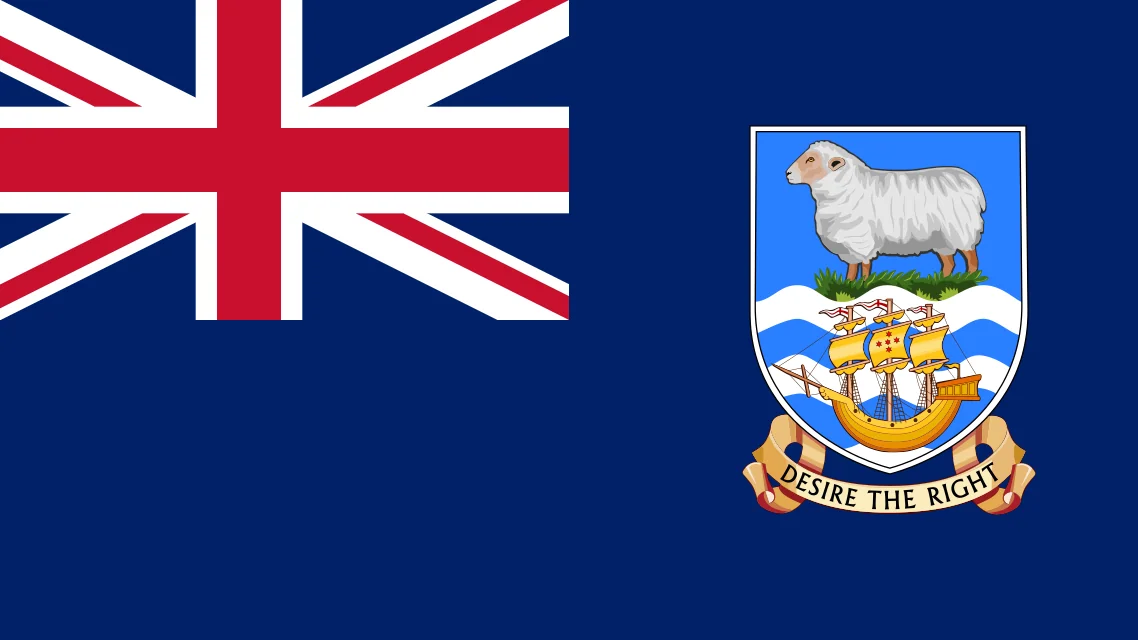
The Falkland Islands had a referendum in March 2013. Of 1,517 valid votes cast, 1,513 chose to remain a British Overseas Territory. The 99.8 percent figure is the kind of number that makes the decolonisation frame buckle at the joint.
Decolonisation, in the tradition the UN codified, concerns a colonised people reclaiming their land. It does not easily accommodate a population voting, with near unanimity, to remain exactly where it is.
Then there is the word Foreign Secretary Ed Miliband reached for on September 4, 2026: he described Britain's commitment to the islands as absolute. Communiqué language is worth parsing.
Absolute has no subordinate clause, no unless, no subject to defence-spending reviews. Whether it was chosen with that precision in mind, or whether it was a politician's reflex under pressure, is the question the next few weeks will begin to answer.
The Israeli Thread: What Yair Netanyahu Was Actually Saying
Yair Netanyahu's statement in September 2026 - that the Falkland Islands belong to Argentina - was reported as a curiosity, the freelancing of a politician's son with time on his hands. That reading is too comfortable. A name carries weight it did not earn in private, and this one arrived precisely when Washington's pressure on London was cresting.
The structural link is Navitas Petroleum, the Israel-based lead operator on Sea Lion. Navitas is not a minor contractor; it holds the operational heart of a 3.1-billion-barrel project whose Final Investment Decision cleared in December 2025.
An Israeli political intervention in favour of Argentine sovereignty, timed to the moment London is under maximum pressure, is not family opinion wandering into geopolitics. It is a signal with a commercial address.
Compare the alternative reading: a son trolling Britain for domestic entertainment. That reading requires you to ignore the one soft but grounded thread running through this dispute - that UK friction with Israel over West Bank settlement sanctions has provided an opening, and that some in Washington are content to keep it open.
The Falklands become a secondary front in a disagreement that began nowhere near the South Atlantic. The territorial dispute in the South Atlantic and the diplomatic quarrel over the West Bank do not rhyme historically. They rhyme structurally: Britain is the pressure point in both, and the levers are being pulled in sequence.
The Marker to Watch: One Word in the Next US State Department Statement
Trump's August 31 statement is on record. The State Department's position is not yet changed. That gap is the only thing that matters now.
The distinction is not procedural. A presidential remark is negotiable; a formal State Department revision of long-held neutrality on Falklands sovereignty is a policy instrument with weight in courts, in financing desks, and in the war-risk assessments that underwrite every offshore drilling contract.
Navitas Petroleum reached a Final Investment Decision in December 2025 and signed for a second FPSO vessel in September 2026. First oil is targeted for 2028. The financing window is narrow, and Milei's decree against 45 licensed entities is designed precisely to force a credit-risk reassessment before that window closes.
What the evidence forces us to conclude: Trump has created leverage; he has not yet spent it. Milei's sanctions are real but their effect on Navitas financing remains unconfirmed. The Israeli thread is visible but not formally stated policy.
Here is the marker. Watch the next formal State Department statement on the Falklands. If it says the United States "supports" UK administration, nothing has moved. If it says the United States "acknowledges" competing claims, someone has been sold.
The verb will be chosen carefully, by people who know exactly what it means. That single word is where the Falklands Transaction either holds or breaks. So should you.