The Strangest Construction Ban in American History
On November 20, 2026, Donald Trump announced that American companies building data centers outside U.S. borders would face "a tremendous tax." The target of the protectionism was the domestic industry itself — not foreign competitors, but the investment decisions of the most valuable companies in the world.
That is the paradox sitting at the center of this policy. Standard trade barriers are aimed outward, at imports and foreign competitors. This one points inward, at the investment decisions of the most valuable companies in the world. It is as if Washington, in 1960, had told Boeing it could not build a factory in Europe. The logic is new. The fear behind it is not.
Trump made the historical connection explicit. The data center ban is, in his framing, a direct lesson drawn from semiconductors. The United States spent decades designing the most advanced chips on earth, then, gradually, handed the manufacturing to Taiwan, South Korea, Malaysia, and beyond. It was efficient. It was rational. It turned out to be a strategic vulnerability so severe that an entire generation of industrial policy has been scrambled to undo it. Trump's argument is blunt: artificial intelligence is what chips were in 1980, and the physical infrastructure running it — the servers and cooling towers and fiber bundles — is the new factory floor. Letting it drift offshore is the same mistake, one generation later.
The "super intelligence boom," Trump announced, must stay within American borders. No rate. No specific mechanism. Just a warning, delivered from the White House, that the geography of computation is now a matter of national survival.
The Chip That Sailed Away: How America Learned This Lesson Before
The story the Trump administration tells about data centers starts thirty years earlier, with silicon. In the 1990s and 2000s, the United States allowed advanced semiconductor fabrication to migrate steadily toward Asia — cheaper labor, government subsidies, cooperative industrial policy. At the time, it looked like rational market behavior. In hindsight, the administration reads it as the slow donation of a strategic nerve center.
Trump has drawn this parallel explicitly, linking the new compute sovereignty push to the history of offshoring chip production. The logic runs like this: once a critical technology leaves domestic soil, reclaiming it costs a generation and several hundred billion dollars. The lesson, as the White House frames it, is not to wait for the regret.
The fall of Jensen Huang illustrates how tangled that history became. The Nvidia CEO resigned following scrutiny over potential chip diversions toward China — a moment that crystallized, more than any policy paper, just how thoroughly American semiconductor companies had grown intertwined with the country they were now being asked to treat as an adversary. Huang's departure was not simply a corporate event. It was a symbol: the entanglement was real, structural, and had been building for years.
Here is where the policy takes its decisive step beyond traditional export controls. It is not merely the chip itself that the administration is trying to contain. Compute capacity — the ability to run thousands of processors in parallel for weeks on end, training the systems that will shape medicine, logistics, and military planning — is now the contested asset. A foreign power does not need to manufacture a chip to use one. It needs only cloud access and a credit card. That loophole, quietly exploited through servers in Malaysia, Singapore, and Thailand, is what the Bureau of Industry and Security moved to close in November 2026. The administration is, in effect, treating AI training infrastructure the way a previous generation treated steel mills: not as a product to be traded, but as a foundation too important to be elsewhere.
The Cloud Loophole Nobody Talked About — Until BIS Did
For years, the workaround was elegant in its simplicity. A Chinese research institute, or a Russian defense contractor, could not walk into an American data center and rent a rack of Nvidia servers. Export controls prevented that. What they could do was rent a server in Kuala Lumpur — a server running American silicon, sitting in a facility built partly with American investment, accessed over the internet with a login and a credit card. The chip never crossed a controlled border. It didn't need to.
This is the gap the Bureau of Industry and Security closed in November 2026. BIS issued rules blocking remote access to U.S. chips and servers for entities in China, Russia, Iran, and Cuba — regardless of where the hardware physically sits. The key word there is "regardless." A processor bolted to a rack in Malaysia is still, legally, American computing power if it was made in America. Under the new rules, routing your requests through a third-country cloud provider no longer launders the transaction.
The practical effect reaches three countries by name: Malaysia, Singapore, and Thailand. All three had become significant transit points precisely because they were friendly enough to host U.S.-brand data centers and neutral enough not to trigger existing controls. That geography was the point. Now it's the target.
The access itself is the violation, wherever the server stands. Physical borders, it turns out, are easier to enforce than anyone imagined — once you decide the chip is the border.
Build It Here, Power It Yourself
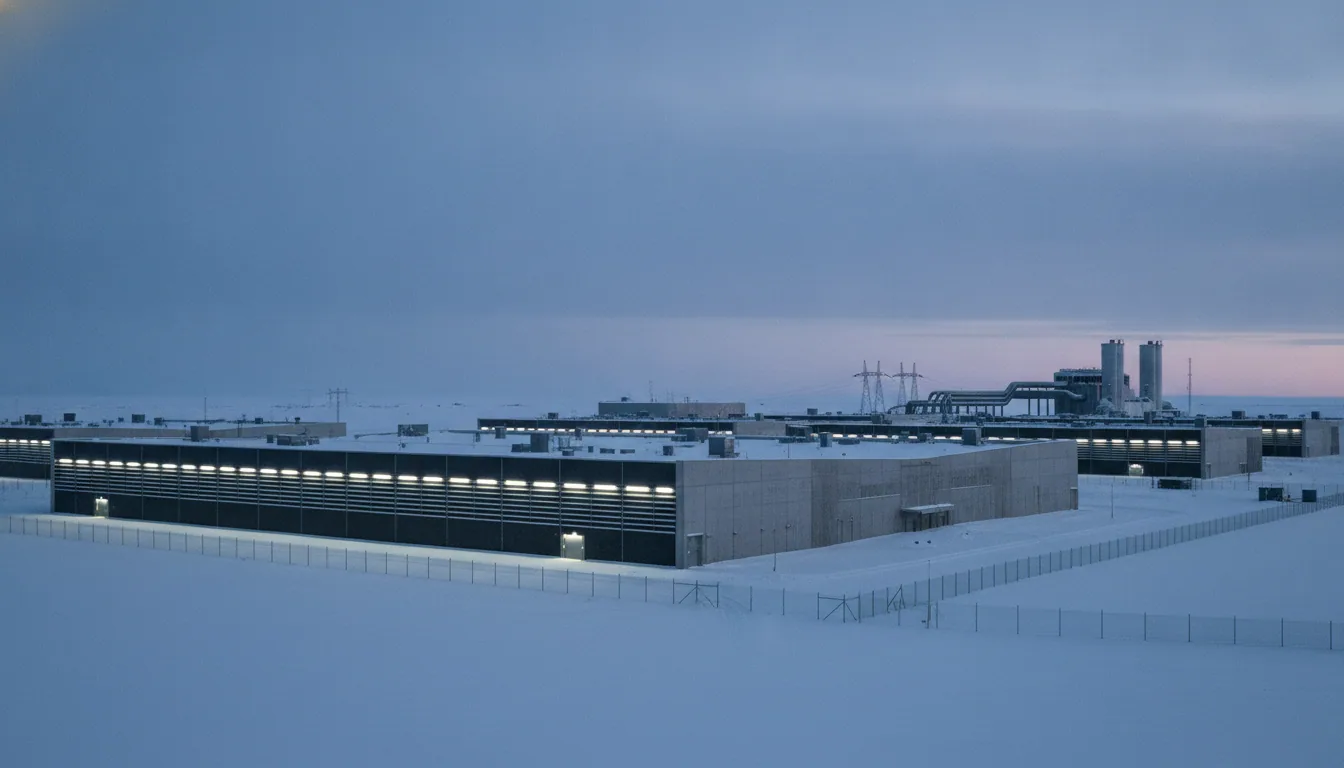
Walk the edge of a brownfield site outside Columbus — cracked asphalt, a rusted chain-link fence, the faint chemical smell of a former industrial yard — and you are looking at the administration's answer to its own ban. If American companies cannot build computing infrastructure abroad, then America has to make it fast and easy to build it here. Executive Order 14318, signed on July 23, 2025, does exactly that: any data center drawing more than 100 megawatts gets pushed to the front of the federal permitting line, with environmental reviews streamlined under the FAST-41 framework. Contaminated land, Superfund sites, old factory floors — all of it now qualifies as priority ground for a server hall.
The energy question is where the policy gets genuinely demanding. Secretary of Energy Chris Wright is leading what the administration calls the Genesis Mission, the domestic infrastructure engine meant to absorb the new construction wave. But the government is not offering to pay the power bills. Under the "Build, Bring, or Buy" mandate, every tech company that wants to plug into this program must generate, contract, or procure its own electricity — 100 percent of what its facility consumes. Amazon, Google, Meta, Microsoft, OpenAI, Oracle, and xAI all signed the Ratepayer Protection Pledge, promising not to push their enormous energy costs onto the public grid's residential customers.
The incentive structure is blunt and generous in roughly equal measure: commit at least $500 million in capital and the federal government opens the door to low-interest loans and tax incentives. The result is a strange new creature in the American economy: a technology company that is also, structurally, an independent power producer. Whether the grid can absorb what comes next is a different question entirely.
The Bill Comes Home: Who Pays for the Electricity
There is a satisfying irony buried in the administration's domestic ambitions. Block the overseas escape route, fine. But then comes the harder question: where, exactly, does the electricity come from?
In March 2026, the answer arrived in contractual form. The Ratepayer Protection Pledge committed roughly 200 signatory firms — including Amazon, Google, Meta, Microsoft, OpenAI, Oracle, and xAI — to absorbing 100% of grid upgrade costs for their new facilities. No passing the bill to local utilities. No quietly inflating a town's electricity rates while the servers hum behind a fence. The companies that need the power pay to deliver it.
Here is the comparison worth sitting with. Traditional factory protectionism brought jobs into communities that broadly wanted them. Data centers are different infrastructure entirely. They require enormous quantities of power, employ relatively few local workers, and generate noise, heat, and grid pressure that neighboring residents feel immediately. The result is a strange political knot: the same administration blocking construction abroad is confronting voters who resist construction at home.
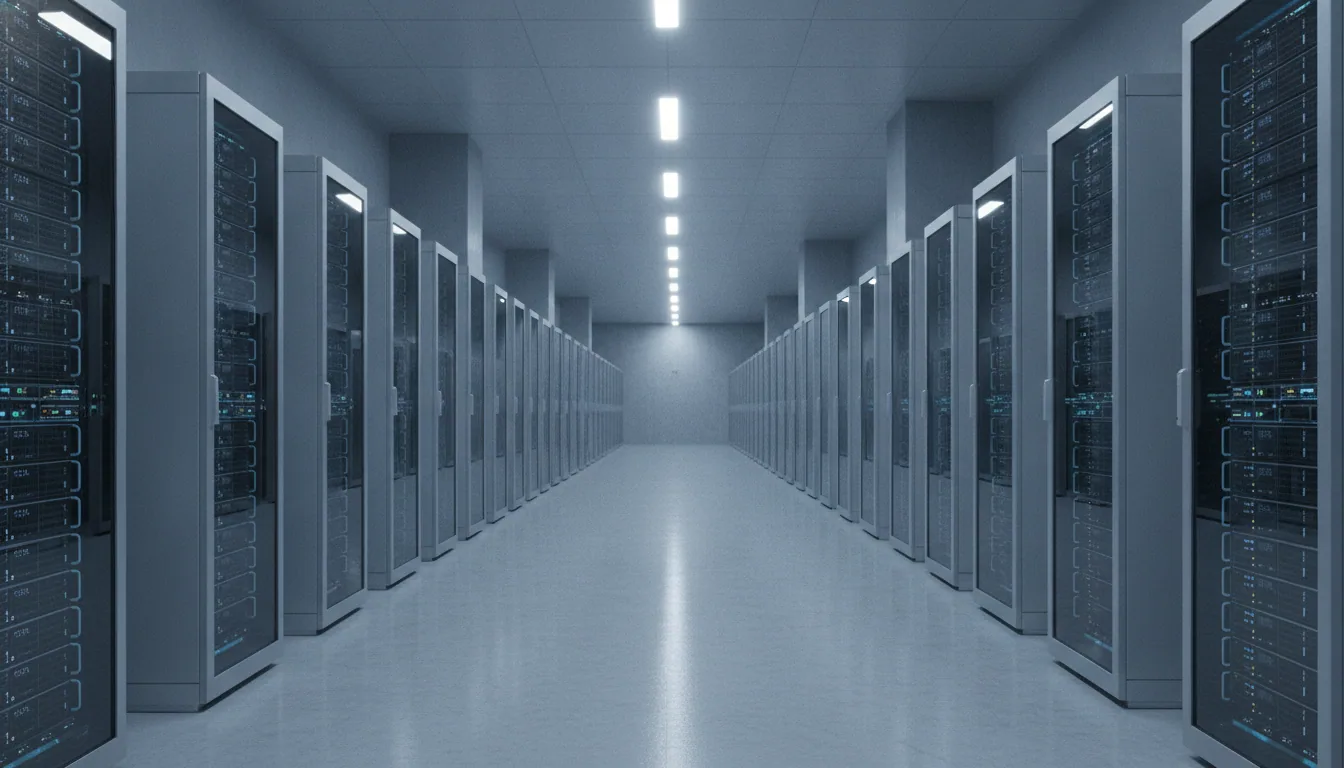
Data centers have become the infrastructure everyone needs and no neighborhood wants. Your phone's AI assistant runs somewhere real, on hardware that drinks power by the megawatt. The "nowhere in my backyard" response to local siting proposals sits awkwardly beside the "nowhere overseas" trade restriction. Squeeze the geography from both ends and the question becomes genuinely uncomfortable: a country that needs this infrastructure but hasn't agreed on where to put it is making a large bet on its own tolerance for inconvenience.
Compute capacity is now the contested asset. A foreign power does not need to manufacture a chip to use one. It needs only cloud access and a credit card.
Sovereign AI and the Fracturing Cloud: What Trump's Data Center Protectionism Leaves Unanswered
At the APEC summit, Xi Jinping and Vladimir Putin called the new U.S. posture what it plainly is: protectionism with a silicon face. Their criticism is self-serving, obviously. It is also, structurally, correct. When a government tells its own companies where they may not build, that is a tariff expressed in geography rather than percentages.
The concept acquiring traction in every foreign ministry from Seoul to Berlin is "sovereign AI" — the idea that a nation's ability to train and run its own models on its own hardware is a matter of strategic independence, not commercial preference. The logic mirrors nuclear deterrence more than trade policy. Compute, in this framing, is not a commodity. It is a capability.
Here is the problem. The "tremendous tax" Trump promised has no published rate. Nobody has explained what happens to the U.S.-owned racks already humming in Singapore and Malaysia. The legal mechanism for stopping a private company from building on foreign sovereign soil remains, generously, theoretical.
And then there is the quiet technical fact that sits underneath all of this. Researchers at FoldSim have demonstrated that a 1,024-node datacenter running 4,096 processor cores can be fully simulated on a single chip. The geography of thinking, it turns out, is stranger and more fluid than any map of borders suggests.
Trump's data center protectionism has drawn the line. Where that line actually falls — legally, technically, philosophically — is a question no executive order has yet answered. The map we thought we understood is already being redrawn, and the borders on it are not the ones anyone expected.