The Mandate Behind Eisenkot's Government Formation: What the Numbers Say
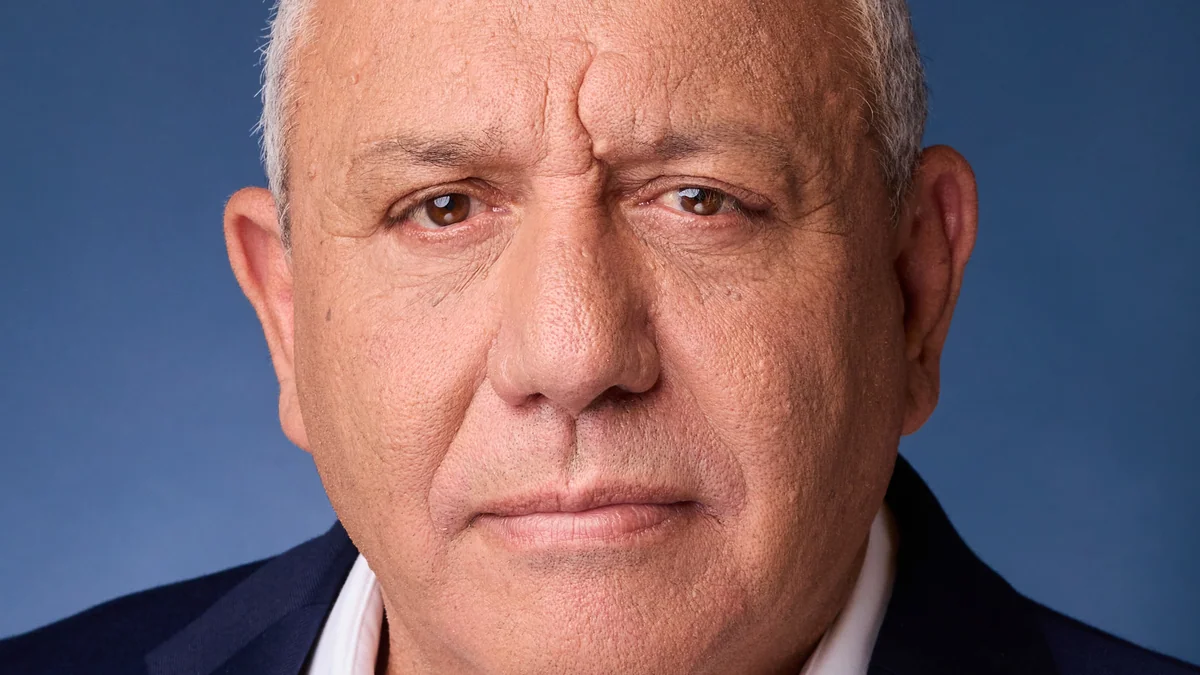
On November 7, 2026, the Eisenkot government formation was set in motion: Isaac Herzog tasked Gadi Eisenkot, leader of the centrist Yashar party and former IDF Chief of General Staff, with forming the next government. The Israeli president's residence in Jerusalem has seen many calculations dressed up as constitutionalism, but this one was harder to obscure than most. The arithmetic behind that decision was blunt.
Sixty-seven members of the 120-seat Knesset recommended Eisenkot. Benjamin Netanyahu, the incumbent, drew 46. The gap is not a narrow tactical opening — it is a structural verdict from the October 27 election, which left no single bloc anywhere near a working majority and forced every serious negotiation across camp lines.
Herzog had no credible alternative. The constitutional mechanics concentrate minds efficiently. Eisenkot holds a 28-day window to close a coalition, with a possible 14-day extension.
If he fails, the president has three days to appoint a fresh candidate. That three-day clock is the quiet lever in the room: it removes the option of running out the clock and coming back better prepared. Either a government is built, or the process moves on without him.
What the mandate does not resolve is the character of what Eisenkot must now assemble. The numbers that brought him to the president's residence came in part from Arab-led parties, a fact that sits uneasily inside the frame of a "national emergency government".
Sixty-seven recommendations are enough to earn a mandate. They are not, by themselves, a coalition. The difference between those two things is where the next 28 days will be spent.
The Former Chief of Staff and the Party He Built
Gadi Eisenkot served as IDF Chief of General Staff from 2015 to 2019. He left that post and entered politics through the centrist Yashar party, carrying the uniform's weight into the civilian arena. The credential is not incidental; in Israeli politics, the military biography is a form of argument.
What Yashar argues is specific. Eisenkot's platform centres on the total elimination of Hamas's military and governing capabilities in Gaza, a formulation that sounds like continuity with the previous government's declared war aims but lands differently when the speaker spent four years as the IDF's chief accountant of force. The security establishment reads that biography as a promise of method over spectacle: operations planned, not announced; objectives defined before troops move.
The more structurally contentious plank is mandatory military or national service for all Israeli groups. That sentence is short because the problem it names is not. The ultra-Orthodox exemption has survived every coalition arithmetic exercise for decades, because every government needed the ultra-Orthodox parties and those parties needed the exemption.
Eisenkot is now attempting to build a majority that does not depend on them, which is the only political condition under which the exemption can be touched at all. Whether Yashar can hold that position through 28 days of coalition negotiations is a different question from whether Eisenkot believes it. The platform is the load-bearing wall he has chosen to stand on.
The ornamental language of national emergency will be easy to find in whatever agreement emerges; this plank will not be.
The Arab Swing: From the Margins to the Kingmaker's Chair
The 67 recommendations that crossed Herzog's threshold did not come from the centrist bloc alone. Ra'am, the Islamic Movement's parliamentary wing led by Mansour Abbas, pledged its eight lawmakers on November 4. The Joint List followed the next day.
Without those 19 Arab-party seats combined, the arithmetic does not reach 67. The number matters not because it is large in absolute terms — the chamber has 120 seats — but because it landed at exactly the point where a centrist formation could not form without it. That is the structural fact the election produced, and no post-election negotiation could paper over it.
Ask the small question first: who is the borderland here, and who is the empire? In Israeli coalition arithmetic, Arab parties have long occupied the borderland — courted quietly, credited publicly only when inconvenient. What November 4 and 5 represent is a formal crossing of that line, the recommendations delivered on the record and attributed by name.
Whether the crossing leads anywhere permanent is a different question. External parliamentary support and a seat at the cabinet table are not the same institution, and they carry different weights when budgets are written and portfolios distributed. It remains unresolved whether the Joint List or Ra'am will hold ministerial positions or simply hold the numbers from outside.
That distinction — minister or guarantor — will determine whether this represents a durable repositioning or a one-election loan of leverage. The practical test is straightforward. Watch the cabinet list when Eisenkot publishes it.
A ministerial chair next to an Arab party's name is a structural fact. A warm statement of external support is furniture.
A warm statement of external support is furniture.
National Emergency Government: Load-Bearing Frame or Borrowed Language?
The label is precise, and that precision matters. In Israeli constitutional practice, the designation "national emergency government" carries weight beyond rhetoric — it invokes a broad-coalition logic meant to override the usual portfolio horse-trading and justify cross-ideological inclusion. Eisenkot's team has reached for that designation deliberately.
The structural anchor is Gaza. Eisenkot's stated platform — the total elimination of Hamas's military and governing capabilities — supplies the emergency rationale with something concrete to hold up. Without that specific, prosecutorial objective at the centre, the emergency label collapses into the kind of language parties use when they want permission to do unusual things without explaining exactly what.
With it, the frame has at least one load-bearing wall. The question is how much weight that wall is actually carrying. Israeli coalitions have invoked crisis language before to assemble unlikely partners, then dispersed the moment the crisis became inconvenient to manage collectively.
The emergency designation suppresses the portfolio auction in theory. In practice, nineteen seats from the Arab-led parties are sitting at this table, and someone will eventually need to decide what their inclusion means in writing versus what it means on the cabinet roster.
Here the distinction between architecture and borrowed language becomes structural, not rhetorical. If the final coalition agreement binds its members to the Gaza objective with specific timelines and shared accountability, the emergency frame is doing real work. If it names the objective and assigns no mechanism, it is moulding — and the building will tell you which only under load.
Likud's Rearguard: Forty-Six Votes and a Pogrom Accusation
Forty-six seats out of one hundred and twenty is not a close loss. It is a structural fact, the kind that takes a year to argue away and rarely succeeds. Netanyahu's bloc fell short not by a narrow margin of contested ballots but by a gap that the arithmetic does not soften: Eisenkot held sixty-seven recommendations to his forty-six, and Herzog read the numbers as the constitution requires.
Likud's response was to reach for a larger register. The party accused Eisenkot and the Attorney General of conducting a pogrom against democracy — bundling an ongoing legal investigation with a political defeat and presenting both as a single coordinated conspiracy. The choice of the word "pogrom" is not incidental.
It carries a specific historical weight in Israeli and Jewish political memory, and its deployment here is a rhetorical decision, not a descriptor. The move is familiar. The transitional strongman who discovers that institutions are corrupt precisely when those institutions rule against him is not a figure unique to any one country or decade.
The accusation does the same work in every language: it reframes a loss inside the rules as an attack on the rules themselves. Whether Israeli voters accept that reframe within Eisenkot's twenty-eight-day window is the first question. Whether Likud's forty-six hold as a coherent opposition bloc, or fracture under the pressure of an Eisenkot coalition that includes their former security establishment, is the second.
Twenty-Eight Days: The Coalition Countdown
The clock is the only neutral actor in the room. Under Basic Law: The Government, Eisenkot has 28 days from the November 7 mandate to assemble a majority; President Herzog may grant a 14-day extension, but not a second one. If the coalition still does not exist at that point, Herzog has three days to appoint a new candidate.
The arithmetic is cold and does not care about the framing. The unresolved question is not whether Eisenkot can count to 61. It is whether the Arab-led parties will sit inside the cabinet or stand outside it.
Ra'am's eight seats and the Joint List's eleven represent 19 of the 120 Knesset members; without them, the "national emergency" label is decorative. With them as ministers, it is load-bearing.
Watch the Defense and Finance portfolios. Those two assignments, when they appear in the coalition agreement, will answer the structural question the headlines have so far left open. If Arab party representatives hold either post, the precedent is real and the architecture is new.
If the final text names them as external supporters only, the coalition is narrower than the week's coverage suggests, and this question about the Eisenkot government formation will be back on your screen before the 14 days expire.