A Company at Its Strongest Has Never Looked More Uncertain
Microsoft has never been more powerful on paper, yet on October 26, 2026, its AI pivot entered a new phase with an announcement that defies the logic of conventional corporate success. The company extended voluntary buyout offers to approximately 60,000 employees — nearly 30% of its entire global workforce — while simultaneously holding the largest AI capital expenditure commitment in its history. A $190 billion infrastructure bet and a mass departure offer do not typically appear in the same quarterly narrative.
The affected geographies — the United States, Canada, India, and the United Kingdom — represent Microsoft's densest operational centers, which means this is not a peripheral trimming. These are core nodes. The voluntary framing matters legally and reputationally, of course, but the structural signal is the same: human headcount is being reclassified as a liability in a balance sheet now dominated by GPU capacity and data center construction.
Satya Nadella has described Microsoft's evolving role as that of a "distillery" for AI models — an elegant metaphor that does considerable ideological work. It positions the company not as an employer of specialists but as a refiner of intelligence, an abstraction layer between raw model capability and enterprise output. If the company is a distillery, then the workforce is the raw grain, not the finished product.
This framing is worth interrogating. Distilleries do not employ 200,000 people to monitor fermentation manually. The logic implies automation at scale, and the buyout program is the organizational mechanism that makes that logic operational.
What we are witnessing is not a downturn, but a deliberate redesign — one where the most important capital is no longer human, and the most consequential labor contract is signed with Nvidia, not employees.
The Human-to-Hardware Swap: Salaries Out, GPU Capacity In
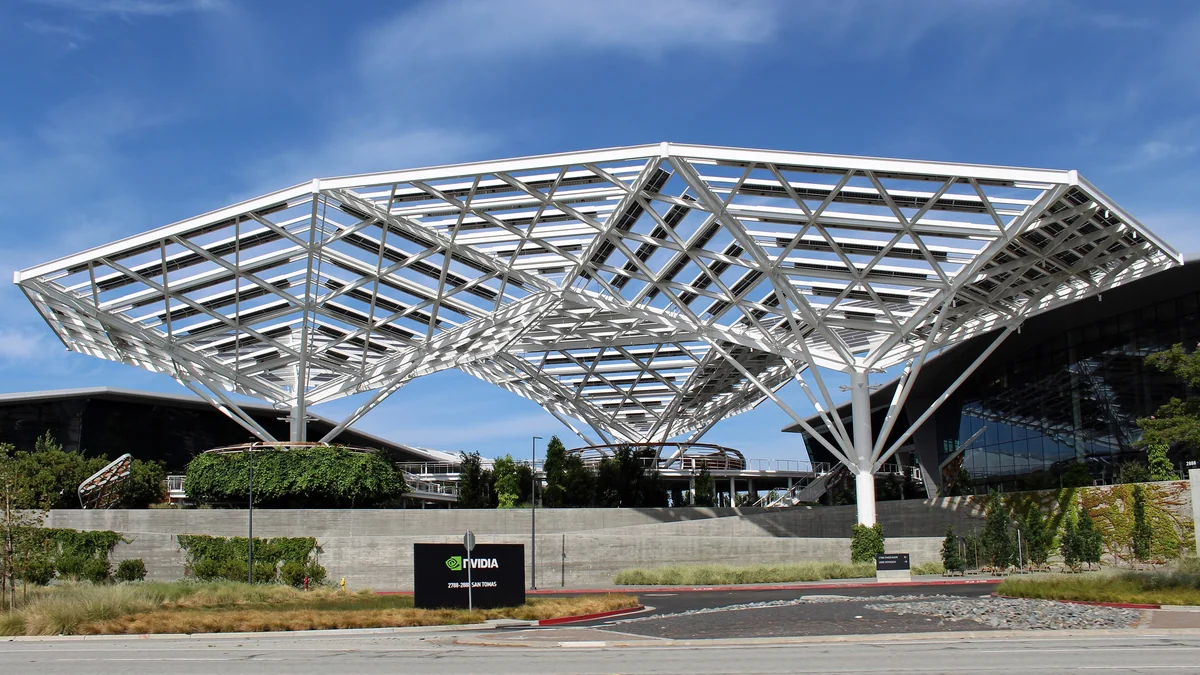
CFO Amy Hood's $190 billion capital expenditure forecast for 2026 is not a budget line. It is a strategic declaration. The figure, allocated almost entirely to data centers and Nvidia GPU acquisition, signals that Microsoft has made a permanent choice about what kind of asset it values most.
Human capital is, in the language of corporate finance, being repriced downward relative to hardware throughput.
The layoff timeline tells a precise story. In June 2024, 1,000 employees were removed from the Azure for Operators and HoloLens teams — units representing Microsoft's bet on mixed reality and telecommunications infrastructure. When that bet failed to scale, the headcount evaporated with it.
Then, in July 2026, a second and larger wave cut 4,800 positions from sales, consulting, and Xbox — divisions whose value proposition depends on human relationship management rather than model inference. These are not random reductions. They are behavioral signals from an organization rewriting its input equation.
The arithmetic is stark. AI spending is accelerating to support the construction of new data centers and the acquisition of Nvidia chips — physical infrastructure that operates continuously, does not require benefits packages, and scales with investment rather than negotiation. A mid-level sales consultant generates revenue through relationships. A GPU cluster generates throughput through electricity. When those two assets compete for capital, the outcome is now structurally predetermined.
What makes this an AI-driven restructuring rather than a conventional cost-cutting cycle is the directionality. Traditional workforce reductions protect margins during contraction. Microsoft is not contracting. It is redirecting capital at velocity, trading recurring salary expenditure for depreciating hardware assets that underpin a fundamentally different revenue architecture.
The question for observers is not whether this trade-off is defensible — it already is, numerically. The question is what institutional knowledge walks out the door when 60,000 employees carry it with them.
What we are witnessing is not a downturn, but a deliberate redesign — one where the most important capital is no longer human, and the most consequential labor contract is signed with Nvidia, not employees.
Flattening the Hierarchy: Why Middle Management Is the First Casualty
Consider the contradiction: a company deploying AI to coordinate increasingly complex workflows simultaneously eliminates the human layer historically responsible for that coordination. The buyout program targets employees at Level 70 and below — middle managers and non-AI specialists — which is not a coincidence. It is a structural verdict.
Middle management exists to translate strategy into execution, to filter information upward and cascade decisions downward. AI-first orchestration does exactly that, faster and without headcount costs. If an AI system can route tasks, synthesize team outputs, and flag bottlenecks in real time, then the coordination layer becomes redundant by design.
The gutting of the Strategic Missions and Technologies unit makes this logic concrete. Jason Zander's division, once tasked with navigating the frontier between defense, cloud, and emerging technology, saw major cuts as generative AI absorbed its operational mandate. The unit's purpose — synthesizing capability across complex domains — is precisely what large language models are now positioned to perform at scale.
Amy Coleman's framing of the program as "voluntary departures" that help the organization "adapt to a rapidly changing industry" is institutional language doing heavy lifting. Voluntary is a technical designation, not an emotional one. When 60,000 roles are made eligible for departure, the signal to those who remain is unambiguous: specialization in legacy coordination is no longer a competitive asset.
For entrepreneurs observing this from the outside, the strategic read is clear. The organizational chart is not shrinking at the edges. It is collapsing at the middle — and any company still building around traditional management layers is building on ground that Microsoft has just declared unstable.
Beyond OpenAI: Microsoft's AI Pivot and the Multi-Model Strategy
Picture a procurement officer in Helsinki, logging into Microsoft 365 Copilot in August 2026, and noticing something quietly different: the responses carry a new texture, a different reasoning cadence. She does not know it yet, but she is talking to Anthropic's Claude Opus 5, freshly integrated into the platform that month. Microsoft said nothing dramatic. It simply expanded the engine room.
This is how diversification works when it is strategic rather than reactive. The OpenAI licensing agreement, extended in April 2026 through 2032, locks in a foundational dependency that no single quarterly result can dislodge. Yet the simultaneous addition of Claude Opus 5 signals something more nuanced: Satya Nadella's "distillery" metaphor was not poetry. It was architecture. When you distill, you draw from multiple sources.
The commercial validation is stark. Paid Microsoft 365 Copilot business licenses doubled by late 2026 — a demand curve that justifies the infrastructure spending and, critically, makes the multi-model bet look less like hedging and more like product engineering. More users mean more use cases, and more use cases reveal which model performs best for which task. OpenAI handles one set of problems; Anthropic handles another. The blend is the product.
The Gaming Copilot termination in 2026 sharpens this picture from the opposite direction. Microsoft is not distributing AI across every surface it owns. It is concentrating it where business contracts — and compliance obligations — create durable revenue. Xbox restructuring signals where the investment is NOT flowing.
For European policymakers watching from Brussels or Tallinn, this multi-supplier logic should read as familiar. It mirrors the energy diversification calculus that reshaped European infrastructure policy after 2022: never let a single source become a chokepoint. If that logic protected gas supply, it may now define the competitive architecture of enterprise AI.
The Watermarking Deadline: How the EU AI Act Turns Compliance Into Competitive Leverage
A technology company can dominate a market and still be caught flatfooted by a regulatory clock. The EU AI Act sets a hard deadline of December 2, 2026, requiring that AI-generated outputs be labeled — a compliance cliff that separates companies with mature disclosure infrastructure from those still navigating internal governance debates.
OpenAI moved first. On October 5, 2026, it launched "textGrain" for EU markets: a statistically hidden watermarking system that embeds invisible identifiers within generated text without degrading readability. Compare this to the alternative — zero-width characters, non-printing markers that are technically functional but forensically fragile and easily stripped. TextGrain represents a more sophisticated posture, one that signals both regulatory seriousness and technical ambition.
Microsoft's own watermarking position remains publicly unconfirmed. For a company that licenses OpenAI models, integrates Anthropic's Claude Opus 5, and routes millions of enterprise queries through Copilot daily, this disclosure gap is not a minor oversight. If an output cannot be traced, labeled, or audited, the liability does not disappear — it migrates upward to the distributor.
This is where the historical analog sharpens. When GDPR enforcement began, early compliance became a moat, not a burden. Companies that built privacy infrastructure ahead of the deadline extracted competitive advantage from the resulting regulatory asymmetry. The EU AI Act's watermarking requirement follows the same logic. For European entrepreneurs and policymakers, the strategic question is already live: who controls the labeling layer controls the audit trail — and the audit trail is fast becoming the most valuable asset in AI accountability.
What This Means for Europe — and the Question No Policymaker Can Afford to Ignore
When 60,000 mid-level technology roles are eliminated at a single company, the speed of structural displacement becomes the central policy variable — not the scale. Europe's workforce frameworks were designed for gradual sectoral transitions, not for the kind of overnight capital reallocation that converts human headcount into Nvidia GPU clusters. The $190 billion infrastructure wager by Microsoft does not merely reshape one company; it redraws the map of where value in the AI economy is created and, critically, which geographies capture it.
For Estonian and EU enterprises, the operational implication is concrete. AI output quality is bounded by the underlying data platform — a constraint that no licensing agreement with Microsoft, Anthropic, or OpenAI can override. The data hygiene imperative is structural, not optional.
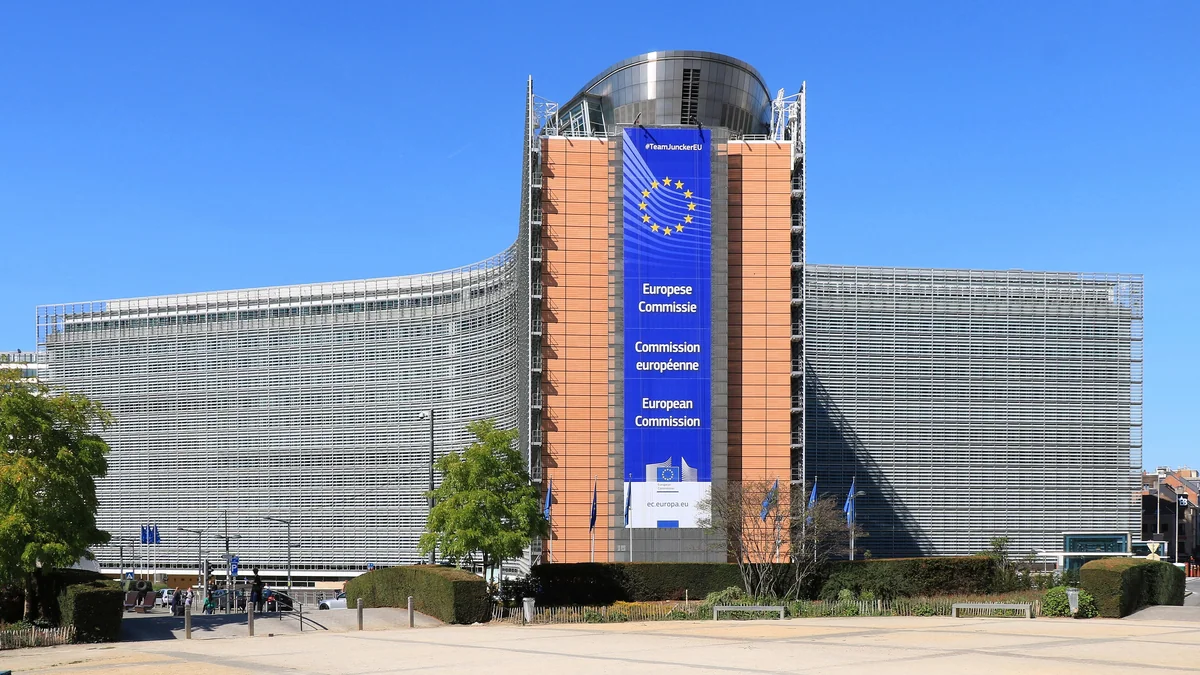
The regulatory dimension, however, offers Europe an asymmetric opportunity. The EU AI Act's output labeling deadline arrives on December 2, 2026, and OpenAI has already deployed "textGrain" watermarking for EU markets. If European regulators can convert compliance infrastructure into a trust signal that enterprises globally demand, the burden becomes a barrier to entry — one that favors incumbents who moved first.
The strategic question for policymakers is not whether AI will restructure labor. It already has — and Microsoft's AI pivot makes the scale and timeline of that restructuring concrete. The question is whether Europe's regulatory leadership becomes an industrial advantage, or simply a slower lane on the same road.