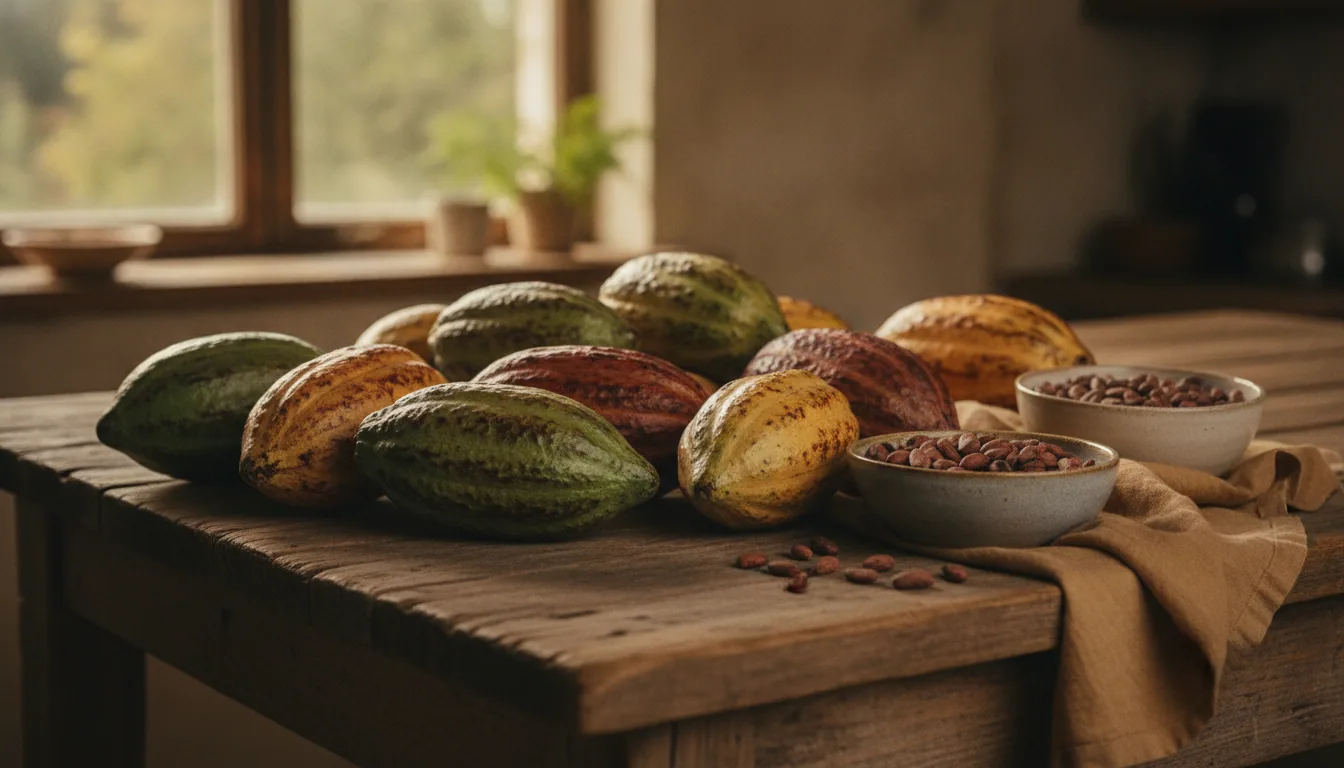
Something Felt Different When You Unwrapped It
You noticed the great chocolate crunch before you even bit into it. The bar felt wrong in your hand, lighter than it should have been, the foil a little too loose. The packaging was identical, the price on the shelf was what you expected, but the chocolate itself had shrunk. You were not imagining things.
Between 2024 and 2025, retail chocolate prices climbed 15 to 20 percent globally, a number that sounds manageable until you are standing at the checkout realizing your Tuesday treat now costs what a decent lunch used to. Lindt alone raised its prices by roughly 19 percent in 2025. And that was the honest version, the brands that simply charged you more and let you see it plainly.
The less honest version was shrinkflation. Hershey and Mondelez, among others, kept the price the same and quietly took away the chocolate. Same wrapper, same shelf position, less bar. It is a polite sleight of hand, and it works exactly because most of us are not in the habit of weighing our confectionery before unwrapping it.
So no, you were not being paranoid. That faint dissatisfaction you felt was real. The bar was thinner, lighter, worth less than the one you remembered buying last year.
Something in the supply chain had broken, badly enough that the biggest names in chocolate had to make hard choices, and they made those choices quietly, hoping you would not notice. You noticed.
Why West Africa Holds the Whole World's Sweetness
Here is the uncomfortable geography lesson behind your smaller chocolate bar. Côte d'Ivoire and Ghana together grow somewhere between 60 and 70 percent of the world's cocoa. Not a plurality. Not a leading share. Most of it, full stop. When something goes wrong in those two countries, the whole world's chocolate supply shivers.
And in 2023 and 2024, everything went wrong in the worst possible order.
El Niño arrived first, bringing heavy rains through 2023 that saturated the growing regions. Wet conditions are exactly what Black Pod disease needs: a fungal infection that rots cocoa pods before they can be harvested, spreading fast through orchards that have no room to breathe.
Then the rains stopped. Drought followed in 2024, stressing trees that were already struggling, and Cacao Swollen Shoot Virus — a disease transmitted by mealybugs, for which the only real remedy is destroying infected trees — worked through Ghana's groves with quiet, ruinous efficiency.
The result was a supply deficit of 462,000 to 494,000 metric tons for the 2023/24 season. The International Cocoa Organization confirmed it as the largest shortfall in 60 years. To put that in physical terms: hundreds of thousands of tons of cocoa that processors, manufacturers, and ultimately every chocolate-buying person on the planet had been counting on simply did not exist.
The concentration of production in one corner of West Africa had always been a structural risk that the industry understood and largely chose to ignore, because the cocoa was abundant and the farmers were cheap to pay. That calculation has now arrived at its invoice. Two seasons of sequential weather damage and compounding disease in two countries were enough to send a global market into historic shock — and to change the price of pleasure for everyone downstream.
The Year Cocoa Outran Copper
In early 2024, cocoa futures crossed $10,000 per metric ton for the first time in history. Let that number sit for a moment. Not diamonds, not saffron — cocoa beans, the thing we use to make Tuesday-afternoon vending machine chocolate. By April 2024, the price had climbed to roughly $12,000 per ton, briefly overtaking copper, the metal that keeps the lights on and the wires running. The commodity traders were not wrong to do a double take.
What happens when something that expensive becomes too expensive to process? Manufacturers blinked. Global cocoa grindings — the actual measure of how much chocolate the world processed and turned into the stuff in your cupboard — fell by 4 to 5 percent. That is not a rounding error. That is factories slowing their lines, buyers canceling orders, and the quiet industrial signal that demand destruction had arrived.
Here is where we are now. By October 2026, prices have eased back to somewhere between $5,500 and $6,000 per metric ton. The crisis has, in market terms, passed.
But "eased" is doing a lot of heavy lifting in that sentence, because $6,000 is still double the pre-crisis historical average of $2,500. The floor has moved. Permanently, most analysts think.
This is the number that matters most for your shopping basket. The peak was dramatic, but the new normal is what stays.
The chocolate industry repriced itself during the panic and there is no particular incentive to reprice it back down. Understanding this — the distance between the spike and the floor — is the only useful thing the commodity market has to tell you before you go and buy the good bar anyway.
The chocolate industry repriced itself during the panic and there is no particular incentive to reprice it back down.
What the Brands Quietly Put in Your Bar Instead
Pick up a mass-market chocolate bar today and read the ingredients. Somewhere below the cocoa solids, you will find it: palm oil, shea butter, sunflower fat.
Cocoa butter — the expensive, silky heart of real chocolate, the thing that makes it melt exactly at body temperature — has been quietly shown the door. Vegetable fats are cheaper, stable, and they behave. They just don't taste the same.
The rest of the gap got filled with nuts, caramel, wafers, dried fruit, anything that could bulk out a bar without demanding much cocoa at all. This is not new as a trick, but the scale of the pivot is. What used to be an occasional shortcut became a structural strategy almost overnight, a hedge dressed up as a product refresh.
You can see it in the launches. McDonald's rolled out a chocolate-bar flavored McFlurry in October 2026, which is a clever move: lean into the brand association, hold the actual cocoa. Ghirardelli reinvented its Easter Bunny for 2026 rather than simply making the old one again. Reinvented is doing a lot of work in that sentence.
Here's the thing nobody tells you: when a brand "reimagines" a classic, it often means the classic became too expensive to make honestly. The confectionery is real, and some of it is genuinely delicious.
But it is not chocolate the way chocolate used to mean something. The industry isn't waiting for cocoa prices to fall back to comfortable levels. It is rebuilding its product range around the assumption that they won't.
The New Normal: What $6,000 Cocoa Actually Means Going Forward
Think back to the decade before 2023, when cocoa traded quietly around $2,500 a ton and no one much noticed. That world is gone. Prices peaked near $12,000 in April 2024, then fell back, and the relief felt enormous until you looked at the actual number: $5,500 to $6,000 per metric ton, still sitting roughly 140 percent above that old average.
Falling from a cliff is not the same as landing safely on the ground.
The recovery is also slower than the optimists hoped. The ICCO revised its projected 2025/26 surplus sharply downward, from 142,000 tons to just 49,000. Meanwhile, its May 2026 bulletin put production at 4.723 million tons against grindings of 4.628 million tons, a margin so thin that one more difficult rainy season in Côte d'Ivoire could tip the balance again. Supply and demand are essentially dancing cheek to cheek, with no room to stumble.
Then the EU Deforestation Regulation arrived, adding compliance costs and paperwork to a supply chain already running on fumes. Certification requirements are genuinely worth having, long term. But arriving when the market is this fragile, they add friction at precisely the worst moment.
Analysts describe what's happening now as a structural price floor, not a spike. Climate risk is real and repeating. Farmers who spent decades underpaid cannot quickly replant aging, disease-prone trees.
The old $2,500-a-ton era assumed a kind of permanent cheapness that was never quite honest about its costs. What you are paying for chocolate now is closer, however painfully, to what it actually costs to grow.
How to Choose Your Chocolate After the Crunch (And Spend the Money Where It Counts)
With retail prices up 15 to 20 percent across the board and cocoa still trading at roughly double its pre-crisis average, this is actually the best possible moment to buy less and buy better. The math changed; your habits don't have to follow the mass-market brands into the corner they painted themselves into.
Single-origin and craft bars quietly absorbed the cocoa reality years before the supermarket shelves caught up. They did not double overnight because they were never pretending cocoa was cheap.
Look for real cocoa butter in the ingredients, not palm or shea fat. A short list, a cacao percentage that actually means something (70% and above, from a named origin), and a price somewhere between €3 and €5 for 80 grams is entirely attainable.
This week, walk past the big-brand shelf and pick up one bar you've never tried before. One. Around €4. Eat half of it slowly, the way you'd sip a good glass of wine. That's your best answer to the chocolate crunch — and the whole assignment.