Seventeen Months In: The Weight Behind a Routine Check-Up
In July 1981, a Gemelli Hospital bulletin announced that John Paul II had survived an assassin's bullet on St. Peter's Square. The hospital has handled papal crises before. This one arrived not from a gunman but from a radiologist's report - a well-localized pulmonary nodule, caught early, the kind of finding that turns a routine check-up into a calendar-clearing event.
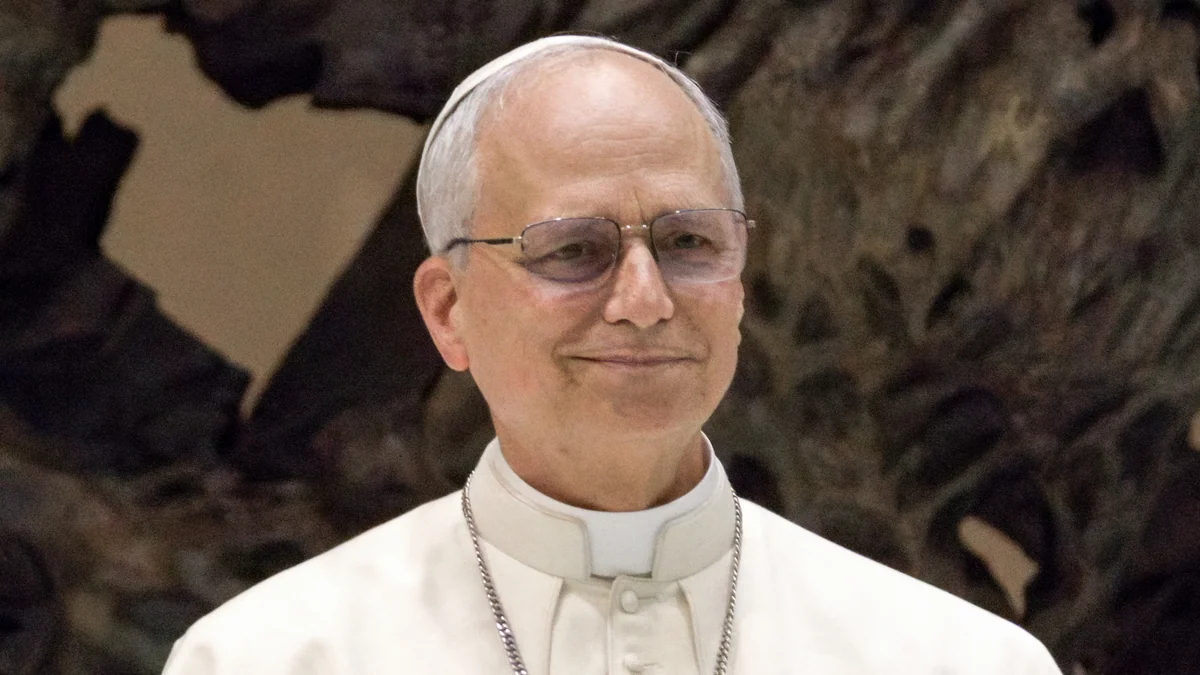
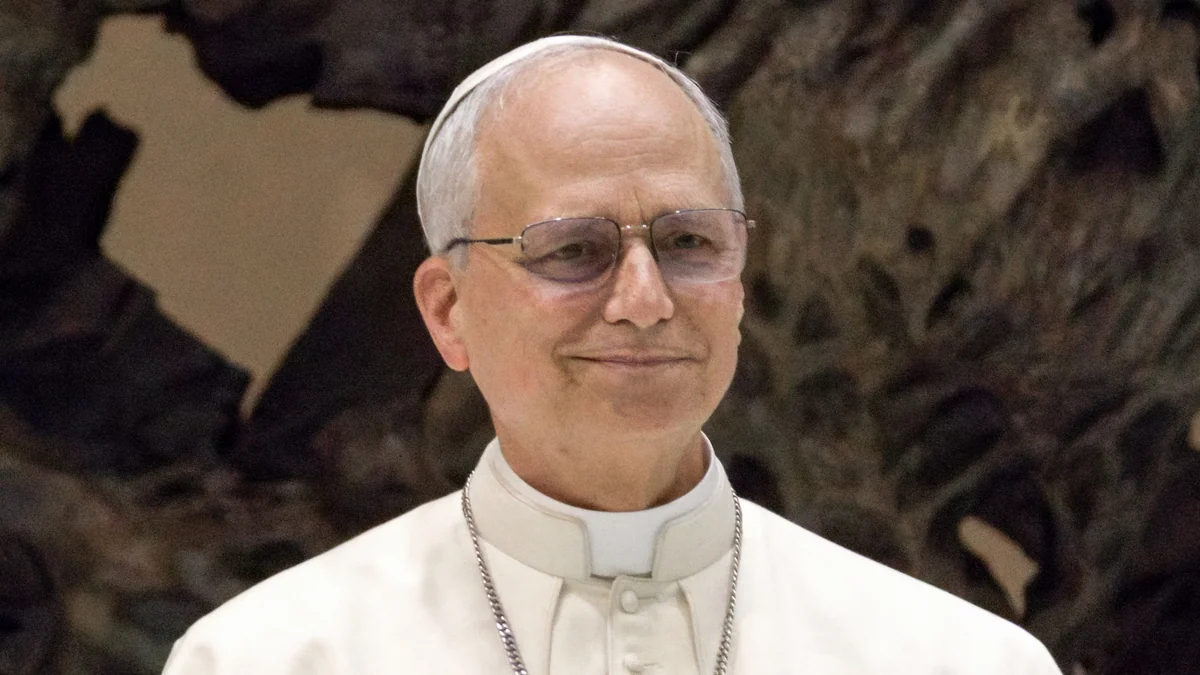
Robert Francis Prevost - Pope Leo XIV, the 267th in the line, the first American-born, holder of Peruvian citizenship, elected May 8, 2025 - was 71 years old and considered to be in good health when the diagnosis came back: lung adenocarcinoma, the most common subtype of the disease, accounting for roughly 40 percent of all lung cancer cases. Early stage. The nodule well-localized. These are the words that allow a surgical team to speak in terms of schedules and recovery windows rather than something harder to name.
He was a non-smoker. That detail will appear in every dispatch, as though it settles something, and it settles nothing - adenocarcinoma is the form most commonly found in non-smokers. His brother Louis is currently in treatment for cancer. Both parents died of the disease. The family history is not a footnote; it is probably why, at 71, with a papacy seventeen months old and its structural foundations still being poured, a routine check-up was taken seriously enough to find what it found.
The Angelus Announcement: Transparency as a Political Act
He did not issue a statement through the Holy See Press Office. He did not let Cardinal Parolin carry the news. On a Sunday, at the Angelus window, Pope Leo XIV told the faithful himself.
The historical default is silence. When John Paul II's Parkinson's advanced through the 1990s, the Vatican managed disclosure in increments, calibrated for damage limitation rather than candour. The institutional logic was consistent across pontificates: papal infirmity threatened the mystique of an office that runs on perceived continuity. The communiqué, when it came, was always passive voice, always a step behind the fact.
Leo XIV did something structurally different. "The doctors think it is opportune to intervene" - the clinical understatement was not accidental. It framed the Pope as a man receiving advice, weighing it, acting on it. Not a suffering servant of providence, not a symbol requiring management. A 71-year-old with a lung nodule, doing what his physicians recommended.
The register of the second line carries as much weight as the first. "I ask you please to pray for me, as I pray for you" - that sentence does not perform invulnerability. It admits a symmetry between the man at the window and the people below it. For an institution that has historically treated any sign of weakness as an administrative crisis, the admission was a choice, not a reflex.
Transparency, here, is policy. Read it as such.
Gemelli, October 13: What the Surgical Record Shows
The procedure was logged, completed, and confirmed before the afternoon was out. On October 13, 2026, Professor Stefano Margaritora and Dr. Luigi Carbone removed the lower lobe of Leo XIV's right lung at Gemelli - the operation ran ninety minutes within a three-hour operating room window. Matteo Bruni, the Holy See's press spokesman, reported it "completed on schedule and as planned."
The method was minimally invasive: a camera-guided thoracoscopic approach, which reduces trauma to surrounding tissue and compresses recovery time relative to open surgery. During the procedure, the team conducted an intraoperative histological examination - real-time tissue analysis performed while the patient is still on the table. Margaritora and Carbone confirmed the result themselves: "The intraoperative histological examination confirmed the diagnosis of lung adenocarcinoma, as suspected by the preoperative tests."
Adenocarcinoma accounts for roughly 40 percent of all lung cancer diagnoses. It originates in the outer lung tissue rather than the central airways, and it is the form most commonly found in non-smokers - a detail the Vatican noted, without elaboration, in early background briefings.
By October 15, two days post-surgery, recovery was proceeding to schedule: respiratory therapy, supervised walking, a return to normal diet. The pace is consistent with minimally invasive pulmonary resection where no significant complications arise. Public audiences and official appearances are cancelled until at least October 20. The South American journey - Uruguay, Argentina, Peru, scheduled to open November 6 - remains undecided, its status dependent on a recovery trajectory that no one at Gemelli is yet in a position to confirm.
Vatican III and the Machinery of Papal Continuity
The name is informal but the record is long. Gemelli Hospital sits on a hill in northwest Rome, and it has served as a second Vatican so reliably - John Paul II spent weeks of his later reign in its corridors, recovering from the 1981 shooting and from successive surgeries - that journalists stopped explaining the nickname. Leo XIV arrived there on October 13 for a different kind of appointment: a scheduled procedure, not a trauma bay.
Cardinal Pietro Parolin, the Vatican's Secretary of State, visited during the recovery period. He confirmed the administration's confidence in the process, and added one detail that the bulletin writers did not smooth away. "I was struck by his serenity," Parolin said. That sentence is either a pastoral observation or a political one, and in Rome it is rarely only one thing.
What the public communiqués do not contain is also a kind of record. The specific stage of the adenocarcinoma - beyond the phrase "early" - has not been disclosed. Whether follow-up chemotherapy or radiation is planned remains unconfirmed. And the identity of those delegated to handle daily governance, should recovery extend beyond the current timeline, has not been named. The Roman Curia does not pause; it absorbs. The machinery of continuity runs on precisely this ambiguity - procedures without declared deputies, confidence without declared chains. It has done so before. Whether that is reassuring or simply familiar depends on how long your institutional memory runs.
The reform project's institutional clock and the medical clock have been set running in parallel, and they do not keep the same time.
The South American Tour and the Geography of a Papacy Interrupted
The November 6 journey to Uruguay, Argentina, and Peru was never a routine apostolic circuit. For Leo XIV, the trip carried a specific narrative weight: a Peruvian citizen returning to Lima not as a missionary official but as the head of the Church. The homecoming story wrote itself, and 1.3 billion Catholics were the intended audience.
A postponement is not a cancellation. Institutional calendars know the difference, though that difference narrows faster than the communiqués suggest. A papal visit deferred once tends to accumulate competing obligations, and the symbolic weight of a first visit does not survive indefinitely on a waiting list.
The geographic dimension matters beyond sentiment. Leo XIV's election in May 2025 signalled a shift in the Church's center of gravity, away from the European interior, toward a hemisphere where the majority of its faithful actually live. The South American tour was the operational proof of that shift. Its postponement would not erase the signal, but it would leave it unconfirmed in the place where confirmation was most legible.
Peru is the sharper case. Uruguay and Argentina receive a pope; Peru receives something closer to a countryman. The distinction is not merely ceremonial. It is the difference between a visit and a reckoning with a specific history, a specific community, a specific promise implied by the election itself. Somewhere in Lima, a schedule was printed and distributed, and events were organized around a date. That date is now soft.
Ask the small question first: who is the borderland here? Lima, for a few weeks longer, waits.
Pope Leo XIV's Health Crisis and the Reform Horizon
Seventeen months is not long enough to embed a reform agenda. It is long enough to signal one. Leo XIV has done the signaling; the structural work, the kind measured in cardinal appointments and dicastery reshufflings, remains largely ahead of him.
The mathematics here are institutional, not medical. A pope shapes a future conclave through the College of Cardinals, and the college is shaped by whom he elevates and when. Leo XIV's reformist inclinations were visible even before May 2025: he ran the Dicastery for Bishops, the Vatican department that governs episcopal appointments worldwide, and the fingerprints of that tenure are a reasonable guide to his intentions. But intention without appointment is architecture on paper.
The health crisis introduces a pressure that cuts in two directions simultaneously. Recovery may slow the pace of consistories. Yet early-reign vulnerability can also accelerate what strategists elsewhere call conclave-proofing: moving faster to stack the college with like-minded electors before the window narrows. Forty percent of all lung cancers are adenocarcinomas; the stage remains publicly unspecified beyond "early." What follows surgery, in terms of adjuvant therapy, is not yet disclosed.
Vatican observers have been watching the pace of appointments to the Dicastery for Bishops and to structural posts across the Roman Curia. That watch has now acquired a sharper edge. The reform project's institutional clock and the medical clock have been set running in parallel, and they do not keep the same time.
The November consistory calendar is the marker to hold in view. Whether it proceeds on schedule, expands to push through a larger slate of appointments, or quietly disappears from the agenda will tell an observer more about where this papacy actually stands than any bulletin from Gemelli. If it disappears, someone has decided the horizon can wait. History records what tends to happen to reforms that wait. Pope Leo XIV's lung cancer diagnosis has not ended a reform project - it has put a clock on it.