Bangkok, October 2026: The IMF Puts Global Financial Cyber-Resilience at the Centre of Systemic Risk
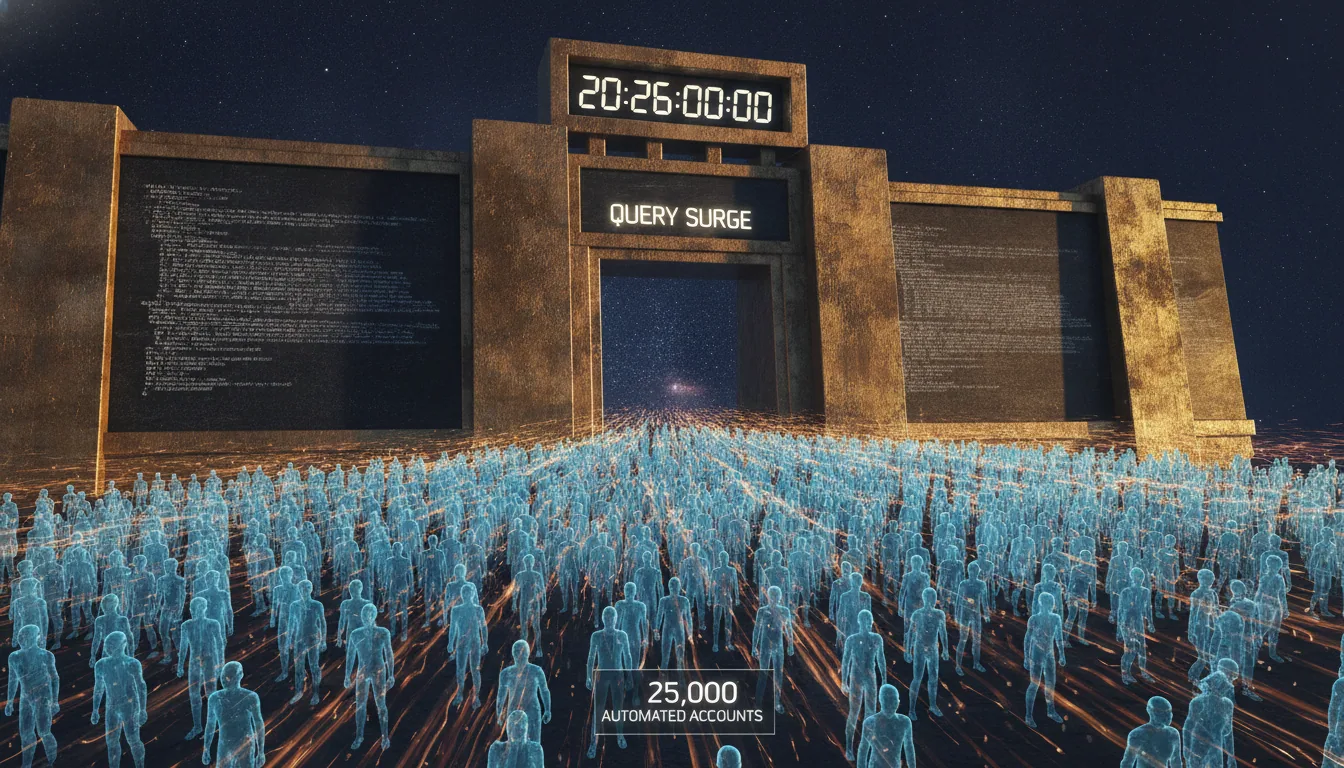
The global financial system has spent the last decade engineering itself for speed and interconnection. The same architecture that enables a payment to clear in milliseconds across three continents now means that a single compromised node can cascade, silently, into a systemic event before any regulator has drafted the first incident report. That contradiction sat squarely at the centre of the IMF's Global Financial Stability Report, released today in Bangkok, which places escalating cyberattacks alongside AI-driven market corrections and sovereign debt fragility as the defining threats to global financial stability.
The scale is no longer abstract. Cyberattacks targeting the financial sector have more than doubled since the pre-pandemic era, and financial firms now absorb one in five of all cyber incidents recorded globally. Banks bear the sharpest exposure: they remain the most frequent victims within the industry, functioning simultaneously as critical infrastructure and as the most attractive target for actors whose sophistication is increasing faster than most institutional defences.
What Bangkok signals is a deliberate shift in how regulators frame the problem. The question is no longer whether an individual bank has adequate firewalls. The question is whether the system as a whole can absorb a coordinated shock to payment infrastructure, custody chains, or settlement rails without triggering what some analysts are now calling a "cyber run" — a loss of institutional confidence that behaves like a traditional bank run, but moves at the speed of automated trading.
The IMF's framing is, in this sense, a diagnostic reorientation. Firm-level security remains necessary. It is no longer sufficient.
Counting the Damage: The Economics of a Breach in an Era of Ransomware
A system engineered for maximum efficiency is also engineered for maximum loss when it fails. The average cost of a financial sector data breach reached $5.56 million in 2025, according to IBM — a figure that reflects not only direct remediation but the compounding weight of regulatory exposure, reputational damage, and operational disruption. That single number reframes the entire security conversation: this is no longer an IT problem. It is a balance-sheet problem.
The ransomware data sharpens the picture further. Sophos found that 65% of financial organisations were hit by ransomware in 2024 — a majority, not an outlier event. Mean recovery costs for those firms reached $2.58 million, a figure that excludes ransom payments themselves and captures only the forensic, operational, and compliance tail. If ransomware were a line item, it would rival the compliance budgets of mid-sized banks.
Scale matters here. ENISA tracked 432 major attacks on the finance sector in the 18 months leading to mid-2025, a rate that renders traditional incident-by-incident risk modelling structurally inadequate. When attacks arrive at that frequency, the question shifts from "will we be hit?" to "how quickly can we contain the damage?" The cross-border correlation between attack density and recovery capacity is uneven, and that asymmetry is precisely what concerns regulators.
For insurers, the cumulative cost exposure is forcing a fundamental repricing of cyber risk. For investors, it introduces volatility that cannot be hedged through conventional instruments. The old actuarial models were not built for a world where the majority of firms in a sector face ransomware within a single calendar year.
The AI Paradox: Simultaneous Accelerant and Antidote to Financial Cyber Risk
The same technology promising to make financial systems smarter is also making them more dangerous. The IMF, in its October 2026 Global Financial Stability Report, identifies an AI-related market correction as a primary threat to global financial stability — a striking indictment from the institution most responsible for monitoring systemic risk. If that assessment is correct, then the financial sector is not merely facing an external threat it must defend against; it is partly incubating one.
Andrew Bailey, Chair of the Financial Stability Board, put the stakes plainly: "The potential impact of frontier AI on cyber risk is the most immediate concern to the financial system." This is not a theoretical warning. Agentic AI and large language models are already being weaponised by malicious actors to automate sophisticated phishing campaigns and execute model poisoning attacks at scale. The barrier to entry for a capable threat actor has dropped measurably, and the arms gap is narrowing.
The practical implication is structural, not episodic. Efficiency gains from AI adoption — faster credit scoring, real-time fraud detection, automated compliance — are real and well-documented. But those same capabilities, once accessible to adversaries, transform every institutional efficiency into a potential attack surface. The dual-use nature of frontier AI is not a future complication; it is the present operating condition.
For policy makers and risk officers, this demands a frank recalibration. Deploying AI defensively while it is simultaneously deployed offensively requires a regulatory framework that anticipates capability curves rather than reacting to breach statistics. Speed of iteration, not volume of legislation, is the variable that will determine who holds the advantage.
The dual-use nature of frontier AI is not a future complication; it is the present operating condition.
DORA, FIRE, and the Architecture of Cross-Border Regulatory Convergence
Picture a compliance officer in Frankfurt, January 2025, opening a new tab on her screen: the EU's Digital Operational Resilience Act is now live. Her institution's cloud providers — the hyperscalers quietly underpinning half of Europe's payment rails — are suddenly subject to direct financial oversight. Critical Third-Party Providers, the category that once slipped between regulatory chairs, have been pulled into the room. DORA did not merely add rules; it redrew the perimeter of who counts as a regulated actor.
Three months later, on April 15, 2025, the Financial Stability Board closed a second structural gap by finalising the Format for Incident Reporting Exchange, known as FIRE. The ambition is architectural: replace the patchwork of national reporting formats with a single, machine-readable protocol that allows supervisors in Tallinn, Tokyo, and Toronto to share incident intelligence in near real time. Fragmented silos have, until now, meant that a breach propagating across borders arrives at each national regulator as a separate, delayed surprise.
The logic is sound. If standardised reporting is the precondition for any credible systemic risk response, then FIRE is the precondition for standardised reporting. Yet the framework's effectiveness rests on a behavioural bet: that national authorities will voluntarily abandon the idiosyncratic schemas they have spent years building into their own supervisory cultures. Coordination, as any institutional economist will note, is cheap to declare and expensive to execute. Whether regulators close that gap, or merely narrow it, will determine whether FIRE becomes genuine infrastructure or an elegant document.
Coordination Under Pressure: G7 Exercises, FS-ISAC, and the Spectre of the Cyber Run
The architecture of international finance rests on trust. Yet history offers a sobering counterpoint: when confidence fractures at a critical node, the cascade is rarely slow. What distinguishes a cyber incident at a major payment hub from a 1930s bank queue is primarily speed, not logic.
In April 2026, G7 central banks ran a Cross-Border Coordination Exercise designed specifically to stress-test that assumption. The exercise probed whether payment infrastructure could withstand a coordinated attack and, crucially, whether institutions could communicate fast enough to prevent a confidence shock from becoming a systemic one. Detailed performance results remain undisclosed, but the fact of the exercise signals something unambiguous: regulators now model cyber disruption through the same behavioural lens as a classic bank run.
FS-ISAC provides the connective tissue beneath that coordination architecture — representing financial firms that collectively manage $100 trillion in assets across 75 countries. Compare that to pre-2008 risk management, where institutions hoarded threat intelligence as competitive advantage, and the shift in institutional logic becomes stark.
The "cyber run" hypothesis reframes information sharing not as compliance courtesy but as structural necessity. If a payment hub freezes and counterparties cannot assess exposure within minutes, behavioural contagion follows technical failure. Gaps in coordination capacity are not secondary risks. They are, as the G7 exercise implicitly acknowledges, first-order systemic vulnerabilities in their own right.
The Quantum Horizon: Post-Quantum Cryptography and the Unfinished Task for Emerging Economies
A long-fuse risk is still a risk. Future quantum computers capable of breaking RSA encryption do not threaten financial infrastructure today, but the preparation window is closing faster than most sovereign budgets can accommodate. On January 13, 2026, the G7 Cyber Expert Group released a coordinated roadmap for transitioning to Post-Quantum Cryptography, signalling that what was once an academic problem has become an operational policy priority.
The timing compounds an already difficult equation for emerging economies. Rising financial conditions, ransomware recovery costs averaging $2.58 million per incident, and now quantum-readiness investment land simultaneously on treasuries that are already stretched. The IMF has flagged that these economies may need to rebuild fiscal buffers simply to absorb the layered pressure of regulatory compliance costs and potential breach losses — before quantum readiness even enters the budget conversation.
This is where the structural asymmetry becomes most visible. Advanced economies with institutional depth can absorb quantum transition costs as a sovereign infrastructure investment. For economies without that buffer, the same transition risks becoming a deferred liability, accumulating quietly until the cryptographic threat is no longer theoretical. The question regulators in Bangkok, Brussels, and beyond must now answer is direct: financial cyber-resilience is not a discretionary capability — it is a national security imperative, and the cost of postponement is already compounding.