
'Economy swimming' is a term that currently describes the intersection of a swimmer's energy-saving technique and a pool's austerity measures. In Estonia, it has become a metaphor for a broader economic squeeze, where 4.4% inflation meets the daily struggle of families trying to keep their heads above water.
Colder Water and Closed Saunas: Policy Written on the Skin
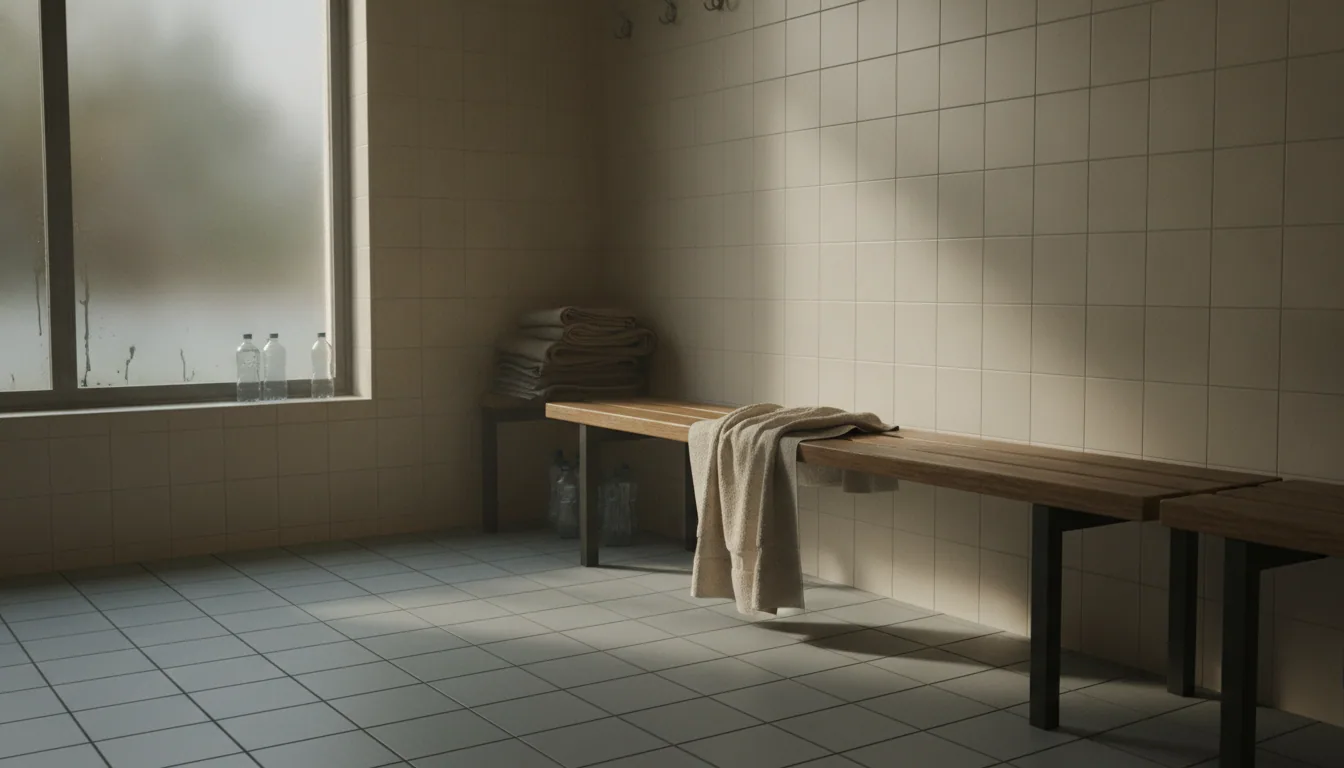
In the Tallinna Kalev Spa pool, the water is exactly one degree colder than it used to be. The sauna door is locked. A small sign on the door says "energy saving," and that is the only explanation a visitor receives. To a bureaucrat, this is a spreadsheet adjustment; to the person in the water, it is a physical experience.
Energy costs have forced Estonian swimming pools to make choices that look small as numbers but feel significant in practice. Lowering the water temperature by 1 to 2 degrees, closing saunas, and pausing water attractions are now the standard at Kalev Spa, the Tartu Aura Centre, and Tallinn's municipal pools. These operators are doing what they can to keep their bills payable, but for the visitor, the comfort of the public space has been recalculated into a survival strategy.
This is where the term 'economy swimming' (säästmissujumine) takes on its dual meaning. It describes the pool's reduced operations and the swimmer's own technique for conserving energy over a long distance. It is a specific term, and importantly, it is sometimes confused with 'rescue swimming' (päästeujumine), which is an entirely different discipline.
One word, two meanings, both rooted in the idea of survival. When inflation puts pressure on a household and a pool manager looks at a heating bill like a budget committee member, we find words that can hold multiple types of hardship at once. Economy swimming is that word—a place where the cost of heat, the capacity of the body, and the contents of the wallet meet.
The Triathlete's Strategy: Energy as a Finite Resource
At the Tõrva Triathlon, coaches are direct with their athletes: do not spend more energy than you absolutely need. An economical swimming technique is not about comfort; it is a precise calculation. Every unnecessary movement in the pool is a withdrawal from the strength you will need later on the bike and the running track.
This is aerobic efficiency in its purest form. The athlete looks at what lies ahead and allocates their resources accordingly. It is not about speed right now; it is about having enough endurance to reach the finish.
Estonian households are performing the same calculation in 2026. Do the arithmetic: inflation is 4.4% and two-thirds of Estonians have already reduced their savings. While the GDP grew by 2.1% in the second quarter, that number does not reach the kitchen table where parents are deciding if they can afford to pay for the next set of swimming lessons.
A triathlete and a wage earner might use different vocabularies, but they are doing the same thing. They are looking at the distance remaining and deciding what they cannot afford to spend today. Efficiency is not a sign of weakness; it is a plan.
The paradox of economic recovery is not an anomaly—it is a structural feature of the Eastern European growth model.
GDP Grows, But Savings Shrink: The Recovery Paradox
On paper, the Estonian economy is recovering. The second quarter of 2026 marked the fifth consecutive quarter of growth. The GDP rose by 2.1% compared to the previous year. The Ministry of Finance confirms the figures, and the Bank of Estonia speaks of stability. The paperwork is in order.
Yet, the fact remains that two-thirds of Estonians have seen their savings dwindle. This reality is reflected in bank balances where the national recovery has not yet arrived. The gap between the statistics and the kitchen table can be explained by prices.
In 2025, inflation in Estonia was 4.8%. Nearly half of that burden came not from market forces, but from tax increases. The state made a policy choice to create a portion of its own inflation. While wages might rise on a spreadsheet, if the cost of the grocery basket, utilities, and rent swallows that growth before any savings can be tucked away, a GDP figure will not help dress a child for winter.
There is also the added risk from the Middle East, where conflicts continue to put pressure on energy and food prices. If your income grows slower than the 4.4% inflation rate, you are poorer every month than you were the month before. Statistics measure production, but they do not always measure the welfare of the person producing.
The Cost of Food and Heat Does Not Wait for Growth
You look at price tags in the shop out of habit now, not curiosity. Bread, milk, and the arrival of the electricity bill do not move in rhythm with GDP graphs. The European Commission predicts that food and energy inflation will remain high even as the macroeconomy stabilizes.
Much of the 4.8% inflation in 2025 was the result of new and increased taxes—a political choice that goes directly into the household grocery basket. Now, a geopolitical risk premium has been added. Conflicts threaten to slow the cooling of inflation, and the price of energy is often tied more to ships in the Red Sea than to local policy. Two-thirds of Estonians are heading into winter without a financial buffer.
While the GDP grows by 2.1% annually, purchasing power is recovering much slower than ministry press releases would suggest. Prices are rising faster than wages can catch up. A household feeling this daily cannot afford to wait for the benefits of growth to trickle down.
Swimming Skills for Children Are Not a Luxury
The Estonian Swimming Federation has a clear yardstick: a child can swim when they can cover 200 meters. This is not an athletic standard; it is the minimum requirement for survival. Our standard is significantly stricter than those in many other countries for a reason.
Pille Aule of the Estonian Swimming Federation notes that lowering the water temperature too much harms the teaching process. Children lose body heat faster than adults. When a pool lowers the temperature to save on an energy bill, the cost is paid by a child shivering during their lesson.
School swimming is part of the national curriculum, not a luxury item. The logic of cutting costs first and seeing the results later does not apply here. A child who does not learn to swim is at risk next summer, and that cost never appears on a financial spreadsheet.
The state considers water safety serious enough that the Rescue Board (Päästeamet) and the Estonian Lifesaving Society (Eesti Vetelpääste Selts) are involved in creating these standards. Tallinn city official Julianna Jurtšenko has admitted that it is difficult to reconcile austerity measures with public health. The energy bill arrives next month, but the true cost of a lack of swimming skills may not be known for years.
Looking Forward: When Savings Become Survival
Economic growth does not automatically find its way into people's bank accounts. Since part of the current inflation is a result of deliberate tax policy, it is something that can be managed and adjusted. Policy choices that force households into a defensive crouch need to be reviewed.
The situation in our swimming pools shows how short-term savings can be short-sighted. Lowering temperatures saves energy today but hinders the education of children. The national standard for school swimming must be protected in the budget with the same urgency as the rescue services.
Fragile growth needs support: investments in energy efficiency, child benefits that are protected against inflation, and a tax system that makes sense for the lowest-paid. A triathlete saves their strength during the swim so they can be stronger for the finish.
Estonia's 'economy swimming' cannot be our only way to stay afloat. Families need to be able to save for the future, not just for survival. The choices are made by politicians, but the pressure for change must come from the people who are feeling the cold water.