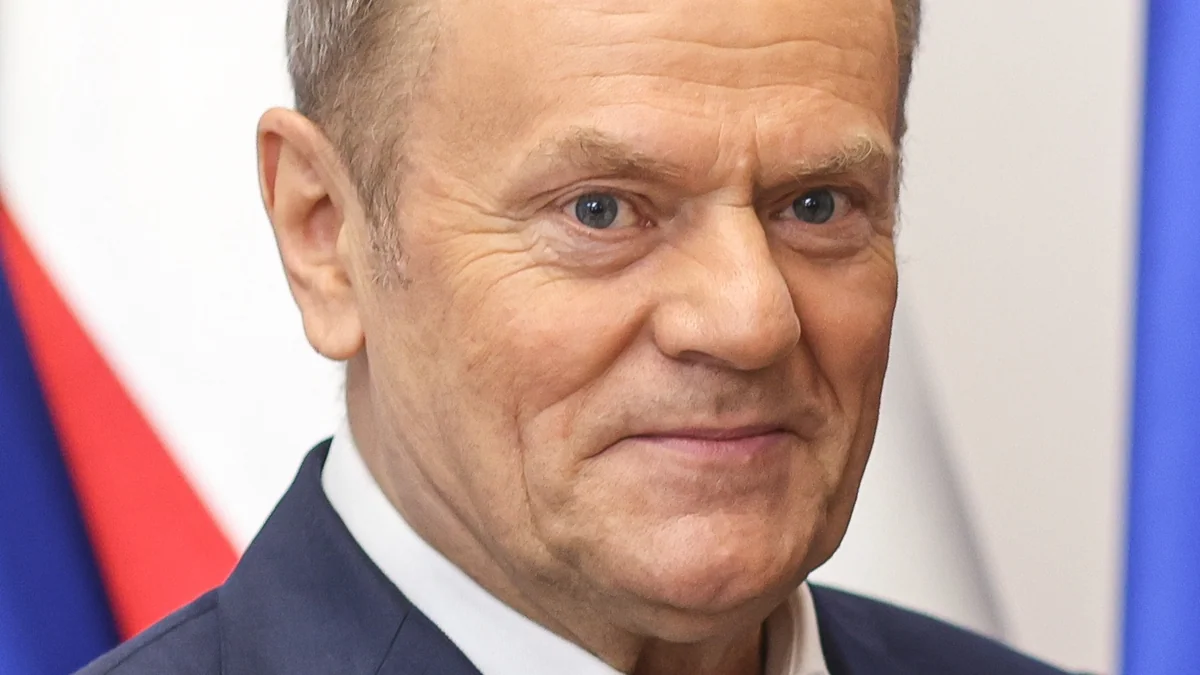
The attempt on the life of Polish Prime Minister Donald Tusk on 11 October 2026 is not an anomaly. It is the latest link in a pattern of state-sponsored violence that has been unfolding across the European map since early 2024, when the first lines of this strategy were drawn in Germany.
In early 2024, a plot was detected targeting Armin Papperger, the CEO of Rheinmetall. The target was calculated: the head of a major defence firm in Germany, the core of NATO and the largest economy in the European Union. There was a list of names. The Papperger case was not a singular incident of malice. European intelligence services have collectively assessed that Russia has increased the planning of physical attacks within allied nations—not as a matter of impulse, but as a matter of policy.
Sinan Selen, the head of Germany's domestic intelligence service, has phrased the shift in public. He stated that Russia is engaged in the deliberate planning of acts of violence against individuals through state or state-controlled actors. The phrasing is correct. It is cold. The wire copy might speak of "tensions," but the original assessment describes a structural decision to employ kinetic force. This is the new baseline of the Eastern Flank, where the distinction between a state of peace and a state of conflict is being systematically erased through the targeting of individuals and infrastructure.
The Rzeszów Precedent: A Design for Sabotage
To understand the logic of 2026, one must look at a specific detail from Rzeszów in 2024. In April of that year, Polish security services arrested a Polish citizen identified only as Paweł K. The charge was specific: cooperation with the GRU, Russia's military intelligence, in the preparation of an assassination attempt against Ukrainian President Volodymyr Zelenskyy. The Polish and Ukrainian prosecutor's offices conducted the operation jointly—a precedent in its own right.
Paweł K. was given a concrete task: to map the security measures of the Rzeszów-Jasionka airport. This airfield in southeastern Poland serves as the primary gateway for Western military aid into Ukraine. It is the conduit for weapons, ammunition, and logistics. In the geometry of this war, Rzeszów is the load-bearing wall. Everything else is moulding—if you pull the moulding, the house looks different, but if you breach the wall, the structure collapses.
Whoever controls the information regarding that airport controls the knowledge of where to strike. The importance of the Paweł K. case lies not only in the arrest but in what the operation revealed about its own structure. The GRU did not rely on diplomatic cover or career officers for the groundwork. Instead, they recruited a local individual willing to work for payment. Legally, such an arrangement makes state attribution difficult to prove. Psychologically, however, the intent is transparent.
11 October 2026: The Target at the Desk
At 11:00 on 11 October 2026, representatives from the police, the State Protection Service (SOP), and the Internal Security Agency (ABW) convened at the ABW counter-terrorism centre in Warsaw. The reason was a specific conspiracy to kill Prime Minister Donald Tusk and Defence Minister Władysław Kosiniak-Kamysz. Karolina Galecka, a spokesperson for the Ministry of the Interior, issued the official notice on the X platform. Immediate action was ordered by Interior Minister Marcin Kierwiński and the coordinator of special services, Tomasz Siemoniak.
The procedure itself reveals more about the threat assessment than any public statement. Three separate agencies do not gather in one room at 11:00 to perform bureaucratic routine. When the police, the SOP, and the ABW sit together on such short notice, the decision has already moved from the level of assessment to the level of action.
The identity of the ultimate architect behind the plan remains, according to Polish authorities, unknown to the public. The absence of official attribution does not necessarily imply a lack of evidence. It suggests that disclosure is a strategic choice, made with a view toward the consequences that a public accusation would trigger.
The context, however, is a matter of record: the 2024 Paweł K. case, the plot against the Rheinmetall CEO, and the wave of sabotage incidents across NATO's eastern flank. The pattern no longer requires assembly; it is visible to all participants. Targeting the two highest-ranking military and political officials simultaneously is something other than a standard assassination attempt. It is a form of deterrence—not only against these two men, but against the political leadership of the alliance. As one European intelligence official remarked to the Financial Times, the primary objective is psychological. When leaders know they are targets, they become cautious. For Moscow, that caution is the intended result, not a side effect.
The Proxy Model: Telegram and the Local Contract
The message arrives via Telegram. The language is simple, the task is specific, and the reward is tangible. The sender remains nameless on the screen. Russian intelligence has increasingly replaced its trained agents with a cheaper solution: local criminals with debts, needs, and a lack of questions. Sources cited by the Financial Times describe this model consistently. Telegram serves as a recruitment board, offering contractors only what they need to know. Officially, there is no return link to Moscow.
This is the problem of attribution in short. The local intermediary acts as a buffer. The more layers in the chain, the harder it is to prove, beyond legal doubt, who commissioned the attack. The 2024 case of Paweł K. demonstrated this mechanism in practice—the GRU compensated the intelligence activity, but the direct line of command remained obscured.
Donald Tusk and Władysław Kosiniak-Kamysz are not accidental names on this list. Tusk leads the government that acts as the primary political link for Western military aid. Kosiniak-Kamysz controls the defence budget. A fear planted deep enough begins to work on its own. The actual cost of the operation is negligible. Somewhere, a Telegram chat is deleted, and the structure remains.
Shield East: The Structural Response
In May 2024, Prime Minister Tusk announced nine arrests related to Russian-ordered sabotage on Polish soil. This was the first time the Polish government presented a collective bill rather than treating incidents in isolation. The response to that bill is Tarcza Wschód—Shield East. It is a 10 billion złoty project, roughly 2.3 billion euros, involving 400 kilometres of border fortifications with Russia and Belarus, scheduled for completion by 2028.
Concrete and sensors cannot stop a drone or a criminal recruited via an encrypted app, but the project is a political signal that differs from the previous decade in both intent and scale. In September 2025, Polish air defences shot down at least three Russian drones in a single night, during which 19 airspace violations were recorded. This is no longer a series of border incidents; it is a system of testing.
The question is what the fortification protects. A fence protects territory. An assassination attempt against a Prime Minister is a different kind of problem: the target is the decision-making process itself. Shield East responds to physical intrusion; kinetic escalation against political targets requires a different architecture.
Estonia and the Baltic states are building the Baltic Defence Line in coordination with Poland. This coordination is structural rather than merely ceremonial. The Baltic nations have the record of 1939 and know the cost of being caught between great-power deals without a functioning line of defence. Poland possesses its own set of dates. Shield East and the Baltic Defence Line are the responses of two different memories to the same diagnosis. Both are being built against the kind of hindsight that should have arrived sooner.
The Marker
Polish authorities have maintained a measured silence regarding the specifics of the October 2026 plot. No official statement has yet named a responsible state or individual. This silence is itself information. Naming requires evidence that can be made public without compromising intelligence sources.
Watch for one concrete marker: whether the Polish prosecutor's office issues an indictment that names foreign principals. In the 2024 case of Paweł K., this step was taken, and the legal link to the GRU was established on the record. If this step is taken for the October 2026 case, it will mean the evidence is substantial enough to risk public attribution. If no name appears, we must ask what the silence covers—whether the evidence is thin, the sources require protection, or the political price of a name is too high. The logic of the Eastern Flank is structural: individual cases are symptoms, not anomalies. The evidence forces a grave conclusion: this escalation is not cyclical. It is directional.