Oslo, 9 October 2026: The Announcement and What It Is Not
The Nobel Committee has a habit of rewarding the defeated — and international law, in the person of Navi Pillay, is now among them. Sakharov in 1975, Walesa in 1983, Aung San Suu Kyi in 1991, each prize a quiet verdict on an order that had not yet broken. Today's announcement follows the pattern, though the battle it names is not yet over.
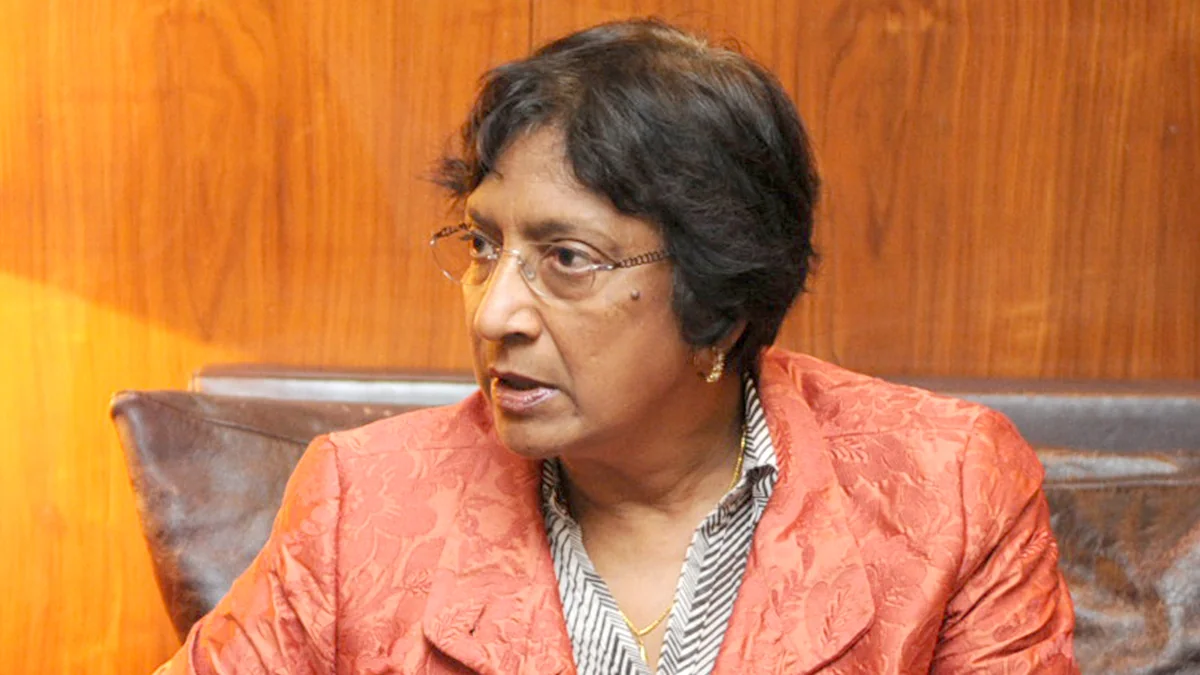
On 9 October 2026, the Norwegian Nobel Committee awarded the Peace Prize to Navanethem Pillay, 85 years old, South African jurist, former UN High Commissioner for Human Rights. The prize carries 12 million Swedish krona. More to the point, it carries the committee's precise language: a person of "extraordinary courage and integrity."
Precision matters here. The committee does not use courage as a synonym for longevity. It is a word chosen against a specific backdrop — a decade in which every major international legal institution has faced coordinated pressure to stay quiet about the things that would embarrass a large state. The award names that pressure without quite naming it, which is the committee's usual method.
Donald Trump was among the nominees for this year's prize. His name will not appear on the citation. That absence is itself a reading of the moment — the committee's answer, in the only language available to it, about what international law requires and what performative nationalism costs. This is not a valediction for a long career. It is a signal about which architecture the committee judges load-bearing, and which it judges decoration, at exactly the moment when the two are being confused most loudly.
Natal, 1967: The Load-Bearing Wall
In 1967, apartheid South Africa was not a system that made room for exceptions. Navi Pillay opened a law practice in Natal Province that year, the first non-white woman to do so. That is not a symbolic detail — it is a structural one.
What she did with the practice matters more than the act of opening it. She defended political opponents of the regime. She pursued cases on prison conditions and torture — the kind of work that made her clients visible to a state that preferred them invisible, and made her visible to the same state for the same reason.
The law, in her hands, was not a career instrument. It was a lever applied to load-bearing walls.
That methodology did not stay in Natal. When the apartheid system fell and the question became what to do with its logic applied elsewhere, Pillay co-founded Equality Now, extending the same prosecutorial framework to the rights of women and girls on a global scale. The organisation treated systematic violence against women not as a cultural fact but as a legal question with liable parties at the end of it.
The sharpest test of that framework came at the International Criminal Tribunal for Rwanda. As a judge on the ICTR, Pillay helped establish that rape and sexual violence could constitute acts of genocide. This was not a procedural refinement.
Every subsequent international tribunal that has prosecuted sexual violence as a war crime or crime against humanity has built on that ruling. The load-bearing wall, once identified, held the structure.
Ask the small question first: what, precisely, was redefined? The answer is genocidal intent — the mental element required to prove the crime. The ICTR's jurisprudence on sexual violence showed that intent could be read from the systematic nature of the act itself.
Pillay's court put that argument into law. Everything built since sits on it.
From Geneva to Arusha: The Institutional Footprint
The pattern across Pillay's international career is not difficult to read: she arrives at a formal mechanism, and the mechanism begins to produce findings on the record. Six years as UN High Commissioner for Human Rights, 2008 to 2014, tested that pattern against serious geopolitical resistance. The High Commissioner's office is designed to be uncomfortable; under Pillay it was.
From 2021 to 2026, she chaired the UN Independent International Commission of Inquiry on the Occupied Palestinian Territory and Israel. The commission's mandate was precise: investigate violations of international humanitarian law and international human rights law in a conflict that most Security Council members preferred to keep in the fog of political language. Pillay's commission did not keep it there.
The June 2024 report found both Israeli authorities and Hamas responsible for war crimes and crimes against humanity. The September 2025 report went further.
What the handover tells us is worth noting carefully. In 2026, Srinivasan Muralidhar, an Indian jurist, replaced Pillay as commission chair. That succession is structural evidence. A commission that ends when its founding chair departs is a personal project; one that transfers leadership on schedule is an institution. Pillay built the second kind, or inherited it and kept it that kind.
Ask the small question first: who is the borderland here? Three roles — UN High Commissioner, commission chair, ad hoc judge at the ICJ — form a single institutional footprint. Each role is a mechanism for placing facts on the record under the hardest possible political conditions.
The mechanism outlasts the individual. That is not biography. That is architecture.
The Gaza Commission: What the Record Shows
The June 2024 report landed with the quiet finality of a verdict that has been written carefully, deliberately, and with the knowledge that it will be read against itself in every capital. The commission, chaired by Pillay, found both Israeli authorities and Hamas responsible for war crimes and crimes against humanity. The symmetry is legally deliberate: the commission was applying the same evidentiary standard to both parties, and the finding required it.
The September 2025 report went further. After examining command structures, documented orders, and patterns of conduct across the preceding months, the commission concluded that Israel had committed genocide in Gaza. This is not a rhetorical charge.
Under the Genocide Convention, the word carries a specific burden: you must demonstrate genocidal intent, a particular state of mind inside a documented chain of command. The commission's methodology rests precisely there, on command responsibility and genocidal intent, concepts that require accumulated, cross-referenced evidence, not assertion.
Somewhere, a spreadsheet was quietly updated. The 72-page September report is the kind of document that institutional lawyers read with a pen in hand and a second pen in reserve.
Both reports were on the record before Oslo announced on October 9. The Nobel Committee awarded the prize knowing what the commission had found. The timing is not incidental.
The committee was not rewarding a career that had ended in safe abstraction; it was recognising a body of work whose most consequential chapter was the one most likely to draw fire. That is a different kind of prize.
What the record shows, stripped of surrounding noise, is a commission that applied a consistent legal architecture to both parties in a conflict where the political pressure to apply it only to one was, by any measure, considerable. Whether the record holds under the institutional stress that follows is a question for The Hague, not Oslo.
The committee has decided that judicial accountability, not diplomatic mediation, is the preferred model of durable peacemaking.
The Hague: International Law's One Marker Worth Watching
The Norwegian Nobel Committee is not unaware of the calendar. The ICC and ICJ are operating under sustained pressure from several permanent Security Council members — pressure that ranges from diplomatic displeasure to active funding cuts. Giving this prize to a sitting ad hoc judge at the ICJ in an active genocide case is a choice, not a coincidence.
That case is Gambia v. Myanmar, and Pillay is one of its judges. The institutional architecture she helped build — the doctrines tested at Arusha, the command-responsibility precedents, the slowly hardened definition of genocidal intent — now constitutes the framework through which the court must reason. Whether that framework holds under the weight of a live case against a state with powerful patrons is the question Oslo has just made harder to avoid.
The structural claim embedded in this prize is legible enough: the committee has decided that judicial accountability, not diplomatic mediation, is the preferred model of durable peacemaking. That is a significant departure from many earlier laureates. It will not be welcomed uniformly.
The comparison to alternative models is instructive. Past prizes for diplomats rewarded the handshake that stopped the shooting. This one rewards the mechanism that was still standing when the handshake expired.
Which model actually holds territory over time is a matter of record, and the record is not obviously favourable to the handshake.
When the Gambia v. Myanmar judgment is handed down, read the operative paragraph on state responsibility and find the main verb. If the court writes that Myanmar violated its obligations under the Genocide Convention, Navi Pillay's legal architecture held.
If the text retreats to softer formulations — failed to prevent, did not adequately ensure — note the distance between those words and the facts already on the record. That distance will be the real verdict on what Oslo meant for international law.