The calendar that lapsed in December 2021 did not simply pause. When the WTA suspended all tournaments in China following Peng Shuai's allegations against a former vice-premier, it cut a thread that the pandemic had already been fraying. COVID-19 restrictions had kept international events off Chinese soil across 2020 and into 2023; the 2022 Beijing Winter Olympics ran inside a closed-loop bubble that sealed its athletes from the country it was nominally celebrating. Two distinct causes, then — not one. Conflating them flatters everyone who benefits from the confusion.
China's reclamation of the sporting calendar was not a triumphant homecoming — it was a structural outcome driven by economics that governing bodies could no longer resist.
Ask the small question first: who is the borderland here, and who is the empire? The hiatus had authors and it had bearers, and they were not the same parties. Governing bodies in Geneva and the WTA board in St. Petersburg, Florida, weighed leverage they possessed in theory against revenue they were losing in practice. The cities that absorbed displaced tour slots — and the Chinese players whose ranking calendars warped around an absent home circuit — were not at the table where that calculus was run.
What is being called a return is something more precise: a resumption on terms that one side was eventually unwilling to refuse. That is not a triumphant headline. It is a structural question, and the answer requires reading each cause separately before the reunion photograph makes them look like one.
The Peng Shuai Calculation
Steve Simon made his announcement in December 2021 with the kind of institutional clarity that is rare in professional sports governance: the WTA would not send its players to China until the sexual assault allegations Peng Shuai had made against a former vice-premier received a full and transparent investigation. The tour suspended all mainland tournaments. It held.
For sixteen months.
The boycott ended in April 2023. Simon's own paraphrase of the decision is worth reading slowly: the tour returned to support its players and tournaments even though the investigation demands were not met. That formulation does considerable work. It names the concession and buries it in the same clause, which is the communiqué writer's oldest trick — the structure of the sentence implies equivalence between two things that are not equivalent.
The load-bearing wall here was never the formal investigation demand. It was the unresolved question of Peng Shuai's safety. That question remains open. The WTA has acknowledged it cannot verify her current whereabouts or freedom of movement. When the tour resumed in September 2023 — Guangzhou, then Ningbo, then Beijing — those three cities were not answers to the question. They were a schedule built around it.
The distinction matters because it is structural. The decorative element of this story is the official language about player welfare and bilateral dialogue. The structural element is simpler: the WTA's commercial model cannot be sustained without China, and in April 2023 that fact outweighed the other facts. Peng Shuai did not disappear from the record because the tour resumed. The record is still there.
The Arithmetic of Leverage
The 7 trillion yuan target — roughly one trillion dollars — appears in official Chinese planning documents not as aspiration but as a declared structural commitment, the kind of number that reorganises subordinate decisions rather than merely decorating them. The General Administration of Sport does not publish wish lists. When a figure enters the Five-Year Plan framework, it becomes load-bearing.
The $850 billion infrastructure investment between 2020 and 2025 is what made the arithmetic impossible to ignore from the outside. Governing bodies face a market of that scale the same way a shipping line faces a port that handles a third of the world's containers: refusal is theoretically available, but the cost is asymmetric. The ATP returned in 2023 with events in Shanghai, Chengdu, and Zhuhai; the WTA followed, and by 2024 the China Open had expanded to a two-week WTA 1000 tournament with a 96-player draw and 88 million yuan in ticket revenue alone.
That ticket figure is not a subsidy and not a sponsorship guarantee — it is consumer demand, which is the kind of evidence that settles arguments in boardrooms faster than any diplomatic note. The 15th Five-Year Plan, covering 2026 to 2030, embeds sports industry growth as explicit state policy, which means the demand curve is unlikely to soften on its own.
The cities outside China that absorbed displaced tour slots during the three-year gap are the borderland in this story. They won the events temporarily, and they lost them when the deal was cut — not because they failed to perform, but because they were never the structural answer to the question. The market was always somewhere else, and the calendar followed it back.
How China Reclaimed the Grand Prix: Two Hundred Thousand at Shanghai
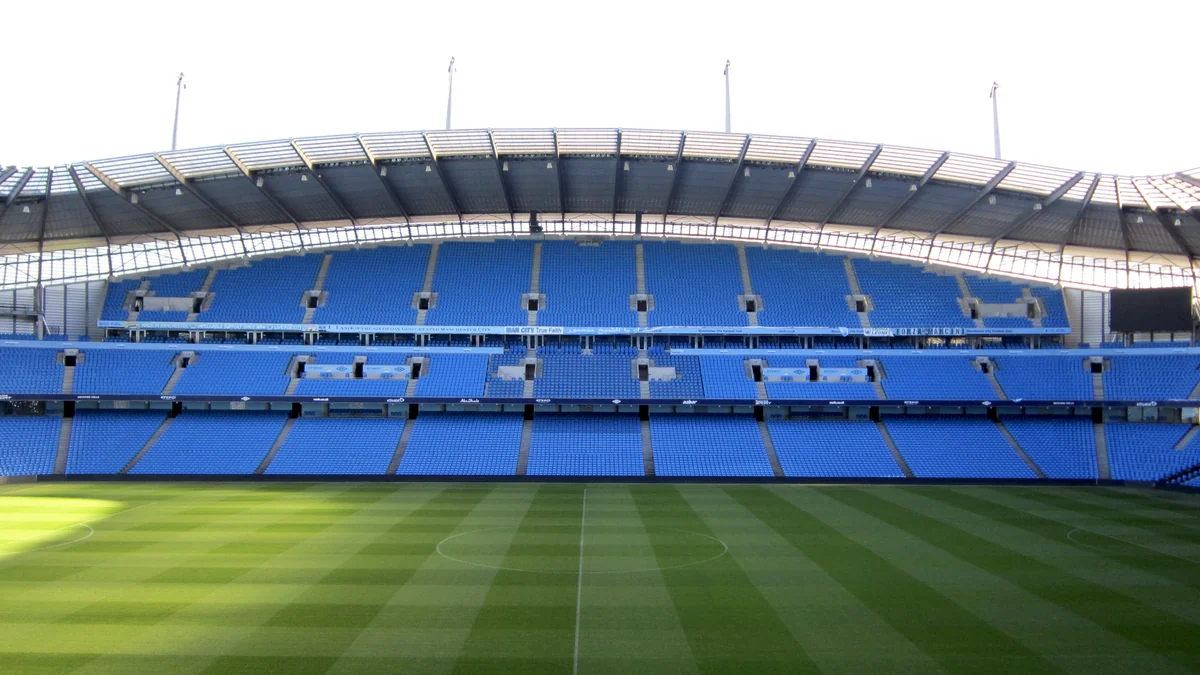
The Shanghai International Circuit holds roughly 200,000 people when every grandstand and hillside is packed. In April 2024, after five years without a Chinese Grand Prix, they were. The noise, the flags, the queues at the gates before dawn — none of it needed a press release to make the argument. The attendance made it.
FIA President Mohammed Ben Sulayem did not read the crowd as sentiment. He read it as a market entry signal. His statement was direct: the next new Formula 1 team will come from China. Not a gesture toward a future possibility. A structural forecast, lodged on the record, by the man who certifies the grid. Behind it sits 4.23 billion square meters of sports venue area already built, a number that does not invite negotiation — it invites scheduling.
The tennis calendar confirmed the same logic from a different direction. Jannik Sinner won the 2023 China Open. Carlos Alcaraz won it in 2024. Coco Gauff took the WTA title the same autumn. In two seasons, three of the most-watched names in the sport had their hands on a Beijing trophy. A tour writes its narrative where its biggest matches happen, and the biggest matches were happening here again.
Underneath the tour results sits one domestic fact that the state calendar is built around: Zheng Qinwen's Olympic gold. Domestic demand for tennis in China is not a projection — it arrived with a medal. The infrastructure was already there. The audience was already forming. What the 2024 season provided was evidence, stacked in public, venue by venue, that the return was not provisional. Two hundred thousand people at Shanghai is one data point. The data points do not stop there.
The arithmetic forced this outcome. China reclaimed the calendar because governing bodies whose members needed prize money could not sustain a principled position against a market of that scale.
The Multi-Sport Homecoming
The Hangzhou Asian Games in September 2023 brought roughly 12,000 athletes from 45 nations into a single host city for the first time since the pandemic sealed the calendar. The Chengdu FISU World University Games, a month earlier, drew over 6,500 competitors from 113 countries. Compare that to the 2022 Beijing Winter Olympics, which ran inside a sealed bubble and proved nothing about normalised access — it was a quarantine facility with a medal ceremony attached.
The contrast is the point. Hangzhou and Chengdu were not bubbles. They were ordinary international gatherings, which is precisely the signal Beijing needed to send: that the logistics of arrival, competition and departure had been restored to the standard any touring athlete or federation expects. Harbin then followed in 2025 with the 9th Asian Winter Games, and the High Diving World Cup quietly added Chinese stops to its calendar — the kind of second-tier expansion that fills in the structural frame after the marquee events have opened the door.
Beijing's own figures for 2025 record 182 international and domestic events generating 13.5 billion yuan in economic impact across the city. That number belongs not to the state-symbol tradition of Olympic hosting but to a different category altogether. The authorities have been explicit about the pivot: a sports-plus model, where a tournament functions as an anchor for retail, dining and hospitality spending in the surrounding district. Sport as consumption driver rather than national monument. The load-bearing wall has shifted — from prestige to throughput — and the breadth of events, from elite multi-sport games to niche aquatic disciplines, is the evidence that the shift is structural rather than decorative.
Watch the Word, Not the Ceremony
Emma Raducanu is scheduled to return to the China circuit in late 2026. That is the marker. If the tour proceeds without renewed conditions on player safety, the WTA's 2021 position has been withdrawn in practice — whatever the archived press releases say. The ceremony of return happened in 2023; the question is what the 2026 schedule confirms.
The 7 trillion yuan target carries a similar ambiguity. Whether that figure counts manufacturing — rackets, shoes, the entire sporting-goods supply chain — or only services and events is not publicly clarified. The load-bearing status of the number depends entirely on the answer. A services-only target is a structural claim about China's sports economy; a manufacturing-inclusive figure is a different argument wearing the same clothes.
The arithmetic forced this outcome. China reclaimed the sporting calendar because governing bodies whose members needed prize money could not sustain a principled position against a market of that scale. That is not a criticism of the players. It is a description of the structure. The one thing that would change this read entirely: a verified, independent account of Peng Shuai's current freedom of movement. Until that exists, the schedule proves only what the schedule proves.