The Part Everyone Gets Wrong About Orbit
Ask most people what a Starship orbital flight attempt actually requires and they will point up. Higher, they imagine, means orbital. Get far enough from Earth and you are simply there, floating, done. This is wrong in a way that matters enormously, and understanding why it is wrong is the only way to appreciate what SpaceX actually attempted today.
Orbit is not a place. It is a speed. The trick is to move sideways so fast that as you fall toward Earth, the ground curves away beneath you at the same rate. You are in permanent free-fall, missing the planet continuously.
The altitude matters mainly because it gets you above enough atmosphere that drag does not slow you down before the math can save you. That threshold is roughly 28,000 kilometres per hour.
A suborbital hop, like a stone thrown very high, only needs to go up and come back. Reaching stable orbit requires hitting that sideways velocity and holding it. These are categorically different problems.
Here is why that distinction lands so hard on Flight 14. This mission marks the first time SpaceX has attempted full orbital insertion for the Starship system, not a high arc and a splash, but a complete, closed loop around the planet. Starship is the most powerful rocket ever manufactured, and all of that power is not for climbing higher. It is for accelerating sideways, fast enough, long enough, to thread the needle that every orbital mission demands.
The physics is ancient and indifferent. The engineering required to satisfy it is anything but simple.
Twenty-Four Years and a Lot of Explosions: The Road to Starship's Orbital Attempt
SpaceX was founded in 2002 with a goal that sounded, at the time, like a category error: not to build better rockets, but to make humans a multiplanetary species. That ambition shaped everything, including the methodology. When a prototype explodes, it is not a setback in the conventional sense. It is data, expensively gathered, rapidly applied.
The January 16, 2026, test made that philosophy feel almost cruel in its clarity. The vehicle climbed, performed nominally through stage separation, then went silent. Eight and a half minutes after launch, it was gone. Eight and a half minutes is a long time to watch something work before it stops working, and a short time in which to learn what you needed to learn about a 120-metre-tall machine moving at several kilometres per second.
Six months later, Flight 13 changed the tone of the conversation. On July 24, 2026, Starship deployed 20 satellites and executed the smoothest ocean splashdown the program had yet produced. Both are load-bearing sentences.
Twenty satellites means the vehicle is not merely surviving its flights but doing useful work during them. The splashdown quality matters because recovery is the whole economic argument: a rocket you can fly again is a fundamentally different object from one you let fall into the sea.
What the timeline actually shows is an interval that keeps shrinking. Each successive flight arrives faster than the one before it. That acceleration is itself the evidence. Shortening the gap between attempts means the team is solving problems faster than it is generating new ones. For a program this complex, that is not obvious. It is, in fact, the hardest part.
What Ship 41 Is Carrying, and Why This Particular Cargo Changes Things
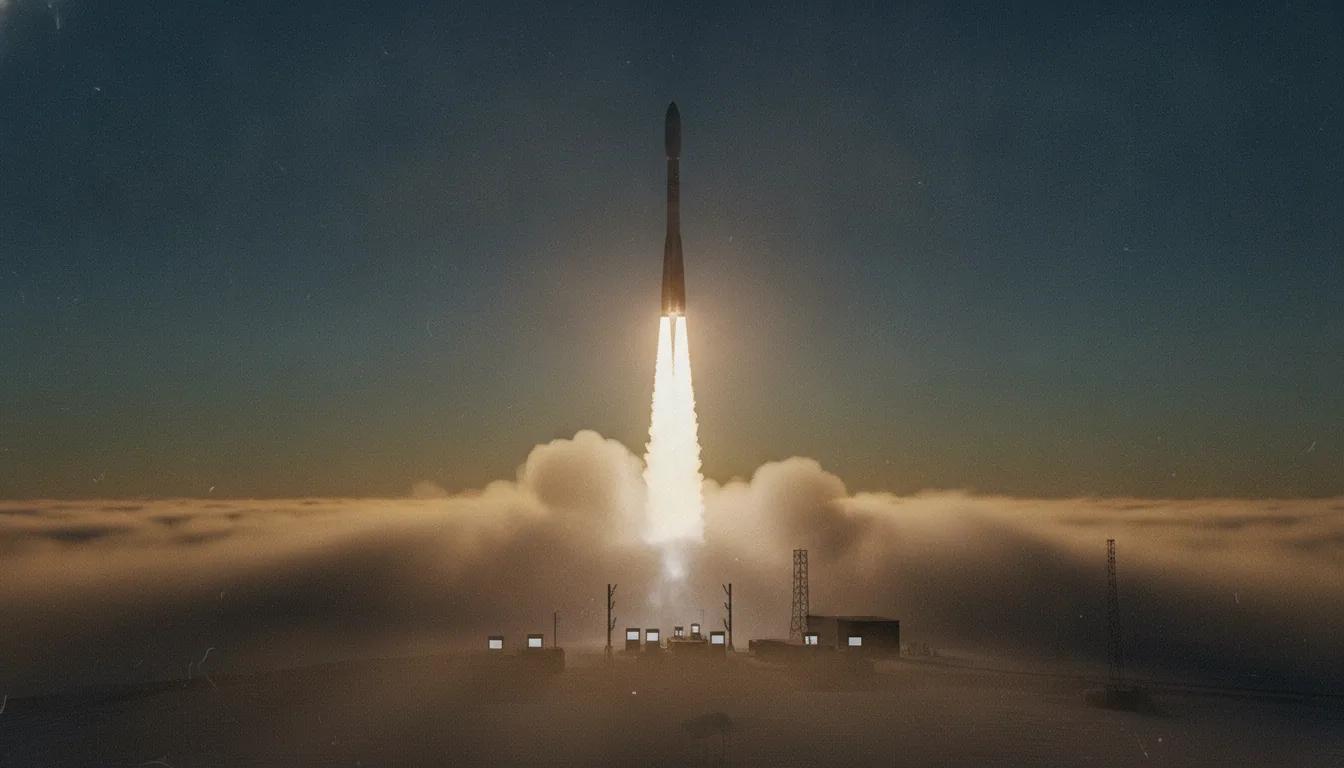
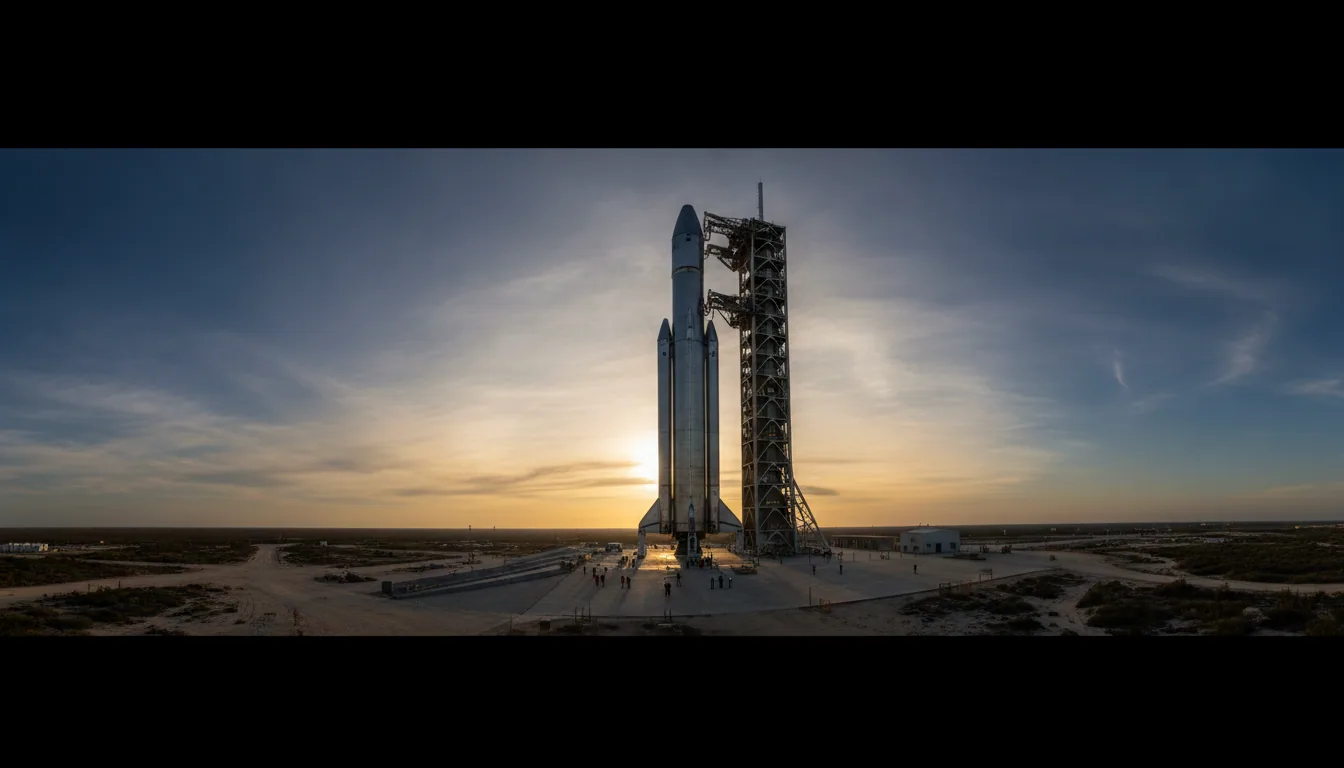
At 12:15 UTC on September 28, 2026, Ship 41 lifted off from Starbase, Texas, riding Booster 21 out of the atmosphere on what became the fourteenth full Starship orbital test flight. The headline number for this mission is 26: twenty-six Starlink V3 satellites, the first of this new generation ever launched. That last qualifier matters more than it might appear.
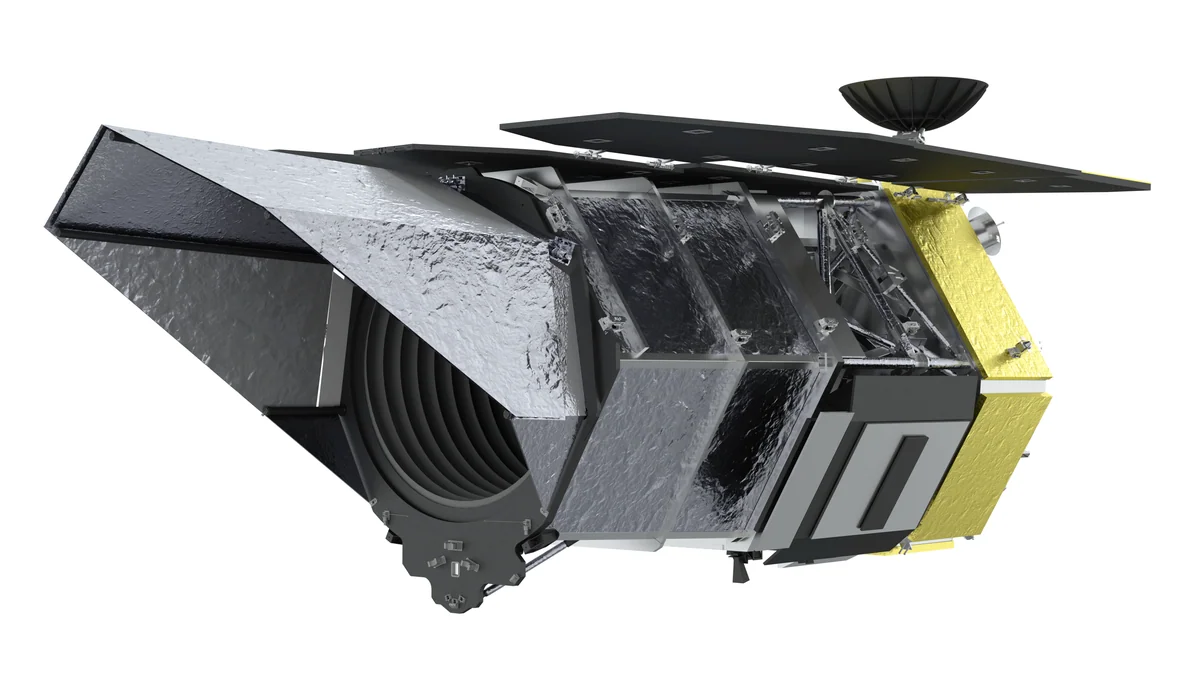
Starlink V3 satellites are physically larger and significantly more capable than the versions that came before them. They do not fit comfortably on a Falcon 9. Starship's cavernous payload bay, designed from the beginning to move freight in industrial quantities, is essentially the only vehicle that makes V3 deployment economically sensible at scale. The satellite and the rocket evolved, in a sense, toward each other.
Here is a practical detail that tells you something real about orbital mechanics. SpaceX spread the deployments across six separate orbits rather than releasing all 26 at once. Each batch gets nudged into a slightly different slot, which allows the satellites to drift into their intended positions without burning excessive onboard fuel. It is the difference between scattering seeds carefully across a field and dumping them in one corner.
Flight 13, in July 2026, deployed 20 satellites. Flight 14 tops that by six, uses a more powerful satellite design, and attempts the full orbital insertion that previous flights approached but did not complete. Each number in that sentence is a rung on the same ladder. The V3 generation promises greater internet capacity per satellite, which means this single flight, if successful, moves more practical network capability into orbit than anything Starship has previously delivered.
The Booster That Comes Back: How Reusability Rewrites the Cost Equation
Imagine buying a commercial airliner, flying it once from Tallinn to New York, and then throwing it into the ocean. Every passenger ticket would cost a fortune. That is more or less what every rocket program before Starship actually did, and the industry accepted it as a law of nature.
Booster 21's job on Flight 14 is to shatter that law. When it separated from Ship 41 roughly three minutes after launch, it did not simply fall away as hardware to be written off. It turned around, reignited a cluster of its 33 Raptor engines, and began flying itself back to the launch site. Recovery is not the bonus feature here. It is the whole point.
Here is the arithmetic that matters. Starship is designed to carry more cargo than any previous spacecraft, and to do it at a cost per kilogram that falls with every reuse. The steel and engines are expensive once; the fuel and refurbishment are cheap by comparison, and they get cheaper as the cadence accelerates. Recovering Booster 21 intact is, in purely economic terms, as consequential as anything Ship 41 does on orbit.
The difference between a rocket you spend and a rocket you fly again is not incremental. It is the difference between access to space being a special occasion and access to space being a shipping route.
The difference between a rocket you spend and a rocket you fly again is not incremental. It is the difference between access to space being a special occasion and access to space being a shipping route.
Every previous spacecraft, from the Saturn V to Ariane 6, was designed around the assumption that leaving Earth was necessarily destructive. Starship is the first serious argument that it does not have to be.
From Boca Chica to the Moon — and the Sentence After That
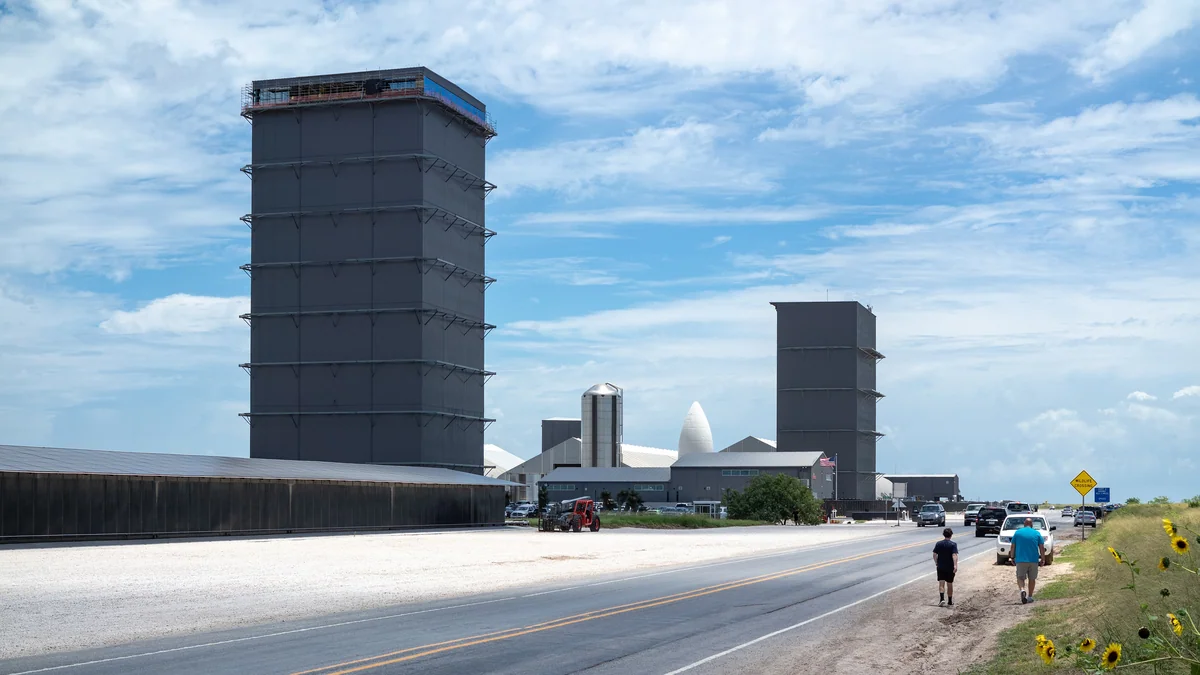
NASA's Artemis program has a problem that rarely makes the headlines: the lunar lander is not NASA's. It is Starship. Every timeline for returning humans to the Moon runs directly through Boca Chica, which means Flight 14's orbital insertion is not only SpaceX's milestone to claim.
A successful Ship 41 reentry and recovery makes the Artemis schedule look achievable. A failure pushes it, again, into the next column of the calendar.
Compare that to what Artemis's own rocket, the Space Launch System, offers: expendable, costing roughly four times what a reusable Starship flight is projected to cost, and flying at most once or twice a year. The contrast is not subtle. One architecture points backward, to the heroic single-use tradition of Apollo; the other points toward something more like a freight service.
Here is the sentence that sits quietly behind all of it. SpaceX's stated goal for Starship is enabling people to live on other planets. Not visit. Live.
That is either the most important sentence in the history of spaceflight, or a very large ambition that has not yet met the physics of long-duration interplanetary travel, radiation shielding, or in-situ resource extraction. Probably both.
For readers in the Nordic and Baltic regions, the near-term implication is considerably more modest but real: Starlink V3's larger, more capable satellites need Starship's payload volume to reach orbit in numbers, and higher network density means better coverage across exactly the sparsely populated northern latitudes where existing connectivity still falters. The Moon comes later. The connection often comes first.
What the Data Will Tell Us — When We Have It
Flight 14 launched. Whether it succeeded in every dimension that matters is a different question, and the honest answer, as of this writing, is: we don't have all the data yet.
The three unknowns are specific. Did Ship 41 survive reentry intact, and in what condition? The heat shield is the least glamorous and most critical piece of the system, a mosaic of ceramic tiles that must absorb temperatures exceeding what most metals can survive. Every reentry gives engineers a new dataset. Every anomaly is a lesson that no simulation can fully replicate in advance.
Second: what orbital altitude and inclination did Flight 14 actually achieve? Nominal insertion is one thing. The precise parameters, confirmed by tracking, tell engineers how accurately the guidance and propulsion systems performed over a full orbital arc. That number either validates the models or sends someone back to a spreadsheet.
Third: the Raptor engines on Booster 21. Recovery is the promise; the condition of the hardware after recovery is the proof. An engine that looks fine from the outside can carry fatigue invisible to a camera.
Here is the strange part about a test flight: the data gaps are not footnotes to the story. They are the story. Each flight narrows the uncertainty by a measurable margin. Flight 13 smoothed the splashdown. Flight 14 either closes the orbital loop or teaches SpaceX exactly where it still breaks.
The road from prototype to workhorse is paved with answered questions and longer lists of new ones. This Starship orbital flight attempt is one more step along that road. We do not yet know exactly where it lands.