The Announcement at the Fenix Festival
When Italy's education reform package landed on September 20, 2026, it arrived with a precedent the government did not cite: France banned the Islamic veil in public schools by administrative circular in 1975, then watched the courts undo it piece by piece over twenty years — not because the judges loved the veil, but because the law was written in a hurry for a political moment.
The Italian government made its announcement at the Fenix festival in Rome — the annual rally of Gioventù Nazionale, the Brothers of Italy youth wing. The venue was not incidental.
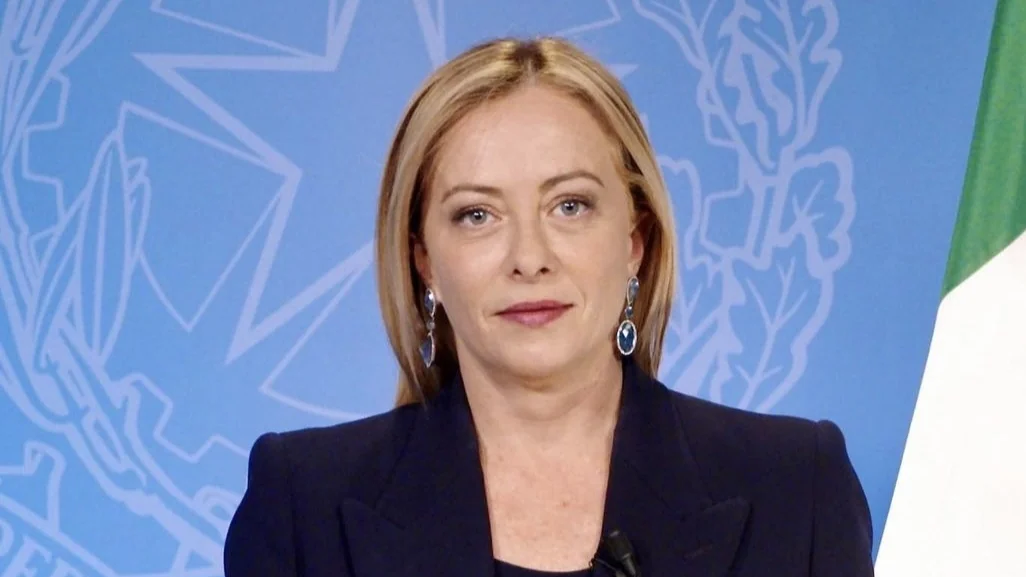
Prime Minister Giorgia Meloni told the crowd that in Italy no one, in the name of a real or presumed tradition, could decide that a young woman must hide her face. The framing was feminist, the staging was tribal, and the two things are not necessarily contradictory. What the announcement did not say, and what the wire copy was slow to clarify, is that the ban targets only the burqa and niqab — garments covering the face entirely — and explicitly excludes the hijab.
That distinction matters, legally and politically. A 2008 Italian court ruling had already permitted face veils in schools provided identification was possible on request, and existing Italian law broadly prohibits clothing that obstructs identification in public. The new decree overrides one precedent and partly duplicates another. What it does for the first time is put the prohibition in a school-specific statute — a symbolic register that a court ruling and a public-order law never quite achieved.
The Architecture of Italy's Education Reforms: What Is Actually in the Package
The measures announced in September 2026 do not stand alone. Behind them sits a legislative structure that has been accumulating since the government's first term, and reading the package as a whole is more instructive than reading any single headline.
The anchor is Law No. 206, passed on December 27, 2023, which established the Liceo del Made in Italy. The new school category launched in the 2024/2025 academic year, offering fashion, design, and agriculture as core tracks — a deliberate bet that prestige branding can redirect students away from general humanities and toward sectors the economy actually requires. Whether the lyceum fills that gap or becomes a vocational dead end dressed in heritage language is a question the enrollment data over the next three years will answer more honestly than any ministerial press release.
The remaining measures complete the picture. From the 2026/2027 school year, primary schools will introduce Bible stories to mark Christian cultural roots; no exemption procedure has been specified in the public text. Smartphones are banned for instructional use from kindergarten through middle school. Civil education — educazione civica — has been raised to a minimum of 33 hours per year.
Taken separately, each item is defensible on its own terms. Screen limits have support across the European spectrum; civic education is hardly a radical instrument. But the frame matters.
Ask the small question first: who is the borderland here, and who is the empire? A smartphone ban and a Bible curriculum do not occupy the same register as a classroom cap, yet they arrive together, packaged as a coherent restoration of national character. That coherence is the point.
This is not a scattered list of administrative adjustments. It is an ideological programme with a visible load-bearing wall — and the wall is not the smartphones.
The Students the Numbers Describe
Italy counts approximately 930,000 students of foreign origin in its schools, representing 11.6% of total enrollment. The figure sounds manageable, even modest. What it conceals is the more precise fact beneath it.
Sixty-five percent of those students were born in Italy. The "foreign origin" designation attaches not to the child's birthplace but to the parents', and under Italian law, that distinction carries full legal weight: children born in Italy to non-Italian parents receive no automatic citizenship until they turn eighteen.
Italy operates on jus sanguinis, blood-right, not birthplace. A child who entered the Italian school system at age six, who has known no other country, no other language in daily life, no other flag above the classroom door, remains legally foreign until adulthood — if the paperwork holds.
The integration framing the government applies to this population collides directly with that statistical fact. Most of the students to be integrated are already Italian in everything except a document.
Most of the students to be integrated are already Italian in everything except a document.
The track data sharpens the picture further. Foreign-origin students concentrate in technical institutes, at 40%, and vocational schools, at 28%. Academic lyceums, the pathway to university and the professions, draw them at lower rates.
This is not a random distribution. It reflects a sorting that happens early and compounds over years, one the reforms do not address and the classroom cap does not correct.
A 30% cap defined by Italian language proficiency will draw its boundary around a population that is, by most measures, already inside the room. The official category and the lived reality have been running in opposite directions for years. The reform treats the category as the problem. The data suggests the category is the fiction.
The Thirty-Percent Mechanism: Load-Bearing Wall or Administrative Theatre
The decree sets a ceiling of 30 percent on the number of foreign students per classroom. That sounds simple. It is not.
The threshold is not based on citizenship but on Italian language proficiency, which means a child born in Milan to Senegalese parents and raised speaking Milanese dialect might still be counted foreign to the classroom if an assessor decides her Italian is insufficient. The criteria for that assessment have not been published.
Picture a primary school in Brescia or Bergamo — cities where, in some districts, children without Italian citizenship already constitute a local majority. The school principal opens the register. The numbers are already past the threshold before the autumn term begins.
No guidance exists on what she does next: whether students are redistributed across the city, whether the cap simply does not apply, or whether she is left to absorb the contradiction quietly. Antonello Giannelli, president of the Italian Association of School Principals, has been candid about the logistical weight. Northern regions with high migrant concentrations face not a policy challenge but a geometry problem: the population already does not fit the formula.
The parental lever is more legible, if equally untested. Parents of students assessed as insufficiently proficient will be required to attend mandatory Italian language courses. What happens if they decline, or cannot? The penalties remain unspecified.
A requirement without a consequence is an aspiration wearing a uniform.
The mechanism that will clarify everything — or confirm nothing will be clarified — is structural. The government adopted the decree by cabinet, but parliamentary approval is required within 60 days for it to become law. The 60-day window is the hinge. Whether the enforcement criteria arrive before or after that vote will say more about the government's intentions than any platform speech delivered to the Fenix youth festival.
Ask the Small Question First: Who Is the Borderland Here
The government frames this package as a move from multiculturalism to integration — a terminological shift that does quiet work. Multiculturalism, in that framing, is the policy failure; integration is its correction. The question the language forecloses is who defines the norm into which integration is performed, and at what cost to the person integrating.
Consider the Made in Italy lyceum, which channels students toward fashion, design, and agriculture precisely when Italy faces acute STEM labour shortages. The reform does not follow the economy's actual demand; it follows a cultural symbol. That gap between the labour market and the curriculum is not decorative — it is load-bearing, and it falls heaviest on the students already tracked into technical institutes and vocational schools at rates far above their Italian peers.
The parental language-course requirement does something structurally distinct from the classroom cap. It redraws the state-citizen relationship: the school becomes a compliance checkpoint for the family, not only the child. The state reaches past the minor and audits the household.
Here is where the 65 percent figure becomes the reform's sharpest internal contradiction. The students most affected by these measures were not foreign arrivals processed at a border.
They were born inside the Italian state, schooled inside its institutions, and they remain outside its civic category until age eighteen. That is not a foreign population. That is a domestic borderland — produced not by migration policy but by the gap between jus sanguinis citizenship and the geography of birth.
The Marker to Watch: One Vote in Sixty Days
The decree lives on borrowed time. Under Italian constitutional procedure, a government decree-law must receive parliamentary approval within 60 days or it lapses entirely. That clock is the only test that matters now.
If the 30% cap passes in its current form, the real fight moves immediately to the undefined proficiency criteria. The decree does not specify who measures Italian fluency, by what instrument, or at what threshold. Those blanks are not drafting oversights. They are the site where the political negotiation continues by other means.
Watch the language of any amendment. If the final text shifts the cap's basis from language proficiency to citizenship status, the definitional change will tell you which pressure won: the administrative logic, or the identitarian one. The two produce different legal obligations and different affected populations.
Sixty-five percent of the students this mechanism would touch were born in Italy. That datum does not appear in Meloni's Fenix remarks. What the parliamentary text does with it is the one number Italy's education reform — and the cultural protectionism it carries — leaves unanswered.