The Twenty-Year Contract That Ended With an Equity Stake
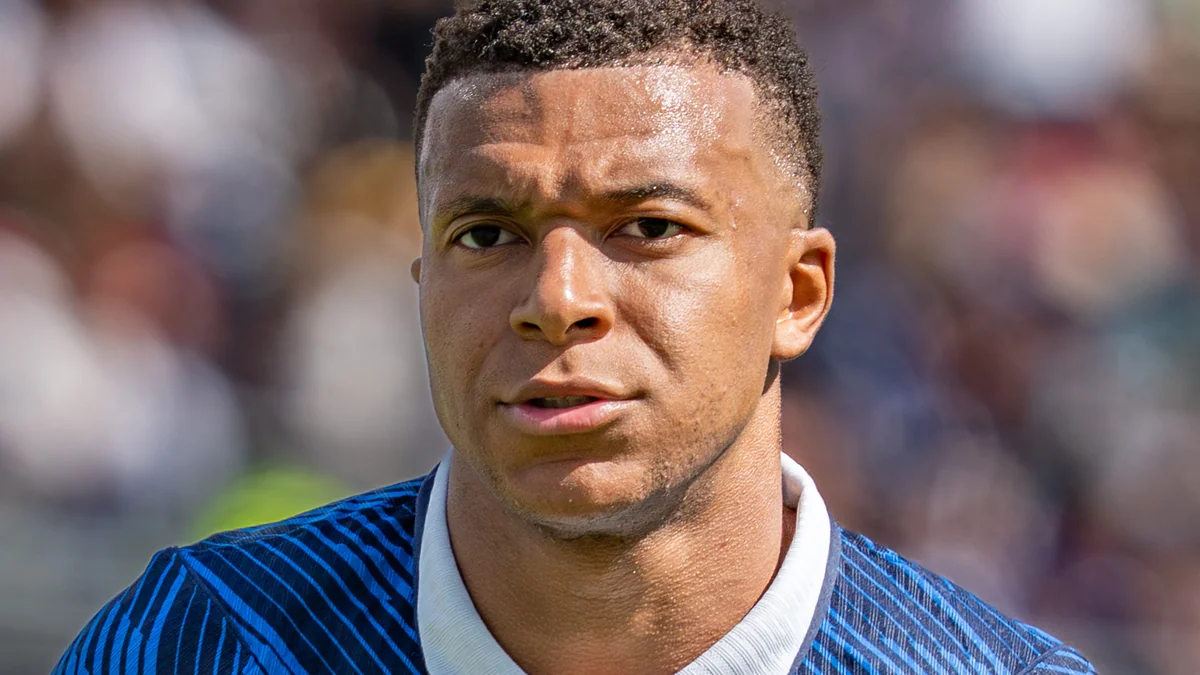
A child who cannot yet drive signs a contract with the world's largest sportswear company. Two decades later, he exits not as a sponsored athlete but as a shareholder. The Mbappé-On partnership, officially announced on September 18, 2026, is the structural contradiction that signals something far more significant than a change of boots.
Mbappé was eight years old when Nike signed him in 2006. The logic was straightforward: identify exceptional youth talent early, lock it in, and convert athletic greatness into brand equity over time. For twenty years, that logic held. It produced a World Cup winner, a Real Madrid striker, and one of the most recognizable commercial faces in global sport.
What Nike did not engineer into that original calculation was the possibility that its own model would become obsolete. The emerging paradigm asks a different question: why should an athlete of Mbappé's calibre trade his image for a fee when he can trade it for ownership? On's answer was a ten-year agreement that places Mbappé inside the company's capital structure, not merely its marketing calendar.
Ten years is a corporate commitment, not a campaign cycle. It frames this partnership as institutional rather than transactional — a deliberate distinction that redefines what athlete-brand relationships can structurally become. The old order offered visibility in exchange for loyalty. This new arrangement offers equity in exchange for belief, and that is a categorically different proposition for both parties.
The Federer Blueprint: Equity, Co-Creation, and the Athlete-Partner Model
When Roger Federer took an equity stake in On in 2019, the transaction looked like an unusual footnote in sports marketing. It was, in fact, a structural template. What Federer negotiated — ownership alongside ambassadorship — became the legal and economic architecture that On has now replicated with Kylian Mbappé, seven years later and at a far greater scale of public visibility.
The distinction between endorser and co-owner is not semantic. An endorser sells association; a shareholder absorbs risk and captures upside. Mbappé's equity stake binds his incentives directly to On's long-term performance on the NYSE, aligning his public behaviour, competitive results, and market credibility with the brand's institutional health. If On grows, Mbappé grows with it. That conditional logic is absent from every flat-fee contract Nike ever wrote.
The co-creation dimension compounds this further. Mbappé's role as Global Brand Ambassador includes direct collaboration with On's product development teams — not approval rights over colour palettes, but functional influence over the engineering of football footwear built on LightSpray technology. This is behavioural mapping made contractual: the athlete's performance data, biomechanical preferences, and competitive feedback feed directly into the product cycle. The billboard is gone. The athlete is in the room.
Federer's blueprint proved the model was commercially viable at the premium end of sport. On's stock remained stable following the Mbappé announcement, suggesting that capital markets have absorbed the logic too. The athlete-partner model is no longer an experiment borrowed from venture capital — it is a replicable, scalable structure, and On has now run it twice with two of the most decorated names in modern sport.
The athlete-partner model is no longer an experiment borrowed from venture capital — it is a replicable, scalable structure, and On has now run it twice with two of the most decorated names in modern sport.
Thierry Henry and the Quiet Architecture of On's Football Strategy
Headlines reward the visible. What they rarely capture is the institutional groundwork that precedes the announcement — and in On's case, that groundwork has a name: Thierry Henry. His appointment as Director of Football is not a ceremonial gesture towards legacy credibility. It is a structural signal that On's entry into the world's largest sport was engineered, not improvised.
Henry reportedly began working behind the scenes on On's football strategy in late 2025, months before the Mbappé deal became public. That timeline matters. It means the September 18, 2026 announcement was the public face of a covert market entry plan, assembled quietly while Nike's contractual grip on Mbappé was still formally intact. For policy observers and entrepreneurs, this is behavioural mapping in practice: a company does not hire a cultural institution like Henry to build buzz. It hires him to build architecture.
The sequencing itself is instructive. On entered running, then tennis through the Federer partnership, then formal football. Each stage expanded brand credibility before entering a more contested market. That is deliberate market sequencing, not organic growth, and it reflects a discipline that many scaling companies abandon in pursuit of speed.
What separates Henry's role from conventional ambassador arrangements is the choice to embed a strategic mind rather than a recognizable face. On already has the face in Mbappé. What it needed was institutional football knowledge — a reading of locker room culture, federation dynamics, and boot performance expectations that no marketing agency can replicate. If Henry's 2025 preparation produced the Mbappé outcome, the strategic question for competitors is simple: how far behind are they, and who is doing their equivalent groundwork right now?
LightSpray: When Robotic Manufacturing Becomes a Competitive Moat
Imagine a shoe built not from stitched panels and adhesive layers, but grown. A robotic arm moves in precise arcs, spraying a continuous filament directly onto a last, fusing structure and surface into a single seamless form. No glue. No assembly line workers hand-lasting uppers in sequence. That is LightSpray, On's proprietary manufacturing technology, and it produces what the company calls a second-skin upper: weightless in the hand, locked to the foot on the pitch.
The commercial stakes are fixed to a deadline. On has targeted 2027 for the public launch of its first football boot line, giving the brand a defined, pressurised window to translate laboratory precision into mass-market credibility. That window is short enough to create urgency, long enough to matter. If the product fails to perform against the established biomechanics of a Mercurial or a Predator, the narrative collapses regardless of the equity structure behind it.
What keeps that narrative intact in the interim is Mbappé's feet. Custom On spikes are expected on a Real Madrid pitch within weeks of the announcement, turning every televised match into a live product test that no marketing budget could replicate. This is the structural argument for disruptive manufacturing as a market-entry wedge: it addresses the product itself, not merely the perception of it. Marketing spend buys attention for a season. A demonstrably superior construction method, validated under Champions League floodlights by the world's most watched footballer, builds something harder to dislodge. If On's robotics deliver on their promise in those early weeks, 2027 becomes less a product launch date and more a formal confirmation of something already proven.
Nike's Structural Exposure: Brand Equity Dilution in Real Time
Two departures, two continents, two rival brands. When Lamine Yamal signed with Adidas shortly before Mbappé severed his twenty-year relationship with Nike, the industry stopped reading these as isolated commercial decisions. Pattern recognition demands a harder question: what structural condition produces simultaneous exits by the two most commercially valuable young footballers on the planet?
The legacy sponsorship model treats athletes as distribution channels. It prices visibility, not agency. What the Federer blueprint demonstrated — and what both Yamal and Mbappé have now acted upon — is that a new generation of athletes can price themselves as co-founders. Nike's architecture, optimised for control and category management, has no native response to that demand. The lost contract is a symptom. The structural misalignment is the diagnosis.
Markets, characteristically, processed this faster than the commentary did. ONON remained relatively stable on the NYSE following the September 18 announcement, a signal that institutional investors read On's move as calibrated rather than speculative. Contrast that with the reputational arithmetic Nike now faces: Mbappé did not merely endorse the football category, he activated it. Boot launches, campaign cycles, retail sell-through — each was predicated on his presence, and category anchors, once gone, leave structural vacuums that no single successor contract fills.
What Mbappé Joining On Signals for the Future of Athlete Capital
A child signed at eight exits two decades later as a shareholder. That trajectory is not accidental — it is the legible output of a structural shift in how athletic capital is being priced, packaged, and retained. On's expansion follows a disciplined arc: running brand first, then tennis via Federer's 2019 equity partnership, now football through a ten-year commitment with the world's most commercially visible striker. Each step has been additive, not reactive.
The athlete-partner model now functions as a macro trend with measurable institutional weight. Equity stakes replace flat fees. Product co-creation replaces passive endorsement. The brand gains a genuinely invested co-developer; the athlete gains asymmetric upside. Nike, meanwhile, faces the compounding cost of structural pressure — executive instability, the departure of Mbappé, the loss of Lamine Yamal to Adidas — that signals a loyalty deficit no marketing budget alone can reverse.
For European policymakers and entrepreneurs tracking capital formation in sport, the geometry of the Mbappé-On partnership is instructive. Swiss-headquartered On is structuring the next wave of global football commerce through governance flexibility and manufacturing innovation, not sheer scale. The strategic question is not whether other athletes will replicate this model — they will. The real question is which institutions, states, and brands are building the ownership infrastructure capable of meeting them on those terms.