Six Hundred People and a Flight to Switzerland
Six hundred people. That is how many British citizens have travelled to Switzerland for an assisted death since 2015, seeking abroad what assisted dying legalisation at home has long refused to grant. Not a statistic from a campaign leaflet - a real number of real people who planned their own deaths in a foreign country, often without their families, because the law at home gave them no other option.
Today - September 11, 2026 - the House of Commons votes for the second time on the Terminally Ill Adults (End of Life) Bill. Lauren Edwards, Labour MP for Rochester and Strood, is sponsoring the legislation. If it passes, adults in England and Wales with six months or less to live could, for the first time, legally request medical help to end their lives on home soil.
The stakes are not abstract. Each of those 600 flights to Zurich cost money, required stamina, and happened far from a person's own bed. That is what the current law costs - in cash, in kilometres, in dignity.
And then there is the other number: 100,000. That is how many people die in the UK every year without adequate palliative care. Not in comfort. Not with pain managed. Just without enough.
Those two figures together explain why this debate is not simply about a new right. It is about what the absence of that right actually looks like - and about what the word "choice" means when the alternative, proper palliative care, is already being rationed. "There is a real human cost to the delay in passing this legislation," Edwards said recently. She is correct. The cost has been paid, quietly, one plane ticket at a time.
Britain is late. Jersey legalised assisted dying in July 2026, with implementation set for next year. The question today is whether Westminster finally catches up - and on what terms.
What the Assisted Dying Bill Actually Says
The Terminally Ill Adults (End of Life) Bill is not a blanket permission. It is a narrow door with several locks.
To be eligible, a person must be a mentally competent adult with a terminal diagnosis giving them six months or less to live. That six-month threshold matters: it excludes people with serious chronic conditions or disabilities who are not actively dying. The Bill also contains an explicit carve-out that drew little attention outside legal circles: a condition caused by voluntarily stopping eating or drinking does not count as terminal illness under this legislation. The Bill closes that particular route deliberately.
For those who do qualify, the process requires sign-off from two independent doctors and a High Court judge. All three must be satisfied that the person has mental capacity, is making a voluntary and informed decision, and meets the clinical criteria. This three-stage requirement is more legally intensive than models operating in Oregon or the Netherlands, where judicial involvement is not standard. Whether that extra layer is meaningful protection or bureaucratic theatre depends on how well-resourced the courts are to handle it.
One detail the headline summaries tend to skip: doctors cannot administer the medication. The patient must self-administer. That distinction carries significant weight, both legally and ethically. It keeps the final act in the patient's own hands, which supporters argue preserves autonomy and opponents argue may create problems for those whose physical capacity is limited.
The coercion safeguard is blunt and serious. Inducing or pressuring someone to choose assisted dying carries a maximum prison sentence of 14 years. A new Voluntary Assisted Dying Commissioner will oversee the entire system, monitor compliance, and report on how the Act is working in practice.
On paper, this is a tightly drawn law. The question is what it looks like when it meets a healthcare system already stretched thin.
A Law That Almost Died: The Road to This Vote
This is the second attempt in two years. The first version of the Bill made it through the Commons but was effectively buried in the House of Lords when opponents filed more than 1,200 amendments in May 2026. Not defeated in a vote. Talked to death by paperwork.
That is what the Lords can do. And it worked.
The Scottish Parliament tried a similar route and hit a wall of a different kind. In March 2026, MSPs rejected their assisted dying bill 69 votes to 57. That margin matters: it means the UK is not moving as one on this question.
If Westminster passes the Bill and Scotland does not, terminally ill people in different parts of the same island will face different choices at the end of their lives. That is a postcode lottery with very high stakes.
Back in Westminster, the political ground has shifted. An August 2026 Ipsos poll found 61% of the public supports bringing the Bill back. That is not a fringe position. That is a majority of people, many of them watching their own families age, doing the arithmetic on what a difficult death actually costs in pain and in money.
The government is officially neutral. But it has completed equality impact assessments to make sure the Bill is enforceable if it passes. That is not nothing.
A government that expects a law to fail does not spend time making it workable. The machinery is being prepared, even if ministers are keeping their hands in their pockets.
One practical point for anyone trying to follow this: the Parliament Act could now be invoked if the Lords attempt to block the Bill a second time. The Commons passed it before. If it passes again today, the Lords' power to stop it is significantly reduced.
When 'Choice' Requires a System That Actually Works
The word "choice" does a lot of work in this debate. It appears in nearly every speech, every press release, every argument for the Bill. But Tony Porter, CEO of Hospice UK, put it plainly: "The choice is to have good palliative care at the end of life and too many people at the moment are denied that choice." That sentence deserves to sit for a moment.
An estimated 100,000 people die in the UK every year without adequate palliative care. One hundred thousand. That is not a rounding error. That is a system already failing people at the most vulnerable point in their lives, before any new law changes anything.
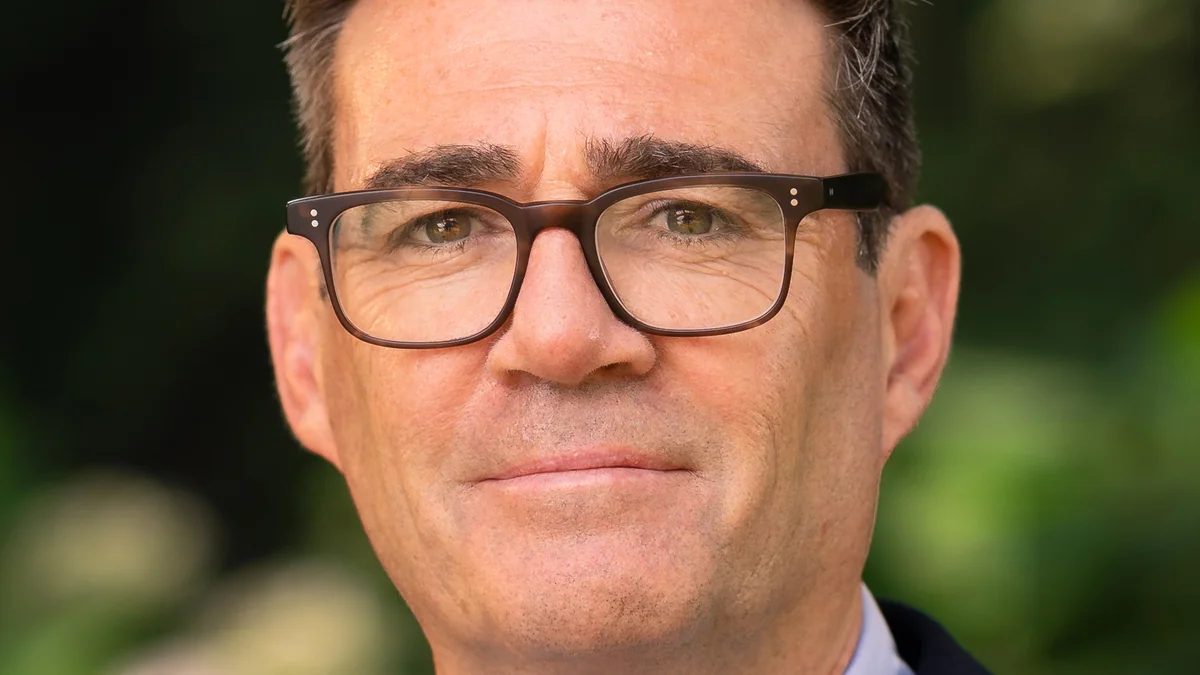
Prime Minister Andy Burnham has said he will not vote on the Bill. His reasoning is not theological or philosophical - it is infrastructural. He has pointed to underfunded hospices and a social care sector held together with emergency patches. When a head of government abstains not on conscience grounds but on funding grounds, that is worth paying attention to.
The British Medical Association and the Royal College of Physicians have both moved to neutral positions - neither supporting nor opposing the legislation. That shift away from active opposition reflects genuine change inside the medical community. But neutral is not the same as satisfied. It means the questions are not yet answered.
Critics are making a specific argument, and it is a hard one to dismiss. If palliative care remains rationed - if pain management, home nursing, and hospice beds stay out of reach for families who cannot afford to fill the gap privately - then end of life legislation does not sit alongside good care as an equal option. For some patients, it becomes the only realistic one. That is not a choice. That is a system narrowing the exit.
The safeguards in the Bill are real. The oversight mechanisms are real. But safeguards protect against coercion by individuals. They cannot protect against a care system that was already stretched thin before this vote was called.
Choice without a funded alternative is not choice. It is arithmetic with a sympathetic label.
What Comes Next, and What It Will Cost to Get It Right
Jersey legalised assisted dying in July 2026. Implementation is set for 2027. The United Kingdom is now trailing a Crown Dependency with a population of 100,000 people.
That comparison stings in a particular way. Jersey moved while Westminster spent months watching over 1,200 amendments bury the previous Bill. If the Commons passes this version again and the Lords obstruct it a second time, Parliament has a mechanism: the Parliament Act, which can prevent the upper chamber from blocking legislation indefinitely. That option exists. Whether the government has the will to use it is a different question entirely.
The constitutional path is clearer than the moral one. Prime Minister Andy Burnham has declined to vote, citing concerns about hospice and social care funding. That is not a trivial concern dressed up as caution. Around 100,000 people die in the UK every year without adequate palliative care. Tony Porter, CEO of Hospice UK, said it plainly: the choice should be good palliative care at the end of life, and too many people are currently denied that choice.
So the real test of this Bill is not the vote on September 11. It is whether Parliament, having legalised the exit door, also funds the room people are supposed to be choosing between. Choice without a funded alternative is not choice. It is arithmetic with a sympathetic label.
Parliament can pass this assisted dying legalisation. It should also pass the funding to make the word "choice" mean something.