The August Heat Record the Thermometer Confirmed — and Estonia's Local Numbers Did Not
Last August, the Copernicus Climate Change Service measured a global average surface air temperature of 16.96°C - making August 2026 the joint-hottest month in recorded history, tied with July 2023. That number sits 0.85°C above the 1991-2020 average, and 1.65°C above the pre-industrial baseline. The world crossed the 1.5°C threshold again, not as a projection, but as a monthly measured fact.
The heat was not evenly distributed, but it was widespread. Western Europe shattered the summer heat record that had stood since 2003 - a benchmark that many had assumed would hold for decades longer. Sea surface temperatures in the Atlantic and the western Mediterranean reached record highs, adding stored thermal energy to a system that was already running hot. The ocean numbers matter because they are slow to shift and slow to cool; they set the conditions for the seasons that follow.
Then there is Estonia. The national August average came in at 16.7°C - precisely in line with the long-term historical norm. The highest temperature recorded was 28.1°C, in Võru on August 6. Compare that with Estonia's all-time August record of 35.6°C, set in 1992, and this past month looks almost mild.
It would be tempting to read the local numbers as reassurance. They are not. A country can sit at its historical average while the global mean breaks records for the same reason a single household can hold steady while neighbourhood costs rise around it - the average masks what is shifting at the margins. The local-global gap is not a reason to relax. It is a data point worth interrogating, and the rest of Estonia's August 2026 story gives plenty of reasons to do exactly that.
Rails, Tunnels, and the Flood That Arrived After the Heat
On August 31, Elron switched to its winter timetable. The calendar step was routine. The climate backdrop it landed against was not.
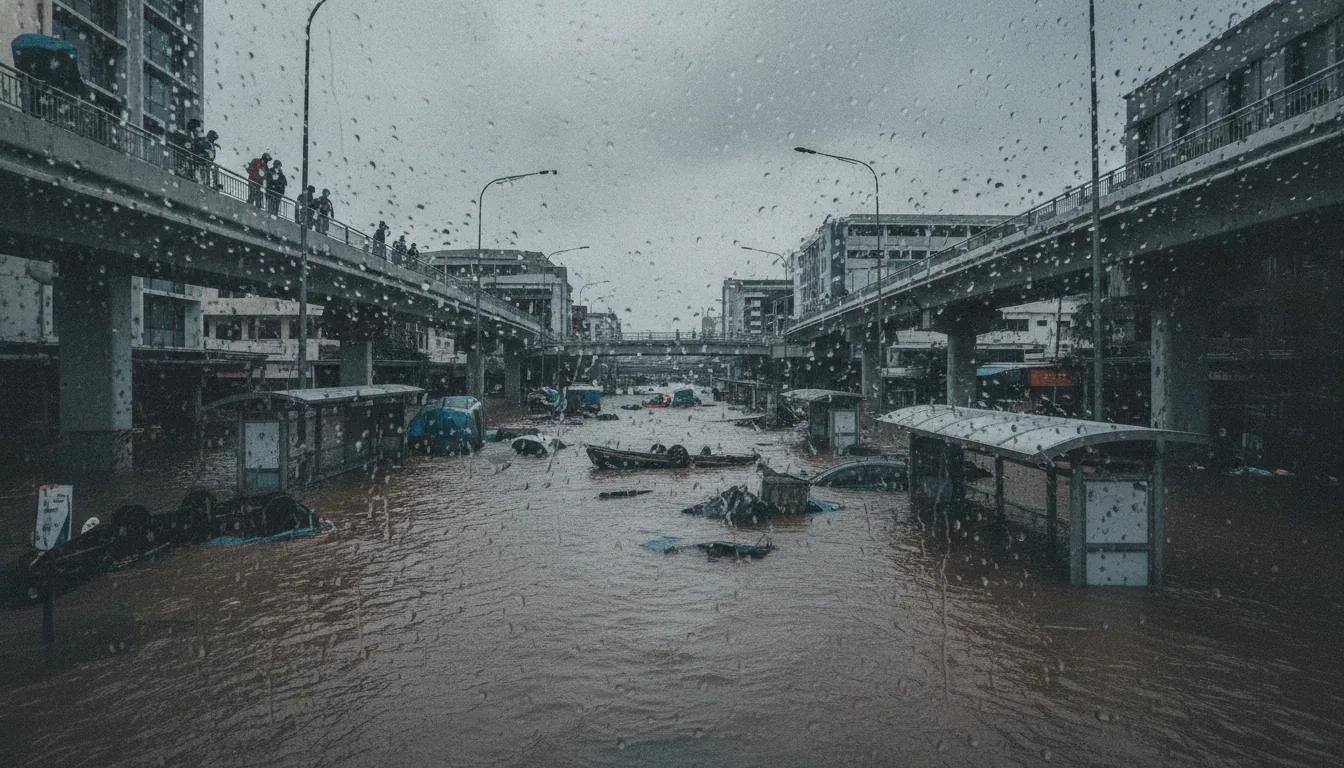
September 2026 brought flash flooding to the Pärnu region that closed multiple tunnels and viaducts. The sequence matters: rail and road infrastructure that had absorbed weeks of thermal stress - expanding joints, softening asphalt, overhead contact lines pulled taut by heat - then faced saturated ground and surging drainage. These are not separate events in any engineering sense. They are a single compound load arriving in two waves.
The planning implications are sharpest when you read the ridership data carefully. Rail passenger numbers on the Tartu route fell 21% in August 2024. The cause was scheduled maintenance works, not heat-driven passenger discomfort. The distinction is not pedantic. If planners attribute the drop to passenger behaviour, they design for demand management. If they attribute it to infrastructure condition, they invest in resilience. The data says infrastructure. The policy response should follow.
What the Pärnu floods add is a timing problem that no winter schedule can solve. Elron runs trains; Eesti Raudtee maintains the track and structures those trains depend on. When September flooding takes out a viaduct, the August timetable change is beside the point. The bottleneck shifts from passenger scheduling to structural capacity.
That is the sequential pressure climate stress is now placing on Estonian transport: heat degrades, rain destroys, and the interval between the two is shrinking. Infrastructure built to survive each threat in isolation is increasingly asked to survive both, back to back.
The Road Built to Survive Both a Baltic Winter and a Southern Summer
Estonian roads already face a brutal thermal regime. A January night in Jõgeva can drop to -30°C; a July asphalt surface in direct sun can exceed +55°C. That spread has always been the design brief. What changed is that engineers can no longer treat the upper end as a theoretical worst case.
In August 2026, Transpordiamet launched a study to test asphalt mixes incorporating plastic waste, targeting a performance range of -30°C to +60°C. The idea is structurally simple: shredded plastic modifies the bitumen binder, making it more elastic at low temperatures and more resistant to rutting when the surface heats. The secondary gain is real but modest - it diverts plastic from landfill at the point where a road is being built anyway.
Both benefits are worth having. Neither is a reason to declare the problem solved.
A materials trial is not a procurement standard. The distance between a promising study result and asphalt that gets actually specified, tendered and laid across Estonia's 58,000-kilometre road network is measured in years and political will. Transpordiamet running the study is the correct first step. The question worth tracking is simpler: does the performance data, when it arrives, change what contractors are required to buy? That's not a gesture. That's a lever.
For the practical reader, the signal here is not that plastic roads are coming. It is that Estonian infrastructure planning has accepted a design envelope that includes +60°C surface temperatures as a planning input, not an anomaly. Engineers are building to a climate they expect, not one they remember. That recalibration, quiet and bureaucratic as it sounds, is where the actual adaptation begins.
Electricity Prices Up 34% in a Month When Renewables Were Producing Well
The Estonian electricity exchange price averaged 5.9 cents per kilowatt-hour in August 2026. That was 34% higher than the same month a year before. The Baltic grid had just delivered a record 3.6 TWh from solar and wind across the summer. Both of those things are true at the same time, which is the part worth sitting with.
Marika, a small-business owner in Ülemiste, described opening her August electricity bill as "reading it twice, then reading it a third time." The number was right each time. Her cooling units had run almost continuously through the warm stretches, and the bill reflected every hour of it - not because the sun had stopped shining, but because the grid had been squeezed from two directions at once.
Heat does two things to power infrastructure simultaneously. It degrades the efficiency of transmission lines, so more power is lost as heat before it reaches the socket. And it drives up cooling demand, pulling harder on a grid that is already delivering less per unit generated. The generation side performed. The delivery and demand side buckled.
The lesson from August 2026 is that generation capacity and grid resilience are two separate investments, and only one of them got the headlines.
More solar panels on rooftops will not fix a transmission network that loses efficiency precisely when demand peaks. The Baltics produced record clean electricity and consumers still paid a third more. Generation capacity and grid resilience are two separate investments, and the gap between them is now visible on monthly bills.
Mapping the Heat Before It Becomes a Crisis: Buildings, Cities, and Updated Baselines
The Estonian Environment Agency did something unglamorous and necessary: it mapped urban heat islands in Tallinn and Pärnu. The goal was to locate, not just acknowledge, the pressure zones where heat accumulates fastest and where health and energy costs compound. A risk named on a map is a problem that can be addressed. A risk left as a general warning is mostly noise.
The comparison that matters here is between what planners used to design for and what they now must. For decades, Estonian building standards were calibrated to climate data that no longer describes the climate. In 2025 and 2026, Estonia updated its building energy efficiency norms to draw on the 1990 to 2020 period, retiring a baseline built from an era that was, by measurable temperature record, cooler. The change is quiet. It will not appear in any headline. But it shifts the thermal tolerance of every new building constructed under those norms.
That is the structural difference between a gesture and an adjustment that compounds over time. The old baseline underestimated the heat load. The new one does not. Every architect who now runs energy calculations uses numbers that reflect the actual distribution of summer temperatures, not a cooler past used as a proxy for a warmer present.
Urban heat island mapping and updated climate baselines are not headline fixes. They are planning steps - the kind that prevent a city from discovering, during the next record August, that its newest buildings were designed for a climate that no longer exists. Estonia has taken both steps. The work is unfinished, but it is located, and it is real.
The Honest Scorecard: What the August Heat Record Actually Cost — and What It Proved
The world ran 1.65°C above pre-industrial levels for a full calendar month. Estonia ran at 16.7°C, exactly where August normally sits. Both facts are true, and holding them together is the only honest way to read the summer.
Tallinn Airport recorded 390,000 passengers in August 2026, a 16% increase over the previous year and the best monthly result in the airport's history. Heat did not suppress demand. It did not close the terminal, melt the runways, or trigger any visible operational crisis. That is worth noting without inflating it into a triumph.
The September flooding in Pärnu arrived before the ink dried on any August success narrative. Infrastructure that absorbed a warm summer quietly failed under rainfall weeks later. The two events are connected; they are not the same event.
Three things will determine whether this August heat record is a data point or a turning point. Does Transpordiamet's plastic-asphalt trial reach a procurement contract? Does grid investment keep pace with cooling demand that rises every summer? Do Keskkonnaagentuur's heat-island maps change a single zoning decision in Tallinn or Pärnu? The thermometer recorded the problem. Those three questions are where the answer lives.