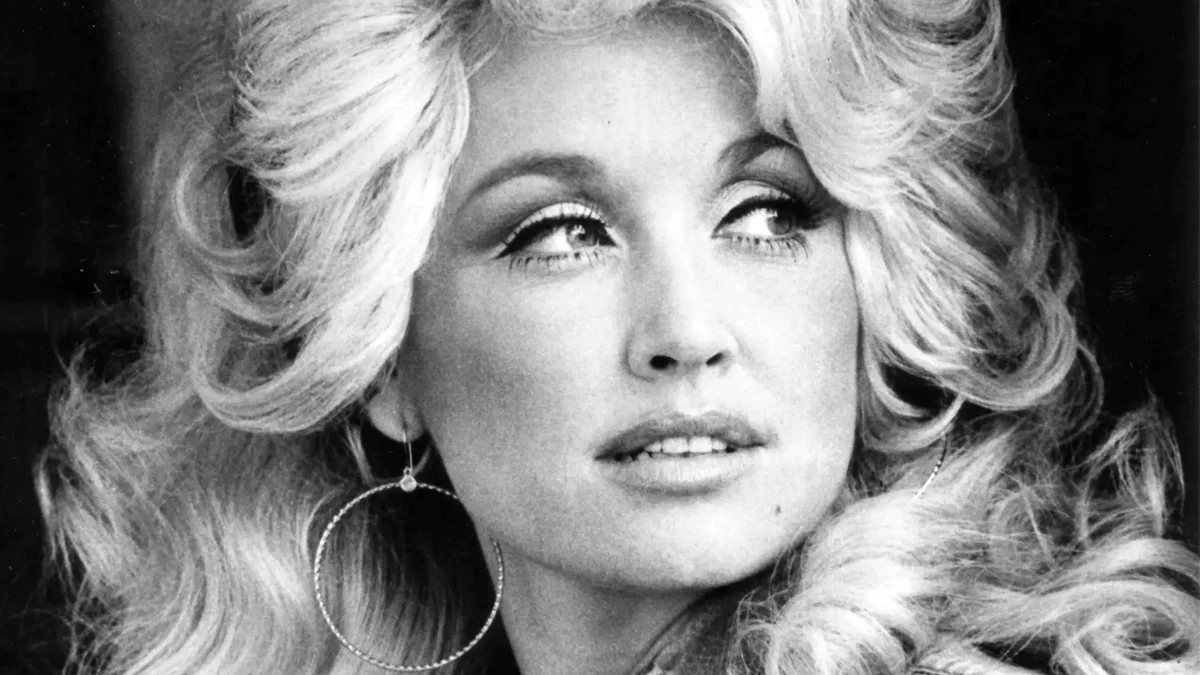
When scientists named a clone after a country singer's chest
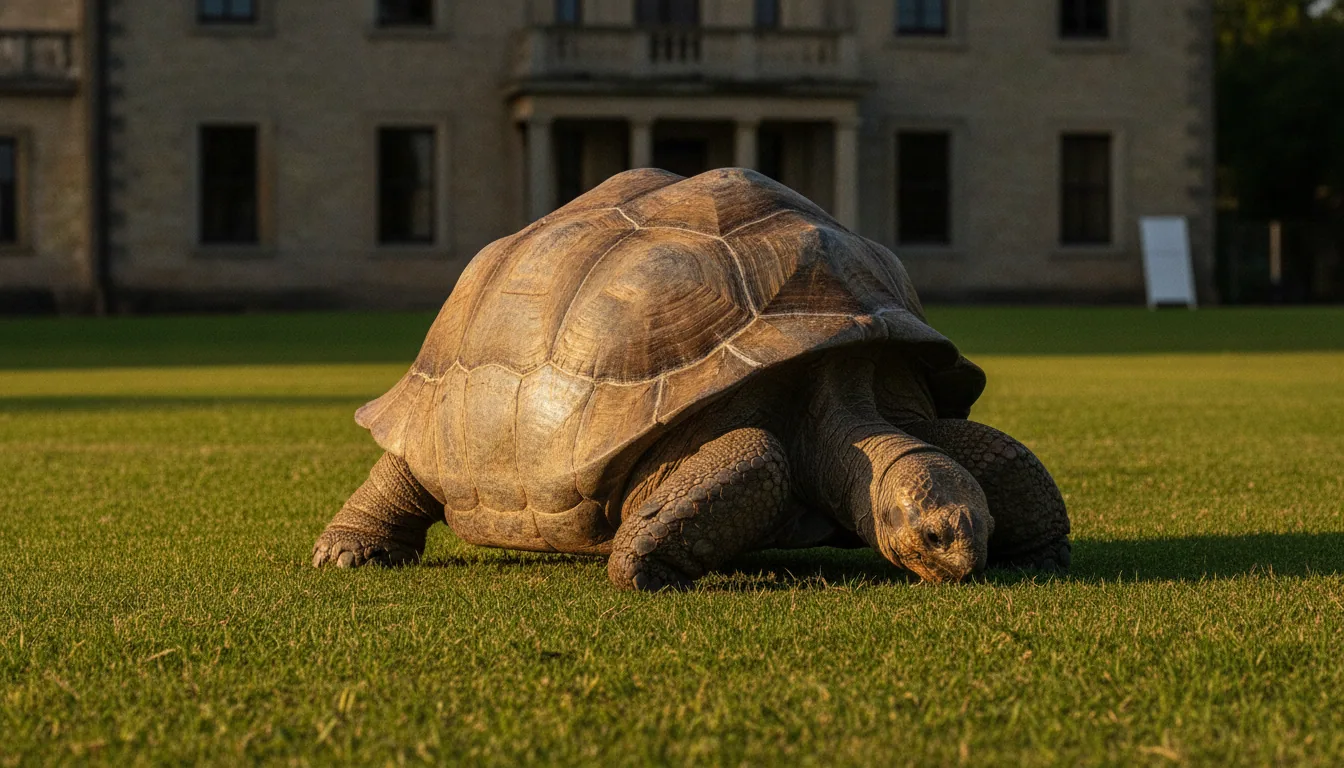
Dolly Parton's scientific legacy begins, improbably, in a laboratory at the Roslin Institute in Scotland in 1996, where a lamb was born that had never had a father. She had one mother, sort of — an adult ewe who donated an egg cell — and another kind of mother, a six-year-old Finn Dorset sheep whose mammary gland cell supplied the DNA. The scientists needed a name.
Ian Wilmut later recalled the reasoning with admirable directness: they couldn't think of a more impressive pair of glands than Dolly Parton's.
Here is the strange part. That mammary gland cell was a fully differentiated adult cell — a specialist, a worker, committed for years to one narrow job. Normal cells don't unlearn that commitment.
To make Dolly, Wilmut's team had to strip the nucleus from an egg cell, slip in the mammary cell's nucleus, and trick the whole assembly into believing it was a fertilized embryo at the beginning of everything. The technique is called somatic cell nuclear transfer, which is a precise way of saying: we took a cell that had forgotten it could become anything, and made it remember.
Dolly walked, ate, and eventually had six lambs of her own. She also gave her name, borrowed from a rhinestone-and-sequin country singer from Tennessee, a permanent address in the history of biology.
Dolly Parton died on August 25, 2026, at age 80, at the Vanderbilt-Ingram Cancer Center in Nashville, following a brief battle with cancer. The news moved fast, as it does. What moved slower, and deserves the longer look, is everything else she quietly funded.
One million dollars and the fastest vaccine in history
In April 2020, when the word "vaccine" still felt like a distant promise, Dolly Parton wrote a cheque for one million dollars to Vanderbilt University Medical Center. She had a personal connection to the institution — a friendship with surgeon Dr. Naji Abumrad, forged after a car accident in 2013, had given her a window into how research actually works. The donation established the Dolly Parton COVID-19 Research Fund, which channelled money into early-phase clinical trials for Moderna's mRNA-1273 vaccine.
That is the part that matters, and it is also the part that gets mangled in retelling. Some accounts have cast her as the essential architect of the Moderna vaccine, the woman who single-handedly brought a shot into existence. The reality is more interesting and more honest.
Early-phase clinical trials are where most vaccines quietly die — the funding gap between laboratory discovery and federal grant money is real, and private capital arriving at exactly that moment can keep a candidate alive long enough to prove itself. That is what her million dollars did.
The New England Journal of Medicine, reporting on Moderna's clinical trials, listed her fund among the acknowledged contributors — the kind of citation that does not appear casually in that journal.
Nature later noted that at least 37 research papers have since cited support from Parton's research fund. To be clear about what that number means: it does not mean she wrote 37 papers. It means her funding created conditions that other scientists built upon and found worth naming.
In the grammar of academic citation, that is a form of intellectual parentage.
A one-million-dollar contribution did not build Moderna. It helped build the evidence that let Moderna proceed. Without embellishment, that is already a remarkable thing for a country singer from rural Tennessee to have done.
Three hundred and thirty million books and what they proved
The Imagination Library began in 1995 as a county project. Sevier County, Tennessee, rural and poor, was the kind of place where the gap between children who arrived at school ready to learn and those who didn't was wide and predictable and considered, by many, simply how things were. Parton's idea was disarmingly simple: mail one free book a month to every registered child from birth until their fifth birthday, no means-test, no application form, just books arriving at the door.
The program scaled. Then it scaled again. Today, one in six children under the age of five in the United States receives books through it.
Globally, the Imagination Library has distributed over 330 million books. That number is large enough to lose its meaning, so try this: if you stacked them spine to spine, the line would circle the Earth more than twice.
The sheer logistics of the thing are staggering. But logistics are not science.
Here is where it gets interesting for developmental researchers. Studies published in 2024 and 2025 confirmed that children participating in the program show measurable improvements in vocabulary and school readiness compared to non-participants. School readiness metrics capture things like letter recognition, listening comprehension, and the ability to follow a narrative — the building blocks that predict how a child will perform in the first years of formal education.
What makes this dataset unusual is its scale and its duration. Thirty years of consistent, geographically diverse enrollment means researchers have something rare: a longitudinal natural experiment, not a controlled lab study with 80 participants, but a program touching millions of real children across real lives.
The Imagination Library was designed as a charity. It turned out to also be one of the largest ongoing experiments in developmental science that nobody initially planned.
It turned out to also be one of the largest ongoing experiments in developmental science that nobody initially planned.
How a singer built a medical infrastructure one cheque at a time
The Dolly Parton Center for Women's Services at LeConte Medical Center did not appear because a government agency identified a gap in rural Tennessee healthcare. It appeared because, in 2010, a woman who grew up poor in the Smoky Mountain foothills wrote a cheque for a million dollars and pointed it at the county she came from.
The target was deliberate. East Tennessee is not a place pharmaceutical companies design clinical trials around.
Twelve years later, she did it again. In 2022, a second million went to the Monroe Carell Jr. Children's Hospital at Vanderbilt, this time for pediatric infectious disease research.
A children's hospital bearing her name opened in Knoxville in 2026, the same year she died. The timeline has a certain logic to it: she funded the science, then watched the building go up, and did not live long enough to see what the research inside it will eventually produce.
Now hold that thought against her estimated net worth of 450 million dollars. These were not rounding errors. They were not the casual line items of someone moving money between accounts.
But they were also not the all-consuming philanthropic pivot of a converted billionaire. They were choices — specific, geographic, unglamorous choices — made by someone who knew exactly which rooms in which hospitals tend to be underfunded.
In 2023, the American Public Health Association gave her its Presidential Citation for contributions to vaccine research and literacy. That is a public health body, staffed by epidemiologists and policy scientists, formally naming a country musician a scientific contributor.
The citation does not mention rhinestones. What it names, quietly and precisely, is a pattern: one institution at a time, one cheque at a time, over more than two decades, filling the gaps that no single grant cycle was designed to reach.
What Dolly Parton's Scientific Legacy Leaves Open
In 2025, a team of psychologists ran her lyrics through computational analysis as a dataset for creativity research, measuring how the emotional valence of her writing shifted across decades. It barely did.
Her body of work, charted on a graph, showed a stubbornly consistent positivity over fifty years. That is a strange thing to say about science: that a songwriter's catalogue became a controlled variable.
There are other things that remain genuinely unresolved. The specific type of cancer that killed her on August 25, 2026, has not been named publicly.
The total sum of her lifetime giving cannot be calculated, because many donations were private and went unannounced. Some research projects at Vanderbilt may have been left mid-funding, their status unclear, the pipeline for their next cheque uncertain.
The deeper open question is structural. Parton's research contributions depended on an unusual convergence: enough money, enough curiosity, and a friendship with a particular doctor born from a 2013 car accident.
Change any one variable and the Dolly Parton COVID-19 Research Fund does not exist. That is not a criticism of the model. It is an honest accounting of how fragile it is.
Private gap-funding can do things that federal grant cycles cannot, but it is not a system. It is a lucky alignment of a specific human being.
Compare that model to what her Imagination Library became: an institution, with infrastructure, running in multiple countries, designed to outlast her. That is the difference between a gift and an architecture.
The 37 papers will accumulate citations. The Imagination Library will keep distributing books. And somewhere in a biology textbook, a footnote about a cloned sheep named after her will keep puzzling students who cannot quite believe that is how the story went.
It is. That footnote is as good a summary of Dolly Parton's scientific legacy as any: the universe has a sense of the absurd, and so, it seems, does the scientific record.