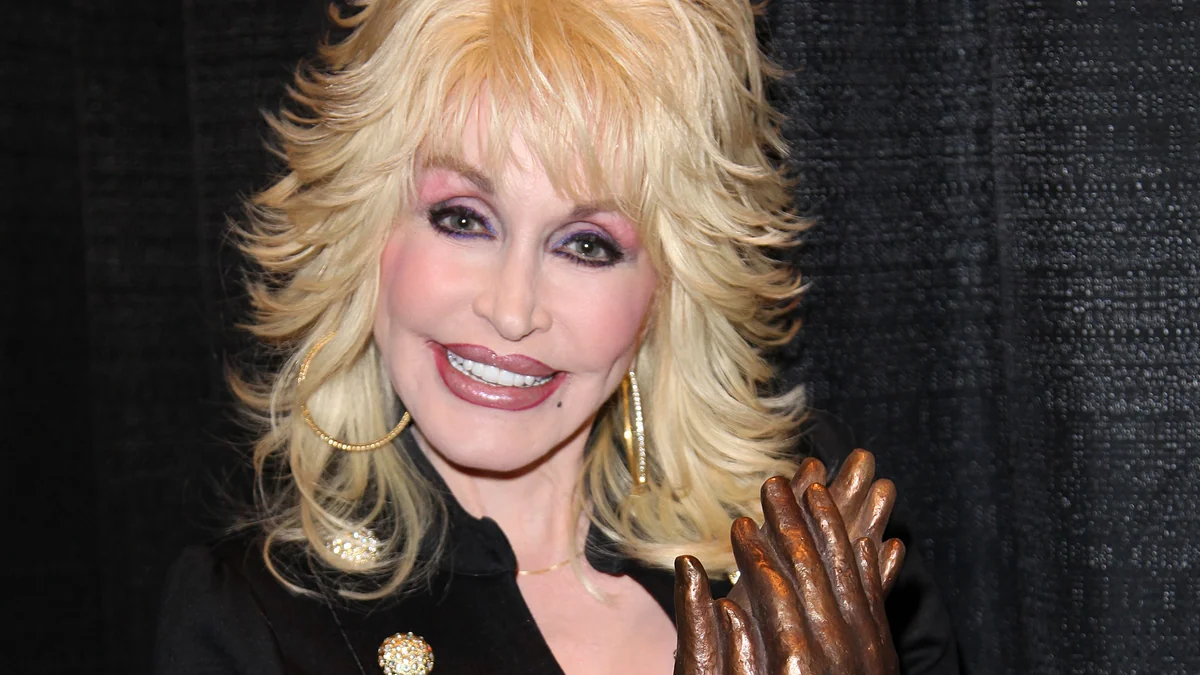
The Tuesday Dolly Parton Left Nashville
Dolly Parton died on a Tuesday. August 25, 2026, at home in Nashville, quietly, after a brief battle with cancer. Her nephew Brian Seaver confirmed it — the same man who had stood beside her for years as her security chief, who had probably watched her walk into more rooms than he could count and own every one of them.
Eighty years old. Seven decades of work. Not one of them coasting.
Seventeen months earlier, in March 2025, Carl Thomas Dean had died — her husband of nearly sixty years, the man she once described as the great private anchor behind all that very public rhinestone. Losing Carl first must have rearranged something fundamental. And then, quietly, she followed.
Here is the detail that keeps coming back to me: she once entered a Dolly Parton lookalike contest and lost. She laughed — of course she laughed. Because she understood, better than anyone, that the character she had built with her own two hands was hers in a way no judge's scorecard could touch.
That is the thing nobody quite grasps about her, not yet, not in the first wave of grief and tribute. She was not simply a beloved performer. She was the least replaceable person in any room she entered — a woman who had manufactured her own mythology so carefully and so warmly that it stopped being manufactured somewhere along the way and became simply true.
She wrote around 3,000 songs, sold more than 100 million records, and built an empire. And she did it all while somehow making you feel she had time for you.
Three Thousand Songs, Every One of Them Hers
Three thousand songs. Sit with that number for a moment. That is not a catalog — it is a life's work measured in melodies, a creative output that most songwriters could not reach in three lifetimes of trying.
She wrote roughly 3,000 songs during her career and sold more than 100 million records across seven decades. The Grammys noticed: eleven of them, including a Lifetime Achievement Award. The numbers alone are staggering, but the numbers are only half the story.
The other half is who owned them.
At 21 years old, in 1967, she founded Owepar Publishing Co. — a quiet, decisive move that most young artists never think to make until it is too late. She understood something that the music industry would spend the next half-century trying to obscure: opportunity and ownership are not the same thing. Writing the song and holding the copyright to the song are two entirely different acts, with two entirely different bank balances attached.
Here is the thing nobody tells you: the moment that crystallized her genius came when Elvis Presley wanted to record "I Will Always Love You." Colonel Tom Parker, his manager, made the terms clear — Elvis records it, but Parton hands over half the publishing rights. She said no.
She turned down Elvis Presley. In Nashville, in 1974, that took nerve most people cannot quite imagine. Then Whitney Houston recorded the song in 1992, the cover became one of the best-selling singles in history, and every cent of publishing royalties went exactly where Parton had insisted they go.
To her.
The refusal was not stubbornness. It was strategy dressed in politeness, which was very much her way. She knew what the song was worth before anyone else did, and she held onto it with both hands.
Eleven Grammys confirm the talent. Owepar confirms the intelligence.
The Empire Inside the Rhinestones
Here's the thing nobody tells you: the sequins were a distraction, and she knew it. While the world was busy looking at the hair, the heels, and the laugh, she was quietly building something most artists never manage.
At the time of her death, her net worth sat somewhere between $450 million and $650 million — a number that belongs to a businesswoman, not a country artist who got lucky.
The architecture of it is worth studying. Roughly 30 active businesses, nonprofits, and licensing deals — Duncan Hines baking mixes, pet accessories, a theme park in the Tennessee mountains.
Dollywood, her crown jewel in Pigeon Forge, drew more than 3 million visitors in 2024. It employs thousands of people in Sevier County, circulates money through restaurants and hotels and gas stations, and it will still be doing that long after the charts have moved on.
Then there is the matter of the Rock and Roll Hall of Fame, where she was inducted in 2022 — an honor she first tried to decline, saying she didn't feel she'd earned it in that genre. They inducted her anyway. A year later she released Rockstar, a full rock album, and followed it with a 2024 remix alongside Sabrina Carpenter.
The brand had no ceiling because she never let anyone else hold the measuring tape.
What does any of this mean for the rest of us? It means something specific and worth sitting with. She built the empire by refusing to separate the creative from the commercial, by treating her name as a resource worth protecting, and by understanding that a good idea generates money you can use for the things you actually care about.
She cared about books for children and relief money after hurricanes. The rhinestones funded all of it.
The Books, the Vaccine, and the Storm
She grew up in a one-room cabin in Locust Ridge, Tennessee, twelve children in a family that paid the doctor with a sack of cornmeal. She never forgot what it felt like to be the kid without.
So when she had money, she did not buy a yacht. She built a library that came to you.
The Imagination Library started in 1995, mailing one free book a month to every child enrolled, from birth to school age, no questions asked. By 2026, it had gifted over 325 million books to children across five countries, 3.5 million going out every single month.
That is not charity as an afterthought. That is a logistics operation run with the same quiet seriousness she brought to owning her publishing rights.
Then came the pandemic. In April 2020, she donated $1 million to Vanderbilt University Medical Center to fund research into what became the Moderna COVID-19 vaccine. She announced it with a single Instagram video, warm and plainspoken, no press conference, no brand rollout.
The money went, the work happened, and hundreds of millions of people received a vaccine that her donation helped accelerate.
Four years later, Hurricane Helene tore through the mountains of western North Carolina and east Tennessee. Appalachia again. Her people.
She put in another $1 million for relief, personally, fast.
What strikes you, looking at all three together, is the consistency of the instinct. Books, because she remembered not having them. A vaccine, because she had the means and the moment.
Flood relief, because the mountains that made her were drowning.
She did not give from abundance alone. She gave from memory.
That is a different kind of philanthropy entirely.
What She Left Unfinished — and Why That Is the Point
At her death, she was still building. The "Life of Many Colors" museum was in development, the "Song Teller Hotel" in Nashville not yet open, both of them fully imagined in her mind and only partway real in the world.
Compare that to most legacies, which arrive finished and already beginning to fade. Hers arrived mid-sentence.
She had said it plainly, in that way she had of making an enormous ambition sound like the most obvious thing: "I have a big dream of having a big empire based in Nashville. What I really want to do is just to — what I've always done — own myself." Not to be loved, not to be remembered, not to win anything.
To own herself.
There is no other artist in the last hundred years of American music who said that so early, so clearly, and then proceeded to mean it every single day for sixty years.
The lesson is not in the sequins or the statistics. It is in the stubbornness. She decided at 21 what she was worth, when she founded Owepar Publishing and kept her songs inside it like something precious locked in a drawer.
She never revised that decision downward. Not for Colonel Tom Parker, not for the industry, not for anyone who told her she was being difficult.
Every year she simply added another room to the house.
So here is your one thing this week. Not a museum, not a hotel. Pick the one corner of your life that belongs completely to you, and do not negotiate it away.
Dolly Parton never did.