Europe's Sea Temperature Records, in Plain Numbers
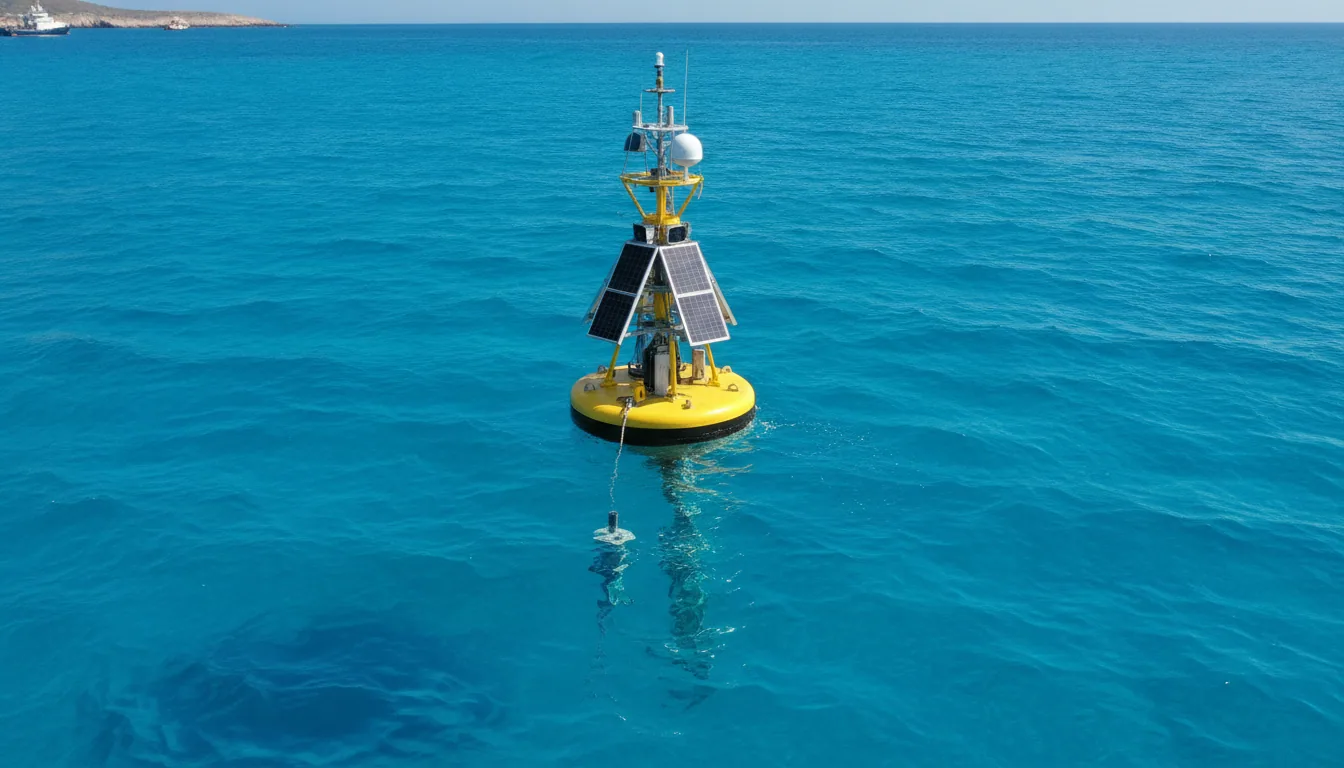
Europe's sea temperature shock has a precise number: 33°C, logged by a buoy anchored near Mallorca in early August 2026. That is not a sea temperature. That is a bath.
Open-water swimmers off the Balearic coast were, by any thermal definition, swimming in warm soup. The Mallorca reading was striking, but it was not an outlier. July 2026 registered the highest global ocean surface temperatures for any July in the observational record, according to Copernicus Climate Change Service.
The Mediterranean's median surface temperature had already hit 28.9°C on a single August day in 2024, tracked by the Barcelona Institute of Marine Sciences. The 2026 season pushed further still, averaging 27°C across the whole Mediterranean basin for July — a figure that would have been unthinkable two decades ago.
Coverage mattered as much as peak readings. By midsummer 2026, 90% of the Bay of Biscay and 80% of the western Mediterranean were formally in marine heatwave conditions. Marine heatwaves are defined by anomaly, not absolute temperature — water must stay at least five days above the 90th percentile for that location and calendar date.
Most of these stretches lasted far longer. This was not a spike. It was a sustained fever across an entire regional ocean system.
The scale check is worth stating plainly. Temperature anomalies reached up to 6°C above long-term averages in some August patches, according to the Copernicus Marine Service. World Weather Attribution confirmed that these peak temperatures would have been virtually impossible without human-caused greenhouse gas emissions.
Six degrees above baseline, across waters that span 2.5 million square kilometres, is not a weather event. That is a reorganisation of the thermal conditions that every coastal ecosystem, fishery, and storm system along Europe's southern and western edge has been calibrated to expect.
Why European Seas Are Warming Faster Than Almost Anywhere Else
The question is not just that the temperatures are high. It is why European waters are hitting records that the physics of the pre-industrial ocean would have made nearly impossible.
World Weather Attribution has run the numbers. Human-caused climate change added approximately 2°C to Mediterranean warming and 1.4°C to the seas off Western Europe. The peak temperatures recorded in the Celtic Sea and the Mediterranean in 2026 would, without human emissions, occur roughly once a century. They are now routine enough to have a Copernicus data series.
The baseline was already stressed before 2026 arrived. European land temperatures rose 2.19 to 2.26°C between 2015 and 2024 — twice the global average rate. Oceans absorb around 90% of the heat that greenhouse gases trap, so every fraction of a degree added to the atmosphere translates, with a lag, into sea surface temperature. The heat has to go somewhere.
Then El Niño pushed the system further. The phenomenon released additional stored ocean heat into the atmosphere in 2026, compounding a baseline that was already anomalous. It is a familiar amplification mechanism, but layered on top of a decades-long warming trend rather than a stable one.
The result is a compound signal that attribution scientists can now separate cleanly into parts: the slow structural warming from emissions, the interannual spike from El Niño, and the regional amplification particular to enclosed or semi-enclosed European seas. The Mediterranean, the North Sea, the Baltic — each accumulates heat faster than open ocean. Together, they explain a Mallorca buoy reading 33°C.
The North Sea and Baltic Are Not the Safe Option
People living on Europe's northern coasts often assume the cold water is a buffer. It is not.
In spring 2025, the North Sea logged its warmest spring on record, averaging 8.7°C — a full 0.9°C above the long-term norm. That gap sounds modest until you consider that the entire Mediterranean crisis was built from anomalies of similar magnitude, stacked and sustained. The same spring, a marine heatwave near the Kiel lighthouse in the Baltic lasted 55 consecutive days. Not a warm spell. Fifty-five days.
The Baltic is not a random outlier. According to the WWF Baltic Sea Programme, 2024 was the second warmest year for the Baltic since records began in 1990. The trend is structural, not episodic.
Estonia's own monitoring data makes this concrete. The Estonian Environment Agency measures a warming rate of 0.4°C per decade for local waters. Compound it over a 40-year career in fishing or coastal tourism, and you get 1.6°C of baseline shift inside a single working life — enough to reorganise which species are commercially viable, which pathogens thrive, and how violent storm surges become when they run over warmer water.
Coastal communities in Finland, Estonia, Denmark, and northern Germany should not plan around the assumption that the warming is a southern problem that will take decades to arrive. The 55-day heatwave near Kiel happened last year. For the North Sea and Baltic, the warming is already the operating condition.
Six degrees above baseline, across waters that span 2.5 million square kilometres, is not a weather event.
The Species That Moved Before the Policy Did
Off the coast of Cornwall, fishermen are pulling up octopuses in numbers that would have seemed absurd a decade ago. In the Mediterranean, parrotfish, once confined to warmer southern latitudes, are now a common sighting further north. The fish moved. The paperwork has not.
These are thermophilic species, animals that thrive in warmer water, filling the ecological space vacated by cold-water species retreating toward cooler depths and higher latitudes. When a keystone species shifts out of its habitat, the trophic cascade below it reshuffles: what eats what, what regrows, what collapses.
One species relocating is a curiosity. A whole guild relocating is a restructured ecosystem.
Marine ecologist John Bruno has been tracking what comes next. "We are rapidly approaching the absolute biological limits of adaptation for many species," he warned. Thermophilic generalists can follow the isotherm poleward. Specialists with narrow thermal tolerance ranges cannot. They run out of ocean.
European fishing quotas, commercial catch targets, and stock assessments were all calibrated against historical species distributions — and those distributions have already changed. A fleet licensed to catch a species where it used to be is a fleet fishing in the wrong place. Quota systems built on decades-old baselines do not describe the sea that now exists.
The biology moved on schedule. The regulation is still catching up.
When the Sea's Temperature Becomes the Land's Problem
The ocean does not keep its heat to itself. It absorbs roughly 90% of the excess energy trapped by greenhouse gases, which means what is stored in the water today is the weather that will arrive on land tomorrow. The sea is not a buffer. It is a delay mechanism.
World Weather Attribution made this chain explicit after the Valencia floods of October 2024. Their analysis linked the catastrophic rainfall directly to record Mediterranean sea surface temperatures, which had peaked at a median of 28.9°C the previous August. Higher surface temperatures drive higher evaporation rates. Higher evaporation rates load the atmosphere with more moisture.
When that moisture hits land, the precipitation events are not just wetter — they are faster and more violent. The Valencia floods killed more than 200 people. Warmer water did not cause the storm. It made the storm a disaster.
Compare this to a cooler-sea baseline, and the difference is not marginal. WWA found that peak Mediterranean temperatures in 2024 would have been virtually impossible without human-caused climate change. Remove the warming, remove roughly 2°C of added heat, and you have a different atmospheric column over Valencia that October.
Inland communities tend to think of marine heatwaves as a coastal problem. The European Centre for Disease Prevention and Control is tracking Vibrio bacteria — which cause vibriosis, a potentially fatal wound and gastrointestinal infection — as an emerging priority in the Baltic and North Sea. Warmer water has expanded their viable range north by hundreds of kilometres over the past two decades.
That's not a gesture. That's a lever worth understanding.
The Honest Scorecard: What Is Known, What Is Working, and What Is Next
The attribution science is no longer debatable. World Weather Attribution has quantified that human-caused climate change added approximately 2°C to Mediterranean warming and 1.4°C to Western European seas. Peak temperatures recorded in 2026 would have been virtually impossible without those emissions. The direction of travel is established.
What remains genuinely open is harder to act on. Scientists cannot yet identify the precise thermal tipping point at which Mediterranean seagrass and coral systems lose the ability to recover. The full impact on deep-sea benthic organisms, which cannot simply migrate northward, is unmeasured. The economic toll of collapsing coastal tourism, driven by jellyfish blooms and heat-stricken beaches, has not been properly tallied.
The policy levers exist. Binding EU emissions trajectories, reformed fisheries quotas aligned with shifting stock distributions, and Vibrio surveillance networks in the Baltic and North Sea are all operational or within reach. They are moving slower than the water is warming.
European sea temperatures have already shifted by 1 to 2°C in ways locked in by past emissions — that baseline has changed regardless of what happens at the next climate summit. Coastal municipalities and fishing associations across the Baltic and Mediterranean should begin scenario planning around that permanent shift now. The question is not whether to adapt. It is whether to adapt ahead of the damage or after it.