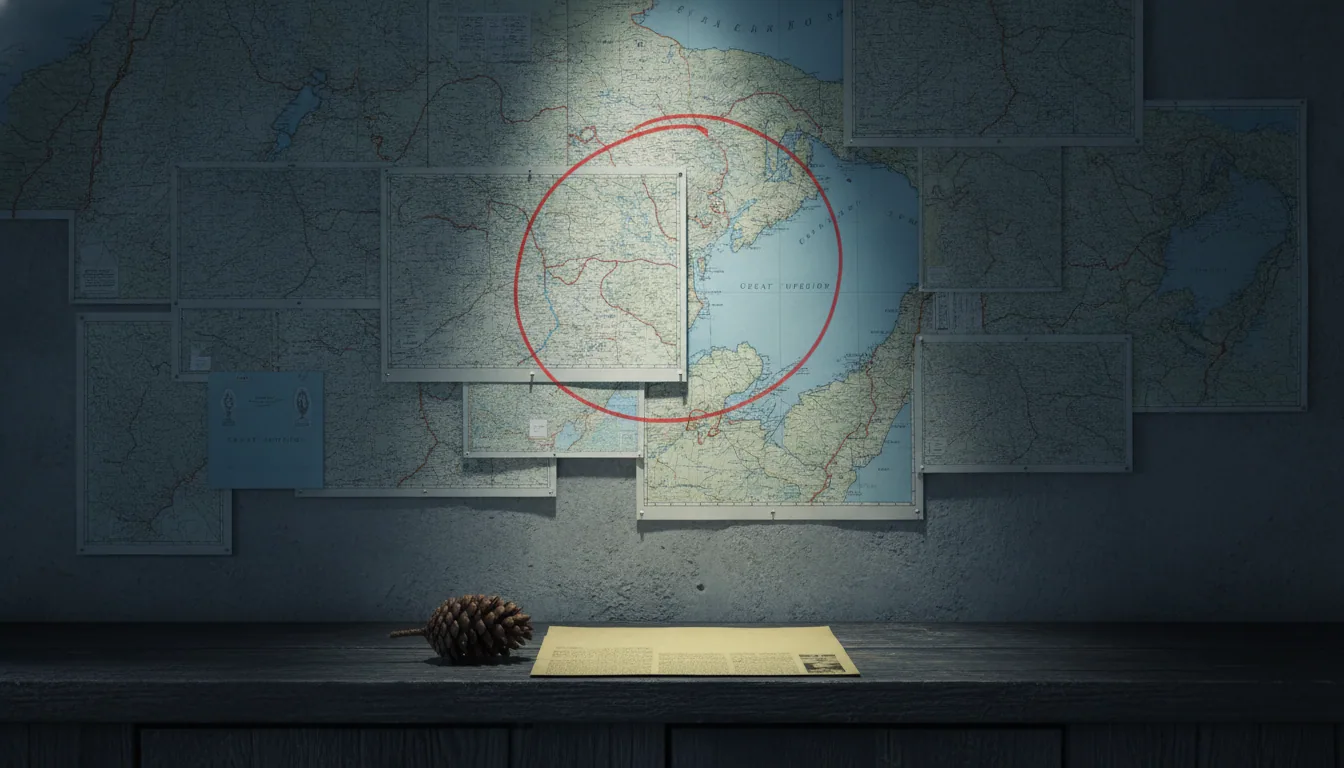
The 72-Hour Trade War is a diplomatic tactic where a superpower issues a three-day deadline to force rapid economic concessions. This strategy uses time-gated tariffs to bypass traditional negotiations, coercing trading partners into immediate regulatory alignment and long-term national security resource locks.
This 72-Hour Trade War tactic prioritizes speed over diplomacy to secure strategic assets before the global map shifts further. In August 2025, Swiss negotiators in Bern watched a digital clock count down the final minutes before a 39 percent U.S. tariff would strike their precision industries. That window was exactly seventy-two hours. It was not a period designed for meaningful diplomacy, but for the cold calculation of surrender.
On August 17, 2026, the same clock was activated for Ottawa. President Trump issued a 72-hour ultimatum that threatened to move the economic floor of the entire North American continent. A 50 percent tariff on a broad range of Canadian exports sat on the table, a weight designed to crush any thought of a long negotiation.
The tactic is now a standardized diplomatic weapon. We saw it used against the European Union in May 2025 to extract rapid concessions from Brussels during a similar confrontation. It treats the global trade map as a series of time-gated auctions where the winner is whoever does not blink.
The structural demands were heavy and precise. Existing U.S. tariffs on Canadian steel and aluminum already stood at 25 percent, but Washington now required these to be accepted as permanent fixtures of the trade relationship. This demand for the total removal of all Canadian retaliatory tariffs is the load-bearing wall, and everything else is molding.
When an empire decides to collect, it does not use the slow machinery of 20th-century treaties, but a stopwatch and a spreadsheet. From the secret protocols of 1939 to the hurried boardrooms of 2026, the history of the borderland remains a ledger of someone else's strategic debts.
Sovereignty and the 72-Hour Trade War
On August 18, Prime Minister Mark Carney delivered a ninety-second televised statement that served as a study in middle-power resistance. He rejected the ultimatum with the flat delivery of a man who has spent a career looking at the bottom of a spreadsheet. The briefness was the point, as any longer response risks looking like a negotiation.
In Washington, the air was thinner. U.S. Trade Representative Jamieson Greer and Canadian Trade Minister Dominic LeBlanc remained at a total impasse. The wire says the talks were candid, but the original says something colder: regulatory alignment, a term that implies the quiet erasure of a border.
Trump’s demand that Canadian agricultural standards be aligned with U.S. rules is the structural heart of the dispute. Everything else is decorative. To accept these terms is to admit that Ottawa no longer sets the rules for what its citizens eat, a classic dilemma where the flag remains but the rulebook is written elsewhere.
LeBlanc found himself in a room where the structural demands were designed to be impossible. The U.S. side expected the white flag of surrender. Instead, they met a government that understands sovereignty as a hard asset, refusing to liquidate the nation's equity by surrendering the right to regulate its own grain.
The Energy Lease and the Borderland
The 72-hour ultimatum to Canada is more than a localized price dispute. It represents a structural pivot from commodity trading to a permanent national security lock-in. Washington no longer seeks a market rate; it demands a guaranteed perimeter.
The timing is not accidental, as the global map is currently under extreme stress. A regional war in Iran has burned since February 2026, destabilizing traditional supply routes. Simultaneously, the U.S.-brokered ceasefire between Russia and Ukraine is reaching its fragile end.
These are the load-bearing pressures behind the August deadline. A secure, terrestrial energy source is the basic requirement for a great power preparing for long-term friction. The demand for Canada to lock in prices for U.S. national security transforms a sovereign neighbor into a strategic utility.
The 72-hour window is just the sound of the mortar drying on a wall that was planned years ago.
While not explicitly named in the public ultimatum, the Keystone XL pipeline remains the likely physical conduit for this integration. It is the plumbing required for a new imperial logic that prioritizes control over commerce. We have seen this tactical template before in other theaters.
In October 2025, the U.S. secured mineral pacts with Malaysia and Thailand. Those deals were specifically designed to sever reliance on Chinese rare earth exports. They were not trade agreements in the classical sense, but rather strategic acquisitions of geography.
Now, that same perimeter is being drawn at the 49th parallel. For the reader, this means the end of the era where critical resources moved via the highest bidder. In a period of high-intensity conflict, the "free market" is a luxury the great powers can no longer afford.
Sovereignty in a borderland is often traded for a place inside the fortress. If Canada accepts these terms, it ceases to be a traditional trading partner and becomes a strategic reserve. The 72-hour window is just the sound of the mortar drying on a wall that was planned years ago.
The Diversification Gambit
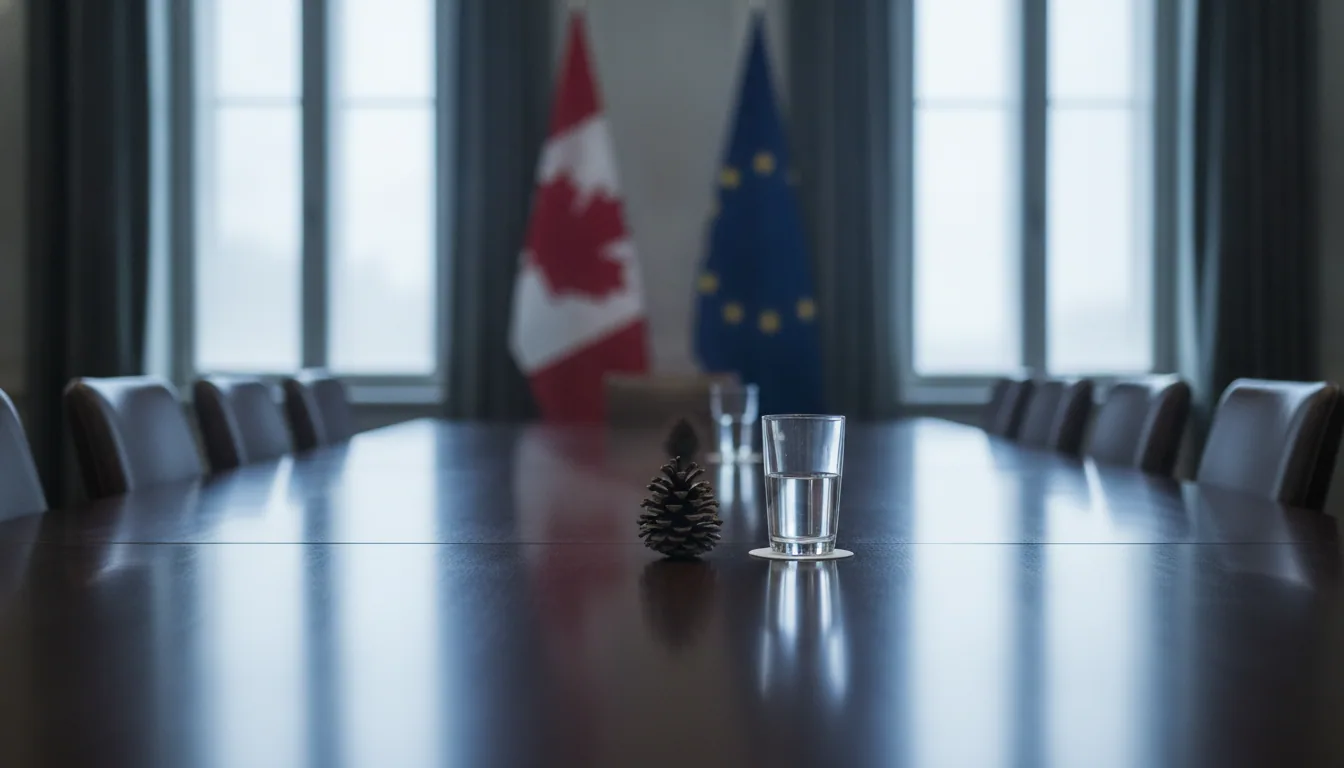
The ink on the supplemental CETA documents was barely dry when the wire reports reached Brussels. From the 1939 protocols to the modern volatility of the 72-hour window, the requirement to seek a second orbit has remained a constant for the small-nation floor. Hours before the August 19 deadline, Canadian negotiators finalized this rapid expansion with the European Union.
Small nations know that total dependency is a slow-motion surrender. The 2025 Swiss negotiation in Bern is the lazy comparison, but that was a mere scramble for a lower percentage. This is a diversification gambit, a fundamental rewrite of the map to avoid remaining a captive market for Washington.
The counter-strike was equally clinical and devoid of any lingering sentiment. Canada announced 21 billion dollars in retaliatory tariffs targeting American agriculture and the energy sectors that fuel the heartland. The resulting list represents the largest retaliatory package in Canadian history.
Trade wars are won on the margins of spreadsheets and the thinning patience of the peasantry. The 21-billion-dollar price tag was a message written in the only language the current White House seems to respect. To the small-nation floor, it is the structural necessity of proving that being the "pot of gold" requires a very substantial entrance fee.
The Pot of Gold and the Ledger
The international order was built on the premise that shared prosperity prevented war, yet today that logic has been inverted into a weapon. President Trump has characterized tariffs as inherently beneficial because the United States is the world's pot of gold where access is a privilege to be auctioned. It is a protection racket where the protection is against the racketeer himself, and the lease is subject to termination on a 72-hour cycle.
This new reality does not observe the closing bell of the New York Stock Exchange. While government offices sit dark in Ottawa, Bitcoin and crypto markets serve as 24/7 lie detectors for geopolitical risk. Market participants use these digital assets to price the likelihood of a deal faster than any official statement because the digital ledger is relentless.
This tactical shift has forced a quiet, cynical reassessment in European capitals after the 72-hour confrontation of May 2025. French trade officials have begun urging the European Union to learn from these tariff tactics rather than reacting with reflexive anger. They recognize that when the global order becomes a series of ultimatums, the only alternative to adaptation is slow and expensive irrelevance.
The Wednesday Morning Pause
On the morning of Wednesday, August 19, the 50 percent ultimatum was suspended. President Trump announced a three-day pause, claiming the two countries were "close to a deal." In the arithmetic of modern trade, "close" is a floating variable.
The phrase is the diplomatic equivalent of a stay of execution; the rope is still in the room, it just isn't tightening today. The 72-hour window is now a standardized imperial tool. In May 2025, the European Union faced the same clock.
In August 2025, Switzerland had three days to negotiate down a 39 percent tariff. These are not negotiations; they are stress tests of a buffer state's structural integrity.
Canada’s 21-billion-dollar retaliatory package remains on the ledger, a defensive wall built against a 50 percent threat while the existing 25 percent steel tariffs continue to grind. The pause is a repositioning. When a great power stops the clock, it is because the decorative molding of diplomacy has served its purpose.
The load-bearing walls of the new deal are being inspected for cracks. If Carney yields on agricultural standards or energy locks, the precedent for every middle power is set. Sovereignty is sold in 72-hour increments.
Watch the expiration of this three-day reprieve on Saturday. If the communiqué uses the verb "extend," the impasse is structural and the retaliatory tariffs will likely proceed. If it says "concluded," read the fine print on energy pricing to see if Canada has become a resource colony for the pot of gold and the next phase of the 72-Hour Trade War.