On the night of August 14–15, 2026, a fire broke out at a Milrem Robotics production facility on Betooni Street in Lasnamäe, Tallinn. Estonian authorities opened a criminal investigation into suspected foreign-state-orchestrated sabotage. No casualties were reported. KAPO and the State Prosecutor's Office identified suspects and sought arrest warrants.
A Concrete-Panel District, a NATO-Critical Factory, and a Fire That Wasn't an Accident
Lasnamäe is not the kind of neighbourhood you associate with the cutting edge of modern warfare. Its Soviet-era panel blocks and late-night quiet suggest a district still catching up with Tallinn's digital renaissance — not a node in NATO's live supply architecture. Yet on the night of August 14–15, 2026, a burning production facility on Betooni Street made the district's strategic significance impossible to ignore.
The building belonged to Milrem Robotics — Estonia's foremost manufacturer of unmanned ground vehicles. Emergency services responded rapidly and brought the fire under control. There were no casualties. The operational response was professional.
Before the flames were even spotted, a local resident had already called the emergency line to report suspicious activity around the building. That detail is not incidental. The State Prosecutor's Office and the Internal Security Service (KAPO) opened criminal proceedings immediately, investigating sabotage as the primary hypothesis.
This was not a factory accident. It was a potential attack on a node in NATO's real-time production chain — and it demands a structural, not merely a forensic, response.
Milrem Robotics: Estonia's Strategic Anchor in the Defence Sector
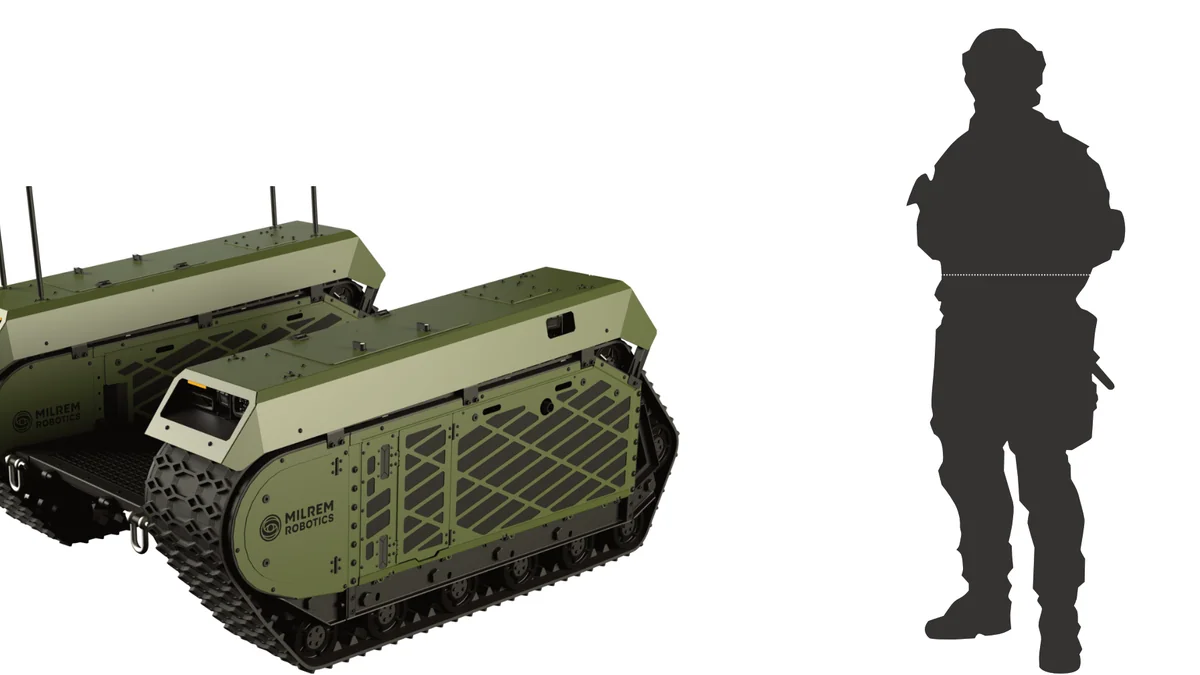
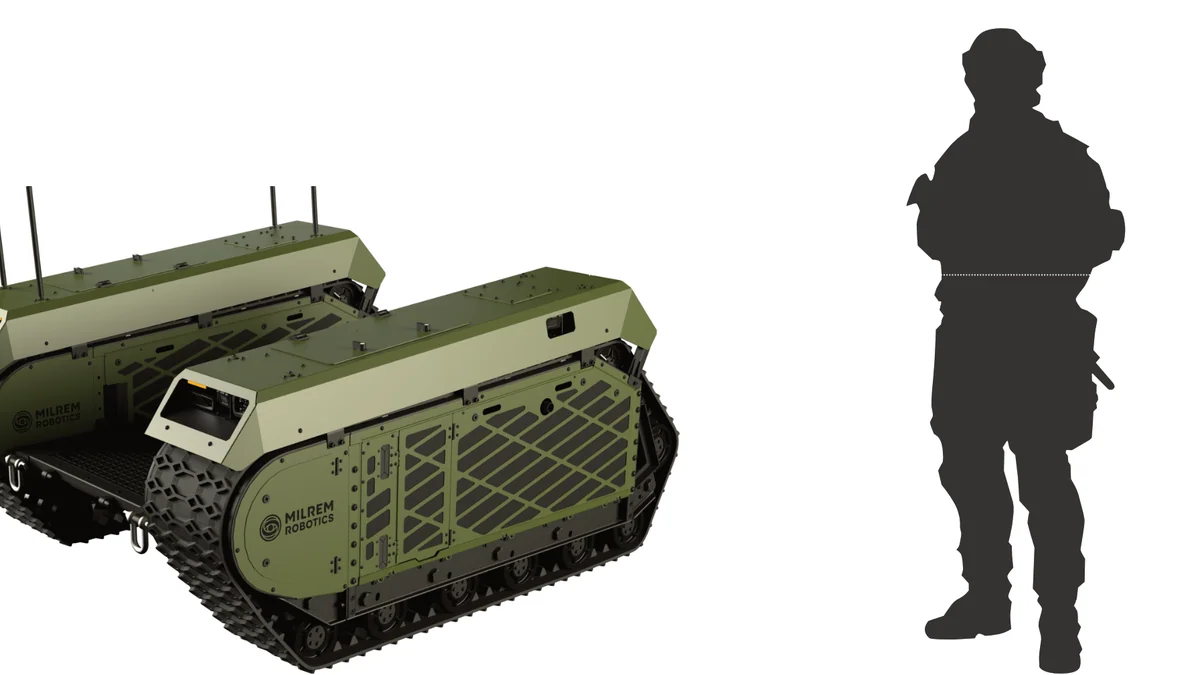
The THeMIS unmanned ground platform has long since graduated from being an export product into something more consequential. It operates within active NATO units and has demonstrated battlefield utility on the Ukrainian front. Milrem Robotics has become Estonia's flagship defence-industrial asset — the point where military demand intersects with technological innovation at scale.
The broader sector context amplifies this. Seven Estonian defence startups have collectively generated €450 million in revenue from Ukraine-related deliveries. Within that picture, Milrem functions as the sector's anchor company, attracting foreign capital and geopolitical attention in equal measure.
That second element carries a dual logic. In 2023, the UAE-based EDGE Group acquired a 54% majority stake, bringing ambitious expansion plans — and unresolved institutional questions. When the controlling shareholder is headquartered in the Persian Gulf, the answer to "who ultimately governs THeMIS technology?" is no longer simply: Tallinn.
Hybrid warfare tactics are shifting. If earlier phases were dominated by information operations and cyber-sabotage, the Betooni Street incident points toward a tactical evolution. The target is now direct production capacity — and that exposes the entire sector's institutional vulnerability in ways that previous threat assessments did not fully model.
The factory floor is no longer the rear.
The Financial Architecture of Vulnerability
The EDGE Group acquisition was not merely a capital transaction. It was a geopolitical choice that imported a new ownership logic into a strategically sensitive company. When European allies ask who controls THeMIS technology, the answer is no longer unambiguously Estonian.
Milrem's financial position compounds the concern significantly. The company recorded a €24.1 million loss in 2025 against revenues of €46.1 million. For every euro earned, more than half is lost — a structural fragility that leaves almost no cushion for operational disruption.
Milrem has pledged €25 million in assets to LHV bank as collateral. The combination of loan obligations and sustained losses makes the company acutely sensitive to any interruption in production capacity. The fire on Betooni Street is a direct strike against a company whose financial room to manoeuvre was already narrowing well before the incident.
This creates a conflict of interests that demands institutional attention. The objectives of a Gulf-based majority owner and a domestic lender do not necessarily align with Estonian national security interests when a crisis hits. Who guarantees continuity of Estonian defence production capacity when the majority shareholder sits in the Persian Gulf? Current legislation offers no clear answer.
The Investigation: Hybrid War Reaches the Factory Floor
A local resident noticed unusual movement near the Betooni Street facility before dawn. That phone call to the emergency line transformed a peacetime incident into the starting point of a criminal investigation. The fire was not an accident.
Chief Prosecutor Astrid Asi confirmed that the sabotage hypothesis is under active investigation. KAPO and the police identified suspects, and the State Prosecutor's Office sought arrest warrants. Initial information points clearly toward foreign state involvement as part of a broader hybrid operation.
The trajectory of hybrid warfare has shifted from server rooms and narrative manipulation toward the physical nodes of production chains. Milrem is the concrete proof of that tactical inflection point — a paradigm shift from digital sabotage to physical disruption of manufacturing capability.
KAPO Director General Margo Palloson has stated that Russia poses a long-term existential threat to Estonia. The provocation at a burning defence facility is no longer an abstract threat assessment — it is an active court file. Estonian institutional behaviour must adapt, moving from a reactive model toward anticipatory protection of strategic assets.
Critical Infrastructure, Private Ownership, and the Accountability Gap
Palloson's message was unambiguous: the physical and digital protection of critical infrastructure must be strengthened. But that call contains a deeper structural contradiction — one between state and private sector responsibility. Estonia's security doctrine defines threats with precision; the private sector's actual defensive capacity frequently lags behind.
The cross-border comparison here is sobering. Finland and Poland have established legal frameworks that oblige the state to provide physical security for strategic facilities during peacetime. In Estonia, that responsibility falls largely on the companies themselves.
The Milrem case exposes a systemic blind spot. A company running high-security-value production operates without a mandatory state protection layer — that layer activates only after the event. The emerging paradigm of hybrid warfare demands a faster institutional reflex: protecting strategic assets before the next incident, not in response to it.
If a private company has become a critical link in NATO's supply chain, its security is no longer a conventional business risk to be priced into an insurance premium. The state must choose: create a mandatory national protection framework, or accept persistent structural exposure. After Betooni Street, that question has moved from the policy seminar to the urgent legislative inbox.
A Paradigm Shift in Estonia's Security Model
The Milrem incident marks a new threshold in hybrid warfare's evolution — one that exposes a systemic weakness in how Estonia protects strategic production capacity. EU and partner-nation investment has made the Estonian defence sector a priority target for adversaries precisely because it has become too important to ignore.
The success of Estonian defence startups in Ukraine has raised the sector's strategic weight considerably. Attracting foreign capital brings resources, but it also creates intersecting interests that require a far more active state role to manage. KAPO leadership's calls for infrastructure strengthening now need concrete legislative backing, not policy declarations.
Policymakers must answer a question that can no longer be deferred: who protects a private company carrying a national security function in a market environment that cannot guarantee that protection on its own? The fire at Milrem Robotics is not a local incident report. It is a demand for structural change — and the next crisis will not wait for the legislation to catch up.