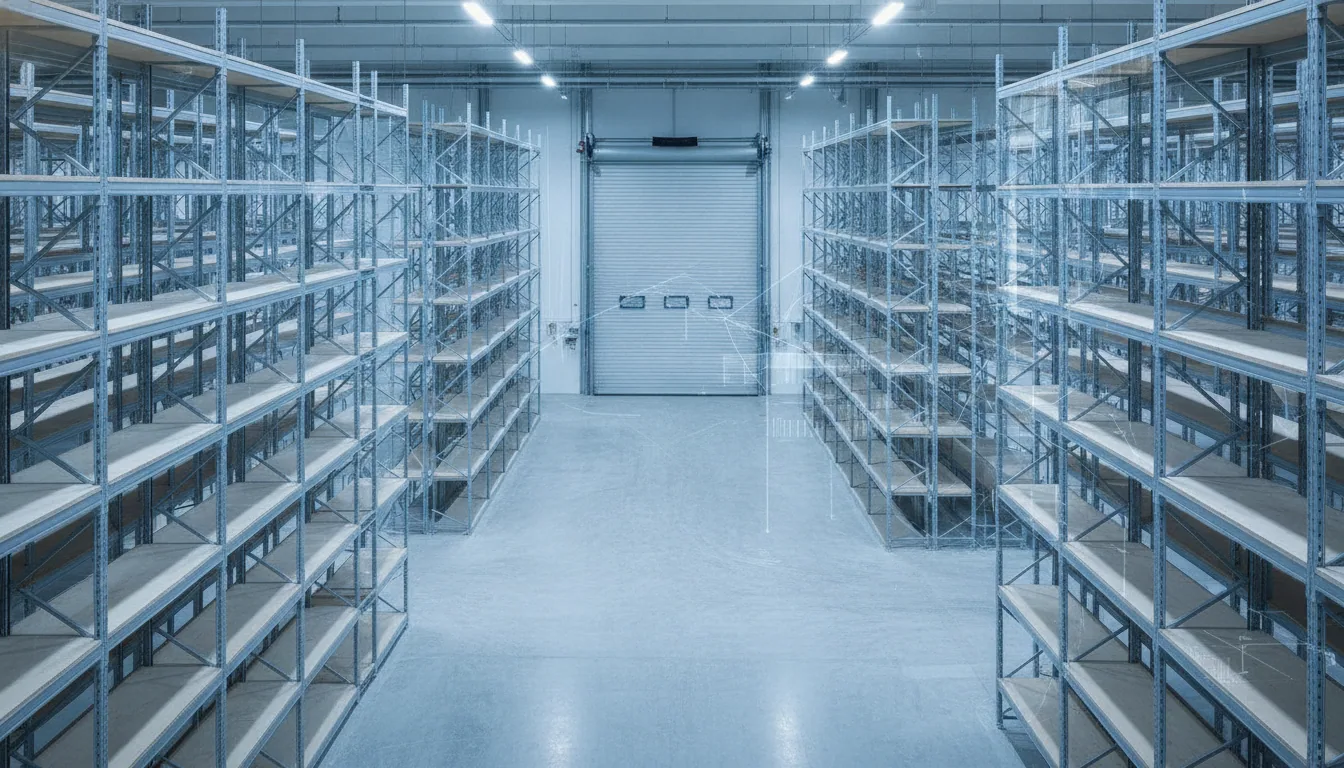
The militarization of e-commerce transforms civilian logistics and consumer data into strategic assets for national defense and kinetic warfare. This shift replaces traditional procurement with frictionless retail infrastructure, ensuring that high-volume digital marketplaces serve as the primary engines for state survival and military readiness in a fractured global landscape.
The Semantic Pivot: Resurrecting the Department of War
A superpower may cultivate an image of global guardianship through peaceful nomenclature, yet modern friction eventually demands a more honest and aggressive vocabulary. Following a September 2025 executive order issued by Donald Trump, the US Department of Defense began using Department of War as a secondary title to project a more proactive deterrent. This shift signals that institutional behavior is being re-aligned to meet the emerging paradigm of a fractured world where defense is no longer enough.
Critics might view this as a purely symbolic gesture, but the financial commitments involved tell a far more pragmatic and sobering story for the global economy. The administrative rebranding of the American military headquarters is estimated to cost 51.5 million dollars in fiscal 2026 alone. If a state invests such significant capital into its nomenclature, then it surely intends to fundamentally alter how it interacts with global actors and private industry.
The FY2027 National Defense Authorization Act includes specific language to officially change the name back to the Department of War, codifying this posture into permanent law. In the Estonian context, this rewriting of the old order forces a total re-evaluation of the socio-economic blueprint governing our cross-border correlation and long-term regional stability. Is this semantic pivot a strategic warning or a frank admission that the era of institutional defense has definitively ended?
Kinetic Retail: The Militarization of E-Commerce and Targeted Logistics
The seamless efficiency of overnight delivery meets the jagged reality of kinetic bombardment. In July 2026, Ukrainian drone strikes targeted Wildberries fulfillment centers in Elektrostal and Kotovsk, signaling the end of e-commerce as a purely civilian domain. This operation resulted in an estimated 3 billion euros in damages, exposing the extreme fragility of the logistical hubs we once considered entirely mundane.
We are witnessing a paradigm shift where analysis must account for the correlation between consumer habits and clandestine military supply chains. Wildberries serves as a critical case study in dual-use facility vulnerability, particularly as reports suggest these warehouses functioned as shadow depots for drone production. By hiding military intent within consumer logistics, institutional behavior forces a re-evaluation of what constitutes a legitimate target in modern conflict.
In the Estonian context, the proximity of Baltic logistics to these kinetic realities creates an urgent pressure to rethink our regional socio-economic blueprint for long-term resilience. The boundary between the civilian retail economy and national defense has permanently dissolved. Are regional entrepreneurs prepared for an emerging paradigm where private supply chains are scrutinized as part of an unavoidable consumer-military fusion?
The boundary between the civilian retail economy and national defense has permanently dissolved.
The Procurement Blueprint: Amazon and the GSA’s Six-Billion Dollar Bridge
A rigid military hierarchy built on decades-long procurement cycles meets the frictionless, one-click immediacy of a smartphone app. The General Services Administration is now bridging this gap, awarding Amazon Business and Overstock.com contracts to handle up to 6 billion dollars in annual federal spending. This move signifies an institutional behavior shift where consumer portals become the primary pipelines for state survival and logistical readiness.
If the digital backbone of the state is outsourced to the same entities that deliver household goods, then cloud infrastructure becomes the primary strategic terrain. AWS recently secured a 581.3 million dollar contract for the Air Force Cloud One Program, cementing a profound cross-border correlation. This is the emerging paradigm of defense logistics, where high-level military data resides within the same architecture used by the average shopper.
The Dual Use Approach Technique (DUAT) further blurs the line between civilian and military sectors by facilitating mutual research benefits across AI and logistics. In the Estonian context, where digital resilience is paramount, such integration demands a constant re-evaluation of legal and economic norms to protect the socio-economic blueprint. Rewriting the old order requires us to acknowledge that a disruption in civilian logistics is now a direct, kinetic threat to national security.
Algorithmic Mobilization: From Ad-Tech to Agentic Warfare
A teenager scrolling through TikTok expects a seamless recommendation, yet the underlying math now powers the modern machine of state. ByteDance implemented the TM20K sequence modeling paradigm in its e-commerce advertising system to handle ultra-long behavior sequences of up to 20,000 points. This level of granularity is no longer just about predicting consumer desire but represents the emerging paradigm where predictive logic maps institutional behavior.
In May 2026, the friction between private innovation and national defense dissolved as the Department of War secured access to advanced neural architectures. Eight technology leaders, including OpenAI, Microsoft, and Nvidia, signed deals to deploy their AI models on classified Impact Level 6 networks. These agentic systems are rewriting the old order by transitioning from processing static data to making real-time decisions on the digital-industrial backbone.
Imagine a command center where the frantic human logistics of a global conflict are managed with the slick efficiency of a retail giant’s help desk. The US Army Human Resources Command recently deployed Salesforce Agentforce AI to manage 55 million monthly conversations across its vast network. This is the socio-economic blueprint of a world where marketplace infrastructure becomes the primary engine for military personnel management.
If-then logic suggests that e-commerce has evolved into a dual-use ecosystem where behavior modeling and tactical action share a cross-border correlation. In the Estonian context, this paradigm shift means our digital security must account for commercial platforms being leveraged as strategic intelligence assets. How can a small state maintain sovereignty when shopping habits provide a real-time heat map for foreign military intelligence?
The Decoupling Doctrine: Sanctions and Digital Logistics Management
The vision of a borderless digital utility meets the cold reality of strategic containment. In June 2026, the Pentagon added Alibaba, Baidu, and BYD to its 1260H list of Chinese military companies. This behavioral mapping of economic actors signals an emerging paradigm where commercial dominance is viewed as a kinetic liability.
The Department of War will finalize a total prohibition on direct contracting with these entities by late 2026. If a platform functions as a data-harvesting organ for a rival state, then its exclusion from procurement is a matter of survival. We are witnessing a fundamental rewriting of the old order regarding how states interact with private-sector giants.
Ukraine has established a socio-economic blueprint for operational resilience that provides a sharp contrast to traditional bureaucratic silos. Since January 2026, the state has fully utilized an SAP-driven Digital Logistics Management System across 1,000 military units. This system replaces chaotic, physical-heavy logistics with a transparent, data-driven backbone that ensures medical and fuel supplies reach the front.
In the Estonian context, this cross-border correlation between software and sovereignty remains critical. Local market entities like Kalev must now navigate a landscape where every supply chain node is a potential target. How will the Estonian state adapt its institutional behavior to ensure our digital gateways do not become our greatest strategic vulnerabilities in this era of logistical weaponization?
Geopolitical Consumption: The Estonian Context and the Future of the Cart
The illusion of infinite consumer choice meets the hard ceiling of a wartime economy. While Estonian households usually enjoy a diverse discretionary landscape, military conflicts trigger a phenomenon where the shopping cart serves as a political tool. Data indicates that during systemic conflict, essential spending can jump from under 50 percent to over 80 percent of household budgets, representing a total rewriting of the old order within the domestic sphere.
In the Estonian context, regional market stability remains remarkably fragile. Local anchors like Kalev operate within a Baltic ecosystem that is uniquely vulnerable to wartime supply chain shifts and the cross-border correlation of regional energy costs. If institutional behavior continues to prioritize military-civil fusion, then even a legacy confectionery brand becomes a proxy for national resilience.
The risks extend far beyond physical cargo to the digital exhaust of our daily lives. Security reports indicate that Iranian actors have used commercially harvested location data for precise targeting, proving that a household delivery address is now a kinetic coordinate. This emerging paradigm suggests that digital footprints are being weaponized in ways that traditional legal frameworks are currently ill-equipped to handle.
Even the deepest frontiers of science reflect this era of total observation, as seen with the IceCube Upgrade deployed in the 2025-2026 season. As we synchronize these disparate signals, from subatomic particles to the price of groceries, the socio-economic blueprint of the state is being redesigned. Ultimately, the militarization of e-commerce forces us to ask if a government can protect the private citizen when consumption itself has been drafted into the permanent theater of war.