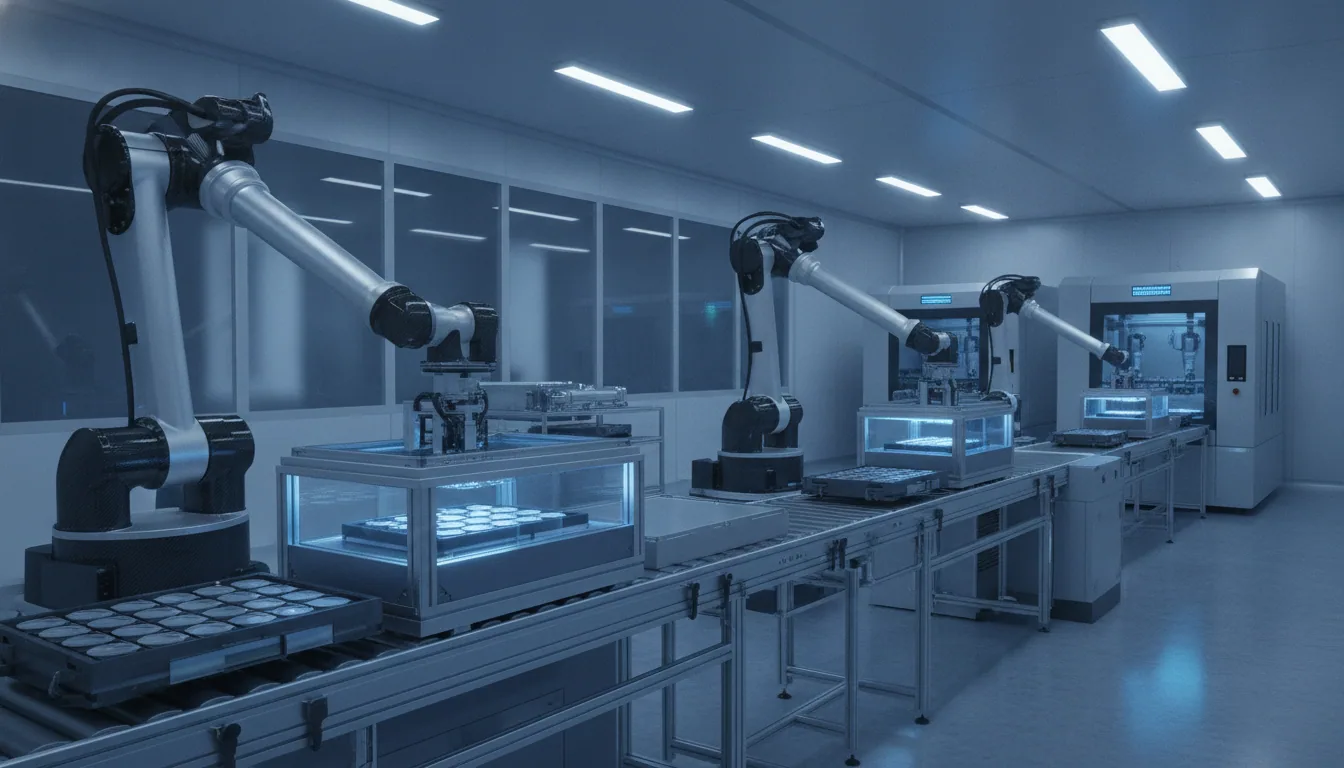
The Smart TV bandwidth battle is being won by data efficiency rather than raw pixel counts. As 8K screens disappear from production lines, manufacturers are realizing that the physical limits of home networking have created a hard ceiling for resolution. Processing power and compression have become more important than pixels.
The Resolution That Hit a Ceiling
Imagine walking into an electronics store in early 2026 and looking for the ultimate television. You expect to see 8K screens everywhere, but instead, they have largely vanished. In January 2026, LG Display quietly stopped making every single one of its 8K panels, both OLED and LCD.
We were promised a future where every blade of grass on a digital pitch would be visible. But more pixels do not always mean more clarity. Here is the strange part.
An 8K stream requires between 80 and 100 megabits per second just to stay alive. Compare that to 4K, which sips a modest 15 to 25 megabits. To a modern home router, this requirement is a logistical nightmare.
Think of your internet connection as the main water pipe into your house. 4K is like running a sturdy garden hose, which most of us can manage. But 8K is like trying to force the flow of a fire hydrant through your kitchen sink.
Most home networks simply choked on the math of 8K. When the pipe is too narrow, the extra pixels do not add beauty; they just add a spinning loading icon. The resolution war ended because the physics of the "fat pipe" hit the reality of the living room.
Understanding this ceiling is the first step in seeing how the battle for your screen has moved from raw numbers to something much more invisible.
The Art of the Squeeze: How We Fit the Universe into a Wire
To get a 4K movie into your living room, we have to perform a sort of digital origami. If we sent the raw data, your internet connection would choke instantly. This is where we use the AV1 codec, a digital packing algorithm that folds files into tiny fractions of their size.
By late 2025, Netflix finished moving its library to this system, which compresses data 20 to 30 percent tighter than before. It is the art of the squeeze. This efficiency is the only reason your stream does not dissolve into a soup of colored squares.
But compression is only half the battle. To keep the picture from stuttering, Netflix uses a strategy called OpenConnect. They place about 18,000 small server appliances directly inside the facilities of local internet providers.
This brings the data closer, so your movie travels across town rather than across an ocean. Think of it as a specialized library in your neighbor's basement. Now hold that thought.
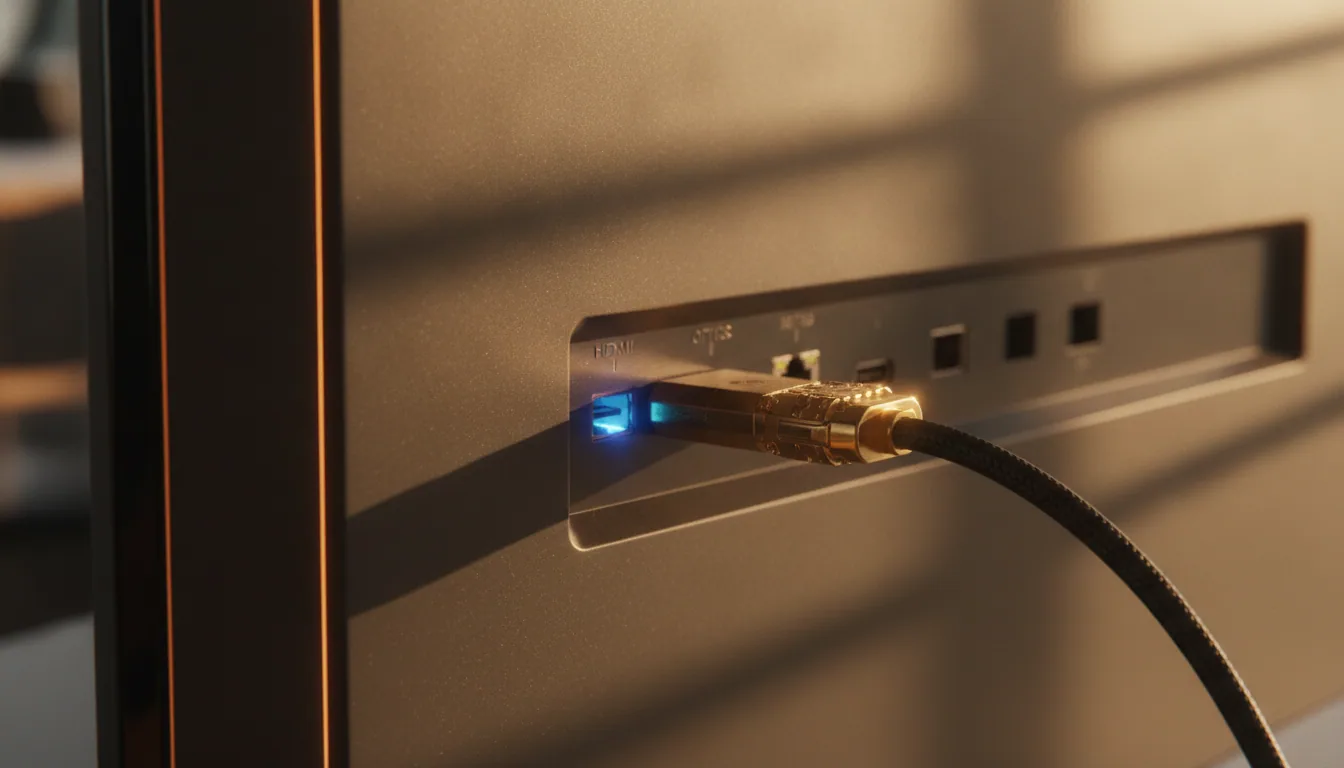
Even if the data reaches your house, it still has to survive the final few feet of copper. This is the physical limit of the HDMI cable. To handle modern gaming consoles, you now need HDMI 2.1 bandwidth on every single input.
Without that specific pipe, the most clever software is just a Ferrari stuck in a narrow alleyway. We are reaching the point where the bottleneck is the wire behind the screen. Here is the strange part.
Even as our cables get faster, our televisions struggle to keep up with the math required to unpack the signals. The universe is being squeezed into a wire, but the wire has a breaking point.
The battle for your living room is no longer about who makes the best glass, but who owns the code running behind it.
Winning the Smart TV Bandwidth Battle with Silicon
Here is the strange part. You might spend thousands on a screen that displays a billion colors with surgical precision, yet the brain inside is often weaker than a five-year-old smartphone. Your TV has the eyes of a hawk but the processing power of a budget handset.
Most smart TVs ship with outdated processors and very little RAM. This is why your menu sometimes stutters while your phone flies through the same tasks. Manufacturers prioritize the panel because that is what you see in the showroom, leaving the engine under the hood as an afterthought.
To solve this without needing massive bandwidth, engineers use AI upscaling. Think of it as a digital artist living inside your screen, taking a standard 4K stream and painting in the missing detail. It makes the picture look sharper by guessing what should be there based on machine learning.
Now hold that thought. Because great software is harder to build than a good screen, Samsung now licenses its Tizen OS to third-party manufacturers like Akai and RCA.
The battle for your living room is no longer about who makes the best glass, but who owns the code running behind it. This shift ensures that even a bargain-bin television can feel like a flagship, provided it has a smart enough mind to compensate for its body.
When the Stream Becomes the River
In 2025, a quiet revolution reached its final tipping point. For the first time, streaming officially surpassed cable and network television as the dominant way we watch things in the United States. The glass rectangle in your living room finally stopped being a simple receiver for broadcast signals and became a portal for data.
The industry felt this shift in its very marrow. In December 2025, Netflix announced an $83 billion acquisition of Warner Bros. Discovery assets. This number is nearly enough to fund the entire European Space Agency for five years.
This was not just a grab for more movies. It was a massive consolidation of the infrastructure needed to push millions of bits through our walls every second. Netflix wanted the library and the delivery system to become one single, unstoppable river of content.
Now hold that thought. While we spent years celebrating the freedom to watch anything at any time, we suddenly started craving the opposite. We missed the comfort of having someone else pick the show.
This led to the rise of Free Ad-supported Streaming TV (FAST) channels, which grew by 76 percent between 2023 and 2025. Here is the strange part. We spent decades building advanced technology just to return to linear television because we missed the comfort of a schedule.
The Toll Booth at the End of the Internet
In the early days of the automobile, manufacturers simply built cars and expected the public roads to handle them. We are currently watching a digital version of that same old human friction. Imagine a highway where the lane size suddenly narrows depending on which brand of car you drive.
In January 2025, the U.S. Court of Appeals for the 6th Circuit set aside the FCC Net Neutrality rules. This decision moved the "Fair Share" debate, the idea that content providers should pay for the pipes, out of law textbooks and into our living rooms.
Now hold that thought. We have already seen a preview of this conflict in South Korea, where Netflix and SK Broadband spent three years in a landmark legal battle over network usage fees. The provider argued that streaming giants should help fund the infrastructure they utilize.
The pressure is highest during live 4K sports. Unlike a pre-recorded show, a live broadcast cannot sit in a digital waiting room to buffer while the network catches up. These events typically require 25 to 40 Mbps to keep up with the high frame rates that make the action feel immediate.
Here is the strange part. The more we crave that crisp, live detail, the more power we give to the companies that own the wires beneath our streets. The pipe is no longer just a neutral utility; it is the gatekeeper of our shared reality.
The Trojan Horse in the Living Room
We often think of bandwidth as a one-way street, a pipe delivering pixels to our couch. But for many modern sets, the pipe is bidirectional. In early 2026, LG took the drastic step of banning residential proxy apps from its webOS platform to prevent data harvesting.
A residential proxy allows a stranger to use your TV's IP address to browse the internet. To a server on the other side, the traffic looks like it is coming from a regular family home rather than a data center. These apps allow a clever piece of software to rent out your home internet identity.
Here is the strange part. These apps can turn your television into an unwitting participant in global cybercrime networks. By masking their location behind your home connection, bad actors can bypass security filters. Our screens are often the weakest link in our home security.
Now hold that thought, because the threat isn't just invisible code. In April 2026, a major patent dispute hit the industry and threatens to turn certain Roku and Hisense models into banned imports. It is a reminder that the "smart" in your TV depends as much on a courtroom as the glass in the panel.
We have spent a century perfecting the way we project light onto glass. Your TV is no longer just a window; it is a contested piece of digital territory. We still don't know who will eventually own the outcome of this Smart TV bandwidth battle, and that is the best part.