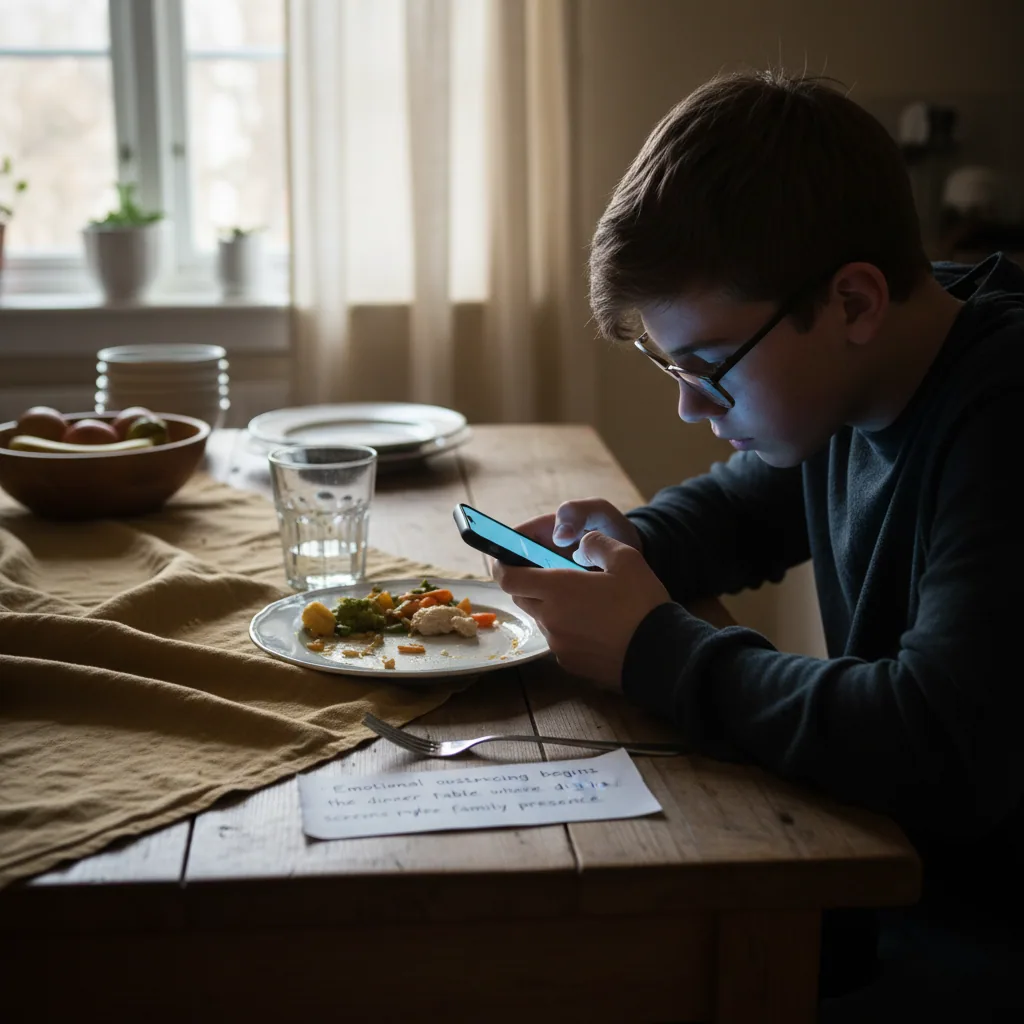
Britain is proposing a mandatory social media ban for children under 16 and a voluntary overnight curfew for 16- and 17-year-olds. The legislation aims to combat a 477 percent rise in youth mental health referrals by regulating addictive algorithms and restricting nighttime screen use starting in 2027.
Britain’s social media curfew is designed to address a system-wide collapse of youth wellbeing by restricting platform access and removing addictive design features. My 11-year-old daughter asked me last week if her phone could stay on after 9:00 PM. It is a small request that every parent in Riga, London, or Tallinn hears daily.
Behind that glowing screen lies a cost we are only beginning to calculate in the cold light of the morning. In the United Kingdom, since 2016, referrals for youth mental health services have surged by 477 percent. This is a system-wide collapse of wellbeing that has grown alongside the rise of the smartphone.
Esther Ghey, a leading voice for regulation, describes the digital landscape as a "Wild West." She argues that addictive design choices and unchecked algorithms make children vulnerable by default. I write so that people understand this is not just a family struggle, but a failure of public safety.
European Commission President Ursula von der Leyen recently joined this chorus of concern. She characterized unrestricted access as a direct source of "mental harm" and "addiction." When the highest levels of EU power use words like that, the era of looking the other way is ending.
British Prime Minister Keir Starmer now wants to "give children their childhood back" through a mandatory social media ban for those under 16. It is an ambitious attempt to close the frontier and protect the next generation. Do the arithmetic: the price of inaction is a debt our children cannot afford to pay.
The Spring 2027 Mandate: A Hard Line at Sixteen
The UK government has set a hard deadline for the digital industry. By Spring 2027, the "Wild West" era of unrestricted access ends for anyone under sixteen. This is a total social media ban written into the heavy machinery of the law.
The Children’s Wellbeing and Schools Act 2026 provides the legal teeth for this move. For a parent, this feels like the state finally acknowledging that a smartphone is not just a toy. The list of platforms facing the axe includes TikTok, Instagram, Snapchat, YouTube, and X.
Policy usually moves slower than a teenager's thumb on a glass screen. However, nine in ten parents supported the ban during government consultations. They are tired of being the only ones saying "no" to an algorithm designed by a billion-dollar company.
The price of inaction is a debt our children cannot afford to pay.
Two-thirds of young people agreed that certain platforms should be closed to those under sixteen. They see the harm too and know what it feels like to be stuck in an infinite scroll when they should be sleeping. We are moving toward a regulated public square where safety matters more than engagement metrics.
Midnight to Six: How Britain’s Social Media Curfew Impacts Older Teens
Technology Secretary Liz Kendall is proposing a default overnight curfew from 00:00 to 06:00 for 16- and 17-year-olds. It is not a hard block, but relies on the friction of choice to give a tired brain rest. It is about making the healthy choice the easiest choice for a student who is already exhausted.
A teenager who stays up until 3:00 AM scrolling through TikTok loses three hours of essential sleep before a school day. The curfew is voluntary, meaning users can opt out by manually changing their account settings. This policy is a gamble on human inertia.
The plan also targets the specific tools that keep us hooked, such as infinite scroll and autoplay features. Platforms will have to make a "stop" the default setting rather than an endless stream. The government is betting that peer inertia will do what parents often cannot.
If every friend’s phone goes quiet at midnight by default, the social pressure to stay online fades. This is a quiet intervention for a group still vulnerable to that 477 percent rise in mental health referrals. I write so that we see how small design shifts might finally prioritize a child's rest over a tech company's profit.
The Enforcement Gap: Why a Ban is Not a Firewall
In Australia, roughly 61 percent of youth reportedly found ways to bypass similar restrictions using virtual private networks. It is a reminder that policy on paper often fails the test of a determined teenager with a Wi-Fi signal. If the technical code is weak, the ban becomes a mere suggestion rather than a firewall.
Ofcom now faces the massive task of implementing age assurance technologies that verify a user’s age without compromising privacy. The risks of a total block go beyond simple workarounds. Research from Cambridge's Amy Orben suggests these bans could push teenagers toward the unregulated "Dark Web."
By closing the front door to TikTok or Instagram, we might inadvertently open a window to much darker spaces where no one is watching. Messaging services such as WhatsApp and Signal are currently exempt from the proposed ban. This leaves parents to wonder if the gate is actually locked.
The Baltic View: Why Tallinn and Riga Are Watching London
London is moving fast, but Brussels is rarely far behind. While the UK aims for a 2027 deadline, the European Commission is preparing its own roadmap for Autumn 2026. This is not just a Western debate.
In Estonia, the digital tiger of the Baltics, the numbers tell a story of deep anxiety. A Eurobarometer survey found that 79 percent of Estonians identify cyberbullying as the primary online threat to children. This is higher than the EU average of 71 percent.
When the UK acts, it creates a ripple often called the "Brussels Effect." Roughly 71 percent of Estonians already support the EU setting a minimum age for social media use. For a parent in Riga, von der Leyen's words about "mental harm" sound like a description of the dinner table.
If 63 percent of all Europeans want age limits, a mandatory ban is no longer a radical idea. It is becoming a common demand for safety. We are watching London to see if a government can actually reclaim a childhood.
Policy as a Shield for the Overworked Parent
A parent finishing a late shift cannot compete with a trillion-dollar algorithm designed to keep their child scrolling. This mandatory ban for those under 16 is a policy shield for families too exhausted to fight every digital battle alone. This is about protecting the basic mental health of a generation.
The Molly Rose Foundation supports these strict regulations to prevent children from seeing harmful content. However, the children’s charity NSPCC has voiced caution, worrying that a complete block might push children toward the dark web. These are the practical frictions we must resolve before Spring 2027.
For a mother in Jelgava or a delivery driver in London, this regulation acts as an extra pair of eyes. I write so that we remember that markets do not feed children or protect their sleep. Only deliberate, human-centered policy like Britain’s social media curfew can help ensure our children get the night’s rest they deserve.