
Kyiv attacks and the new escalation of the war reached a devastating peak on July 2, 2026, when an 11-hour bombardment targeted the capital’s residential districts and energy infrastructure. This massive assault involved 496 drones and 74 missiles, killing at least 13 people and leaving 33 separate locations in ruins.
Staying alive in Kyiv now requires a cruel calculation of time and shelter as the sky turns into a theater of saturation strikes.
The 11-Hour Night in the Metro
Eleven hours is about how long a double shift at the supermarket lasts, or the time it takes to drive from Riga to Warsaw. On July 2, 2026, eleven hours was the amount of time the people of Kyiv spent underground. From 8 p.m. until the following morning, the metro stations were not transit hubs but bedrooms for thousands of families.
In the Darnytskyi district, a nine-story residential building did not survive the night intact. Part of the structure was simply blown away, leaving residents trapped under a mountain of concrete and twisted metal. It is the kind of math no mother wants to do while clutching her children in the dark.
Mayor Vitaliy Klitschko called it a terrible night for the city, and the numbers back him up. By dawn, at least 13 people were confirmed dead. Another 90 were injured, with 70 of those requiring a hospital bed.
This was not a military skirmish on a distant map; it was a 74-missile assault that turned 33 locations into crime scenes. When an ambulance station is hit, you are no longer looking at a war of maneuvers. You are looking at the price of staying alive when the sky turns against you.
We talk about escalation in policy papers, but this is what it feels like when the arithmetic of war reaches your front door. Every siren is a lost day of work, a missed school lesson, and a heart rate that never quite returns to normal. I write so that we do not forget what those eleven hours actually cost.
Kyiv Attacks and the New Escalation of the War: Saturating the Sky
The strategy is a simple, cruel math problem. To get a missile through a city's shield, you do not just fire one; you flood the sky until the computer has too many targets to track. On July 2, Russia launched a record 496 long-range drones to "soak up" the defenses.
Ukrainian teams intercepted 476 of those drones, which is a staggering rate of success. But while the soldiers focused on the cheap plastic wings, the real killers were moving faster. Alongside the drones, 74 missiles were fired, and 25 ballistic missiles reached their targets.
Doing the arithmetic of this assault reveals the limit of current technology.
Tymur Tkachenko, head of Kyiv’s military administration, confirmed the damage spread across all ten city districts. Significant destruction was reported at 33 separate locations, including the Cityhotel Residence and a local ambulance station. When an ambulance station is destroyed, the cost is the minutes added to a response time for the next person in need.
The 'Retaliation' Cycle and the Refinery War
President Volodymyr Zelenskyy was in Dublin on July 1 when the intelligence reports reached him. He warned the world that a massive strike was coming. By the next day, that warning became a 496-drone reality for families in Kyiv.
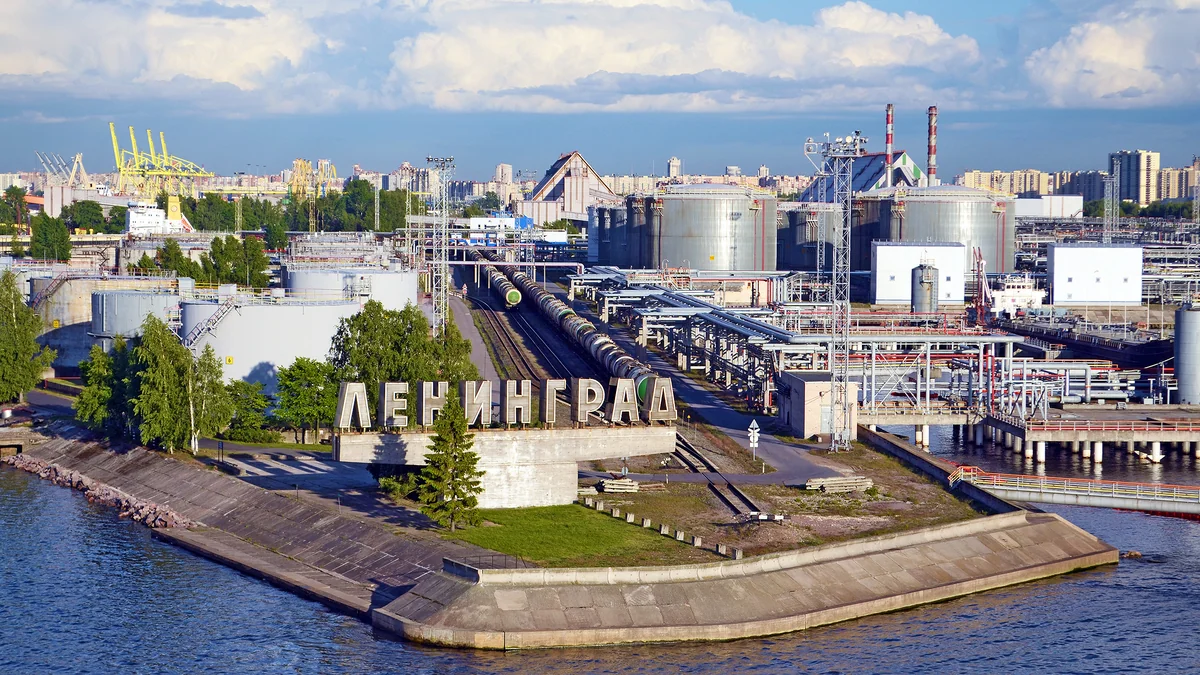
The Russian Ministry of Defense frames Kyiv attacks and the new escalation of the war as a necessary response. They claim these 74 missiles were "retaliation" for Ukraine’s recent hits on the Kstovo and Slavjanski refineries. This is the policy of reciprocal targeting, where the energy grid becomes the frontline.
For those of us watching from the Baltics, this cycle feels like a grim preview of a two-speed war. It is no longer just about soldiers in trenches; it is about who can keep the lights on. When refineries burn, the cost is measured in more than just barrels of oil.
Why the Baltic Border Just Went Quiet
The silence at the border has a specific, heavy weight. On July 1, Russia closed seven railway crossings with Estonia, Latvia, and Finland without providing any justification. This sudden absence of a train whistle makes every neighbor look toward the east with a familiar tightness in the chest.
In Moscow, the silence was quickly replaced by pointed accusations. Maria Zakharova claimed Estonia was involved in Ukrainian drone strikes targeting St. Petersburg. For those of us in Riga or Tallinn, these words are the technical preparation for whatever comes next.
While Kyiv endured its 11-hour nightmare, Poland scrambled fighter jets to secure its own airspace. When missiles are in the air, the border is no longer just a line on a map. Closing seven rail lines disrupts trade and reminds us that for the Kremlin, borders are merely levers to be pulled.
The Arithmetic of Attrition and $45 Oil
In 2026, the price of oil and the price of life are the two figures that determine how much longer the sirens will wail. Russia is currently selling its oil to India at 45 dollars per barrel. This discounted price continues to fuel a military that has seen total casualties reach an estimated 1.4 million personnel.
On the Ukrainian side, the ledger is even more lopsided. The national budget is 53 billion euros, but the actual defense needs are 136 billion euros. Imagine trying to run a home where the basic bills cost nearly three times your total salary.
Defense Minister Mokhailo Fedorov is now requesting 6.6 billion euros from the EU. It is a specific, urgent number that represents only a small fraction of the total deficit. In a war of attrition, one side sells oil to stay afloat while the other relies on the political will of its neighbors.
Practical Policy Beyond Condemnation
Foreign Minister Andriy Sybiha was blunt after the July 2 strikes, demanding concrete action to stop the terror. For a family in the Darnytskyi district, condemnation does not fix a radiator or replace blown-out windows. Policy fails when it cannot keep pace with the physics of a 25-missile hit.
Ukraine’s total defense needs stand at 136 billion euros, but its national budget is only 53 billion. That is a gap that no amount of diplomatic concern can fill. The cost of an interceptor is high, but the cost of a hit at one of the 33 damaged locations is significantly higher.
I write so that we remember these numbers are not abstractions. Kyiv attacks and the new escalation of the war prove that policy is a choice made in Brussels or Riga that determines if a mother in Kyiv can sleep through the night. The door is still open to act before the next winter arrives; we must move into the language of the bank transfer.