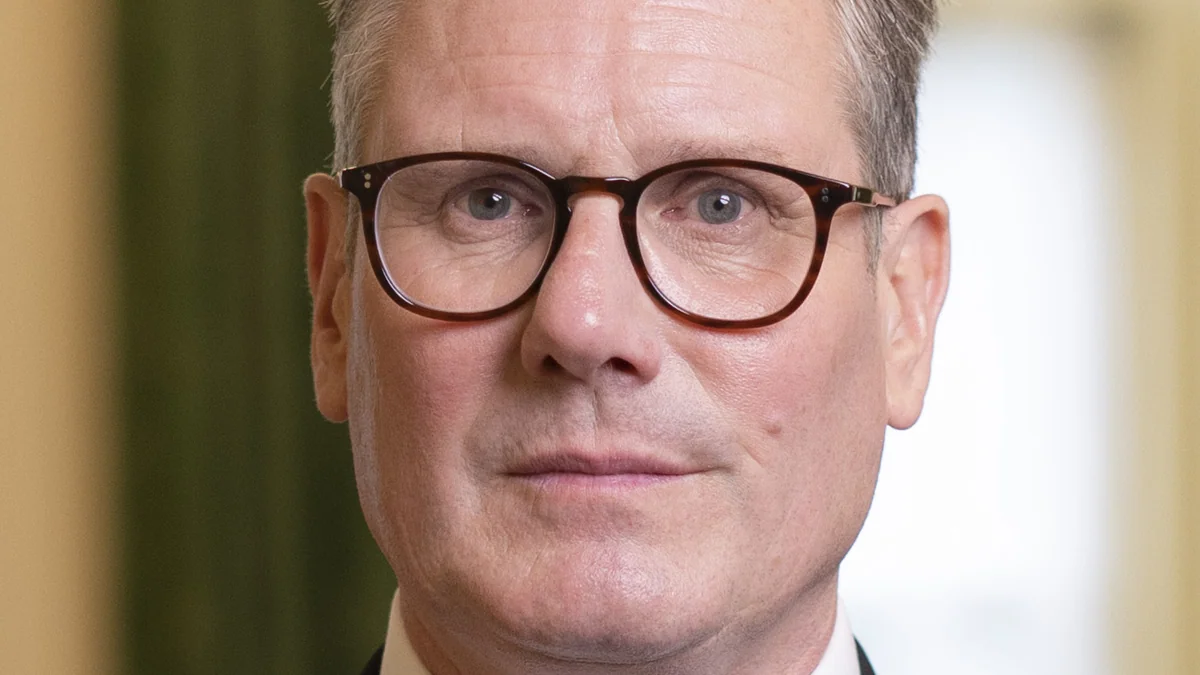
Keir Starmer’s social media ban, under the "Australia plus" framework, prohibits children under 16 from using platforms like TikTok and Instagram by September 2026. The policy mandates biometric age verification and threatens tech giants with fines of up to 10% of global turnover for non-compliance.
Keir Starmer’s social media ban ensures that by September 2026, the digital routine for every child under 16 in the UK will come to a definitive halt. My oldest daughter is 11 years old. By the time she starts the new school year as a 13-year-old, the platforms she knows today will be legally off-limits.
On June 15, 2026, the Prime Minister announced a policy that feels less like a distant headline and more like a new household rule. The "Australia plus" model is very clear: if you are under 16, you are off the "Big 10" platforms entirely. For parents, September 2026 is now a firm deadline marked on our calendars.
I write so that we can see the practical side of these decisions. This is not a suggestion or a guide for families, but a hard line. That is what policy feels like when it steps directly into the hallway where our children put on their shoes.
Do the arithmetic. If your child is 13 today, they will still be under the age limit when the full implementation arrives. For them, the digital world they currently navigate will simply stop.
The 'Australia Plus' List and Keir Starmer’s Social Media Ban
The UK government signals that these rules exceed the stringency of regulations already seen in Australia. The heart of the policy is a total ban for children under 16 on what are being called the "Big 10" platforms. TikTok, Instagram, Facebook, X, and YouTube are all included on this restricted list.
The list also includes Snapchat, Threads, Twitch, Kick, and Reddit. Under-18s are additionally prohibited from accessing romantic or sexual AI chatbots. Digital harm is now recognized in more forms than just a standard scrolling feed.
Even for applications not among the "Big 10", the rules change significantly for younger users. These apps must disable disappearing messages and livestreams for all minors. These specific features are identified as the primary tools for the most hidden and dangerous forms of digital harm.
Do the arithmetic. Platforms now face fines of up to 10% of global annual turnover for failing to enforce these boundaries. This structural change gives the government real teeth against massive global corporations.
To protect a child from an algorithm, the system requires you to give that same algorithm a high-resolution scan of their face.
Biometric Verification and the 20:30 Curfew
For 16- and 17-year-olds, the new rules introduce a digital curfew where platforms will simply shut off at exactly 20:30. This sharp, mechanical end to the day bypasses parental discretion to ensure the "Big 10" apps go dark. It is a transition that changes the evening for every teenager preparing for exams or coming home from work.
To make this work, the government is not relying on a simple honor system. Every user will have to prove their age through biometric facial analysis, a government-issued ID, or credit card details. Privacy becomes the heavy price parents must pay for a bit of digital peace.
Do the arithmetic on this trade-off between privacy and protection. For a parent who spends their day guarding their bank balance, handing over sensitive data feels like a significant risk. The 20:30 curfew is a hard limit that ignores the messy reality of modern teenage life.
The Fight for the Digital Border
Keir Starmer has framed this as a "fight" against tech companies and the addiction they trade in. He is facing some of the wealthiest entities on earth to protect children. To win, the UK is using the language boardrooms understand best: the balance sheet.
If a platform fails to follow the new rules, it faces a fine that could break a corporation. Do the arithmetic. That amount is a matter of corporate survival that makes even the most powerful executive pay attention.
Many teenagers already know how to use a VPN to pretend they are in a different country. UK authorities are now discussing the step of blocking these workarounds to ensure the ban actually works. Technology Minister Peter Kyle says that "all options are on the table" regarding youth protection.
Learning from France and the Baltics
France has already set a precedent by passing legislation to ban social media for those under 15. The UK's choice to push the limit to 16 goes even further. That one year makes a real difference in a household where a teenager is already looking for work.
In the Baltics, Estonian experts have expressed opposition to a total social media ban for youth. They fear a "knowledge gap" for future workers who miss years of learning how to navigate digital spaces safely. The debate centers on whether you can teach someone to swim by keeping them away from the water.
It is a choice between shielding a child and preparing them. For many parents, the idea of a total ban feels like a step backward. By 16, a young person is already stepping into a world that does not have an "off" switch.
Why 90% of Parents Support the Move
The government consultation ending May 2026 received over 116,000 responses. Do the arithmetic. This is thousands of families saying they can no longer manage the digital world by themselves.
The data indicates that 90% of parents support the ban for children under 16. These are people who see the "Big 10" algorithms as a direct threat to their children. The regulator Ofcom must now turn this mandate into a functioning reality.
Safety has a price, but the cost of doing nothing is higher. While a ban alone will not solve the loneliness our children feel, it offers a rare moment of practical hope. The Online Safety Act 2023 is being strengthened to put a child's well-being before a company's bottom line under Keir Starmer’s social media ban.