The North Atlantic Cold Blob is a cooling anomaly south of Greenland caused by the weakening of the Atlantic Meridional Overturning Circulation (AMOC). While global temperatures continue to rise, this specific region has cooled by up to one degree Celsius, signaling a potential collapse that could drop European temperatures by 5 to 15 °C.
The North Atlantic Cold Blob represents a significant cooling anomaly in the North Atlantic Warming Hole that indicates a slowing of the planetary conveyor belt. We now have the precision to track ocean temperature shifts down to the decimal point across thousands of miles. South of Greenland and east of Iceland, this data reveals a sea surface cooling that stands as a verifiable physical anomaly in a warming world.
This region is the North Atlantic Warming Hole, the specific area where the Atlantic Meridional Overturning Circulation (AMOC) delivers heat to the atmosphere. It is essentially the radiator for the European continent. A one-degree drop might sound small, but in oceanography, it is a significant signal that the conveyor belt of water moving from the tropics is slowing down.
Despair is just procrastination with better PR. It feels green to debate global averages, but the question is whether we are looking at the specific levers that keep our climate stable. We are currently observing the weakest circulation state in 1,000 years.
By identifying this region as the critical heat exchange point, we move from vague anxiety to precise engineering challenges. The honest scorecard starts with acknowledging that our continental heater is losing its prime.
The Physics of the Brake: How Freshwater is Stalling the Ocean’s 1,000-Year Engine
The AMOC is the ocean's primary heat engine, functioning as a massive conveyor belt that regulates the European climate. Warm surface water travels from the tropics toward the North Atlantic where it releases its heat to the atmosphere. Once cooled, this water becomes dense enough to sink and journey back south, completing a vital planetary cycle.
The engine relies on salinity because salt makes water heavy enough to sink. Today, the Greenland ice sheet is melting at an accelerated rate, pouring massive volumes of freshwater into the sinking zones of the North Atlantic. Because freshwater is less dense than saltwater, it floats on the surface like a mechanical brake, preventing the water from sinking and stalling the engine.
The honest scorecard shows this is not a theoretical model. Data from Stefan Rahmstorf and the Potsdam Institute shows the AMOC has weakened by 15% since the mid-20th century and is currently in its weakest state in a millennium. A 15% reduction in such a massive system is a measurable, physical shift in how the planet moves energy.
The "cold blob" is the visible footprint of this stall, marking where the AMOC delivers its heat to the atmosphere. Instead of the air receiving warmth from the ocean, the lack of circulation creates a localized cooling anomaly. This confirms the engine is struggling to move against the freshwater influx.
Despair is just procrastination with better PR.
The North Atlantic Cold Blob: Statistical Signals vs. Climate Realities
The IPCC Sixth Assessment Report (AR6) initially characterized a 21st-century AMOC collapse as unlikely. However, recent high-resolution modeling has forced a recalculation of that timeline. Statistical modeling by Peter and Susanne Ditlevsen suggests the system could reach a breaking point between 2025 and 2095.
They identify 2057 as the mean probability year for a total collapse, a timeline that fits within a single human career. For an Estonian homeowner or a European farmer, this shift means the cooling patch is no longer a distant curiosity but a factor in long-term financial planning. In February 2024, René van Westen and his team at Utrecht University identified a physics-based early warning signal in a landmark study.
This signal tracks the transport of salinity at the southern boundary of the Atlantic. It allows us to separate the statistical noise from the actual mechanical failure of the ocean current that keeps Europe temperate. The risk is measurably higher than initial UN assessments suggested, especially when facing a potential cooling rate of 3 °C per decade in some European regions.
The European Forecast: Siberian Winters and the Reality of 3 °C Decadal Shifts
Imagine an Estonian winter where the Gulf of Finland freezes thick enough for heavy trucks by early November, even as the global thermostat climbs. The data confirms that if the AMOC engine stalls, temperatures in Northwest Europe are projected to drop by a staggering 5 to 15 °C over a single century.
The real disruption lies in the sheer velocity of the change, with some regions facing cooling at a pace of 3 °C per decade. For one ordinary household, that is the shift from a temperate climate to a sub-arctic one in just ten years. This forces us to rebuild our entire energy and transport infrastructure for extreme cold.
In Estonia, we face a "seasonal divergence" where we might endure Siberian winters while still retaining intense summer heat. This means managing deep, structural frost and blistering heatwaves within the same twelve-month cycle. This turns our agricultural calendar into a moving target that traditional open-field methods simply cannot hit without massive technological intervention.
The Global Trade-off: Rising Tides and Shifting Rain Bands
The North Atlantic heat engine functions as a strictly closed system. Thermal energy not delivered to the region south of Greenland does not simply vanish from the planetary budget. The data reveals a massive global redistribution of heat that must go somewhere else.
This stalled circulation acts as a direct lever for rising sea levels. When the current slows, warm water is no longer pulled northward and piles up against the US East Coast and Southern Europe instead. Projections indicate this could raise local sea levels by one meter, roughly the height of a kitchen counter added to every tide.
The trade-off continues in the tropics, where an AMOC collapse would pull tropical rain bands south. This causes essential monsoons to miss the specific regions that have relied on them for millennia. This is a systemic threat to global food security that moves the needle for billions of people.
The Honest Scorecard: Adaptation and What Actually Moves the Needle
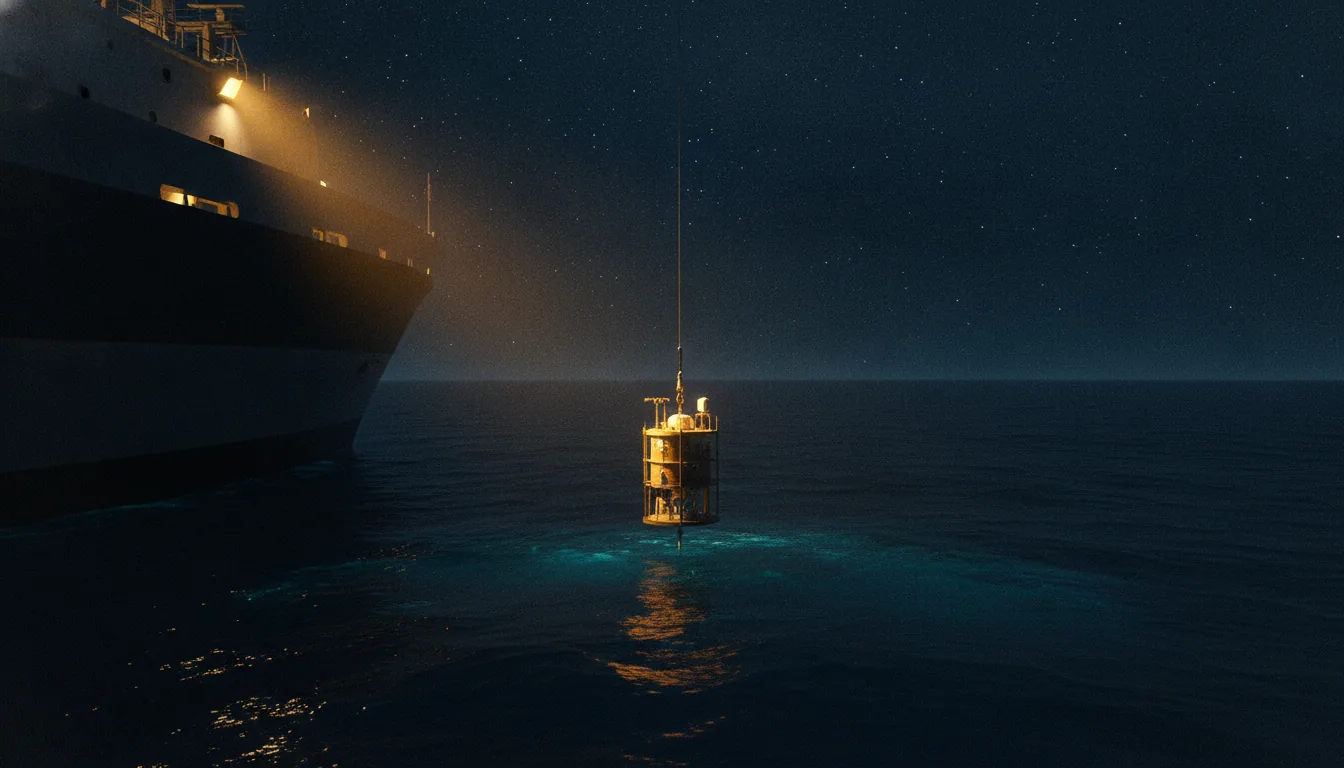
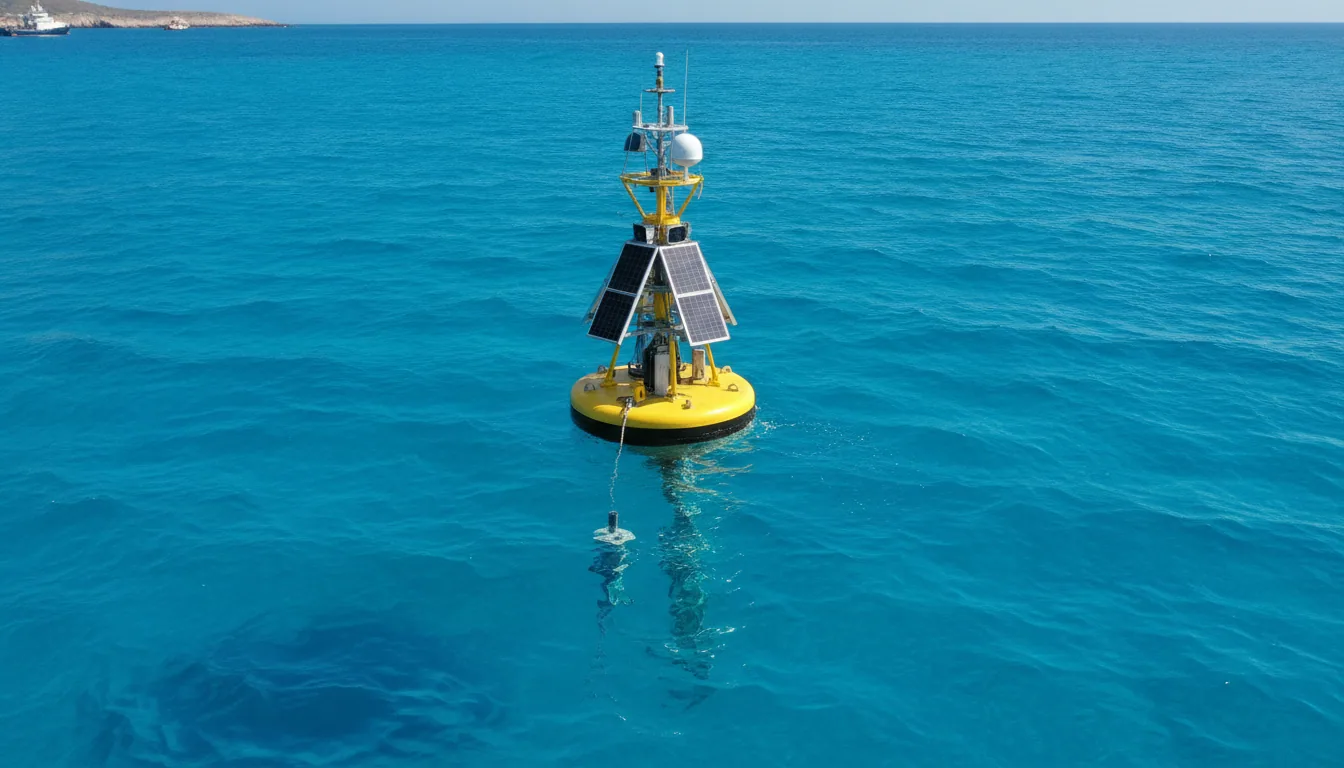
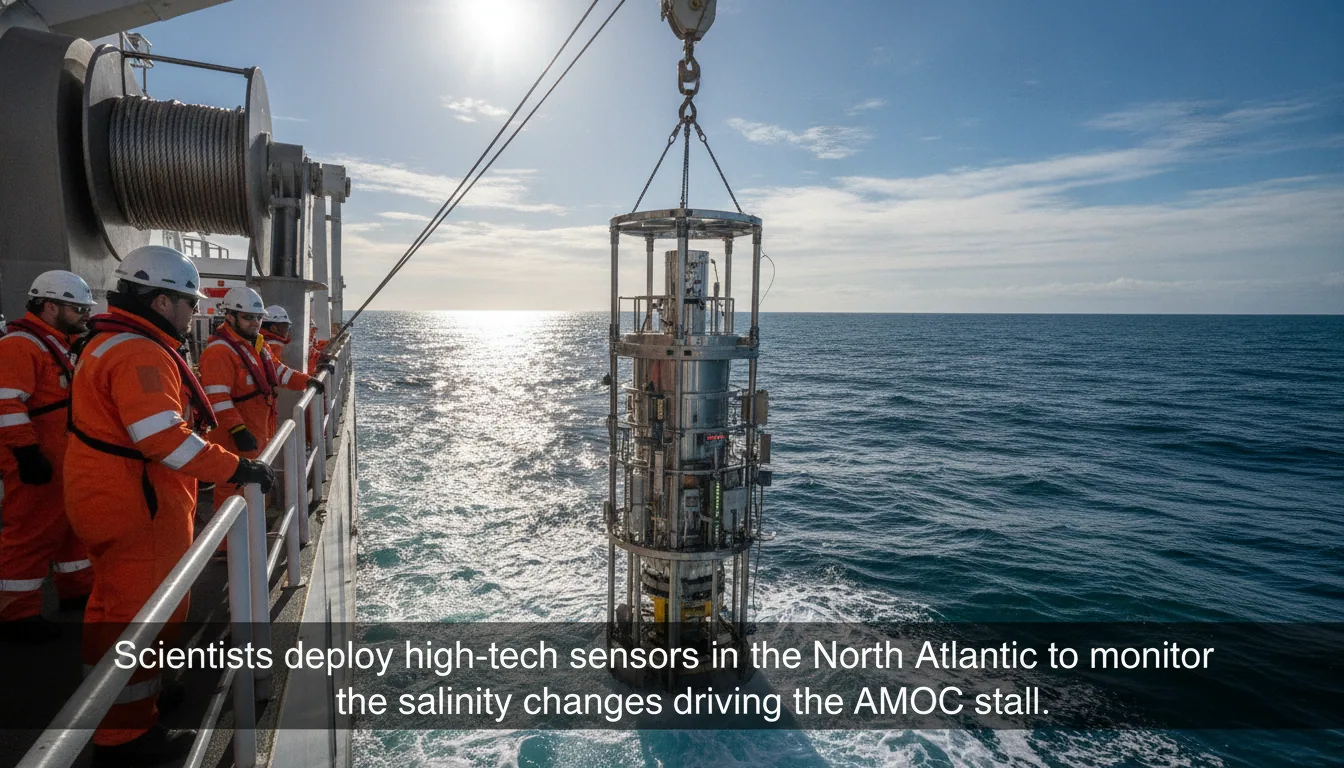
The 15% weakening of the AMOC since 1950 is a physical measurement that we can address through both decarbonization and practical adaptation. Investing in high-resolution monitoring of Sea Surface Salinity (SSS) is a lever that gives us the 30-year lead time required for massive infrastructure shifts.
Slogans do not insulate a power grid, and funding the builders who design for a 5 to 15 °C temperature drop is the real lever here. Researchers like René van Westen and Peter Ditlevsen have provided the statistical window of 2025 to 2095 for a possible collapse. This 1,000-year low in circulation strength is a prompt for regional agricultural resilience rather than climate theater.
We must move capital toward the farmers and founders who can adapt to a potential 3 °C cooling per decade. Shifting from general climate talk to specific, regional hardening of our energy and food systems is what actually works. Tracking the North Atlantic Cold Blob is our most proportionate next step to fund the ocean sensor networks that turn salinity data into a map for survival.