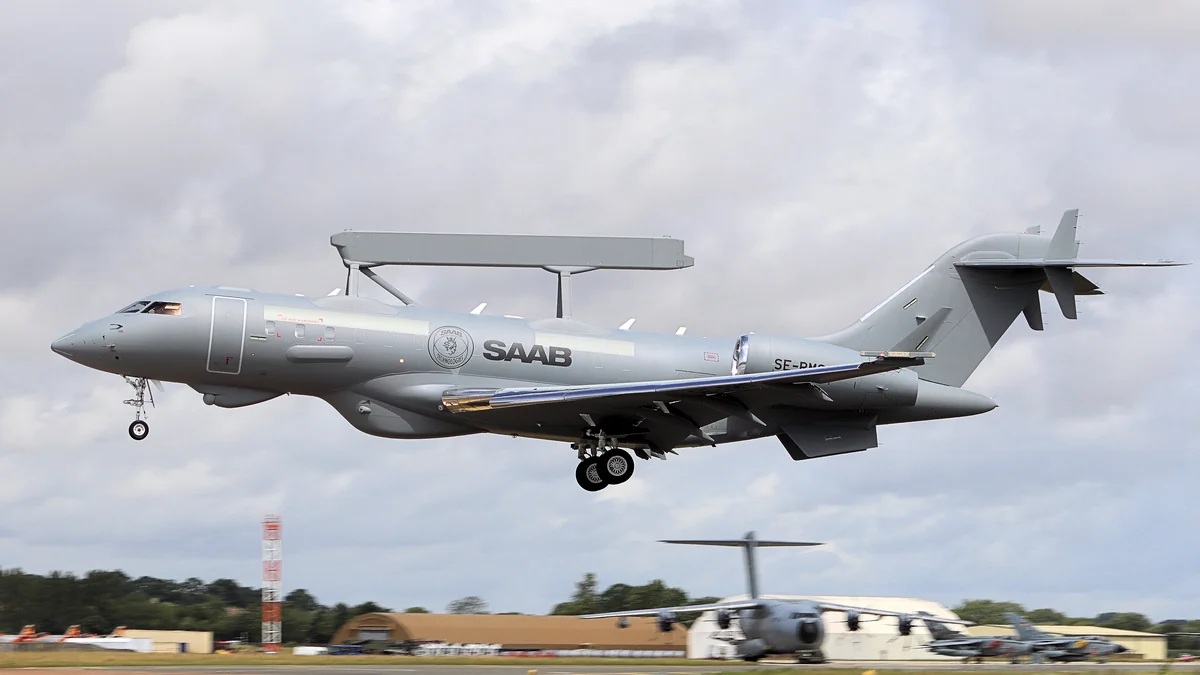
Canada is shifting its military procurement strategy toward Sweden to enhance Arctic sovereignty and domestic industry. On May 27, 2026, Prime Minister Mark Carney announced the purchase of six Saab GlobalEye aircraft, marking a departure from traditional reliance on United States suppliers to foster independent defense capabilities.
Canada’s Swedish defense pivot prioritizes national sovereignty and domestic manufacturing by replacing aging American surveillance technology with advanced Swedish-built systems integrated onto Canadian aircraft.
My oldest daughter asked this morning why her class trip to Stockholm is more expensive than the one to the local lake. I told her that sometimes, you have to pay a bit more upfront to build a relationship that lasts. It is the same arithmetic we are seeing in Canada right now.
On May 27, 2026, Prime Minister Mark Carney changed the way Canada shops for its security. Instead of buying American, the government announced it will purchase six Saab GlobalEye early warning aircraft from Sweden. This is a fresh start for a country tired of being a footnote in someone else's industrial strategy.
For decades, Canada’s defense budget looked like a one-way street. Roughly 70% to 75% of every dollar spent on military equipment flowed directly across the border to United States suppliers. Mark Carney noted that 75 cents of every dollar of capital spending for defense goes to the United States and concluded this is not sustainable.
That is what policy feels like when a neighbor starts acting like a landlord. US trade tariffs implemented under the Trump administration made the old partnership feel like a bad deal for working people. Canada is now choosing a Swedish partner to watch over 4.4 million square kilometers of Arctic territory.
The GlobalEye system will be integrated onto the Canadian-built Bombardier Global 6500 business jet. When your biggest trade partner starts acting like a rival, you find a new shop to frequent. This shift to a Nordic partnership is about survival math for a nation's sovereignty.
Scaling Canada’s Swedish Defense Pivot in the Frozen North
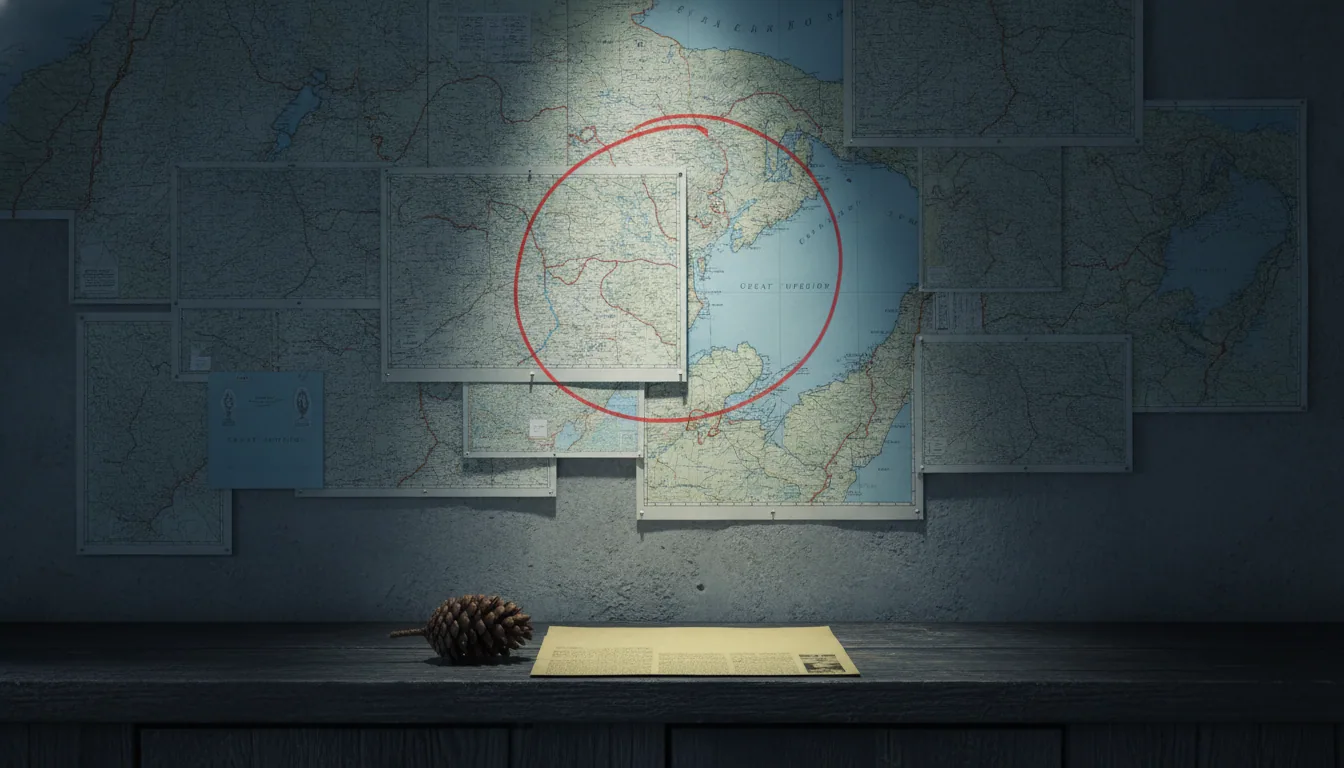
Sovereignty is a heavy word that often masks a simple question: do you know who is in your house? For Canada, that house includes 4.4 million square kilometers of Arctic territory. It is a vast, cold expanse where silence is the default.
To monitor this space, the government is purchasing a fleet of six Saab GlobalEye airborne early warning and control aircraft. The Swedish bid was selected over Boeing’s E-7 Wedgetail and L3Harris’s Aeris X systems. Reports show the Boeing bid was hampered by delays and cost overruns.
When you are managing a national budget, you cannot afford to pay for someone else’s mismanagement. Do the arithmetic on those delays and the drain on the public purse becomes clear.
That is what policy feels like when a government prioritizes function over traditional loyalty. Mark Carney stated that Saab’s GlobalEye will be a key resource for the Canadian Armed Forces to detect and deter threats across the Arctic. I write so that we see the procurement process as a survival strategy.
If you cannot see across 4.4 million square kilometers, you do not truly own it. Using the Swedish system is a pivot toward a partner that delivers. It defines Arctic sovereignty as a practical surveillance task rather than an abstract concept.
The Math of Making Things at Home
When we talk about large defense deals, the money often feels like it disappears into the clouds. For a worker at the Bombardier plant, however, this is not about abstract radar ranges. It is about whether the rent gets paid.
The plan integrates Swedish technology onto the Bombardier Global 6500, a jet built right in Canada. This is not just buying a finished product off a shelf in Stockholm. It is a partnership that keeps the tools moving in local hangars.
Seventy-five cents of every dollar of capital spending for defense going to the United States is not sustainable.
The government has mandated that at least one-third of the GlobalEye fleet must be manufactured within Canada. This means two of the six planned planes will be home-grown from the fuselage up. This is a hard requirement to support domestic industry.
Swedish Prime Minister Ulf Kristersson notes that "GlobalEye is already creating jobs in Canada and working with the Canadian supply chain." That is what policy feels like when it actually hits the ground. It is the difference between sending a check abroad and keeping a neighbor employed.
Saab has proposed that if Canada chooses the Gripen fighter jet, the entire assembly and maintenance would happen on Canadian soil. Investing that money at home is how a country builds its own floor to stand on.
Crossing the Atlantic for a New Partnership
In November 2025, the ink dried on a formal Strategic Partnership between Canada and Sweden. This agreement laid the groundwork for deep cooperation in aerospace and artificial intelligence. Swedish Prime Minister Ulf Kristersson was clear about the stakes, saying, "This decision ties our two nations even closer together."
By December 2025, Canada joined the EU’s Security Action for Europe (SAFE) initiative. This move brought a hard financial boundary into the procurement office. Under the SAFE initiative, non-EU components must comprise no more than 35% of total estimated costs.
This single number dictates where every bolt and circuit board must come from. That is what policy feels like when it forces a country to build its own supply lines.
The reaction from the south arrived quickly. In May 2026, the Pentagon suspended its planned biannual defense talks with Canada. This suspension turned years of routine military cooperation into a series of unanswered emails and empty meeting rooms.
For Canada, the safety of the old North American partnership has been traded for a seat at the European table. It is a gamble based on the idea that independence is worth the friction of a quiet phone line.
The 5% Promise and the F-35 Bill
In 2025, Canada finally met the NATO defense spending target of 2% of GDP. For Prime Minister Mark Carney, it was just the start of a much steeper climb toward the 2035 target of 5%. Moving from 2% to 5% of GDP in a decade is more than doubling a bill that already consumes billions.
Carney has stated that 75 cents of every dollar going to the United States is not sustainable. That is what policy feels like when a nation decides it can no longer afford to buy its security off a neighbor’s shelf. To make room for this new path, the government is looking at its old commitments.
Prime Minister Carney has ordered a military probe to investigate reducing the planned order of 88 Lockheed Martin F-35 jets. These American fighters were once the undisputed center of the fleet. Now, they are a test case for the policy of pivoting away from American military capability.
A 5% target is not a luxury item for the federal treasury. It is a commitment that requires every dollar to work twice as hard for domestic industry and Arctic sovereignty. Reducing the F-35 order is how a government proves it is serious about a new partnership.
These numbers matter because every line in a budget is a promise. When the government chooses a Canadian-built platform for Swedish technology, it keeps its word to the taxpayer. Canada's Swedish defense pivot ensures that 4.4 million square kilometers of Arctic territory are watched by eyes we helped build while securing the nation's economic future.