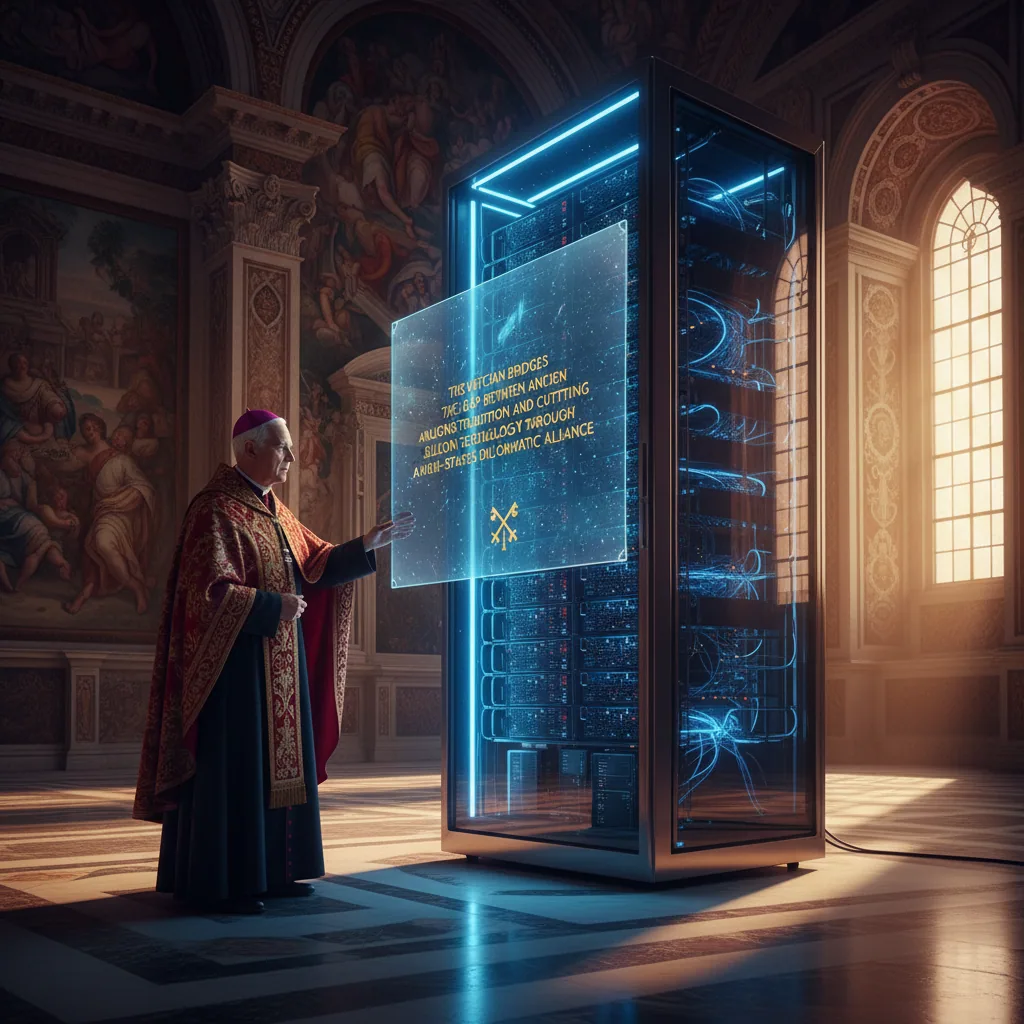
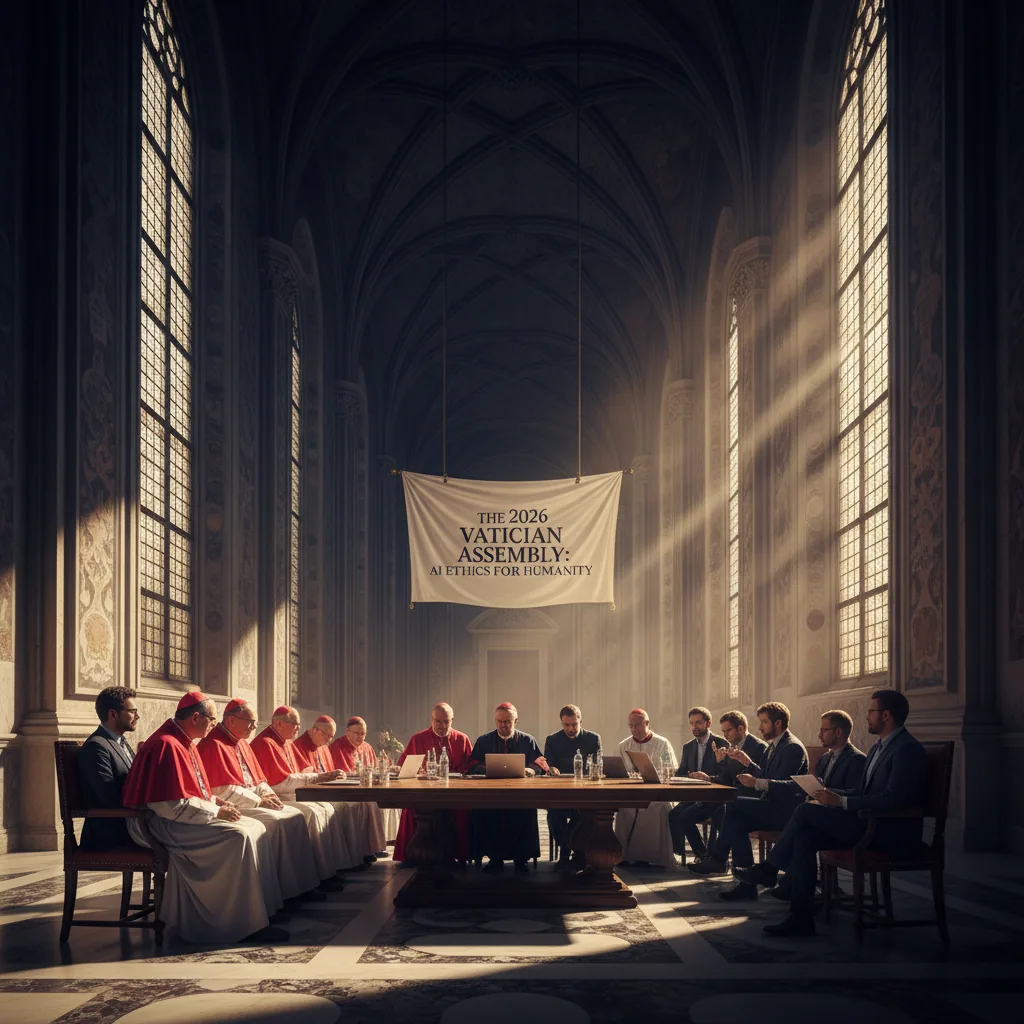
In May 2026, Pope Leo XIV released Magnifica Humanitas, a 42,300-word encyclical addressing the ethics of artificial intelligence. The document calls for global AI disarmament, a moratorium on lethal autonomous weapons, and a framework emphasizing human dignity against digital dehumanization. This theology of AI disarmament recognizes technology as a non-neutral force reflecting a specific moral vision.
The theology of AI disarmament seeks to dismantle the systems of automated violence and corporate control that reduce human life to data points.
In 1891, Pope Leo XIII addressed the "new, terrifying ghost" of the steam engine in Rerum Novarum. He saw factories reorganizing human labor and realized old rules for masters and servants no longer applied to a world of soot and steel. This document became the foundation for how a billion people thought about work for a century.
History has a way of rhyming in much higher frequencies. On May 25, 2026, Pope Leo XIV released Magnifica Humanitas, a document about the silicon and electricity that have become the new architecture of our souls. This five-chapter encyclical demands a fundamental restructuring of how we build the thinking machines that now govern everything from bank loans to drone strikes.
The Death of a 1,600-Year-Old Idea
For sixteen centuries, the Catholic Church relied on "Just War" theory to decide when picking up a sword was morally permissible. Leo XIV has now declared that this traditional framework is officially outdated because of AI capabilities. It required human intention and a sense of proportion that autonomous systems inherently lack.
The argument is as cold and logical as a line of C++. If a machine can decide to kill without a human being "in the loop," the very concept of a "just" conflict evaporates. In February 2026, the Holy See called for an immediate moratorium on Lethal Autonomous Weapons Systems (LAWS) at the UN in Geneva.
To someone in 1610, this would have been magic, but to us, it is a matter of "harness-level benchmarks." In the technical world, we use tools like CheetahClaws to test how well an AI agent follows instructions. The Pope argues that we have forgotten the most important benchmark: whether the machine recognizes a human being as more than a coordinate.
Defining the Theology of AI Disarmament
When the Vatican speaks of "disarmament," they are using a word normally reserved for nuclear warheads. AI disarmament is defined as freeing technology from the mentality of armed competition and monopolistic corporate control. It is an attempt to pull the "brain" of our digital age out of the hands of generals and put it back into the hands of the community.
The Pope is particularly concerned with "opaque algorithms" where decisions—to deny a mortgage or target a missile—are made in "black boxes." Every line of code contains a vision of humanity, and when that code is hidden, so is the moral responsibility of its creators.
| Concept | Traditional Framework | Magnifica Humanitas Framework |
|---|---|---|
| Warfare | Just War Theory (Human-led) | AI Disarmament (Machine-led is inherently unjust) |
| Technology | Neutral tool | Non-neutral; reflects a vision of humanity |
| Human Status | Individual soul | Data point for automated targeting |
| Development | Market-driven efficiency | Algorethics (Ethics-by-design) |
| Labor | Factory workers / Laborers | Content moderators / Rare earth miners |
Every line of code contains a vision of humanity, and when that code is hidden, so is the moral responsibility of its creators.
The Ghost in the Machine
The "intelligence" we marvel at is built on what the Pope calls "new forms of digital slavery." Content moderators and rare earth mineral miners are cited as the primary victims of this new economy. He points to workers in Nairobi or Manila paid pennies to stare at the worst horrors of the internet so feeds stay clean.
The Vatican has leaned into the term algorethics to address this dehumanization. Coined by the Pontifical Academy for Life, it demands that ethical principles be baked into the design phase of AI. Algorethics is not a PR afterthought, but a requirement that technology serves the common good from its inception.
An Unlikely Alliance in Silicon Valley
Anthropic co-founder Chris Olah stood with the Vatican, representing tech developers terrified of what they have built. Olah noted that AI companies operate inside incentives and constraints that can conflict with doing the right thing. This alliance provides a moral shield for "safety-first" developers against being forced to weaponize their research.
The Pope's audience is the eleven major world religions that signed the Rome Call for AI Ethics. There is a growing ecumenical consensus that we are drifting toward a "technocratic paradigm." In this paradigm, efficiency is the only god we worship, regardless of the human cost.
Why You Should Care
We are currently outsourcing our moral agency to systems we do not fully understand. A recent study (arXiv:2605.26079) found that 25.7% of AI benchmarks have critical design issues. Building a society on these benchmarks is like building a skyscraper on a foundation where every fourth brick is made of sand.
"To disarm does not mean rejecting technology," the Pope writes, "but preventing it from dominating humanity." He even quotes J.R.R. Tolkien to emphasize the need to succor the years wherein we are set. The goal is to ensure that "Agentic AI" remains a responsibility rather than a magical, uncontrolled breakthrough.
The Open Horizon
The Vatican hasn't provided a line-by-line legislative framework, leaving questions about how to regulate systems moving at the speed of light. We still don't know how superpowers will respond to the suggestion that their most revolutionary weapons are morally bankrupt. We are left asking "Should we?" rather than just "Can we?"
The adventure of the next decade isn't just about making models larger. It is about whether we are clever enough to remain the masters of the visions we've written into our code. Engaging with the theology of AI disarmament is our best chance to remain human in an age of automated logic.