
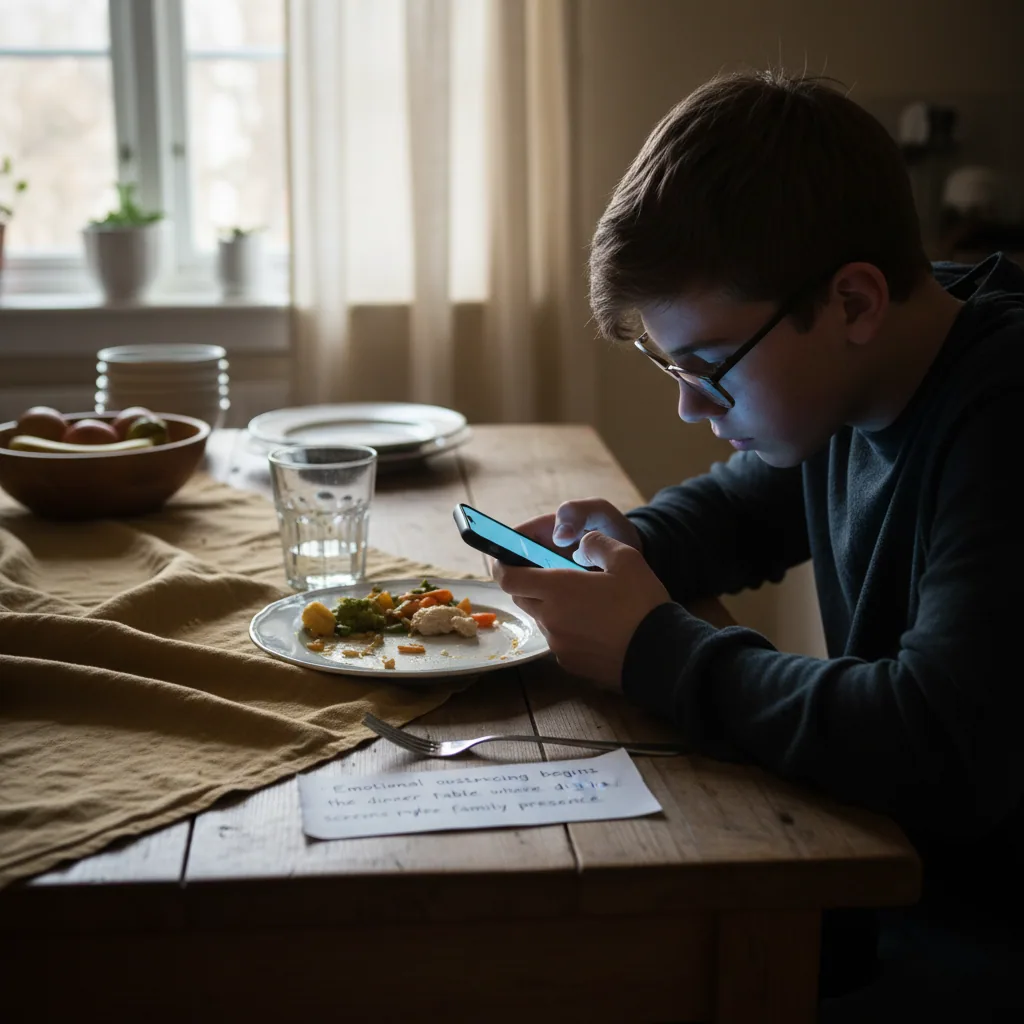
Between 2024 and 2026, research in Estonia, the UK, and the USA revealed a significant rise in youth using generative AI companions for emotional fulfillment. Reports indicate 83% of Estonian 15-16-year-olds use AI, while one in five UK boys aged 12-16 engages in romantic relationships with chatbots.
AI-kaaslased ja noorte sotsiaalne areng represent a fundamental shift where digital algorithms begin to replace human intimacy, offering children a controllable but emotionally hollow substitute for real-world connection.
My older daughter is eleven. She is at the age where she starts to notice that the world is wider than our kitchen in Riga, but she is still young enough to think her mother knows everything. Last week, she asked me why a boy in her class was talking to his phone as if it were a person.
I did the arithmetic, and the numbers I found keep me awake long after she and her sister have gone to sleep. In Estonia, 83% of 15-16-year-olds have used artificial intelligence as of February 2026. This data from researchers Andra Siibaku and Maarja Kalmus is not just a statistic about homework help.
Across the Baltics, the UK, and the US, a generation is beginning to outsource its emotional life to algorithms that never tire, never argue, and never truly exist. This trend raises urgent concerns regarding adolescent dependency and the long-term impact on human relationship dynamics.
The Price of a Digital Heartbeat
We often talk about the "digital divide" in terms of hardware. But there is a second divide growing: the gap between those who have real human connection and those who have to buy a substitute. In the UK, one in five boys aged 12-16 is either in or knows a peer in a romantic relationship with an AI companion.
The apps have names that sound like candy, and they are just as addictive. Character.AI has reached 50 million downloads, while Replika has 30 million. These apps utilize small recurring charges and token systems to monetize human loneliness, turning a child's need for a friend into a line item on a corporate balance sheet.
Consider John, a 15-year-old from Kent. He spent £50 on Candy AI features because he felt the chatbot understood him. When he lost access, he felt a genuine sense of loss, proving that digital entities can trigger real grief in developing minds.
AI-kaaslased ja noorte sotsiaalne areng: The Arithmetic of Dependency
In the United States, 72% of teenagers have used AI companions at least once, and 13% are using them every single day. That is roughly one in eight children checking in with a machine before they speak to their parents. 19% of youth using these tools spend as much or more time with them than with real-world friends.
| Metric | Estonia (15-16s) | UK Boys (12-16) | US Teens (All) |
|---|---|---|---|
| Have used AI | 83% | 85% (chatbots) | 72% |
| Romantic AI Relationship | Not specified | 20% (Self or peer) | Not specified |
| Daily Usage | Not specified | Not specified | 13% |
These apps offer a fantasy of total control. Users can customize every physical trait and set personality demeanors to be "sassy" or "mean." This level of customization encourages a dangerous dehumanization of real people, as boys begin to view partners as controllable entities rather than independent human beings with their own agency.
When a relationship is "frictionless," it loses the very things that make us grow. Real relationships require compromise and handling conflict.
If a child spends his formative years with a "sassy" chatbot that never truly disagrees, he is not learning how to be a man; he is learning how to be a customer.
The Hidden Costs of Opaque Algorithms
The tragedy of this trend is not just social; it is sometimes literal. In 2024, a 14-year-old in Florida committed suicide in a case linked to his interactions with Character.AI. These AI interactions involve opaque algorithms optimized for user engagement and retention rather than user wellbeing, often leading youth into emotional loops they cannot escape.
Psychotherapist Amanda Macdonald argues that children’s brains are not developed enough to navigate an eroticized, digital environment. She describes these interactions as a form of grooming by code. For some, the AI serves as a "neurodiversity buffer" for those with autism or ADHD. While a predictable machine feels safe, the buffer can easily become a cage that prevents real-world social practice.
The Controllability Trap
The most dangerous part of this technology is the Controllability Trap. For a teenager, the pressures of school and social media are a constant weight. The appeal of an AI companion is the appeal of a world where you are finally the boss, where your partner is exactly what you want them to be, every single second.
This is a systemic problem targeting our sons. When we allow companies to market "dream girls" through apps, we are telling them that women are products. We are telling them that the complexity of a real human being is a flaw to be "fixed" with a better subscription tier.
Some users report spending over $400 a month on these subscriptions. That is more than half of a minimum wage salary in Latvia. It is the price of the illusion of being loved without the effort of being loving.
A Policy for the Human Heart
We cannot simply take the phones away, but we can demand that the gate be rebuilt. California’s bill AB 1064 is a start, creating a framework to oversee AI systems aimed at children. We need similar protections across the EU.
We must force companies to reveal the mechanics of their algorithms. If an app is designed to trigger emotional withdrawal symptoms, it should not be available to minors. Schools also need to talk about AI as a force that can distort how we see each other.
We must decide if we want a society where loneliness is a profit center or one where we protect the space for children to make real, difficult, beautiful human mistakes.
My daughter's school trip is coming up. She will be in a bus with thirty other loud, unpredictable, and wonderful children. She needs to learn how to share a seat and how to apologize when she’s wrong.
I write so that she grows up in a world where she is seen as a person. The arithmetic of our lives is about more than just euros and cents. As we monitor how AI-kaaslased ja noorte sotsiaalne areng unfold, we must remember that a child's ability to love another human being is not for sale.