Sarah Lowery sits on a hard plastic chair at Heathrow Terminal 5, her eyes fixed on a board of "Cancelled" flights—a scene that grounds any Trump-Xi Beijing Summit analysis in the harsh reality of global supply chain collapses. She was supposed to be in Johannesburg for her sister’s wedding, a trip she saved for over eighteen months. Instead, she is watching the price of a replacement ticket climb toward three thousand pounds.
From May 14 to 15, 2026, U.S. President Donald Trump and Chinese President Xi Jinping met in Beijing to address the Strait of Hormuz energy crisis. The summit focused on stabilizing trade through Boeing aircraft orders, semiconductor export frameworks, and fentanyl precursor crackdowns amidst rising geopolitical tensions.
The distance between a family celebration and a geopolitical stalemate is measured in the rising cost of jet fuel. Sarah holds her phone, refreshing a news feed that she hopes will tell her when the world will start moving again. She is a human data point in a crisis triggered by a blockade thousands of miles away.
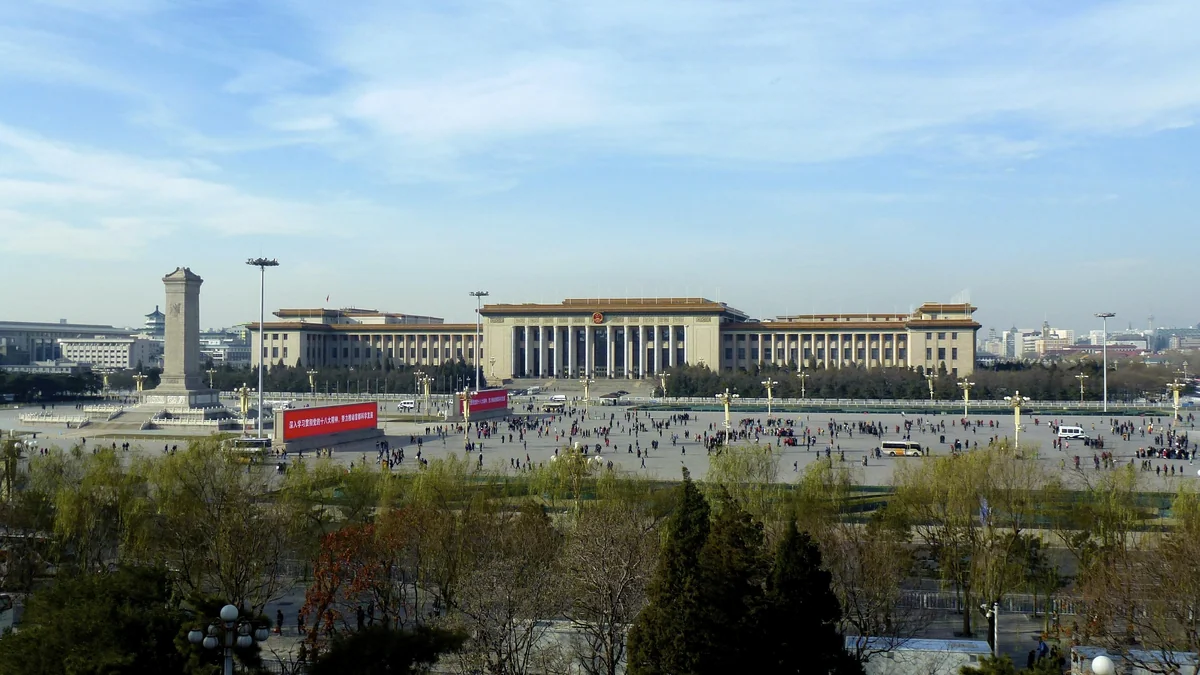
While the world watched the red carpet at the Great Hall of the People, people like Sarah waited for a sign that the price of breathing—and traveling—might finally stabilize.
The Long Road to Beijing
The heavy doors of the Great Hall of the People swung open on May 14, 2026, marking the first time Donald Trump had set foot in the Chinese capital in nine years. The atmosphere was heavy with the scent of damp pavement and the sterile, cold air of a city under immense security pressure.
The ceremony was a choreographed display of military precision designed to mask the underlying fragility of the moment. President Trump referred to Xi Jinping as a "tremendous guy" as they walked past the honor guard. It was a tactical warmth that contrasted sharply with the resolute, almost somber expression on Xi’s face.
The momentum for this meeting had nearly vanished in the weeks prior due to trade curbs and escalating tensions over rare earth minerals. Yet, the crisis in the Strait of Hormuz acted as a gravitational pull that neither leader could ignore. When the taps are turned off in the Middle East, the lights begin to flicker in both Washington and Beijing.
The Thucydides Trap: A Trump-Xi Beijing Summit Analysis
Inside the meeting room, Xi Jinping invoked the "Thucydides Trap"—the ancient idea that a rising power and an established one are destined for collision. "Can China and the United States overcome the Thucydides Trap and create a new paradigm of major-country relations?" Xi asked.
In the United States, search interest for the term spiked immediately, with over 50,000 queries recorded on the first day of the summit. It was as if a nation were collectively trying to look up the name of the storm they were already standing in.
The two leaders attempted to build what their aides called "constructive strategic stability." This proposed three-year framework is intended to manage competition without slipping into the open conflict that both sides now openly fear.
"This is what managed competition looks like up close: a ledger where the sovereignty of a self-governed island is weighed against the price of jet fuel and the stability of a semiconductor supply chain."
The Components of Strategic Stability
| Pillar | Objective | Status at Summit |
|---|---|---|
| Energy Security | Resolve the Strait of Hormuz blockade and Iranian oil flow. | Discussed as part of a "Grand Bargain." |
| Industrial Trade | Stabilize Boeing orders and U.S. aerospace manufacturing. | Negotiations ongoing; no formal signing yet. |
| Tech Governance | Managed flow of Nvidia chips and dual-use AI technology. | Framework established for monitored exports. |
| Public Health | Crackdown on chemical precursors for fentanyl. | Reported agreement to implement stricter controls. |
The Iran-Taiwan Pivot
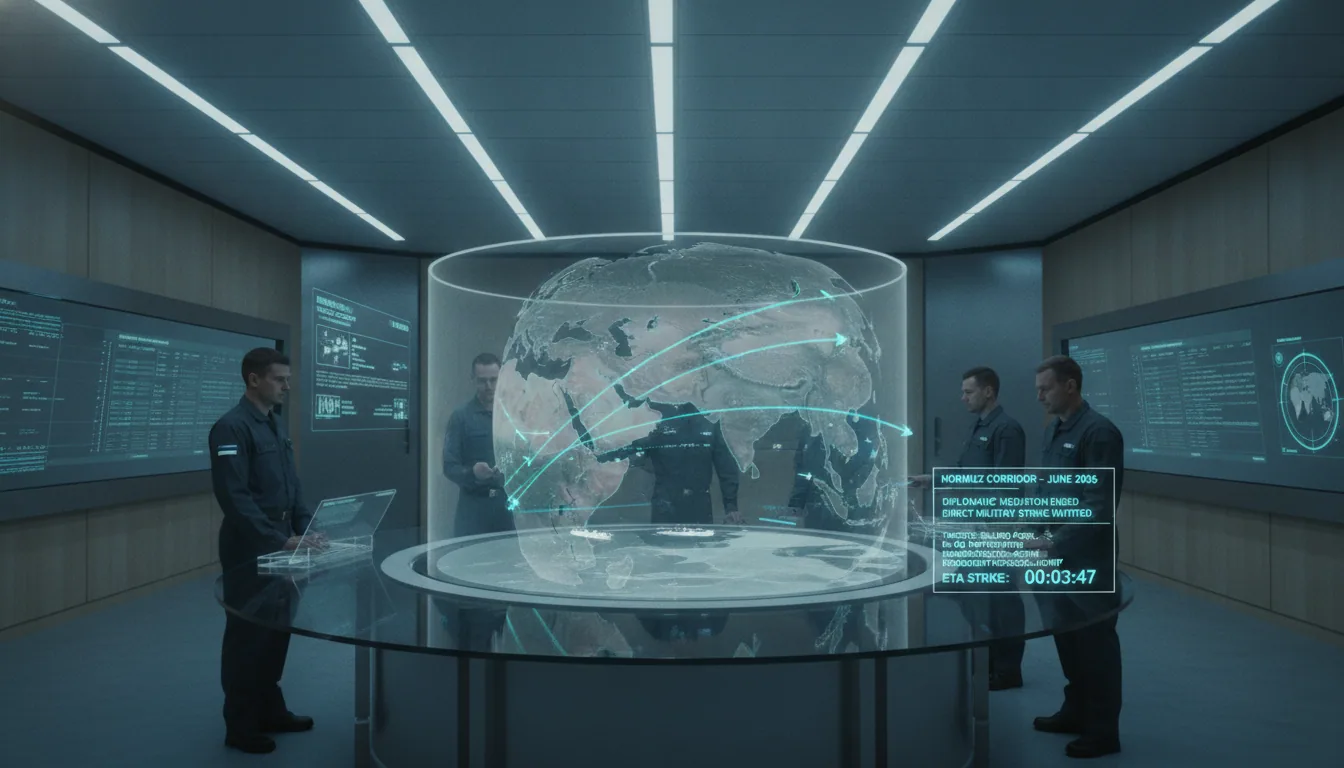
The most significant shift during the two days in Beijing centered on what diplomats are calling the "Grand Bargain." For months, an Iranian blockade of the Strait of Hormuz has strangled global jet fuel supplies, sending airfares into the stratosphere. This is a political choice that has left millions of people like Sarah Lowery unable to reach their families.
Negotiators spent hours discussing a trade-off where the U.S. looks for China to curb Iranian oil exports and pressure Tehran to end the blockade. In exchange, the U.S. would offer Beijing access to high-end Nvidia chips currently behind a wall of export bans.
Xi Jinping was characteristically blunt about his red lines, describing Taiwan as the "core of core interests." He warned that mishandling the issue could jeopardize all bilateral relations, holding significant leverage in the current energy climate.
Numbers and Human Impact
When negotiators discuss Boeing aircraft, they are discussing the survival of a domestic industry that supports thousands of families in places like Renton, Washington. I asked a source close to the negotiations what the Boeing deal meant for the average worker.
They told me about the silence of a factory floor when the orders stop coming. The potential trade deal would see China resume massive purchases of U.S. aircraft, providing a lifeline to American industrial stability.
Then there is the issue of fentanyl. China reportedly agreed to a crackdown on the chemical precursors used in the production of the drug. Last year, over 70,000 Americans died from synthetic opioid overdoses—this agreement is an attempt to turn a geopolitical concession into a saved life.
The Silence and the "Hot Mic"
Despite the declarations of success, the summit ended without a signed treaty. President Trump described the talks as "very successful," stating that "lots of very potentially bad problems will be settled."
The reality inside the room was likely much more abrasive. A "hot mic" incident reportedly captured a single, sharp profanity—an "F-word"—inside the meeting room. It reminded the world that beneath the handshakes, there is a raw, simmering friction between two men competing for global dominance.
Even as they discussed oncology research and climate goals as "neutral channels," regional security concerns remained. The U.S. is watching shifts in European policy, while China is watching the U.S. military presence in the Pacific.
The Unresolved Horizon
As the summit concluded on May 15, the "Grand Bargain" remained a series of verbal promises. There is no clear timeline for when the "monitored flow" of Nvidia chips will begin or when the Boeing deal will be finalized. The world is being asked to trust a process held together by the mutual fear of a total collapse.
In the Great Hall of the People, the cleaners move through the rooms, erasing the physical traces of the men who just tried to divide the world. The banners are taken down, and the questions raised about the Thucydides Trap remain unanswered.
Back at Heathrow, Sarah Lowery is still waiting, checking her bank balance to see if she can afford an airport hotel. Her life remains on hold, suspended in the gap between the rhetoric of presidents and the reality of a world that has forgotten how to move—a final, sobering note for any Trump-Xi Beijing Summit analysis.