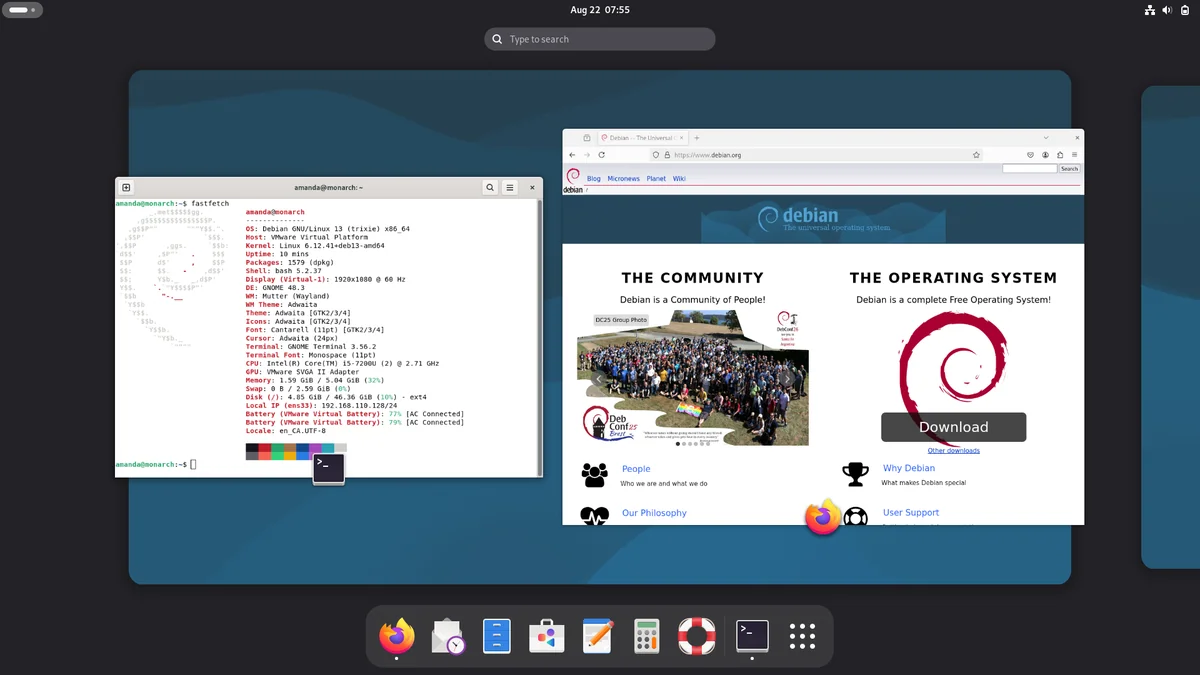
By 2026, European states led by France and Estonia are implementing digital sovereignty strategies to reduce reliance on US technology. This shift involves transitioning to open-source software like Linux and decentralized protocols to secure control over data flows, local taxation, and algorithmic transparency.
The French government’s decision to migrate from Windows to Linux isn’t a marketing stunt or a sudden burst of nationalist sentiment. It is a pragmatic architectural choice made at the lower layers of the system. In engineering terms, if you don’t control the operating system, you don’t control the telemetry, the data exfiltration paths, or the fundamental security of your stack.
In 2026, the European Union is accelerating its push for "strategic autonomy." While politicians frame this in terms of geopolitical power, the engineers are focused on a more immediate problem: the structural dependency on proprietary black boxes that reside outside their jurisdiction.
The Math of Dependency
From a market perspective, the European cloud sector has behaved like a centralized monolith being slowly hollowed out. Data from Synergy Research Group shows that European cloud providers saw their market share collapse from 29% in 2017 to just 15% by 2022.
This didn’t happen because European providers failed to grow. In fact, their revenues quadrupled in that period. The problem is scale and the velocity of US "hyperscalers." By the first quarter of 2026, the global cloud market’s annual run rate exceeded $500 billion. When that much capital and data flow out of a jurisdiction, it creates a vacuum that affects everything from tax revenue to national security.
"If a state does not have control over its operating system, it does not have control over the movement of its data."
Sovereignty as System Architecture
Digital sovereignty is often dismissed as a buzzword. However, when we strip away the rhetoric, it is a technical requirement for an enforceable relationship between the digital economy and public authority. Without control over hardware and software, legal mandates like GDPR are essentially empty shells.
Here’s what the press releases omit: switching to Linux isn’t just about changing desktop icons. It’s a full-stack refactoring. It means moving to verifiable, open protocols where "black boxes" are replaced by auditable code.
| Component | Traditional Model (US-Centric) | Sovereign Model (EU Direction) |
|---|---|---|
| Operating System | Windows (Closed Source) | Linux (Open Source) |
| Communication Protocol | Slack / Teams (Centralized) | Matrix (Decentralized) |
| Cloud Infrastructure | AWS / Azure / GCP | Local EU Providers |
| Data Protection | US Cloud Act | GDPR (Data Sovereignty) |
The Estonian Precedent
Estonia has been operating in this space longer than most. The Riigikogu (Parliament) passed its first information policy foundations in 1998. But the challenges of 2026 are different from those of the early "Tiger Leap" days.
Dan Bogdanov, a lead researcher at Cybernetica, frames the problem through the lens of internal security. If a nation’s official gazette or legal databases are hosted on foreign cloud infrastructure, which laws actually apply to that data? It’s a question of who holds the "root keys" to the digital copy of a country’s legal space.
EU OS and Algorithmic Transparency
The so-called "EU OS" initiative is less a single product and more a strategic framework. It’s an attempt to bundle open-source components into a secure, cohesive ecosystem. The focus here is algorithmic transparency.
If a piece of software is making automated decisions about a citizen—whether regarding taxes or social services—that code must be human-readable. The "Digital Europe" program is now funding AI and high-performance computing specifically within these verifiable frameworks. We are seeing the early stages of a legitimate alternative to the proprietary app-store monopolies.
Project Charles: Mapping Jurisdiction
One of the more interesting technical developments is "Project Charles." It’s a browser extension that functions as a navigation system for digital jurisdiction. It alerts users when they are interacting with US-based services and suggests European-hosted alternatives.
By 2026, as we move from paper credentials to verifiable digital proofs, the location and authenticity of data become critical. This isn’t just about e-government; it’s about cultural heritage. If we outsource our history and our language models to foreign platforms, we lose control over how we are interpreted by future algorithms.
The Engineering Tradeoff
Digital sovereignty is ultimately a tradeoff between convenience and autonomy. For decades, the industry chose the convenience of pre-packaged, proprietary solutions. Europe has now decided that the hidden costs of those "black boxes" have become too high to ignore.
In engineering, a system is only as secure as its weakest link. If that link is a dependency on a foreign jurisdiction that can be leveraged at any time, no amount of local encryption will fix the problem. The real question is: can we build an infrastructure that is open enough to be trusted, but performant enough to remain relevant?
This isn’t a prediction. It’s an architectural choice that will define the next decade of the digital landscape.